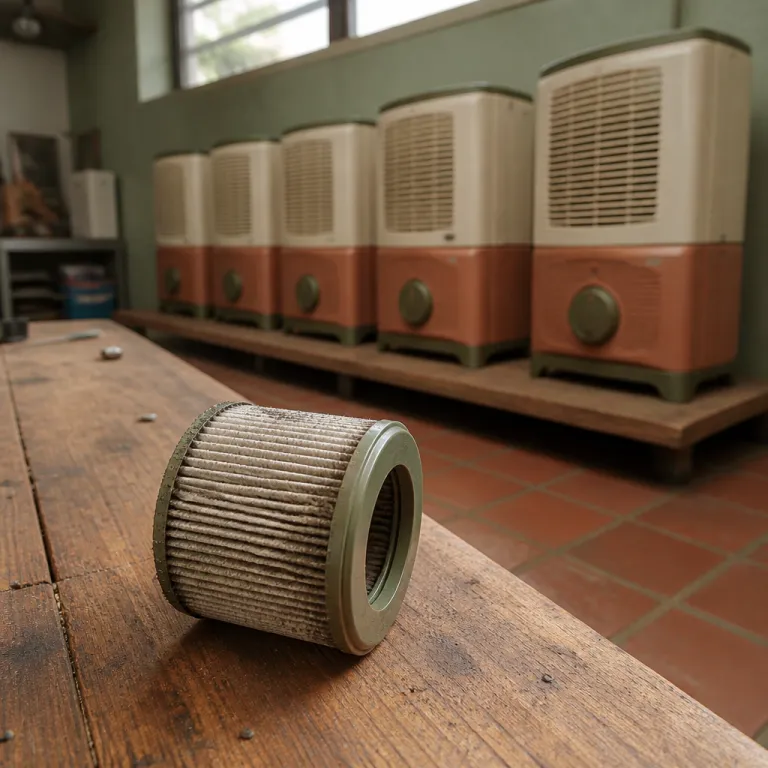
How affiliate economics shape almost every “best air purifier” list
Search for any air purifier buying guide affiliate bias topic and the same pattern appears. Most lists of the so called best air purifiers lean heavily on models that sell fast on Amazon at a comfortable price point, because affiliate programmes typically pay between 1 and 4 percent per unit and reward volume more than nuance. That economic reality quietly shapes which purifier, which filter technology, which room size and which brand you see at the very top of almost every review.
When a publisher earns a commission on each air purifier sold, the incentive is to highlight purifiers with strong stock, aggressive discounts and high click through rates rather than the absolute best air performance for a specific allergy profile. That is why the Levoit Core series, the Coway Airmega range, Dyson Pure Cool towers and Blueair or IQAir flagships dominate “best air” lists, while niche brands like Austin Air, Airpura, AllerAir or Oransi rarely appear despite excellent long term performance on odours and fine particles. The result is that a pet owner comparing air purifiers for a 25 m² room may think they are seeing a neutral ranking, when in reality the list is optimised for air delivery, price appeal and affiliate conversion rather than for multi pet dander, smoke or volatile organic compounds.
Affiliate bias also affects which technical metrics are explained and which are quietly ignored, even though clean air delivery rate and fan speed matter as much as headline HEPA claims. Many buying guides mention CADR and CFM in passing, but they rarely unpack how the combination of CADR CFM, room size and noise level determines whether a unit can actually clean air effectively at low speed in a real bedroom. For a reader trying to understand air quality, filter life, pre filter maintenance and the difference between a true HEPA filter and a basic HEPA type purifier, this selective emphasis can leave critical gaps.
Why the same five models keep winning: SEO, repetition and risk aversion
Once a handful of air purifiers become the default recommendations, SEO dynamics lock them in place across hundreds of air purifier buying guide affiliate bias articles. Editors see that guides featuring the Levoit Core 300 or 600S, the Coway Airmega 250 or 400 and the Dyson Pure Cool rank well, so they repeat those units, those prices and those performance claims to chase similar traffic. Google does not penalise this repetition, so there is little downside to publishing yet another “top five” with the same purifiers, the same room size assumptions and the same vague language about clean air and HEPA filtration.
Testing unfamiliar purifiers is expensive, slow and hard to monetise, which is why many outlets never touch Austin Air, Airpura, AllerAir or EnviroKlenz units that rely on heavy activated carbon beds and industrial style housings. These machines often have modest CADR numbers on paper but exceptional long term odour removal, especially in homes with several pets, yet they lack strong affiliate support and rarely appear in mainstream review grids. For a family choosing an air purifier for babies or toddlers, this bias means they mostly see sleek plastic towers with high top speed fan settings, but almost no discussion of how a 2 kg carbon filter compares with a thin deodorisation pad when the litter box is in the same room.
Risk aversion also plays a role, because no editor wants to be the only one recommending an obscure purifier unit that later has support issues or a noisy fan at top speed. It feels safer to echo the consensus that these five models are the best air purifiers for almost everyone, even if that consensus quietly ignores households with three cats, a smoker, or severe asthma. When every review leans on the same CADR CFM figures, the same HEPA filter marketing and the same low noise level claims at low speed, readers are left thinking the market is simpler than it really is.
For parents researching top air purifiers for babies, this repetition can be especially misleading, because infant rooms often need lower fan speed, lower noise and higher air quality margins than generic living rooms. Yet the affiliate driven lists rarely separate nursery use from open plan spaces, even though the clean air delivery rate required for a 12 m² nursery is very different from that of a 35 m² lounge. The same five purifiers are simply resized on paper using CADR, CFM and room size calculators, without any fresh testing of particles, gases or long term filter degradation in baby specific conditions.
What multi pet and asthma households really need from an air purifier
For a home with three cats, a dog and soft furnishings, the air purifier buying guide affiliate bias problem becomes painfully concrete. In that scenario, the main challenge is not just fine particles but also hair, dander, tracked litter dust and persistent odours that cling to fabrics, so the best air purifier is rarely the sleek tower with the highest CADR on a spec sheet. What you actually need is a robust pre filter for hair, a deep true HEPA filter for particles and a heavy activated carbon bed for gases, all sized correctly for the room and run at a fan speed that balances clean air with tolerable noise.
Consider a six month comparison between a Levoit Core 600S and an Austin Air HealthMate in a 30 m² living room shared with three indoor cats and a litter box. The Levoit Core unit offers excellent CADR CFM for particles at top speed, a compact HEPA filter and a modest carbon layer, which makes it a strong performer on dust and pollen but less dominant on strong pet odours over time. The Austin Air machine, by contrast, uses a large cylindrical HEPA filter combined with several kilograms of activated carbon, so its initial air delivery rate may look lower on paper, yet its long term odour control and gas adsorption can be dramatically better in a closed room.
Most mainstream reviews never run this kind of long term test, because it requires months of daily use, repeated sniff checks, particle counting and filter inspections rather than a weekend of unboxing and noise level measurements. For a multi pet household, the best air choice may be a pair of medium CADR purifiers with generous pre filters and deep carbon rather than a single top speed tower, but that configuration rarely earns a neat affiliate commission. If you read a glowing review that never mentions hair clogging the pre filter, the cost of a replacement HEPA filter or the support experience when a fan fails, you are probably seeing the imprint of affiliate incentives more than the messy reality of pet life.
Families juggling pets and children face similar trade offs, especially when they consult generic guides instead of resources focused on top air purifiers for families. A purifier that looks perfect on a spec sheet may roar at top speed, making it unusable during bedtime, which forces parents to run it at low speed and accept weaker clean air delivery. In that context, the true best air purifiers are those that maintain high clean air delivery rate at medium fan speed with acceptable noise, but affiliate biased lists rarely highlight this nuance.
How to read any air purifier buying guide with a critical eye
When you next read an air purifier buying guide affiliate bias is the lens you should consciously apply. Start by asking three blunt questions: who pays this publisher, which purifiers were actually tested in real rooms, and which specific use cases, such as asthma, smoke or multi pet odours, are they optimising for. If a guide never mentions CADR, CFM, room size, filter weight, activated carbon mass or long term costs, you can safely assume it is optimised for clicks rather than for your lungs.
A trustworthy review will state the exact model names, the test room dimensions, the measured clean air delivery rate at different fan speed settings and the observed noise level in decibels. It will also explain whether the purifier uses a true HEPA filter, a HEPA type media or a hybrid system, and whether there is a washable pre filter to catch hair and large particles before they clog the main filter. Crucially, it will disclose whether the unit was purchased at full price or supplied by the manufacturer, and whether there is any ongoing affiliate support or sponsorship that might tilt the ranking.
As a reader, you can also look for signs that the guide has considered alternatives beyond the usual five, such as Austin Air, Airpura or other heavy carbon purifiers that excel in odour control but lack flashy marketing. If the list never mentions these brands, never compares delivery rate against filter mass and never discusses long term ownership costs, you are likely seeing a narrow slice of the market. For a more balanced view, you might cross check with independent lab tests, consumer advocacy reports and hands on evaluations that track particles and gases over months rather than days, or consult a detailed product test such as this true HEPA and active carbon purifier review that focuses on real home use.
Ultimately, the best air purifier for your home is the one whose CADR CFM matches your room, whose filters you can afford to replace, and whose noise level you can live with at the fan speed required for clean air. That may be a popular Coway Airmega or Levoit Core unit, or it may be a more industrial Austin Air box that quietly runs for a decade with minimal support needs. Your job as a reader is not to memorise every spec, but to recognise when a buying guide is serving your interests and when it is mainly serving its own affiliate revenue.
Key figures about air purifiers, affiliates and household needs
- Affiliate commissions on major e commerce platforms for home appliances, including air purifiers, typically range from 1 to 4 percent of the sale price, which strongly incentivises publishers to prioritise high volume models over niche units with lower traffic potential (data compiled from public affiliate programme terms by multiple retailers).
- Independent lab tests of HEPA based purifiers show that units with a clean air delivery rate sized at least five times the room volume per hour can reduce fine particles (PM2.5) by more than 80 percent within 30 minutes, compared with reductions below 50 percent when CADR is undersized for the same room size (results reported by organisations such as AHAM and various academic indoor air quality studies).
- Long term ownership studies of premium purifiers indicate that models with durable steel housings and large HEPA and activated carbon filters, such as some Austin Air and Airpura units, can operate effectively for 5 to 10 years with infrequent filter changes, while many plastic tower purifiers require new HEPA filters every 6 to 12 months, significantly increasing lifetime cost despite a lower initial price (findings summarised from manufacturer maintenance schedules and consumer reports).
- Noise level measurements show that to maintain healthy air quality overnight, a purifier often needs to run at a medium fan speed that produces around 35 to 45 dB, yet many popular models only reach their advertised CADR at top speed settings above 55 dB, which many users find too loud for bedrooms (data drawn from product spec sheets and independent acoustic testing).