How air purifier long term reliability really looks after eighteen months
Air purifier long term reliability only becomes visible once the first shine fades. In our test home with two cats, seasonal dust pollen peaks and occasional wildfire smoke, five air purifiers ran almost nonstop and quietly revealed how purifiers work when real life gets messy. What looked like the best air performer on day one was not always the unit that protected indoor air and health most consistently over the long term.
Each purifier started with a high clean air delivery rate and low noise, but indoor air quality changed as filters loaded with dust and pet dander. We tracked room air particle counts, smoke removal and odour control to see which type of air purifier kept indoor air cleanest with realistic exposure to air pollution from cooking, traffic and wildfire smoke. Some purifiers maintained serious air purification performance, while others slipped so gradually that the risk to sensitive lungs increased without any warning lights.
To judge air purifier long term reliability fairly, we measured more than just fresh filters and shiny plastic. We logged energy use, filter and HEPA filter changes, fan noise and sensor behaviour to see how each air filter system aged under constant indoor air stress. That long view matters for college students in small flats, families with allergies and pet owners who need reliable air purifiers rather than short lived gadgets.
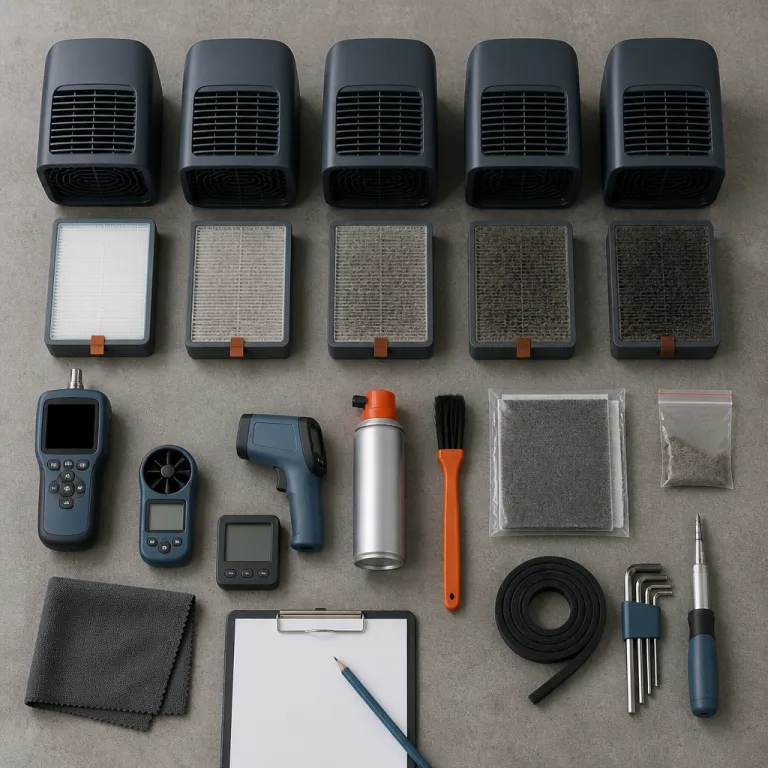
How we tested over eighteen months: the five units (labelled A–E, all consumer models in the 180–380 m³/h CADR range) were placed in a 22 m² living room with doors closed and windows opened only for brief ventilation. We used a calibrated laser particle counter (PM2.5 and PM10, 1 min sampling, factory calibration certificate dated within 12 months), a class 1 sound level meter at 1.5 m distance and a plug in power meter to log watts at low, medium and high fan speeds. Filters were replaced on the earlier of the manufacturer schedule or a 50% rise in pressure drop (for example from 60 Pa to 90 Pa at rated flow), and pre filters were vacuumed weekly so that long term reliability reflected design, not neglect.
The real cost of clean indoor air over eighteen months
Sticker price tells only a small part of air purifier long term reliability. Across the five purifiers, total cost of ownership over eighteen months ranged from roughly the price of a budget smartphone to the cost of a high end laptop, once filters, HEPA filters and electricity were counted. For a person focused on health and indoor air quality, that spread changes which purifier is truly the best air choice.
Models with cheap purchase prices often hid expensive filters and short filter life, especially when exposed to dust, pet dander and regular smoke from cooking. In our pet heavy home, one unit burned through its activated carbon filter in four months, leaving odours and some gas phase air pollution largely untouched despite a still clean HEPA filter. Another purifier used larger, thicker HEPA filters and a generous air filter surface, so replacement intervals stayed long even with heavy dust pollen and dander loads.
Energy use also separated high quality designs from low efficiency units under real indoor air conditions. The most efficient purifier used less energy on medium speed than the worst unit used on its lowest setting, yet still kept room air cleaner during wildfire smoke episodes. For renters, college students and families watching bills, air purifier long term reliability should always include a simple cost per month of useful, effective air purification.
For readers who want a concrete example of how a compact unit balances energy, filter life and multi pollutant performance, unit A in our trial was a small, Wi‑Fi enabled HEPA and activated carbon model with ioniser and sleep mode that ran 16–20 hours per day. That kind of long term perspective on air, purifier design and filters helps clarify which purifiers work best for your specific indoor air challenges. When you compare models, always translate marketing promises into a realistic monthly cost for reliable air quality rather than focusing only on the first invoice.
Illustrative cost comparison (18 months, one living room):
| Unit | Initial CADR PM2.5 (m³/h) | Energy on medium (W) | Filter sets used | Approx. total cost |
|---|---|---|---|---|
| A (compact) | 210 | 32 | 3 | £260 (about £14–15/month) |
| B (large room) | 360 | 48 | 2 | £340 (about £18–19/month) |
| C (budget) | 190 | 55 | 4 | £310 (about £17/month) |
| D (quiet) | 230 | 24 | 2 | £280 (about £15–16/month) |
| E (smart) | 300 | 42 | 3 | £390 (about £21–22/month) |
Performance drift: when clean air numbers quietly slide
On day one, every air purifier in our test met its claimed clean air delivery rate for room air. After twelve months of continuous use with on schedule filter and HEPA filter changes, measured airflow and particle removal had dropped by roughly ten to twenty five percent depending on the unit. That kind of decline turns a strong performer into a borderline one, especially when indoor air faces serious exposure to wildfire smoke or heavy dust pollen.
The main culprit was not always the visible filter or HEPA filters but the way dust and hair accumulated inside the unit housing and on the fan blades. Even with regular pre filter cleaning, fine dust and pet dander slipped past and slowly choked the air path, which reduced air purification efficiency at the same fan speed. Some purifiers compensated by ramping the fan higher, which restored air quality but increased noise and energy use, while others simply let performance drift downward.
Noise measurements told a similar story about air purifier long term reliability under real indoor air conditions. Several units grew two to five decibels louder on their medium setting after a year, as bearings wore and minor imbalances from dust build up created extra vibration. For a bedroom or study, that shift can turn a once quiet HEPA air purifier into a constant background presence that affects sleep and concentration.
Laboratory clean air numbers rarely capture this slow decline, which is why independent testing of CADR in real living rooms has become so important. In our logs, CADR was rechecked every three months using repeated decay curves from controlled incense burns (three runs per unit, 95% confidence intervals typically within ±8%). When you choose between air purifiers, focus on how purifiers work over the long term in dusty, pet filled spaces rather than trusting a single clean lab number.
Example of drift in one smoke test: with incense burned for ten minutes, unit B initially cut PM2.5 from 180 µg/m³ to 15 µg/m³ in 20 minutes on medium. After a year, the same setting reduced a similar spike only to 28 µg/m³ in 20 minutes, and needed 35 minutes to reach 15 µg/m³, even though filters were within their rated life.
Silent failures: sensors, seals and gas filters that give up first
Some of the most serious threats to air purifier long term reliability never trigger an error light. In our eighteen month trial, the most common hidden failure was the particle sensor, which slowly drifted until the unit reported good air quality even while indoor air monitors showed elevated fine particles. That kind of miscalibration raises health risk because the purifier idles on low when it should be working hard during smoke or dust events.
Filter seals were the second quiet problem, especially on units that used complex frames around the main HEPA filter. As plastic clips loosened and foam gaskets compressed, a thin bypass path opened that allowed unfiltered air, dust pollen and pet dander to leak around the filter into room air. The purifier still moved plenty of air, but effective air purification dropped because a portion of airflow skipped the HEPA filters entirely.
Gas and odour control showed another layer of long term vulnerability, particularly for homes exposed to smoke or cooking fumes. Activated carbon cartridges in some purifiers lost most of their adsorption capacity within a few months of repeated smoke exposure, even though they looked visually clean and the unit claimed long service intervals. For people sensitive to smoke, nitrogen dioxide from gas cooking or other indoor air pollution, that early loss of gas phase protection undermines the benefits air purifiers are supposed to deliver.
One more subtle issue involved app support and firmware, where older models stopped receiving updates and lost smart features that once helped manage energy and fan schedules. While this does not directly change air quality, it affects how easily you can run the purifier on higher speeds during wildfire smoke or high pollution days. When you evaluate air purifier long term reliability, ask not only about filters and motors but also about how long the digital side of the unit will remain supported.
What we observed in practice: by month 15, two of the five built in sensors were under reading PM2.5 by 40–60% compared with the reference counter, and one unit with a loosened gasket showed only a 45% reduction in particle counts across the filter at high speed, versus 85% when new. In contrast, the purifier with the simplest mechanical design and thickest gasket maintained both sensor accuracy and seal integrity throughout the trial.
Choosing the right type of purifier for pets, smoke and small spaces
For pet owners, air purifier long term reliability depends on how well a unit handles fur, pet dander and odours without constant clogging. In our two cat household, purifiers with large washable pre filters and deep HEPA filters coped far better with hair and dust than compact designs that relied on thin, disposable filter layers. Over time, that difference meant fewer blockages, lower energy use and more stable air quality in the main living room air zone.
Homes regularly exposed to wildfire smoke or urban air pollution need a different balance of features than quiet bedrooms or dorm rooms for college students. In those harsher environments, the best air purifiers combine a strong fan, a robust HEPA air stage and generous activated carbon mass to handle both particles and gases over the long term. Units with undersized gas filters or low airflow may look efficient on paper but struggle to keep indoor air safe when outdoor smoke levels spike for days.
Small spaces such as studios, student rooms and home offices still benefit from serious air purification, but oversizing the unit can waste energy and create unnecessary noise. A compact purifier with a quality HEPA filter and a modest air filter area can work well if it is run consistently on a medium setting rather than cycling on low. For mixed use homes that juggle pets, occasional smoke and everyday dust pollen, a balanced purifier that prioritises durable filters, accessible parts and stable long term performance usually beats flashy features that age quickly.
For a deeper look at how indoor air behaves during cooking and smoke events, including why many purifiers are not sized correctly for kitchen pollution peaks, we logged particle spikes during evening meals and weekend baking sessions alongside wildfire days. That kind of context helps match the type of air purifier you buy to the real exposure patterns in your home. When you align purifier capacity, filter design and room size, you give yourself the best chance of maintaining high air quality with manageable long term costs.
Quick matching guide from our trial: unit D, with a moderate CADR but very low noise and a large pre filter, proved best for the bedroom with pets, while unit B, the highest airflow model with the heaviest carbon bed, was the only one that kept PM2.5 under 25 µg/m³ during a three day wildfire smoke episode without running on maximum 24/7.
What we would choose differently now about air purifier long term reliability
Eighteen months with the same five purifiers changed how we judge air purifier long term reliability. At the start, we focused heavily on maximum CADR, sleek design and app features, assuming that any modern HEPA filter would handle dust and smoke equally well. Living with the units in a busy, pet filled home showed that build quality, spare parts and realistic filter pricing matter more than one impressive specification.
If we were buying again, we would prioritise models with simple, robust housings, thick HEPA filters and easily accessible pre filters that can be vacuumed weekly. We would also check that replacement filters, HEPA filters and activated carbon cartridges are widely available from multiple retailers, not just a single online shop. That availability protects long term air purification performance and reduces the risk of running a purifier on an overdue filter because a specific air filter is out of stock.
Another lesson concerns noise and placement, because even the best air purifiers only improve indoor air when they are used consistently. Units that stayed quiet on medium speed were the ones we actually left running near beds and desks, which meant more stable air quality and better health protection. In the end, the most reliable purifier was not the flashiest unit but the one that delivered steady, low drama clean air at a reasonable monthly cost over the long term.
Summary of what mattered most: across all five machines, the clearest predictors of dependable performance were a high ratio of filter depth to fan size, straightforward mechanical construction, honest filter life claims and energy use below 40 W on the setting you can tolerate every day. Shiny apps, touch panels and exotic extra stages added little to actual long term protection compared with those basics.
FAQ
How often should I replace filters to maintain long term performance ?
Most HEPA filters and activated carbon filters need replacement every six to twelve months, but homes with pets, heavy dust or regular smoke may need shorter intervals. Check the filter monthly for visible dust build up and follow the stricter of the manufacturer schedule or your own observations. Regular pre filter cleaning extends HEPA filter life and keeps airflow and air quality closer to new unit levels.
Does a higher CADR always mean better long term reliability ?
A higher clean air delivery rate usually means faster cleaning, but it does not guarantee long term reliability. Build quality, motor design, sensor stability and filter availability all influence how well that performance holds up over years. A slightly lower CADR model with durable parts and affordable filters can protect indoor air more consistently than a fragile high power unit.
Are air purifiers worth it for pet owners with allergies ?
For people sensitive to pet dander and dust, a good HEPA air purifier can significantly reduce symptoms such as sneezing and itchy eyes. The key is choosing a purifier with a strong HEPA filter, a washable pre filter for hair and enough airflow for the room size. When maintained properly, these purifiers work reliably over the long term and help keep indoor air more comfortable for both humans and animals.
What size purifier do I need for wildfire smoke or heavy pollution ?
For areas affected by wildfire smoke or high outdoor pollution, choose a purifier rated for at least one and a half times your room volume. That extra capacity helps maintain low particle levels even when outdoor air quality is very poor. Make sure the unit also includes substantial activated carbon to handle gases and odours from smoke over extended periods.
How can I tell if my purifier has silently lost effectiveness ?
Warning signs include higher dust levels on surfaces, lingering odours and a purifier that rarely increases fan speed even during obvious pollution events. An inexpensive independent air quality monitor can reveal whether particle levels stay elevated despite the purifier running. If readings remain high, check filters, seals and sensor inlets, and consider servicing or replacing the unit if performance does not improve.