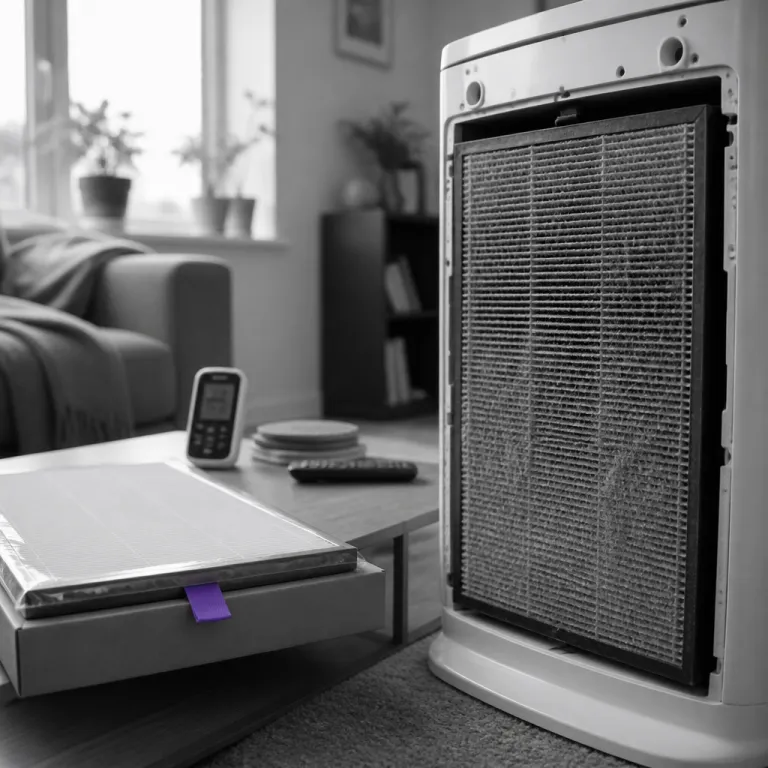
How CADR is measured in the lab and why it looks so good
The clean air delivery rate, or CADR rating, was created to compare air purifiers using a standardized test. In the official AHAM AC-1 protocol, a single air cleaner runs in a sealed 12 square metre room with a volume of about 28 cubic metres (roughly 1,000 cubic feet), and technicians inject a known amount of dust, pollen, or smoke before measuring how quickly particles disappear. That controlled protocol produces a single CADR rating in cubic feet per minute, or CFM, that looks reassuringly precise on the box.
During this AHAM test, the air delivery is measured over just 20 minutes, which captures short term performance rather than the long term behaviour you experience in a real living room. The CADR clean value is calculated as the product of the purifier airflow in CFM and the efficiency of its filter at removing particles of specific microns, so a higher CADR always reflects either more airflow, better filtration, or both. Because the room is empty, with no sofas, rugs, or books to trap and re release particles, the decay curve of indoor air pollution is steeper than in a furnished home.
Manufacturers then publish separate CADR ratings for dust, pollen, and smoke, and many highlight the highest number as proof of superior performance. That marketing choice can mislead allergy sufferers who assume that a high smoke CADR automatically guarantees better air quality for fine dust or pet dander in a real room. When you read a product sheet, remember that every CADR rating comes from this idealized test room size, not from a cluttered open plan flat with doors opening and closing all evening.
Key takeaway: CADR is a useful, standardized benchmark, but it reflects short tests in a bare, sealed chamber rather than the messier conditions in your actual home.
What CADR really tells you about clean air
At its core, CADR is a measure of how much clean air an air purifier can deliver each minute, after accounting for the fraction of particles the filter actually captures. A purifier with a high CADR rating for dust will usually clear airborne particles between about 0.1 and 10 microns faster than a weaker competitor, assuming both run in the same sealed room. For someone with asthma or seasonal allergies, that higher CADR can translate into fewer particles reaching your lungs during a pollen spike or a neighbour’s wood smoke episode.
However, CADR ratings do not directly describe noise, energy use, or long term filter performance, so a high CADR air purifier might still be too loud for a bedroom. The AHAM test also ignores gases and odours, which depend more on the amount and quality of activated carbon in the filter than on the CFM CADR for particles. When you compare air purifiers, treat CADR as one pillar of performance, alongside filter type, noise at different fan speeds, and the real room size where you will actually use the device.
Because CADR is expressed in cubic feet per minute, you can convert it into air changes per hour, or ACH, by multiplying by 60 and dividing by your room volume. That simple calculation lets you translate a single CADR rating into a practical estimate of how often the purifier will replace the air in your bedroom or living room. For allergy control, many specialists recommend aiming for at least four to five air changes per hour, which usually requires a higher CADR than the minimum suggested on the box.
Key takeaway: Think of CADR as “clean airflow per minute” and combine it with noise, filter type, and room volume to judge whether a purifier will actually meet your comfort and health goals.
Why CADR rating real world performance drops in a furnished home
Once you move an air purifier from the AHAM chamber into a real living room, the effective clean air delivery almost always falls. University field studies that track indoor air quality in occupied homes consistently find that the effective air changes per hour reach only about 60 to 70 percent of the theoretical value predicted from the lab CADR. That gap explains why a purifier that looks powerful on paper can feel underwhelming when you still wake up congested in a supposedly clean bedroom.
Furniture is one of the main culprits, because sofas, curtains, carpets, and books all act as both sinks and sources for particles. During the first minutes of operation, the purifier pulls dust and smoke particles from the air, but many of those particles are simultaneously settling into fabrics or hiding in cracks, only to be resuspended later by footsteps or a closing door. This constant exchange between surfaces and indoor air slows the apparent decay of particles, so the effective CADR clean rate in your room is lower than the purifier CADR measured in the empty test chamber.
Air leakage further erodes real world CADR, especially in older homes or flats with shared hallways. A door that does not seal tightly can let polluted air seep in from kitchens, garages, or neighbours, offsetting part of the clean air delivery rate your purifier works to provide. In practice, even a high CADR unit may lose 20 to 30 percent of its theoretical advantage if your room size is connected to a busy corridor or an open plan living area with frequent traffic.
Key takeaway: Expect a substantial drop between the CADR on the label and the cleaning rate you experience in a lived in, slightly leaky room full of furniture and fabrics.
How room layout and open plan spaces change the numbers
Room geometry also matters, because the AHAM test assumes a simple rectangular room with uniform mixing, while real homes have alcoves, hallways, and partial walls. In an open plan living and dining area, the effective room size can double or triple compared with a compact bedroom, stretching the same air delivery over far more cubic feet. That larger volume means fewer changes per hour at the same CFM, so CADR rating real world performance again lands well below the optimistic figure on the box.
Obstacles between the air purifier and the rest of the room, such as tall furniture or half walls, can create dead zones where particles linger. If the purifier sits in a corner behind a sofa, the local air may be very clean, but the far side of the room can remain dusty or smoky for much longer, which reduces the practical benefit for your lungs. To get closer to the advertised CADR ratings, you need to place the unit where its airflow can circulate freely, ideally with at least 30 centimetres of clearance on all sides.
For whole home comfort, some readers consider pairing a portable purifier with their heating or cooling system, and that choice changes how you interpret CADR rating real world performance. When you integrate filtration with an AC unit or central fan, the relevant metric becomes the combined air delivery of the system, not just the standalone purifier CFM. If you are exploring that route, a detailed guide on how to choose an air purifier for your AC unit and whole house comfort can help you balance CADR, duct airflow, and filter resistance without sacrificing air quality.
Key takeaway: Layout and placement can easily halve or double how much of your home actually benefits from a purifier’s rated clean air delivery.
From lab CADR to your room: a simple correction rule
Because the gap between lab CADR and CADR rating real world performance is so consistent, you can apply a simple correction when sizing a purifier. Take the clean air delivery rate printed on the box, then multiply it by 0.6 or 0.7 to estimate the effective CADR you will get in a furnished room with some leakage. That adjusted figure usually matches field measurements where the actual air changes per hour land at about two thirds of the theoretical value.
Next, calculate your room volume by multiplying floor area by ceiling height, then convert that volume into cubic feet if the CADR rating is given in CFM. Divide the adjusted CADR by the room volume and multiply by 60 to estimate how many changes per hour the purifier will realistically deliver in that specific room size. For allergy control in a bedroom, aim for at least four effective air changes per hour, which often means choosing a model with a higher CADR than the manufacturer’s suggested maximum room size.
A practical shortcut is to multiply your room area in square metres by about 1.5 to get a target CADR in cubic metres per hour, then convert if needed to CFM. That rule of thumb already bakes in the 30 to 40 percent loss between the AHAM test and CADR rating real world performance in a lived in space. When comparing purifiers, prioritise models whose dust CADR and smoke CADR both meet or exceed that target, rather than relying on a single headline rating.
Worked example: Suppose a purifier is rated at 200 CFM and your bedroom is 12 m² with a 2.4 m ceiling (about 1,000 cubic feet). Adjusting for real conditions, 200 × 0.7 ≈ 140 CFM. ACH ≈ (140 × 60) ÷ 1,000 = 8.4 air changes per hour, which comfortably exceeds the 4–5 ACH many guidelines recommend for allergy relief.
Why smoke CADR can be more misleading than dust CADR
Many boxes highlight smoke CADR because smoke particles are tiny and dramatic, but that number can be more variable than the dust CADR. In the AHAM test, the smoke used has a particular distribution of particle sizes in the sub micron range, while real world smoke from cooking, candles, or wildfires can contain a broader mix of particles and gases. As a result, a purifier with an impressive smoke CADR in the lab may not deliver equally strong performance against the complex mixture of particles and volatile compounds in your actual indoor air.
Dust CADR, by contrast, tends to track more closely with everyday allergy triggers such as skin flakes, textile fibres, and pollen fragments, which mostly fall in the 0.3 to 10 microns range. If you suffer from rhinitis or mild asthma, prioritising a higher dust CADR and a robust HEPA filter often yields more consistent relief than chasing the absolute highest smoke CADR. For odours and gases, focus on the mass and quality of activated carbon in the filter rather than on any particle based CADR rating.
Independent testing labs sometimes publish their own CADR like ratings using different protocols, which explains why reviews can disagree about the same purifier. Methodology choices such as test pollutants, room size, mixing fans, and measurement instruments all influence the apparent clean air delivery rate. A detailed analysis of why independent air purifier reviews disagree shows how these five methodology choices can shift verdicts, reinforcing the need to interpret any single CADR number with caution.
Key takeaway: Use corrected CADR as a sizing tool, lean on dust CADR for everyday allergies, and treat smoke CADR and third party scores as supporting evidence rather than absolute truth.
Filters, particles, and what CADR leaves out
CADR rating real world performance focuses on how quickly a purifier reduces airborne particles, but it does not describe how the filter ages. Over months of use, a HEPA filter gradually loads with dust and other particles, which can reduce airflow and slightly lower the effective CADR even if the filtration efficiency remains high. That slow decline means your purifier’s clean air delivery rate six months after installation may be lower than the fresh out of the box rating.
Particle size also shapes performance, because filters capture different microns through a mix of interception, impaction, and diffusion. The AHAM test uses standardised dust and smoke, yet real indoor air contains a shifting blend of pet dander, outdoor soot, cooking aerosols, and skin flakes, each with its own size distribution. A purifier optimised for sub micron particles may excel against wildfire smoke but perform less dramatically against larger coarse dust that settles quickly onto surfaces.
Gases and odours sit almost entirely outside the CADR framework, even though they strongly influence perceived air quality in a home. Activated carbon filters can adsorb many volatile organic compounds from paints, cleaning products, and cooking, but their capacity is finite and rarely captured in a simple rating. When you evaluate air purifiers, look beyond CADR to the total filter package, including pre filters for hair and lint, HEPA media for particles, and carbon for gases, because only that combination reflects the full spectrum of indoor air challenges.
Key takeaway: CADR tells you how fast a purifier scrubs particles from the air, but only the full filter stack and its maintenance schedule reveal how well it will handle real pollutants over time.
Noise, fan speed, and the hidden side of performance
Another blind spot of CADR rating real world performance is that the official number usually corresponds to the highest fan speed, which many people find too loud for continuous use. If you run your air purifier at a lower setting overnight to sleep comfortably, the actual air delivery can drop by half or more compared with the maximum CFM. That trade off between noise and clean air means the practical CADR in your bedroom at night is often far below the value printed on the box.
Manufacturers often publish optimistic decibel ratings measured in favourable conditions, which can understate the intrusive character of fan noise in a quiet room. Independent reviewers who measure noise and airflow together at each fan speed provide a more realistic picture of CADR rating real world performance across the settings you will actually use. A detailed guide on how honest reviewers test air purifier fan noise explains why simple decibel specs almost always fail to capture the full acoustic impact.
For allergy sufferers, the goal is to find a balance where the purifier delivers enough clean air to maintain good indoor air quality without disrupting sleep or conversation. That usually means choosing a model with a higher CADR than you strictly need, then running it at a medium setting that still achieves your target air changes per hour. By oversizing slightly, you compensate for the inevitable losses from furniture, leakage, and lower fan speeds while keeping the acoustic footprint acceptable.
Key takeaway: Size up so you can run the purifier quieter; the official CADR assumes max fan speed, but your nose and ears will prefer a strong unit ticking along on medium.
Practical buying guide: matching CADR to your space and symptoms
When you shop for an air purifier, start by defining the room where you most need relief, usually the bedroom for someone with allergies or mild asthma. Measure the length, width, and height to calculate the volume, then decide how many air changes per hour you want, with four to five as a solid target for symptom reduction. From there, work backwards to a required clean air delivery rate, then divide by 0.6 or 0.7 to account for the typical 30 to 40 percent drop between lab CADR and CADR rating real world performance.
Once you have that adjusted target, compare purifiers not only on their dust CADR and smoke CADR, but also on filter design, noise levels, and running costs. Look for a sealed HEPA filter rated to capture at least 99.97 percent of particles around 0.3 microns, paired with a meaningful layer of activated carbon if odours or traffic fumes bother you. Check replacement filter prices and recommended changes per year, because a purifier with a slightly lower CADR but cheaper filters can deliver better long term value and more consistent indoor air quality.
Placement is the final lever you control, and it can make or break CADR rating real world performance in your home. Position the purifier where airflow is not blocked by furniture, ideally near the main source of pollution or close to your breathing zone if you spend long hours in one spot. Avoid tucking a high CADR unit into a corner behind a bed or sofa, because that effectively shrinks the portion of the room that benefits from the clean air delivery rate you are paying for.
Key takeaway: Size for your real room volume, budget for filters, and place the unit in the open; those three decisions matter more than chasing the single biggest CADR number on the shelf.
Why independent tests matter more than box claims
Because the AHAM protocol is standardised yet idealised, independent tests in real rooms provide crucial context for allergy sufferers trying to interpret CADR rating real world performance. Reviewers who measure particle decay in furnished bedrooms and living rooms, while doors open and close and people move around, often report 30 to 50 percent lower effective CADR than the official rating. Those field results align with academic studies showing that the effective ACH in a furnished living room averages only 60 to 70 percent of the theoretical value derived from lab CADR.
Different review sites sometimes reach conflicting verdicts on the same purifier because they make different methodological choices about room size, test pollutants, and measurement instruments. A detailed explanation of why independent air purifier reviews disagree outlines five key methodology choices that can swing results, from whether they use continuous pollution sources to how they define the end point of a test. When you read reviews, prioritise those that clearly explain their test setup, room volume, and baseline air quality, because that transparency signals a more trustworthy assessment.
For your own home, you can perform a simple sanity check by watching how quickly visible dust on dark furniture declines over several days of continuous purifier use at a steady fan speed. If you still see heavy settling despite a supposedly high CADR, your real world performance is probably closer to half the box rating, and you may need either a larger unit or a second purifier for an open plan space. Treat the CADR number as a starting point, then refine your expectations based on how your nose, lungs, and eyes feel after a few weeks of daily use.
Key takeaway: Trust transparent, real room tests—and your own symptoms—more than glossy packaging when deciding whether a purifier is doing its job.
FAQ
How much lower is CADR rating real world performance than the box value ?
Field measurements in furnished homes typically show that CADR rating real world performance is about 30 to 50 percent lower than the official lab rating. Furniture, air leakage, and continuous pollution sources all slow the rate at which particles leave the air. As a rule of thumb, multiply the box CADR by 0.6 to 0.7 to estimate what you will actually get.
Is a higher CADR always better for allergies ?
A higher CADR usually means faster removal of airborne particles, which helps with allergies, but it is not the only factor. You also need a true HEPA filter, reasonable noise levels at the fan speed you will use, and enough activated carbon if odours or fumes trigger symptoms. For most bedrooms, a purifier that delivers at least four effective air changes per hour after adjusting for real world losses offers a good balance.
Should I trust smoke CADR or dust CADR more ?
Dust CADR often aligns better with everyday allergy triggers such as skin flakes, textile fibres, and pollen fragments. Smoke CADR can be more variable because real world smoke from cooking or wildfires contains a complex mix of particles and gases that differ from the standard test smoke. If you must choose, prioritise a strong dust CADR and a robust HEPA filter, then look at smoke CADR as a secondary indicator.
How do I size an air purifier for an open plan living room ?
For an open plan space, calculate the total floor area and ceiling height to get the full volume, then aim for at least four effective air changes per hour. Because CADR rating real world performance drops more in large, leaky spaces, choose a purifier with a significantly higher CADR than the manufacturer’s suggested maximum room size. In some cases, using two smaller units placed strategically can provide more even coverage than a single large purifier.
Does running the purifier on low speed make CADR meaningless ?
Running on low speed does not make CADR meaningless, but it does reduce the actual clean air delivery compared with the maximum rating. Many purifiers deliver only half or less of their rated CADR on quiet settings, so you need to oversize the unit if you plan to run it silently at night. Checking independent tests that measure airflow and noise at each fan speed helps you choose a model that still meets your air quality goals on the settings you will actually use.