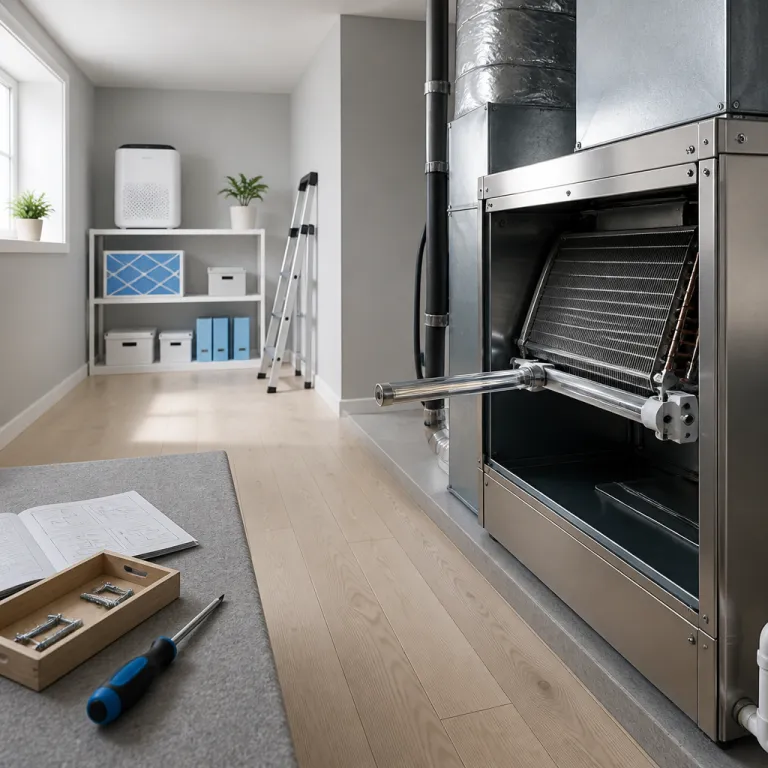

How UV light for your AC unit actually works
Ultraviolet or UVC light for an AC unit targets microbes directly. When the light shines on passing air and on the evaporator coil surface, it damages the DNA or RNA of bacteria, viruses, and mold so they cannot reproduce. This process supports cleaner air without adding chemicals to your indoor air.
In a typical HVAC system, a UV light is installed near the coil or inside the duct to treat both the coil and the moving air. The goal is to keep the evaporator coil free from biofilm and mold while the sanitizing lights also reduce airborne microorganisms in the duct air stream. Because the light operates continuously, it offers regular sanitizing of the HVAC air that passes through the unit.
There are two main configurations of UV lights for HVAC systems. Coil sanitizing lights sit close to the commercial coil or residential coil and focus on preventing slime, mold, and organic buildup on that surface. Air sanitizing lights are placed in the duct air path so the UVC bulb can treat a larger volume of indoor air as it circulates through the air conditioning system.
Coil sanitizing versus air sanitizing lights in HVAC systems
Choosing UV light for an AC unit starts with deciding what you want to sanitize. Coil sanitizing lights are mounted just above or beside the evaporator coil, where condensation and dust create ideal conditions for mold growth and biofilm. Air sanitizing lights are installed in the supply duct of the HVAC system so the light treats the air volume rather than only the coil surface.
For many homes, a coil sanitizing light offers strong value because a clean coil improves air quality and also helps the system maintain its original efficiency. When the commercial coil or residential coil stays free of organic buildup, the HVAC air can move more easily and the air conditioning system does not need to work as hard. In larger buildings with complex HVAC systems, combining coil sanitizing with in duct sanitizing lights can be justified to protect both the equipment and the indoor air in high occupancy zones.
People who already use an air purifier in main rooms often ask whether a light HVAC installation is still useful. The answer is that a UV light in the HVAC unit complements portable air purifier devices by treating the hidden surfaces and duct air that room units never reach, while the purifiers handle room level particles and gases. For a deeper explanation of how a UV bulb interacts with filters and other technologies, see this detailed guide on the role of UV lamp light bulbs in air purifiers at this analysis of UV lamps in purifiers.
Health, air quality, and mold control benefits
People usually consider UV light for an AC unit when they are worried about mold or allergies. A properly sized UVC bulb near the evaporator coil can significantly reduce mold colonies on that surface, which in turn limits the spread of spores through the HVAC air. Cleaner coils and ducts support better indoor air quality, especially for occupants with asthma or chronic sinus issues.
UV systems do not replace filtration, but they add another layer of protection in the HVAC system. Filters capture particles such as dust and pollen, while sanitizing lights target the microbes that survive or grow on damp surfaces inside the unit. When both tools are used together, the result is cleaner air that feels fresher and often smells less musty in rooms served by the air conditioning system.
For households that already invested in a high efficiency air purifier, a UV light HVAC upgrade can still be worthwhile. The air purifier handles room level pollutants, while the HVAC systems with UV support cleaner indoor air throughout the entire building. This whole system approach is especially valuable in humid climates where mold on coils and in duct air is a recurring maintenance and health problem.
Costs, regular price, and how to judge value
When evaluating UV light for an AC unit, many buyers focus first on price. A basic coil sanitizing light installation for a single residential unit often has a regular price that includes both the UVC bulb and the light installation labour. Some contractors advertise a lower unit price but then add extra fees for brackets, wiring, or difficult access to the HVAC system.
It is more useful to compare the full sale price or regular price including installation, replacement bulbs, and expected energy impact over several years. A quality UV light HVAC kit with a durable bulb and proper safety housing may cost more upfront, but it can protect the evaporator coil and duct air surfaces long enough to offset that difference through reduced cleaning and better efficiency. In many regions, homeowners can expect a typical installed price in the range of about $350 to $750 for a single residential system, with most jobs taking one to three hours depending on access and electrical work. When you see a price sale or a temporary sale price, check whether the offer still includes professional installation and a warranty on both the light and the HVAC air equipment.
Commercial buyers face a different calculation because they may need multiple lights for several HVAC systems. In that case, the unit price of each light, the total sale price for the project, and the cost of shutting down the air conditioning system for installation all matter. Facility managers should also consider the value of improved indoor air for tenants or customers, which can be harder to quantify but is central to the long term return on investment.
Installation, safety, and maintenance of UV lights
Installing UV light for an AC unit is not a casual do it yourself project. The UVC light can damage eyes and skin, and incorrect light installation can also harm plastic parts or wiring inside the HVAC unit. For these reasons, most manufacturers and HVAC professionals recommend that only trained technicians handle the installation and any later adjustments.
During installation, the technician chooses a position that maximizes exposure of the evaporator coil and nearby duct air while shielding occupants from direct light. They also verify that the HVAC system materials near the bulb can tolerate long term UVC exposure without cracking or discoloration. In commercial systems, engineers sometimes specify UV resistant commercial coil coatings or protective baffles to balance sanitizing power with equipment longevity.
Maintenance is relatively simple but must be regular to preserve performance and air quality. The UVC bulb output declines over time, so most manufacturers recommend replacement every twelve to eighteen months even if the light still appears to be on. At each service visit, the technician should also inspect the coil, the duct surfaces, and the air conditioning system controls to confirm that the sanitizing lights are operating safely and effectively.
How UV lights compare with filters and portable air purifiers
People often ask whether UV light for an AC unit can replace filters or a portable air purifier. The short answer is no, because each technology targets different contaminants in the air and on surfaces. Filters remove particles such as dust and smoke, while UVC light focuses on living microorganisms in the HVAC air and on the coil.
In a well designed HVAC system, you will usually see a layered approach that combines mechanical filtration, UV sanitizing lights, and sometimes dedicated room air purifier units. This combination helps control both particulate pollution and biological growth on the evaporator coil and in the duct air, which is especially important in buildings with limited natural ventilation. For people who want data driven insight into how well their cleaner air strategy is working, tools such as a PM2.5 sensor can reveal gaps that the AC unit display never shows, as explained in this guide to what a 90 dollar PM2.5 sensor tells you that your purifier display does not at this PM2.5 sensor comparison.
Portable air purifiers remain valuable even when a UV light HVAC upgrade is installed. They can be placed in bedrooms or offices where people spend long hours, adding another layer of filtration and sometimes their own internal UVC light for localized sanitizing. When all these systems work together, the result is more stable indoor air quality across seasons and changing outdoor air conditions.
Choosing replacement UV bulbs and planning long term upkeep
Once you install UV light for an AC unit, the next challenge is managing replacement bulbs. Every UVC bulb has a rated life in hours, and its output slowly declines even if the light still appears bright to the human eye. To maintain consistent air quality and coil sanitizing performance, it is wise to schedule bulb changes before the end of that rated life.
When comparing replacement bulbs, avoid choosing only by the lowest unit price or the most aggressive price sale. A quality bulb from the original manufacturer or a reputable supplier will match the wavelength, output, and physical size specified for your HVAC system, which protects both the coil and the duct air surfaces. Common examples include 254 nanometre UVC lamps such as 18 inch single ended bulbs for residential air handlers or 36 inch double ended bulbs for larger commercial coil sections, but you should always match the exact part number listed in your equipment manual.
Good record keeping is part of responsible indoor air management. Note the regular price and any sale price for each bulb purchase, the installation date, and the expected replacement date for every light in the HVAC air network. This simple log helps ensure that your air conditioning system, your air purifier strategy, and your sanitizing lights continue to work together to provide cleaner air throughout the life of the unit.
Key statistics on UV lights and indoor air quality
- Studies on HVAC coil irradiation have reported reductions of up to around 90 percent in microbial growth on treated evaporator coil surfaces compared with untreated coils, which directly supports better airflow and more stable cooling performance (for example, research published in ASHRAE Transactions on UVGI for coils, such as Levetin et al., 2001, and Kowalski and Bahnfleth, 2000).
- Field research in commercial buildings has shown that installing UVC lights in air handling units can reduce reported respiratory symptoms among occupants by roughly 20 to 40 percent, although results vary depending on baseline air quality and maintenance practices (as summarized in peer reviewed indoor air quality studies on UVGI in offices, including work by Menzies et al. in The Lancet and related ASHRAE literature).
- Energy audits indicate that dirty coils can increase air conditioning system energy use by 5 to 15 percent, so keeping the coil clean with UV assistance and regular maintenance can contribute to lower electricity consumption over the life of the HVAC system (figures consistent with ASHRAE guidance on coil fouling and efficiency in documents such as ASHRAE Handbook–HVAC Systems and Equipment).
- Indoor air quality assessments often find that people spend more than 85 percent of their time indoors, which means that improvements in HVAC air cleanliness and duct air hygiene can have a larger impact on exposure than many outdoor focused interventions (a statistic frequently cited by the U.S. Environmental Protection Agency and public health agencies in exposure time use surveys).
- Manufacturer spec sheets and CDC and ASHRAE guidance on ultraviolet germicidal irradiation (UVGI) note that most HVAC UVC bulbs are rated for about 9,000 hours of operation, or roughly one year of continuous use, which aligns with the common recommendation to replace lamps every twelve to eighteen months (for example, CDC guidelines on environmental infection control and ASHRAE position documents on airborne infectious disease).
FAQ: UV light for AC units and air purifiers
Does UV light in an AC unit kill all germs in the air
UV light in an AC unit can inactivate many bacteria, viruses, and mold spores that pass close enough to the bulb for a sufficient time. However, it does not sterilize the entire HVAC system or guarantee that every microbe in the indoor air is neutralized. That is why UV is best used together with good filtration and regular maintenance.
Is a UV light HVAC upgrade safe for people and pets
A properly installed UV light HVAC system is designed so that no direct UVC light escapes into occupied rooms. The bulb is enclosed inside the air handler or duct, and access panels are sealed to prevent leaks. As long as only trained technicians open the unit and follow safety procedures, the risk to people and pets remains very low.
How often should I replace the UVC bulb in my AC unit
Most manufacturers recommend replacing the UVC bulb every twelve to eighteen months, even if it still appears to be on. The invisible germicidal output declines over time, which reduces sanitizing effectiveness on the coil and in the duct air. Checking the product manual or consulting your HVAC technician will give you the exact interval for your model.
Can UV light for an AC unit replace a portable air purifier
UV light for an AC unit cannot fully replace a portable air purifier because the two tools serve different roles. The UV bulb mainly protects the evaporator coil and reduces microbes in the HVAC air stream, while a room air purifier captures fine particles and sometimes gases directly where people breathe. Using both together offers broader protection for indoor air quality.
Will a UV light reduce odors from my air conditioning system
A UV light can help reduce musty odors that come from mold or biofilm on the coil and in the ductwork. By limiting microbial growth, the sanitizing lights cut down on the compounds that cause those smells. However, odors from sources such as cooking, smoke, or chemicals still require filtration, ventilation, or source control beyond the HVAC system.