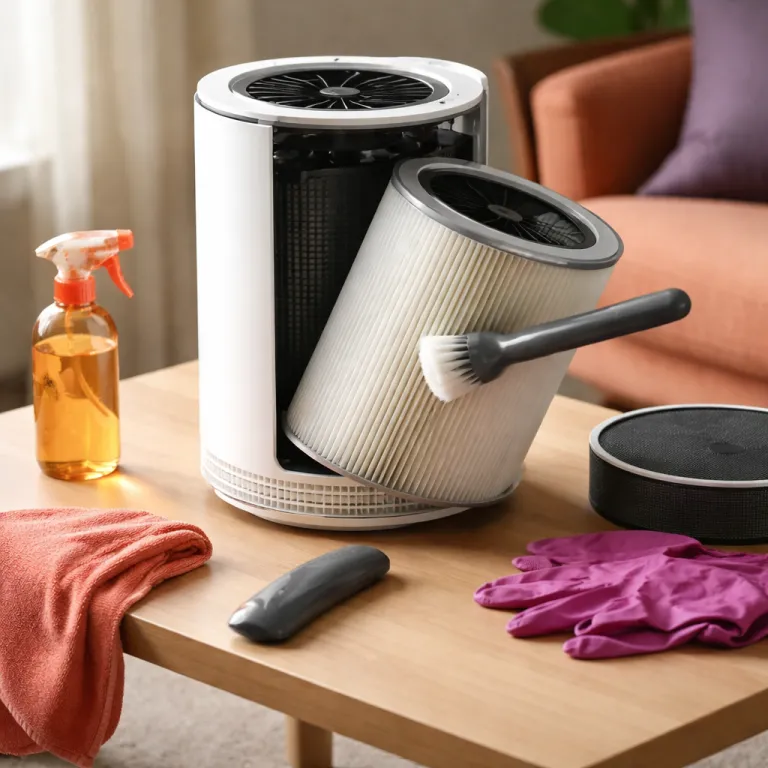

Why spring cleaning your air purifier matters for your baby
When pollen season collides with heating dust, your air purifier quietly struggles. A clogged pre filter can cut the clean air flow by roughly 40 to 60 percent, long before any warning light appears on the purifier or on its digital air quality display, according to typical Association of Home Appliance Manufacturers (AHAM) clean air delivery rate (CADR) guidance and related airflow tests. For a new parent relying on air purifiers to protect a baby from pet dander and dust, that hidden loss of performance turns spring cleaning into essential purifier maintenance rather than a cosmetic chore.
Think about how quickly dust and lint cake inside a dryer vent or around a washing machine pump filter, then imagine the same build up inside the intake grille of your air purifier. Indoor air carries microscopic dust, pet hair fragments, and fibers that stick to the filter frame, the vent edges, and every corner of the housing over time. Without regular cleaning and replacing filters on schedule, even premium purifiers with strong independent lab ratings will recirculate particles instead of delivering truly fresh air into the nursery.
Spring is the ideal moment for a full air purifier spring cleaning maintenance routine because the heating season has loaded your home with extra dust and the allergy season is just starting. A focused 30 minute maintenance session can restore a large share of the original CADR, especially if you remove the pre filter, clean the intake, and check every filter layer in one pass. This seasonal reset also lets you audit purifier placement, indoor air humidity, and your broader cleaning products routine so that the purifier works with your home habits rather than fighting against them.
Quick spring cleaning checklist for your baby’s air purifier
- Unplug the unit and vacuum the exterior vents and control panel.
- Remove, clean, or replace the pre filter as recommended by the manual.
- Inspect the HEPA cartridge for dark streaks, clumps, or musty odors.
- Check the carbon filter for lingering smells from pets, cooking, or smoke.
- Confirm that gaskets and seals sit flat with no gaps or cracks.
- Reset sensors if available and verify purifier placement in the nursery.
Step 1 and 2: exterior cleaning and pre filter reset
Start your spring cleaning by unplugging the air purifier and moving it away from the wall so you can reach every vent and corner. Use a soft brush attachment on your vacuum to clean the intake grille, the top exhaust, and the control panel, because this gentle mechanical cleaning removes loose dust without scratching the plastic or pushing particles deeper into the filters. Wipe the exterior with a slightly damp microfiber cloth and mild cleaning products, then dry it carefully so no moisture drips toward the main HEPA filter or the carbon layer.
Next, open the filter compartment, remove the pre filter, and tap it gently outdoors or over a bin to release the heaviest dust and pet dander. Many pre filters are washable, so check the manual before you rinse anything under a tap or near a washer or washing machine drain pump, because some brands only tolerate vacuum cleaning and will lose shape if soaked for a long time. If the mesh looks torn, clogged, or permanently grey after you clean it, treat this as a sign that replacing filters early will protect the more expensive HEPA cartridge and keep air quality stable through the whole spring.
Manufacturers often base purifier maintenance schedules on average homes, but a baby’s room with pets or nearby traffic rarely matches those assumptions. In high pollen or high dust environments, pre filters may need cleaning 30 to 50 percent more often than typical usage charts suggest, especially during spring cleaning when windows are opened more frequently. While opening windows briefly can flush stale indoor air and bring in fresh air, it also pulls in pollen and pet particles, so pair that habit with a strict pre filter routine to avoid overloading the main filters too quickly.
Step 3 and 4: HEPA, carbon filters and real world replacement cues
Once the pre filter is clean, slide out the HEPA filter and inspect it under bright light without touching the pleats. A uniform light grey color across the filter surface is normal and simply shows that the purifier has been trapping fine air pollution, but dark streaks, visible dust clumps, or a musty smell suggest that replacing filters now will restore clean air delivery before allergy peaks. If you are unsure which replacement filter model to choose, consult independent testing or a detailed guide on how to choose the right filter for your air purifier rather than relying only on marketing claims.
Carbon filters work differently, because they target gases and odors rather than visible dust, so you need a more tactile test. Hold the carbon filter close and sniff gently; if pet dander smells, cooking fumes, or smoke linger even after you clean the room, the carbon media is likely saturated and no longer improving indoor air quality. Homes with smokers, heavy cooking, or multiple pets often need carbon filters replaced much earlier than the time intervals that standard maintenance tables or reports recommend, especially in spring when humidity rises and can accelerate odor adsorption fatigue.
For compact air purifiers or tabletop purifiers in a nursery, follow the same inspection logic but be extra careful with fragile seals and gaskets around the filters. A damaged gasket lets unfiltered air bypass the HEPA media, which quietly undermines purifier maintenance efforts even if you clean the exterior and change filters on time. If you notice persistent odors or fine dust on nearby furniture despite regular cleaning, consider a detailed maintenance guide focused on effortlessly maintaining a tabletop air purifier to double check that every component is seated correctly and that the airflow path is fully sealed.
Typical replacement intervals for nursery air purifiers
| Component | Average home | Home with pets or high pollen |
|---|---|---|
| Pre filter | Clean every 1–3 months | Clean every 2–4 weeks |
| HEPA filter | Replace every 6–12 months | Replace every 4–9 months |
| Carbon filter | Replace every 3–6 months | Replace every 2–4 months |
Step 5: sensors, placement, humidity and the rest of the home
Modern air purifiers often include particle sensors that adjust fan speed automatically, but those sensors drift over time and need occasional recalibration. After your air purifier spring cleaning maintenance routine, reset the sensor according to the manual, then run the purifier on high for several minutes in a relatively clean room to give it a fresh baseline for indoor air readings. If the sensor sits too close to a wall, a floor, or a dusty vent, it may misread local dust and trigger the wrong fan speed, so treat placement as part of purifier maintenance rather than an afterthought.
Position the purifier so that the main air intake faces the center of the room, with at least 30 to 50 centimeters of clearance on all sides and no furniture blocking the vent. Avoid corners, behind curtains, or directly under a shelf, because these spots trap air and reduce the effective clean air delivery rate even when the filters are new and clean. For a baby’s room, aim the airflow so it circulates around the cot rather than blowing directly on the child, which balances comfort, noise, and air quality without creating drafts.
Finally, remember that the purifier is only one piece of your spring cleaning strategy for clean air. Check indoor humidity with a simple hygrometer and keep it between 30 and 50 percent, because over humid air can clog filters faster and encourage dust to stick to surfaces, while very dry air lets dust and pet dander stay airborne longer. Extend your maintenance mindset to the rest of the home by cleaning the dryer vent, inspecting the washing machine pump filter, and vacuuming vents with a brush attachment, since every place where dust can accumulate will eventually feed particles back into the air that your purifiers must remove again and again.

FAQ
How often should I perform a full spring cleaning on my air purifier?
A thorough air purifier spring cleaning maintenance routine once every spring is a good baseline for most homes. In households with pets, smokers, or high pollen exposure, repeat a lighter version every one to two months, focusing on pre filter cleaning and quick exterior dust removal. New parents may want to align this routine with other seasonal chores so the nursery air quality never drifts far from optimal.
When is it time to replace the HEPA and carbon filters?
HEPA filters typically last six to twelve months, but high dust or pet dander levels can shorten that time by 30 to 50 percent. Replace the HEPA filter when you see dark streaks, clumped dust, or notice that allergy symptoms worsen even though the purifier runs as usual. Carbon filters often need more frequent replacement in homes with strong cooking odors or smoke, especially if a sniff test shows that smells linger despite regular cleaning.
Is opening windows compatible with using an air purifier in spring?
Short periods of opening windows can help flush stale indoor air and bring in fresh air, even when you rely on air purifiers. During high pollen days, limit window time and run the purifier on a higher setting afterward to remove incoming particles quickly. In a baby’s room, prioritize comfort and stable temperature, using brief ventilation combined with consistent purifier maintenance to keep air quality balanced.
Do I really need to clean vents, the dryer, and the washing machine too?
Yes, because every dusty vent, clogged dryer filter, or neglected washing machine pump filter becomes a secondary source of airborne particles. When the dryer vent leaks lint or the drain pump area traps grime, those materials eventually dry, break apart, and re enter the indoor air that your purifier must handle. Treating the whole home as an air system, rather than focusing only on the purifier, gives your filters a fair chance to maintain clean air for your family.
What humidity level is best for my baby’s room and the purifier?
A relative humidity between 30 and 50 percent usually balances comfort, respiratory health, and filter longevity. Overly humid air encourages dust to clump on filters and inside vents, while very dry air keeps fine particles and pet dander suspended longer, forcing the purifier to work harder. Use a simple hygrometer to monitor levels and adjust with a humidifier or dehumidifier as needed, checking that no device blows directly into the purifier intake.