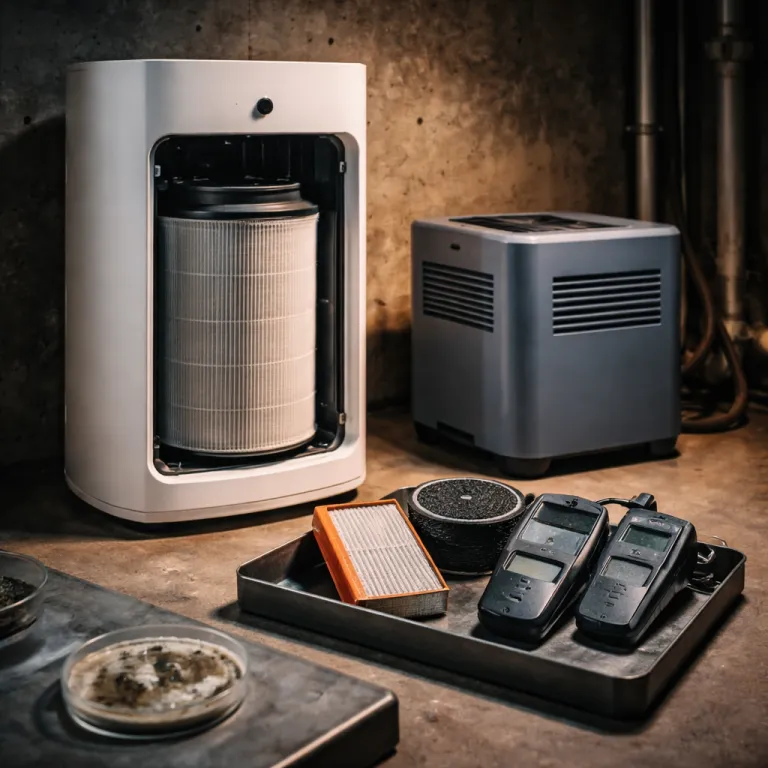
Why an air purifier for mold is only part of the solution
TL;DR for parents: A portable air purifier for mold helps by capturing airborne spores, but it cannot stop mold from growing on damp surfaces. To protect a baby or young child, combine a properly sized HEPA purifier with humidity control, thorough cleaning, and basic repairs.
Many parents buy an air purifier for mold and hope for overnight miracles. A well designed unit improves indoor air quality by trapping mold spores floating in the air, but it cannot stop new colonies from forming on wet walls, carpets, or window frames. To truly protect a baby or young child, you must pair portable purifiers with strict humidity control, regular cleaning, and basic building maintenance.
Mold is a living organism that needs moisture, organic material, and time to colonize surfaces. Spores drift through the air everywhere, so even the best air purifiers with HEPA filters cannot prevent contamination if a leak keeps feeding hidden mold behind furniture. Think of the purifier as a mask for your home’s lungs, while dehumidifiers, ventilation, and repairs act as the real treatment for the underlying problem.
For a new parent, this means the first step is not choosing between HEPA, carbon, or UV purifiers. The first step is checking humidity levels, looking for stains or musty smells, and deciding whether visible mold patches are small enough to handle safely. Only then does it make sense to compare the price, noise level, and particle removal performance of each air cleaning product.
Humidity, spores, and why mold keeps coming back
Humidity is the load bearing factor that decides whether mold spores stay harmless or start growing. Research and guidance from agencies such as the U.S. Environmental Protection Agency (EPA) and the Centers for Disease Control and Prevention (CDC) indicate that most indoor mold growth accelerates when relative humidity stays above about 60 percent for more than a month, while keeping it between 30 and 50 percent usually stops new colonies from forming (EPA; CDC indoor air guidance).
This is why a purifier alone never fixes a mold problem, no matter how advanced its filters or how smart its auto mode might be. To control humidity, you need both measurement and action in every large room where your child spends time. A simple digital hygrometer costs little and lets you track air quality and moisture near windows, wardrobes, or a compact purifier you might place in the nursery.
If readings stay high, a dehumidifier, better bathroom ventilation, and repairing roof or plumbing leaks become more urgent than buying another air purifier for mold. Once humidity is stable, mold issues become easier to manage because airborne spore concentrations drop faster. HEPA based air purifiers then capture mold spores before they settle on toys, bedding, or soft furnishings.
In this balanced setup, the purifier, the dehumidifier, and basic home maintenance work together to give your family the best air you can realistically achieve.
How HEPA, carbon, and UV technologies handle mold differently
When you compare air purifiers for mold, you are really comparing how different filters and technologies handle particles, gases, and microbes. A HEPA filter is designed to capture at least 99.97 percent of particles around 0.3 microns, which includes most mold spores that typically range from about 1 to 30 microns (HEPA standard EN 1822; aerosol filtration studies). This makes HEPA or true HEPA systems the backbone of any serious mold control strategy in a child’s bedroom or a family living area.
Activated carbon filters work very differently because they target gases and odors rather than solid particles. In a home with mold, activated carbon helps absorb musty smells and volatile organic compounds released by mold growth, but it does not remove the spores themselves from the air. For that reason, the best air purifiers for mold combine a HEPA filter for particle removal with a substantial activated carbon stage for odor control.
UV based purifiers use ultraviolet light to damage the DNA of microbes passing close to the lamp. In practice, standalone UV purifiers often have limited contact time and airflow, so their effect on mold spores in real homes is modest compared with a strong HEPA filter (CDC UVGI guidance; HVAC UV studies). UV can be more effective when integrated into HVAC systems, but even then it complements, rather than replaces, mechanical filters and regular duct cleaning as explained in guides about air purifier filtration ratings.
| Technology | What it targets | Strengths for mold | Limitations |
|---|---|---|---|
| HEPA / True HEPA | Fine particles and spores | Captures airborne mold spores efficiently | Does not remove mold growing on surfaces |
| Activated carbon | Gases and odors | Reduces musty smells and VOCs from mold | Cannot trap solid spores on its own |
| UV / UV-C | Microbes exposed to light | Can inactivate some spores and bacteria | Needs enough intensity and contact time to work well |
What HEPA does for mold, and what it cannot do
HEPA filters excel at trapping airborne mold spores before they reach your child’s lungs. A certified true HEPA filter in a well engineered room air cleaner can capture spores, fine particles, pet dander, and dust in a single pass. This improves measured air quality and often reduces allergy like symptoms such as sneezing or irritated eyes.
However, HEPA filters do not kill mold growing on damp drywall, window frames, or inside a bathroom cabinet. If you see visible mold patches larger than about one square metre, most public health agencies recommend calling a professional mold remediator rather than relying on air purifiers (EPA mold remediation guidance). The purifier will still help by reducing airborne mold spores during and after remediation, but it cannot replace physical removal of contaminated materials.
For small spots, you can clean surfaces safely while running an air purifier for mold nearby to capture disturbed spores. Always wear gloves and a mask, ventilate the area, and dispose of cleaning cloths promptly to avoid spreading mold fragments around the home. After cleaning, keep humidity in the 30 to 50 percent range so that any remaining spores cannot restart the problem.
Choosing between HEPA, carbon, and UV for a baby’s room
For a nursery or child’s bedroom, a HEPA based air purifier for mold with activated carbon is usually the most balanced choice. Look for air cleaners with a clear Clean Air Delivery Rate (CADR) in cubic feet per minute (CFM) that matches the size of your large room or smaller nursery, because underpowered units worsen mold issues by circulating air too slowly. As a rule of thumb, aim for at least four to five air changes per hour in the room where your baby sleeps (AHAM CADR interpretation).
Many parents compare compact room purifiers from different brands when planning a long term purchase. These models typically combine a pre filter for larger dust, a HEPA filter for fine particle removal, and an activated carbon layer for odors, which together handle most mold related concerns. When comparing price and features, pay attention to replacement filters cost per month and whether the purifier has a smart auto mode that adjusts fan speed based on real time air quality.
UV features in compact purifiers can sound reassuring but often add more marketing than measurable benefit. If you choose a purifier with UV, treat it as a secondary feature after HEPA and carbon, and still focus on humidity control and cleaning. For a deeper understanding of how different filtration technologies are used in practice, resources on filtration applications for air purifiers can help you interpret technical claims more calmly.
Noise level, smart controls, and real life usability
In a baby’s room, noise level matters almost as much as filtration performance. Many modern air purifiers publish dBA ratings so you can compare how loud they are on sleep mode or auto mode. Aim for a purifier that stays below about 30 dBA on its quietest setting if your child is sensitive to sound (acoustic comfort guidelines for bedrooms).
Smart features can genuinely help busy parents manage air quality without constant tinkering. A smart air purifier with sensors can track particle levels, adjust fan speed automatically, and send alerts when the filter or pre filter needs replacement, which prevents performance from degrading silently over time. Some products also integrate with home assistants, but the most important function remains reliable, consistent particle removal rather than fancy apps.
Usability also includes how easy it is to clean the exterior, vacuum the pre filter, and change the main filter without releasing a cloud of dust. Check whether the product design allows you to swap filters without touching the dirty surfaces directly, especially if you are pregnant or have asthma. A well designed purifier encourages regular maintenance, which keeps mold spores and other particles under control month after month.
Whole home strategy: pairing purifiers with humidity and HVAC care
An air purifier for mold works best as part of a whole home strategy rather than a standalone gadget. Start by mapping where your family spends the most time, such as the nursery, living room, and perhaps a home office, then decide which large room needs a dedicated purifier. In damp areas like basements or bathrooms, prioritize dehumidifiers, exhaust fans, and leak repairs before investing in extra air purifiers.
Your HVAC system can either support or sabotage your efforts to control mold spores. Dirty air handlers, clogged filters, and wet duct insulation create ideal conditions for mold growth, which then spreads spores through every vent in the house. Scheduling regular HVAC maintenance, using appropriately rated filters, and checking for condensation problems can reduce the burden on individual room purifiers.
When you do use central HVAC, a portable air purifier in key rooms still adds a valuable extra layer of protection. It captures mold spores, pet hair, and fine dust that bypass or overwhelm the main HVAC filter, especially during pollen season or after a renovation. For parents seeking quiet options that can run all night, curated lists of top quiet air purifiers can help you balance noise level, CADR performance, and price.
Source removal and when to call a professional
No purifier, however advanced, can compensate for an active leak or a chronically wet basement. If you see mold covering more than about one square metre, or if a musty smell persists despite good ventilation and a strong air purifier, it is time to consult a certified mold remediator. Professionals can assess hidden cavities, test for moisture inside walls, and remove contaminated materials safely while using industrial HEPA based mold control systems.
For smaller problems, you can often handle source removal yourself with careful cleaning and drying. Always fix the moisture source first, whether it is a dripping pipe, a roof leak, or poor bathroom ventilation that leaves condensation on tiles for hours. After repairs, run dehumidifiers and your air purifiers for several weeks to ensure both surfaces and air reach a stable, dry state.
Remember that mold by products can linger in soft furnishings, carpets, and curtains even after visible growth disappears. Washing textiles at high temperatures, discarding heavily contaminated items, and vacuuming with a HEPA equipped vacuum cleaner help reduce residual spores. Combined with a well maintained air purifier for mold, these steps give your child a cleaner, safer environment without relying on any single product as a magic fix.
Reading product specs: CADR, filters, and long term costs
When you compare different air purifiers, technical specifications can feel overwhelming, but a few numbers matter most. Clean Air Delivery Rate (CADR) is expressed in cubic feet per minute (CFM) and tells you how quickly a purifier can remove particles from a given room size, so higher CADR usually means faster particle removal. For mold spores and general air quality, focus on the smoke or fine particle CADR rating, because it reflects performance on small particles similar to spores (AHAM CADR test method).
CADR, air changes per hour (ACH), and room volume are closely linked. ACH is calculated by multiplying CADR by 60 and dividing by the room’s volume in cubic feet. For example, a purifier with a 200 CFM CADR in a 1,000 cubic foot nursery (about a 10 by 10 foot room with a 10 foot ceiling) delivers roughly 12 ACH, which exceeds the four to five air changes per hour often recommended by indoor air quality guidelines for effective particle reduction (indoor air engineering literature).
Filter design and replacement schedules strongly influence both effectiveness and long term price. A typical purifier for a family home uses a three stage system with a washable pre filter, a HEPA or true HEPA filter, and an activated carbon layer, and each stage plays a distinct role in handling mold and other pollutants. Check how often the manufacturer recommends changing each filter, usually every six to twelve months for HEPA media and three to six months for carbon, and calculate the yearly cost before making a purchase decision.
Balancing budget, performance, and family needs
For new parents, budget pressures are real, so it helps to separate marketing claims from essential features. A mid range air purifier for mold with a solid HEPA filter, a decent amount of activated carbon, and a quiet low fan speed often delivers better value than a premium model overloaded with rarely used smart options. Focus on core performance metrics like CADR, noise level, and filter replacement costs rather than chasing every new feature.
When comparing price between products, consider how many rooms you need to cover and whether a single large room purifier can serve multiple spaces. Sometimes two smaller air purifiers placed strategically near sleeping and play areas provide more consistent air quality than one oversized unit in a hallway. Also think about where you will store spare filters and how easy it is to order certified replacements, because running out at the wrong moment can leave your child unprotected during a mold flare up.
Ultimately, the best air solution for your family is the one you can maintain consistently. That means choosing a purifier whose filters you can afford, whose noise level your baby can sleep through, and whose controls you actually use. Combined with humidity control, cleaning, and timely repairs, this practical approach turns an air purifier for mold from a hopeful gadget into a reliable part of your home’s health strategy.
Statistics: key figures on mold, air quality, and purifiers
- Indoor mold spores typically range from about 1 to 30 microns in diameter, which places them well within the capture range of HEPA and true HEPA filters designed to trap at least 99.97 percent of 0.3 micron particles, as documented in filtration standards and peer reviewed aerosol studies (EN 1822; ASHRAE aerosol research).
- Most building and health authorities, including the EPA and CDC, recommend maintaining indoor relative humidity between 30 and 50 percent, because mold growth tends to accelerate once humidity stays above roughly 60 percent for extended periods (EPA mold guidance; CDC dampness and mold resources).
- Clean Air Delivery Rate (CADR) tests are often interpreted using around four to five air changes per hour, so choosing a purifier with a CADR matched to your room size is critical for effective particle removal (AHAM CADR interpretation documents).
- Many consumer air purifiers operate around 20 to 30 dBA on their lowest setting, which is comparable to a quiet bedroom at night and suitable for continuous use in a baby’s room according to common acoustic comfort guidelines (WHO night noise recommendations).
- Filter replacement intervals for home air purifiers commonly range from six to twelve months for HEPA filters and three to six months for activated carbon filters, depending on pollution levels and usage patterns, as noted in many manufacturer manuals and indoor air quality recommendations.
FAQ
Can an air purifier completely remove mold from my home ?
No, an air purifier for mold cannot remove existing mold growth from surfaces. It can capture airborne mold spores and improve air quality, but you still need to clean or remove contaminated materials and fix moisture problems. Think of the purifier as a support tool, not a standalone mold removal solution.
Is a HEPA filter enough to protect my baby from mold spores ?
A HEPA or true HEPA filter is very effective at capturing mold spores in the air your baby breathes. However, it must be combined with humidity control, regular cleaning, and prompt repair of leaks to prevent new mold growth. Without these measures, spores will keep finding damp surfaces to colonize despite the purifier.
Should I choose a purifier with UV light for mold problems ?
UV light can inactivate some microbes, but in small room purifiers its impact on mold is usually limited compared with a strong HEPA filter. If you buy a UV equipped purifier, treat UV as a secondary feature and still prioritize HEPA, activated carbon, and proper room sizing. For most families, a well designed HEPA and carbon purifier offers better value and more predictable results.
How do I size an air purifier for a nursery or large room ?
First measure the room’s floor area and ceiling height to calculate volume, then look for a purifier with a CADR rating that can provide at least four to five air changes per hour. Manufacturers often list recommended room sizes, but checking CADR in CFM and using the ACH formula gives a more objective comparison between products. When in doubt, slightly oversizing the purifier is safer than choosing an underpowered model.
How often should I change filters in an air purifier used for mold ?
Most HEPA filters need replacement every six to twelve months, while activated carbon filters may need changing every three to six months in homes with mold or strong odors. Always follow the manufacturer’s guidance and watch for signs like reduced airflow, persistent smells, or a dirty pre filter. Regular filter changes keep particle removal efficient and prevent the purifier from becoming a source of trapped pollutants.
One page checklist for parents
- Keep indoor humidity between 30–50% using hygrometers, dehumidifiers, and exhaust fans.
- Inspect walls, windows, carpets, and furniture regularly for stains, condensation, or musty smells.
- Choose a HEPA purifier with activated carbon and a CADR sized for at least 4–5 ACH in your nursery.
- Run the purifier continuously on a quiet setting in sleeping and play areas, not just during the day.
- Clean small mold spots safely, fix leaks immediately, and call professionals for areas larger than 1 m².
- Vacuum with a HEPA equipped vacuum, wash textiles in hot water, and replace heavily contaminated items.
- Change filters on schedule and note dates on a calendar or in a phone reminder so performance stays reliable.