
Why a true HEPA air purifier for mold matters in everyday rooms
Indoor air often carries more mold spores than people realize. A true HEPA air purifier for mold gives you a precise tool to trap those spores before they settle and fuel mold growth. Cleaner air means fewer airborne particles reaching your lungs and fewer colonies forming on damp surfaces.
When you bring a dedicated air purifier into a damp bedroom or basement room, you are adding a continuous barrier between mold sources and your breathing zone. In many consumer products, “true HEPA” refers to filters that meet a minimum efficiency of 99.97 percent at 0.3 micrometres, while higher HEPA classes such as H13 and H14 under EN 1822 and related standards are tested to even stricter capture rates for fine particles, including most mold spores and fragments. This level of filtration is especially important for anyone with asthma, allergies, or a history of sensitivity to poor indoor air quality.
Not every air purifier is equal when mold is the main concern. You need a certified air purifier that combines a true HEPA filter, a robust pre filter, and an effective activated carbon stage to handle both spores and musty odours. Models with a quality sensor and automatic regulation of fan speed in auto mode can react to sudden spikes in airborne contaminants, maintaining strong air protection with minimal energy use.
How HEPA filters, carbon stages, and CADR ratings work against mold spores
The heart of any true HEPA air purifier for mold is the HEPA filter itself. True HEPA filters are engineered to trap mold spores, pollen, dust, and other airborne particles through a dense maze of fibres. When air passes through this HEPA filter, spores collide with fibres and remain locked inside, instead of circulating back into your indoor air.
Before air reaches the main HEPA filters, a washable pre filter or disposable pre filter usually catches larger dust and hair. This step protects the more delicate HEPA filters from clogging too quickly, which preserves airflow and keeps the clean air delivery rate, or CADR, at a stable level. CADR is commonly reported in cubic feet per minute (CFM) and sometimes in cubic metres per hour (m³/h); a strong CADR rating for smoke and dust usually signals that the purifier can also move enough air to reduce mold spores effectively in a given room size.
Activated carbon stages add another layer of defence in a mold focused air purifier. While carbon does not trap mold spores themselves, it adsorbs the volatile organic compounds and musty odours associated with mold growth, making the air feel fresher and less oppressive. When you compare units tested to higher efficiency classifications, such as some portable dual HEPA H14 air filter systems assessed for clean air delivery and risk reduction from airborne transmission in independent laboratory studies, with more basic air purifiers, the difference in odour control and perceived air quality can be striking.
Choosing the right room size, CADR, and energy profile for mold control
Matching a true HEPA air purifier for mold to your room size is non negotiable. If the purifier is too small, mold spores will continue to circulate faster than the device can process the air. A properly sized air purifier should be able to cycle the full volume of indoor air in the target room at least four to five times per hour.
To judge this, look closely at the CADR figures for dust and smoke, which are often similar to the performance against mold spores. A higher CADR rating means the purifier can move more air, but you must compare that number to the cubic metres of your room to understand real world coverage. As a practical rule of thumb, you can estimate coverage by converting CADR in CFM to m³/h (multiply by about 1.7), then dividing by the desired air changes per hour, typically four to five, to approximate the maximum room volume, and finally adjusting for ceiling height and layout.
Energy use also matters when you plan to run an air purifier continuously for mold control. An Energy Star certified air purifier, as described in U.S. Environmental Protection Agency efficiency guidance, will typically consume less electricity per unit of clean air delivered, which keeps long term costs manageable. When combined with an intelligent auto mode that responds to the quality sensor, you get a balance of strong air cleaning performance, reduced noise, and lower energy demand.
Comparing popular brands: Levoit, Austin Air, and others for mold issues
Consumers searching for a true HEPA air purifier for mold often encounter a crowded marketplace. Levoit, Austin Air, and several other brands compete for attention on platforms such as Amazon, each claiming to offer the best air solution for mold spores. Sorting through these purifiers requires a focus on filter design, airflow, and independent certifications rather than marketing language.
The Levoit Core series, for example, combines a cylindrical HEPA filter with a pre filter and an activated carbon layer in a compact tower format. Many Levoit Core purifiers include a quality sensor and auto mode, which allows the device to increase fan speed when airborne particles rise, then slow down when the indoor air stabilizes. For small to medium room sizes, a Levoit air purifier can provide strong air quality improvements, especially when you replace filters on schedule and keep the washable pre filter free of dust.
Austin Air takes a different approach, using large, heavy filter canisters with substantial amounts of activated carbon and a deep bed of true HEPA media. These Austin Air purifiers are often chosen for severe allergy cases or homes with persistent mold growth, because the combination of carbon and HEPA filters can handle both odours and fine particles over long periods. While they may consume more energy and move air at higher CFM levels, their robust construction and certified performance under recognized test protocols, including third party CADR and filtration assessments, make them a serious option for people who want durable, long term mold defence.
Real world strategies: placing, running, and maintaining a purifier for mold
Owning a true HEPA air purifier for mold is only part of the solution. Where and how you operate the purifier determines whether it truly reduces mold spores and improves air quality. Placement, fan settings, and maintenance routines all influence the volume of clean air you actually breathe.
Position the air purifier in the room where you spend the most time, such as a bedroom or home office, and keep it away from walls or heavy furniture that block airflow. The intake and outlet need at least several tens of centimetres of clearance so that the purifier can circulate indoor air efficiently and reach its rated CADR performance. If your model offers auto mode linked to a quality sensor, leave that mode active during the day, then switch to a quieter fixed speed at night if noise becomes an issue.
Maintenance is equally critical for mold control. Replace the HEPA filter and activated carbon filters according to the manufacturer schedule, and clean or wash the pre filter regularly so that dust does not choke the system. Neglecting filters allows mold spores and other airborne particles to bypass clogged media, undermining the promise of clean air and wasting the energy the purifier consumes.
Beyond the device: integrating purifiers into a broader mold prevention plan
A true HEPA air purifier for mold should support, not replace, basic moisture control. Mold growth begins when spores land on damp materials, so you must address leaks, condensation, and high humidity alongside any purifier purchase. Without this, even the best air purifiers will only mask a deeper problem.
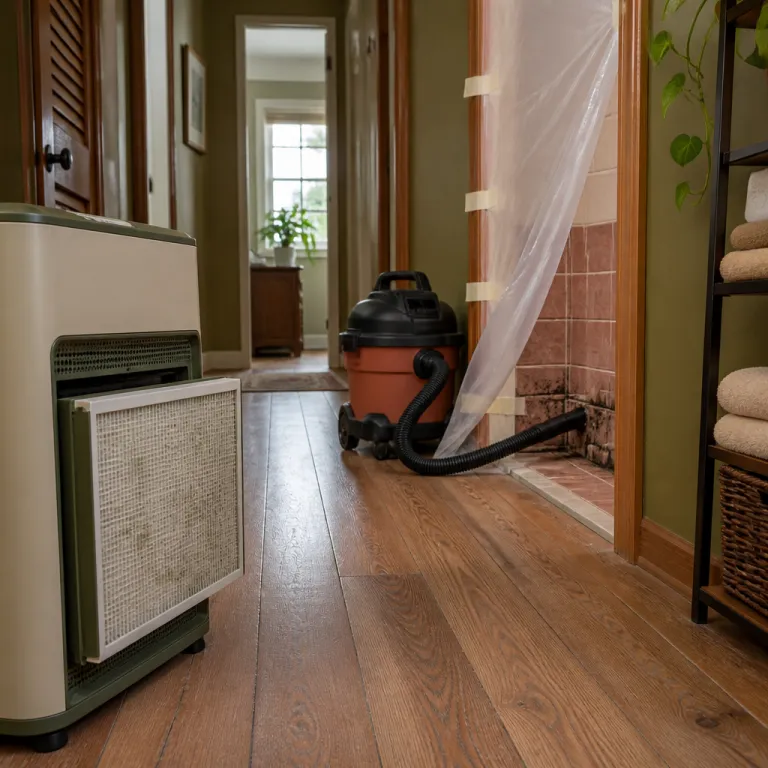
Start by measuring indoor air humidity and keeping it generally between forty and sixty percent, a range often recommended by public health and building science sources, including EPA summaries on indoor air quality, using dehumidifiers or improved ventilation where necessary. In bathrooms, basements, and kitchens, combine an air purifier with exhaust fans and regular cleaning so that mold spores have fewer places to settle and thrive. When you remove visible mold, use appropriate protective equipment and cleaning agents, then run the air purifier at a higher CFM setting for several hours to capture disturbed airborne particles.
For people working at desks or in small offices, a compact air purifier can quietly transform the immediate breathing zone. A desktop unit with a true HEPA filter, a small activated carbon stage, and a responsive quality sensor can maintain clean air around you even when the rest of the room is less controlled. Over time, this layered approach, combining structural fixes, ventilation, and targeted air purifiers, delivers a measurable reduction in mold spores and a noticeable improvement in how the air feels.
Key statistics on mold, indoor air, and HEPA purifiers
- In many homes, indoor air can contain roughly two to five times more pollutants than outdoor air, according to summaries from the United States Environmental Protection Agency, which underscores the value of using certified air purifiers with true HEPA filters.
- True HEPA filters are commonly defined in filtration standards as capturing at least 99.97 percent of particles with a diameter of 0.3 micrometres, while higher HEPA classes such as H13 and H14 under EN 1822 are tested at even more demanding efficiencies for fine aerosols, a size range that includes most mold spores and many other airborne allergens.
- Studies of mold contaminated buildings have shown that reducing indoor relative humidity below roughly sixty percent can significantly limit mold growth, making dehumidification a crucial partner to any air purifier strategy.
- Clean air delivery rate, or CADR, tests conducted by independent laboratories typically assume that a purifier runs on its highest fan speed, so real world performance at lower speeds may be lower than the published CADR figures.
- Energy Star certified air purifiers, based on EPA and Department of Energy program data, can be up to about forty percent more energy efficient than standard models, which becomes important when devices run continuously for mold and allergy control.
Frequently asked questions about true HEPA air purifiers for mold
Can a true HEPA air purifier remove existing mold from walls or ceilings ?
A true HEPA air purifier cannot remove mold that is already growing on surfaces, because its filters only treat airborne particles. You still need to clean or replace contaminated materials and fix moisture problems to stop mold growth. The purifier helps by capturing mold spores released into the air, which reduces the chance of new colonies forming elsewhere.
How long should I run an air purifier each day for mold control ?
For meaningful mold control, an air purifier should run for most of the day, ideally close to twenty four hours. Continuous operation allows the device to keep up with mold spores that are constantly released from hidden sources or disturbed dust, but it also increases electricity use, filter wear, and background noise. Using auto mode with a quality sensor can reduce these trade offs by lowering fan speed when the air is already clean and reserving maximum power for times when pollutant levels rise.
Do I need activated carbon filters if my main concern is mold spores ?
Activated carbon filters are not strictly required to trap mold spores, because that task falls to the true HEPA filter. However, carbon stages are very useful for removing musty odours and volatile organic compounds associated with dampness and mold growth. Many people find that combining HEPA filters with carbon filters makes indoor air feel fresher and more comfortable.
How often should I replace HEPA and pre filters in a mold prone home ?
In a home with mold issues, HEPA filters may need replacement every six to twelve months, depending on usage and manufacturer guidance. Pre filters, especially washable pre filters, should be cleaned every few weeks so that dust and hair do not restrict airflow. If you notice reduced airflow, persistent odours, or a drop in air quality despite running the purifier, it is usually time to inspect and replace filters.
Is a higher CADR always better when choosing an air purifier for mold ?
A higher CADR generally means the purifier can clean more air per minute, which is helpful for larger rooms or severe mold problems. However, you should balance CADR ratings with noise levels, energy consumption, and the quality of the HEPA filter and carbon stages. The best air purifier for your situation is the one that matches your room size, runs quietly enough to use continuously, and offers reliable, certified filtration performance.