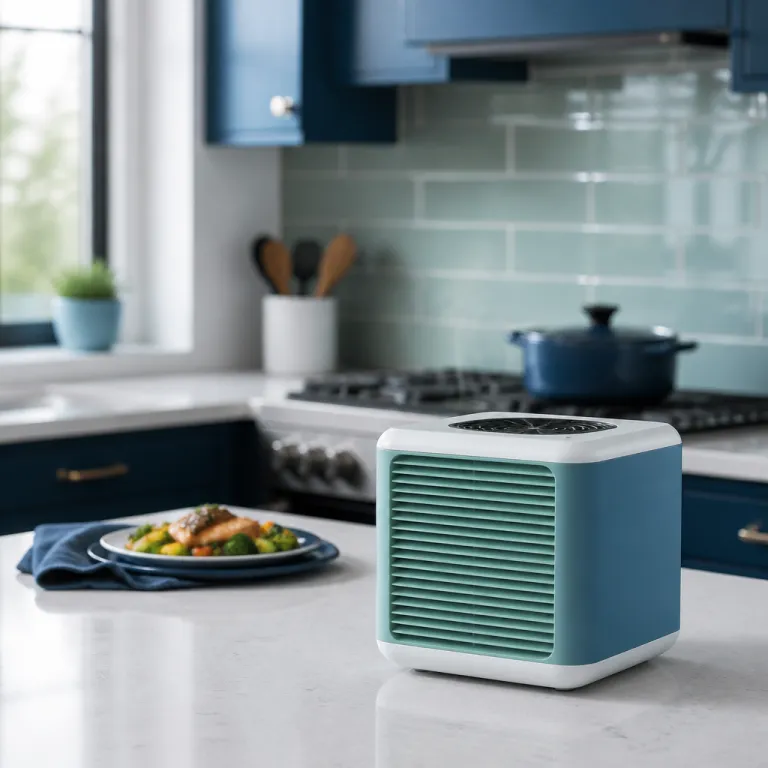
Why every busy kitchen needs a dedicated air purifier
Cooking releases hot air, fine grease droplets, and invisible particles. In many modern kitchens, especially open plan spaces, a kitchen air purifier now does as much work as the range hood because it keeps lingering smoke and microscopic aerosols under control. When you fry, sear, or grill indoors, you generate ultrafine particles that travel far beyond the kitchen and settle in bedrooms, living rooms, and hallways.
A specialised purifier for kitchens targets both particles and odors, which means it must combine a strong mechanical filter with a robust carbon stage to trap volatile organic compounds from oils and spices. The best air purifiers for this room use a multi stage filtration system that includes a pre filter, a true HEPA filter, and an activated carbon filter so that both visible smoke and invisible gases are removed from the air delivery stream. When you compare products, focus less on marketing language and more on hard numbers such as Clean Air Delivery Rate, often expressed as CADR in cubic metres per hour (m³/h), and the corresponding airflow in cubic feet per minute (CFM) under standardised AHAM test conditions.
Because kitchens are noisy already, the noise level of any air purifier matters more here than in a quiet office. A unit that sounds acceptable in a bedroom may become intrusive when its fan ramps up to a higher mode to cope with cooking odors and heavy smoke. Look for a purifier with a clear noise specification in decibels (dB) at each fan mode, ideally measured at a distance of about one metre in a controlled test room, so you can predict whether it will blend into the background hum of your appliances.
Key features that define an effective kitchen air purifier
Three technical features separate a basic purifier from one that can truly handle demanding kitchens. First, the combination of a washable or replaceable pre filter with a high efficiency HEPA filter and a deep carbon filter activated with a substantial mass of adsorbent determines how well the unit copes with grease, particles, and odors. Second, the CADR rating, which links the Clean Air Delivery Rate in m³/h to the fan airflow in CFM (1 CFM ≈ 1.7 m³/h), tells you how quickly the purifier can cycle the air in your kitchen during intense cooking sessions.
Third, a reliable quality sensor and an intelligent auto mode are crucial when you are juggling pans and do not want to touch controls with oily hands. In auto mode, the purifier reads real time air quality data and automatically adjusts fan speed, which keeps the air quality more stable while also limiting unnecessary noise and energy use between meals. When you evaluate different air purifiers, check whether the sensor responds quickly to bursts of smoke and whether the product maintains a reasonable noise level when it ramps up to its highest mode.
Many buyers compare models on online marketplaces by price alone, but that approach often ignores essential features such as staged filtration design and the depth of the carbon filter. A compact kitchen air purifier with a shallow carbon layer may look attractive in photos, yet it will saturate quickly when exposed to repeated cooking odors from frying fish or toasting spices. For a more technical breakdown of how carbon capacity and air delivery interact in real products, a detailed carbon filter and smoke odor performance analysis based on measured CADR and breakthrough time can help you understand why some purifiers clear a room while others barely dent the smell.
How to size a purifier for different kitchens and layouts
Matching the purifier to the size and shape of your kitchen is as important as choosing the right filter. Manufacturers usually publish a Clean Air Delivery Rate in cubic metres per hour and sometimes a CFM figure, and these numbers indicate how much filtered air the unit can push back into the room. To translate that into real performance, you need to compare the CADR to the volume of your kitchen and any connected living spaces using a simple sizing formula.
For a small enclosed kitchen, a compact air purifier with a moderate CADR rating may be enough, especially if you already use a ducted range hood that captures most of the visible smoke. As a rule of thumb, required CADR (m³/h) is approximately equal to room volume (m³) multiplied by desired air changes per hour (ACH) and then divided by 60. In a large open plan apartment where the kitchen flows into the living room, you often need either a larger purifier with a higher CADR or a second unit placed near the seating area to maintain good air quality throughout the shared space.
Portable air purifiers also play a role beyond the main cooking zone, especially when family members are sensitive to odors or particulate pollution. Placing a compact purifier with a true HEPA filter and activated carbon in an adjacent nursery or home office can reduce the spread of cooking odors and fine particles that escape the kitchen. A detailed comparison of whole home filtration and portable purifiers in separate rooms shows that a layered approach often delivers the best air quality for families who cook frequently.
Understanding filters, stages, and what really removes smoke
Every kitchen air purifier relies on a sequence of filters, and understanding that sequence helps you judge quality. The pre filter is the first line of defence, catching larger dust and grease droplets so that the more expensive HEPA filter and carbon filter last longer. Behind it, a true HEPA filter captures at least 99.97 percent of particles down to 0.3 micrometres, including much of the fine smoke generated by searing meat or charring vegetables, when tested at the standard flow rates used in laboratory evaluations.
However, HEPA alone cannot remove odors, which is why a substantial layer of activated carbon is essential in any purifier designed for kitchens. This carbon filter works by adsorbing gases and volatile organic compounds from oils, spices, and cleaning products, and its effectiveness depends on both the amount of carbon and the contact time created by the airflow and the air delivery path. When a manufacturer advertises multi stage filtration, look for clear descriptions of each stage, including whether the carbon is granular, pellet based, or impregnated foam, and how often the activated media must be replaced under typical household cooking loads.
Some brands now highlight advanced features such as a quality sensor that detects both particles and odors, then adjusts the fan mode automatically. In practice, this means the purifier increases its air delivery rate when it senses a spike in smoke or cooking odors, then returns to a quieter mode once the air quality improves. For readers who want to go deeper into the relationship between CADR, CFM, and filter design, technical reviews that measure real world delivery rate performance under cooking conditions, rather than only quoting idealised lab values, are more informative than simple marketing claims.
What to know about brands, prices, and real world noise levels
Brand reputation matters when you are choosing a purifier that will run for hours every day in a demanding kitchen environment. The Levoit Core series, for example, has become a popular choice because it combines a compact footprint with a true HEPA filter, a substantial activated carbon layer, and a responsive auto mode that reacts quickly to changes in air quality. Many users appreciate that a Levoit purifier often includes a clear quality sensor indicator, which shifts colour as smoke and odors rise or fall in the room.
When comparing Levoit Core models with other air purifiers, pay close attention to the published CADR ratings and the stated noise level at each fan mode. As an illustration, a typical mid sized unit in this category might offer a particle CADR of around 250 to 300 cubic metres per hour (roughly 150 to 175 CFM), with noise levels of roughly 24 to 28 decibels on low, about 40 decibels on medium, and close to 50 decibels on high in standardised acoustic tests. Over time, that can make the purifier feel intrusive if you must run it at maximum speed in a small apartment where the kitchen opens directly into the living area and conversations compete with fan noise.
Noise specifications are often given as a range in decibels, from a quiet sleep mode to a loud turbo mode, and you should compare those figures to typical background sounds in your home. For many households, a purifier that stays below about 45 decibels in its normal operating mode will blend into the hum of a refrigerator and dishwasher, while higher levels may become distracting during meals. Balancing price, performance, and acoustic comfort is the key to finding the best air purifier for your kitchen rather than simply chasing the lowest cost or the highest advertised airflow.
Portable and personal purifiers for people who cook and commute
Not every air quality problem begins and ends in the kitchen, especially for people who cook at home and then spend long hours commuting or working in shared offices. Portable and personal air purifiers extend the same core technologies, such as true HEPA filtration and activated carbon, into smaller products that can sit on a desk or travel in a bag. For individuals with asthma or fragrance sensitivity, these compact purifiers can reduce exposure to residual cooking odors that cling to clothing and hair after preparing strong meals.
When you evaluate portable purifiers, look for the same fundamentals you would demand in a larger kitchen air purifier, including a clear description of the filter stack, a realistic CADR or air delivery figure for small spaces, and a published noise level that will not distract you in a quiet carriage or office. Some personal purifiers offer multiple fan modes, allowing you to switch from a low noise setting during phone calls to a higher mode when you are alone and want faster cleaning. While their CADR ratings are naturally lower than those of full size kitchen purifiers, they can still provide the best air improvement for a single person in a confined space when used consistently.
For households that cook frequently and also worry about outdoor pollution or seasonal smoke, combining a robust kitchen purifier with one or two portable air purifiers creates a flexible defence against fluctuating air quality. The key is to maintain all filters on schedule, from the pre filter that traps visible dust to the HEPA and carbon filter elements that handle fine particles and gases, so that the overall delivery rate remains close to the original specification. In practice, this layered approach means cleaner air in the kitchen, cleaner air at your desk, and fewer lingering odors following you through the day.
Key statistics about kitchen air quality and purifiers
- Studies from public health agencies have shown that gas and electric cooking can temporarily raise indoor particulate levels to several times typical outdoor pollution levels during frying or grilling, especially in small kitchens without effective ventilation, when measured with particle counters during controlled cooking tests.
- Independent laboratory tests on many consumer air purifiers report particle Clean Air Delivery Rate values ranging from about 100 to more than 400 cubic metres per hour, which translates into roughly two to eight air changes per hour in an average sized kitchen when you apply the standard CADR to ACH sizing formula.
- Noise measurements for popular HEPA purifiers typically range from around 20 decibels on the lowest sleep mode to more than 55 decibels on the highest mode, a difference that users clearly notice during conversations and meal times in real homes as well as in acoustic chambers.
- Filter replacement intervals for true HEPA and activated carbon filters are often specified between six and twelve months of typical use, but heavy cooking with frequent smoke and strong odors can shorten that interval significantly, especially when the carbon stage is relatively shallow.
- Consumer surveys in several markets indicate that price, noise level, and filter replacement cost are the three most influential factors when people choose an air purifier for their kitchen or living area, with CADR and brand reputation following closely behind in purchase decisions.
FAQ: kitchen air purifiers and everyday cooking
Do I still need a range hood if I use a kitchen air purifier ?
A range hood and a kitchen air purifier serve different but complementary roles. The hood captures hot air, grease, and moisture directly above the stove, while the purifier filters the broader room air, including fine particles and odors that escape the hood. For the best air quality, especially in small or enclosed kitchens, using both together is more effective than relying on either one alone.
How often should I replace filters in a kitchen air purifier ?
Most manufacturers recommend replacing the HEPA and carbon filters every six to twelve months, but heavy cooking can shorten that schedule. If you frequently fry, grill, or cook strongly scented foods, you may notice persistent odors or reduced airflow sooner, which signals that the carbon filter or pre filter is saturated. Following the specific guidance for your product and checking filters visually every few months helps maintain both air quality and delivery rate.
What CADR rating should I look for in a medium sized kitchen ?
For a typical medium sized kitchen of around 20 to 25 square metres with a standard ceiling height, a purifier with a particle CADR of roughly 250 to 350 cubic metres per hour usually provides several air changes per hour during cooking. If your kitchen opens into a larger living area, choosing a higher CADR or running the purifier at a stronger mode during intense cooking can help control smoke and odors more effectively. Always compare the stated CADR to the combined volume of all connected spaces, not just the cooking zone.
Are portable and personal purifiers useful if I already have a large unit in the kitchen ?
Portable and personal purifiers can still be valuable even when you own a powerful kitchen air purifier, because they target different spaces and exposure patterns. A compact unit on your desk or bedside table can reduce your personal exposure to particles and odors that drift from the kitchen or enter from outdoors. People with respiratory conditions or strong sensitivity to smells often benefit from this layered approach to air quality.
How can I reduce purifier noise while keeping good air quality in the kitchen ?
To balance noise and performance, run the purifier at a higher mode before and during cooking, then switch to a lower fan speed once visible smoke and strong odors have cleared. Positioning the unit a few metres away from where people sit or talk can also reduce perceived noise without sacrificing much air delivery. Choosing a model with a well designed airflow path and a published low noise level at medium speeds helps keep conversations comfortable while maintaining clean air.
References
- United States Environmental Protection Agency (EPA) – Indoor Air Quality and Cooking, including studies on particle emissions from gas and electric stoves under controlled test conditions and guidance on ventilation and filtration.
- Association of Home Appliance Manufacturers (AHAM) – Clean Air Delivery Rate (CADR) program, which defines standardised test methods for tobacco smoke, dust, and pollen in a specified test chamber and links CADR to room size recommendations.
- World Health Organization (WHO) – Household air pollution and health, summarising evidence on fine particulate exposure, respiratory risk in homes that cook frequently, and the benefits of improved ventilation and filtration.