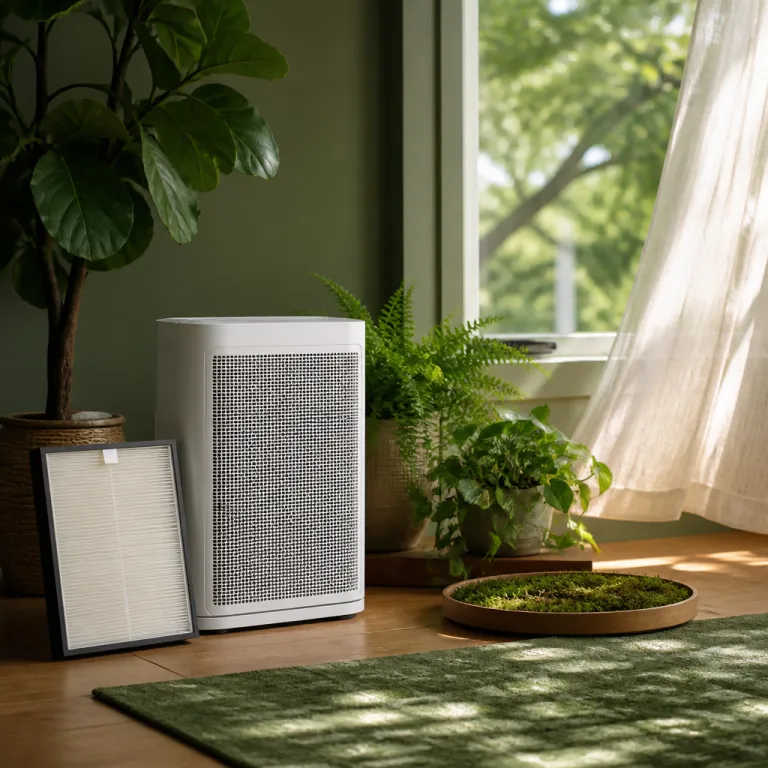
What “air clean HEPA” really means for your lungs
When people talk about air clean HEPA technology, they usually mean a tightly sealed filter system that can trap extremely small particles and improve indoor air quality. In technical terms, a true HEPA filter is certified to remove at least 99.97 percent of airborne particles with a diameter of 0.3 micrometres (µm), often called the most penetrating particle size for this type of filtration. That level of HEPA filtration is what turns basic air purifiers into medical grade style airclean systems that can genuinely change indoor air quality when used correctly.
A HEPA AirClean filter is built from dense mats of glass microfibres arranged to create a maze that forces air to twist and turn. As the air moves through the HEPA media, particles such as dust, pet dander, mould spores and combustion residues collide with the fibres and stick, which explains the very high efficiency of modern HEPA filters in both homes and clinical environments. Because of this ability to capture particles a few microns and smaller, HEPA AirClean products are often recommended for people with asthma or allergic rhinitis who need cleaner air to reduce symptoms and night‑time coughing.
Not every product that mentions a HEPA filter actually uses a sealed HEPA standard design, so you must read the manual and technical sheet carefully. Some air purifiers rely on a HEPA type filter that looks similar but has lower efficiency and may only capture a smaller number of larger particles, which can leave ultrafine pollution circulating in the air. When you compare reviews and check the star rating, always verify whether the manufacturer states a certified HEPA class and provides test data for particles down to at least 0.3 µm, ideally from an independent laboratory.
How HEPA air purifiers work with multi stage filtration systems
A modern HEPA airclean purifier rarely uses a single filter, because layered filtration systems handle different pollutants more effectively. The first stage is usually a pre‑filter that catches coarse dust and hair, protecting the main HEPA filter from clogging too quickly and preserving higher efficiency over time. Behind that, many air purifiers add activated carbon or similar media to adsorb gases and odours before the air reaches the final HEPA AirClean barrier that targets fine particles.
In a well engineered airclean systems design, the fan pulls air through each layer in sequence, maintaining a controlled airflow rate that balances noise and efficiency. If the airflow is too fast, the ability to capture particles a few microns in size can drop, while too slow a flow reduces the clean air delivery rate and makes the product feel underpowered in larger rooms. This is why serious reviews often mention both the type of filtration and the number of cubic metres per hour the purifier can process, not just the marketing label or the decorative display on the box.
Some smart HEPA air purifiers, such as bedroom units with H13 HEPA filter cartridges, now integrate sensors and app control to adjust fan speed automatically. A detailed smart air purifier test can show how quickly such a system reduces fine particles and pet dander after cooking, cleaning or vacuum activity in a typical flat, sometimes plotting the decay curve minute by minute. When you read reviews stars for these connected models, look beyond the overall number and check whether users mention real improvements in asthma symptoms, less visible dust and better perceived air quality at night.
For readers comparing connected devices, an in depth smart HEPA bedroom purifier review is a useful benchmark for understanding how HEPA filtration behaves in real homes. Such tests often highlight how pre‑filters, HEPA filters and carbon layers age differently, which directly affects filter replacement schedules and long term costs. Paying attention to these details helps you choose an airclean filter system that maintains high efficiency instead of losing performance quietly after a few months of continuous use.
HEPA, AirClean and Miele: what the labels really tell you
Brand language around air clean HEPA technology can be confusing, especially when companies mix terms like HEPA AirClean, AirClean filter and HEPA type filtration. Miele, for example, uses the AirClean name for both vacuum bags and certain AirClean filter cartridges in its vacuum cleaners and air purifiers, which can mislead buyers who assume every AirClean product is a true HEPA filter. In reality, some Miele AirClean filters are standard high efficiency dust filters, while others are certified HEPA filters with a clearly stated class such as HEPA 13 in the product documentation.
When you see a Miele vacuum or purifier advertised with an AirClean systems label, check the manual or technical leaflet for explicit wording like HEPA filter or HEPA AirClean filter. A genuine HEPA AirClean product will specify its tested efficiency for fine particles, often listing 99.95 percent or 99.97 percent removal for 0.3 µm particles, whereas a basic AirClean filter may only promise a high percentage for general household dust. This distinction matters for people with asthma or severe allergies, because only the higher efficiency HEPA filters reliably capture the smallest airborne particles that trigger symptoms and inflammation.
Independent reviews of Miele vacuums and air purifiers often rate filtration performance using stars and detailed measurements of outgoing air. A good review will separate the performance of the vacuum bags, the motor protection filter and the final HEPA AirClean filter, explaining how each layer contributes to overall air quality and noise. When you compare reviews stars and price in USD across different brands, remember that a cheaper product with a non‑HEPA type filter may cost less upfront but allow more fine dust and pet dander back into the room.
For heavy duty needs, such as renovation work or commercial cleaning, specialised HEPA scrubbers with multi stage carbon and HEPA filtration can be more appropriate. A thorough test of a commercial HEPA air scrubber shows how industrial grade filter HEPA cartridges and carbon blocks handle dust, odours and allergens in demanding environments. These systems illustrate the upper end of what HEPA filters and airclean systems can achieve when designed for continuous, intensive use with strict maintenance.
Choosing the right HEPA AirClean system for allergies and asthma
For a person living with asthma or allergic rhinitis, the choice of air clean HEPA purifier is not just a lifestyle upgrade but a health decision. The most important factor is matching the clean air delivery rate and HEPA filtration performance to the size and type of room where you will use the product. A compact unit with a small HEPA filter may perform well in a 12 square metre bedroom, but the same device will struggle to maintain good air quality in a 40 square metre open plan living space with high ceilings.
When comparing air purifiers, look for clear information about the number of air changes per hour the system can deliver at its recommended room size. For allergy and asthma management, many respiratory specialists suggest aiming for at least four to five air changes per hour, which usually requires a higher efficiency fan and a generously sized HEPA filter. This is where detailed reviews and laboratory tests become valuable, because they reveal whether the claimed performance holds up once the filters start loading with dust and pet dander from daily life.
Another key decision is whether you need a portable HEPA AirClean system or a built in solution integrated into existing ventilation systems. Portable units with sealed HEPA filters are easier to install and maintain, and they allow you to move the product between rooms as your daily activity changes. Central systems can filter air for the entire dwelling but often rely on HEPA type filters rather than true HEPA filters, so you must check the manual carefully and confirm the efficiency for particles around 0.3 µm and below.
People with asthma who also live with pets should pay special attention to how well a purifier handles pet dander and fine hair. A good HEPA airclean filter can trap these allergens effectively, but only if the pre‑filter and main filter are replaced on schedule and the airflow path is well sealed. Reading user reviews stars that mention real life allergy relief is often more informative than marketing claims, especially when several reviewers describe similar improvements in sleep quality and reduced need for medication over months of use.
Costs, filter replacement and what “free shipping” really hides
Owning an air clean HEPA purifier is a long term commitment, because the filters that make the system effective will eventually clog and need replacement. The initial product price in USD is only part of the total cost, and over several years the cumulative cost of HEPA filters, pre‑filters and optional carbon filters can exceed the purchase price. Responsible manufacturers provide a clear schedule for filter replacement in the manual, often based on hours of use or months in a typical household environment with average dust levels.
When you compare prices, calculate the annual cost of replacement filters by multiplying the number of changes per year by the price per filter HEPA or carbon cartridge. Some brands offer bundles of filters or vacuum bags with discounts and free shipping on qualifying shipping orders, but exclusions apply and you should read the small print to understand which regions or retailers are covered. A realistic cost comparison between different air purifiers must include these ongoing expenses, not just the headline price in USD on the product page or in the advert.
Marketing around free shipping and discounted HEPA filters can distract from more important questions about efficiency and durability. A cheaper HEPA type filter that needs frequent replacement may end up costing more than a premium HEPA AirClean filter with higher efficiency and longer service life, especially if the ability to capture particles a few microns in size remains stable as the filter loads with dust. Reviews that track performance over many months, rather than just first impressions, are particularly valuable for understanding this trade off and predicting long term ownership costs.
Some consumers also underestimate the value of a good pre‑filter, which is usually much cheaper than the main HEPA filter but plays a crucial role in protecting it. By trapping larger dust and pet dander before they reach the HEPA media, a robust pre‑filter extends the life of the main filter and keeps airflow strong, which maintains high efficiency for fine particles. When reading reviews stars, look for comments about how easy it is to clean or replace pre‑filters and whether the product provides clear alerts when any filters are due for replacement.
HEPA, sensors and understanding what your purifier display does not show
Many buyers assume that an air clean HEPA purifier with a bright display and colour coded air quality indicator tells the full story about indoor pollution. In reality, most built in sensors measure only a narrow range of particle sizes or rely on simple optical detectors that can be fooled by humidity, aerosols or unusual dust types. This means a purifier can show a reassuring green light while still leaving a significant number of ultrafine particles in the air, especially if the filter is ageing or the fan speed is too low for the current pollution level.
To understand how HEPA filtration really performs, independent testing with calibrated PM2.5 sensors and particle counters is essential. Detailed analyses comparing a purifier’s own display with external sensors have shown that some systems underestimate pollution spikes from cooking, candles or vacuum cleaning, which can mislead users into running the product at lower speeds than necessary. A technical article on what a dedicated PM2.5 sensor reveals about purifier performance, such as the one available through this independent PM2.5 sensor comparison, helps readers interpret these discrepancies and adjust their settings.
For a HEPA AirClean system, the combination of a sealed filter, a reliable fan curve and accurate sensing is what guarantees consistently high efficiency. If the sensor underestimates pollution, the purifier may never ramp up to the higher efficiency modes needed to clear fine particles and pet dander quickly, even though the HEPA filter itself has the ability to capture them. This is why some experts recommend running HEPA air purifiers at a fixed medium setting in bedrooms and living rooms, rather than relying solely on automatic modes that respond only to what the internal sensor can see.
Regular maintenance also affects how well sensors and filters work together. Dust accumulation on the sensor window or in the air intake can cause the system to misread air quality, while a clogged pre‑filter can reduce airflow and lower the effective clean air delivery rate even if the HEPA filter is still relatively new. Checking the manual for sensor cleaning instructions and following the recommended filter replacement schedule ensures that the technology behind the air clean HEPA label continues to perform as promised.
HEPA filtration beyond purifiers: vacuums, bags and whole home strategies
Air clean HEPA technology is not limited to standalone air purifiers, because the way you clean floors and textiles also shapes indoor air quality. A vacuum without a sealed HEPA filter can act as a particle generator, sucking up dust and pet dander only to blow a cloud of fine particles back into the room through its exhaust. In contrast, a vacuum equipped with a genuine HEPA AirClean filter and tightly sealed vacuum bags can significantly reduce the number of airborne particles after cleaning, especially in smaller rooms.
Brands like Miele have built reputations around high efficiency filtration in their vacuum systems, combining multi layer vacuum bags with motor protection filters and optional HEPA AirClean cartridges. When these components work together as a coherent airclean systems design, the outgoing air from the vacuum can be cleaner than the ambient air in the room, which is particularly valuable for people with asthma or dust mite allergies. Reviews stars for such vacuums often highlight reduced dust on surfaces between cleanings and fewer allergy flare ups after vacuuming, which are practical signs that the filtration is doing its job.
For a whole home strategy, combining HEPA air purifiers in key rooms with HEPA equipped vacuums and regular textile washing creates a layered defence against airborne and settled particles. The goal is to reduce both the number of particles floating in the air and the reservoir of dust and pet dander that can be stirred up by daily activity. When you evaluate products, think in terms of systems rather than isolated devices, asking how each filter, bag and purifier contributes to the overall ability to capture and retain particles in the low micron range.
Budget planning should also consider the recurring cost of vacuum bags and HEPA filters alongside purifier filter replacement schedules. While some consumers focus mainly on the USD price of the main product, the long term expense of consumables can vary widely between brands, especially once you factor in shipping orders, regional availability and whether free shipping applies or exclusions apply. A careful reading of reviews that mention real world running costs, combined with transparent manufacturer data, will help you build an effective and sustainable air clean HEPA strategy for your home.
Key figures on HEPA air cleaning and indoor pollution
- According to the United States Environmental Protection Agency (EPA), people spend about 90 percent of their time indoors, where certain pollutants can be two to five times higher than typical outdoor levels, which underlines the value of effective HEPA filtration in homes and offices. This figure comes from EPA summaries on indoor air quality and exposure.
- Certified true HEPA filters are designed to remove at least 99.97 percent of airborne particles with a diameter of 0.3 micrometres, a size chosen because it is the most penetrating particle size and therefore the hardest for filters to capture under standardised test conditions.
- Clinical studies on asthma and allergy management have shown that using HEPA air purifiers in bedrooms can reduce indoor particulate matter concentrations by 50 percent or more, which is often associated with measurable improvements in symptom scores and medication use over several months of follow up.
- Independent laboratory tests of popular portable air purifiers have reported clean air delivery rates ranging from about 100 to more than 400 cubic metres per hour, meaning that the most powerful units can fully filter the air in a 30 square metre room up to five times per hour when doors and windows remain closed.
- Market analyses of the global air purifier sector indicate that HEPA based products account for the majority of sales by revenue, reflecting consumer preference for high efficiency filtration despite higher upfront and replacement filter costs compared with simpler mesh filters.
FAQ: air clean HEPA questions from informed buyers
How often should I replace a HEPA AirClean filter in a purifier
Most manufacturers recommend replacing a HEPA AirClean filter every 6 to 12 months, depending on usage hours and pollution levels. In homes with heavy traffic, smokers, pets or frequent cooking, the filter may load faster and need earlier replacement to maintain high efficiency. Always follow the schedule in the product manual and watch for signs such as reduced airflow, more visible dust or a persistent odour when the purifier runs.
Is a HEPA type filter good enough for asthma and allergies
A HEPA type filter can improve air quality compared with no filtration, but it usually does not meet the strict 99.97 percent at 0.3 micrometre standard of true HEPA filters. For people with asthma, severe allergies or compromised immune systems, a certified HEPA filter or HEPA AirClean filter with documented performance for fine particles is strongly preferable. Always check technical specifications rather than relying on marketing phrases like “HEPA like” or “HEPA style”.
Do HEPA air purifiers remove gases and odours as well as particles
HEPA filters are designed to capture solid and liquid particles, not gases or volatile organic compounds, so they do not remove odours on their own. To tackle smells from cooking, smoke or chemicals, you need a purifier that combines HEPA filtration with an activated carbon or similar gas adsorption stage. When choosing a product, look for a clear description of both the particle filter and the gas filter, and check reviews for comments about real world odour reduction.
Can a vacuum with a HEPA filter replace an air purifier
A vacuum with a sealed HEPA filter and good vacuum bags can significantly reduce dust and pet dander in carpets and upholstery, but it only cleans the air while you are vacuuming. A dedicated HEPA air purifier runs continuously, filtering the air many times per hour and capturing particles that never settle on surfaces. For the best results, especially in homes with asthma or allergies, use both a HEPA equipped vacuum and one or more HEPA air purifiers as part of a coordinated airclean systems approach.
What room size should I match to an air clean HEPA purifier
The right room size depends on the clean air delivery rate of the purifier and the number of air changes per hour you want. For allergy and asthma control, many experts recommend at least four to five air changes per hour, which means a purifier rated for a larger area than the bare floor space of your room. Always check the manufacturer’s room size guidance, then compare it with independent tests and reviews stars to confirm that the purifier maintains performance in real homes.