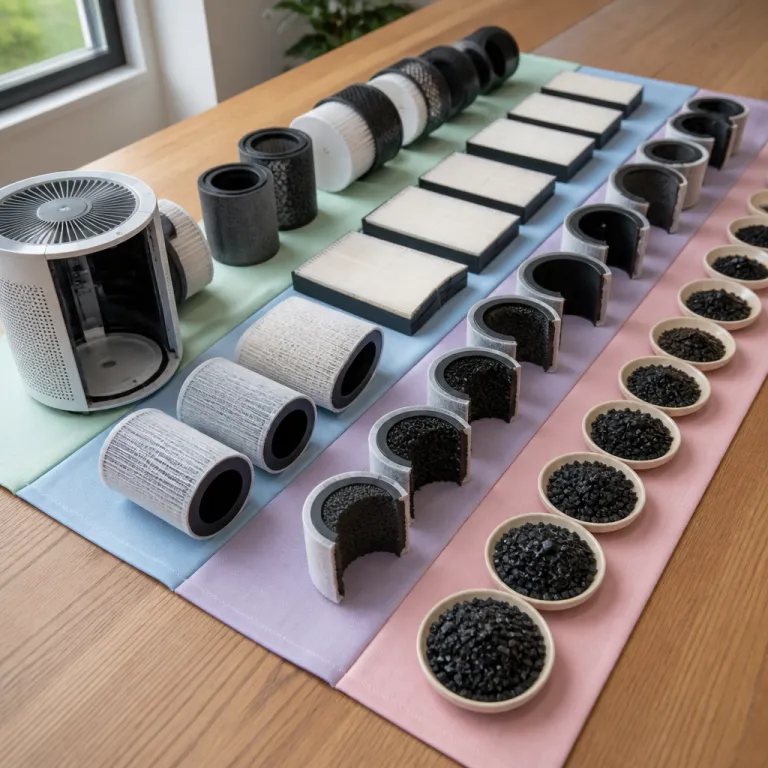
Why a carbon filter wildfire smoke purifier matters more than HEPA this summer
When wildfire smoke drifts into your home, the air quickly feels heavy. Your eyes sting, the living room smells like a campfire, and even a powerful air purifier with a true HEPA filter can leave that stubborn odor hanging. The missing piece in many air purifiers is a serious activated carbon filter that can trap the invisible gases riding on the smoke.
Wildfire smoke is not only about fine particles; it also carries formaldehyde, benzene, acrolein and other volatile organic compounds that float through indoor air as gases. A HEPA filter captures particles down to 0.3 micrometres, but it does nothing for these gases, which is why a carbon filter wildfire smoke purifier must combine true HEPA for particles with a heavy bed of activated carbon for smells. During summer wildfire peaks, the best air purifiers for smoke are those that pair high clean air delivery rate, or CADR, with enough carbon mass to keep absorbing odors for weeks instead of days.
Think of HEPA as the net for particles and activated carbon as the sponge for gases. A smart air purifier that only boasts a high CADR CFM rating for particles may still leave your sofa smelling like smoke if the carbon filter is just a thin mesh. To protect air quality in a small flat or a large home, you need to look beyond marketing terms like smart mode or auto mode and focus on how much carbon the filter actually contains, how much area it covers, and how often you are ready to replace it during a long wildfire season.
The physics of activated carbon: why filter weight beats fancy marketing
Activated carbon works through adsorption, which means gas molecules stick to the vast internal surface of each carbon grain. In a proper carbon filter wildfire smoke purifier, billions of microscopic pores create a huge surface area where smoke gases can lodge, but the total capacity still depends mainly on how many grams or kilograms of carbon you have. A light filter with a thin coating of carbon simply runs out of room much faster than a deep bed of granules.
Manufacturers often promote carbon impregnated mesh filters that look sleek and low profile, yet these usually contain less than 50 grams of carbon and saturate quickly under wildfire smoke. By contrast, serious air purifiers for smoke use between 1 and 3 kilograms of activated carbon, which can keep indoor air noticeably fresher for several weeks of elevated pollution. When you compare purifiers, ignore vague claims about advanced carbon technology and instead check the actual carbon weight in the box or on the specification sheet.
For residents in smoke exposed regions, this carbon math matters more than small differences in CFM or fan speed. A unit with slightly lower CADR but a heavy carbon filter can maintain better air quality and cleaner air odor over time than a faster air cleaner with a token carbon layer. If you want a deeper dive into how air purifiers handle smells and gases, a practical guide on whether air purifiers really eliminate odors in your home explains why carbon is the key technology for wildfire smoke odors.
Comparing real machines: from thin mesh to heavy carbon bricks
Look at three popular categories and you will see how different the carbon story can be. A typical low end purifier such as the Coway AP-1512HH pairs a capable HEPA filter with a very light carbon layer, which helps a little with smoke odor but saturates fast during a strong wildfire episode. Mid range machines like the Levoit Core 600S increase both CADR and carbon volume, yet they still rely on relatively thin carbon sheets compared with professional units.
At the high end, models in the Austin Air range or the IQAir HealthPro Plus use deep beds of granular activated carbon that can weigh several kilograms, turning the whole air purifier into a serious gas and odor air cleaner. An Austin Air HealthMate, for example, combines a true HEPA filter for particles with a massive carbon section that covers the full circumference of the filter drum, which is why it remains effective longer when wildfire smoke lingers. These pro level purifiers often have lower stated CFM than some plastic competitors, but their heavy carbon filters give them a clear advantage for long smoke seasons.
When you read reviews or lab tests, pay attention to both CADR CFM numbers and the description of the carbon filter, not just the HEPA label. A helpful technical article on how air purifiers eliminate unpleasant odors shows that gas removal always depends on carbon mass and contact time, not on brand hype. During summer wildfire peaks, a carbon filter wildfire smoke purifier with a slightly lower fan speed but a heavier carbon bed can keep indoor air more comfortable, while a lighter model may leave you chasing lingering smoke smells room by room.
Practical sizing, DIY options and when to change your carbon filter
Choosing the right carbon filter wildfire smoke purifier starts with room size and airflow. Aim for at least four to five air changes per hour, or ACH, in the room where you sleep or work, which means the purifier’s CADR should be roughly two thirds of the room volume in cubic metres per hour. A unit that covers a large living room on paper but only reaches that ACH at maximum speed may be too noisy to run all night, so check both CADR and real world fan settings.
Some residents build DIY air purifiers by taping HEPA style filters to a box fan, which can be a cost effective way to remove particles but usually lacks any meaningful carbon section. If you go the DIY air route, consider adding a separate carbon pre filter panel in front of the main filter to catch some smoke gases, while understanding that the CADR for gases will still be modest. For people who prefer a ready made solution, a smart air purifier with a quality sensor and auto mode can ramp up speed when smoke particles rise, but you still need to budget for regular carbon filter replacements during a long wildfire season.
A practical rule is simple; when you can smell smoke again in a room where the purifier runs continuously, the carbon is likely saturated even if the indicator light stays green. That is especially true for thin carbon sheets, which may last only a few weeks of heavy smoke, while a multi kilogram carbon block in an Austin Air HealthMate can remain effective for months. If you want a balanced machine for bedrooms or medium rooms, this detailed test of a bedroom and large room air purifier with a PM2.5 air quality sensor shows how to read CADR, ACH and filter specs together before you buy.
FAQ
Does HEPA alone remove wildfire smoke odor from indoor air ?
A true HEPA filter removes smoke particles very effectively but does not capture the gaseous chemicals that create wildfire smoke odor. Those gases require an activated carbon filter with enough mass to adsorb them over time. For long summer smoke episodes, you need both HEPA for particles and substantial carbon for smells in the same air purifier.
How much activated carbon should a wildfire smoke purifier contain ?
For serious wildfire smoke, aim for at least 1 kilogram of granular activated carbon in the main filter, not just a thin carbon impregnated mesh. Low end purifiers with 100 to 300 grams of carbon may saturate in a few weeks of heavy smoke, while multi kilogram beds in units like Austin Air purifiers or the Air HealthMate line can last significantly longer. Always check the stated carbon weight in the specifications rather than relying on vague odor control claims.
Is a DIY box fan purifier enough for wildfire smoke ?
A DIY air purifier built with a box fan and particle filters can reduce smoke particles and improve short term air quality, especially in smaller rooms. However, most DIY designs lack a substantial carbon filter, so they do little for persistent smoke odor and gaseous pollutants. If you use a DIY setup, consider adding a separate carbon panel and still plan to ventilate when outdoor air improves.
What CADR and ACH should I target for a smoke season purifier ?
For wildfire smoke, aim for at least four to five air changes per hour in the main rooms where you spend time. That usually means choosing an air purifier with a smoke CADR high enough to match about two thirds of the room volume per hour, while still being quiet enough at the required fan speed. A smart air purifier with a quality sensor and auto mode can help maintain this ACH automatically when outdoor smoke levels fluctuate.
How do I know when to replace the carbon filter ?
The most reliable sign is your nose; if smoke or other odors return even though the purifier runs continuously, the carbon filter is probably saturated. Indicator lights on smart purifiers often estimate filter life based on hours, not on real gas load, so they can be misleading during intense wildfire periods. Plan to replace thin carbon sheets more frequently in summer, while heavier carbon blocks in models like Austin Air purifiers or the Air HealthMate range will usually last longer before odor breakthrough appears.