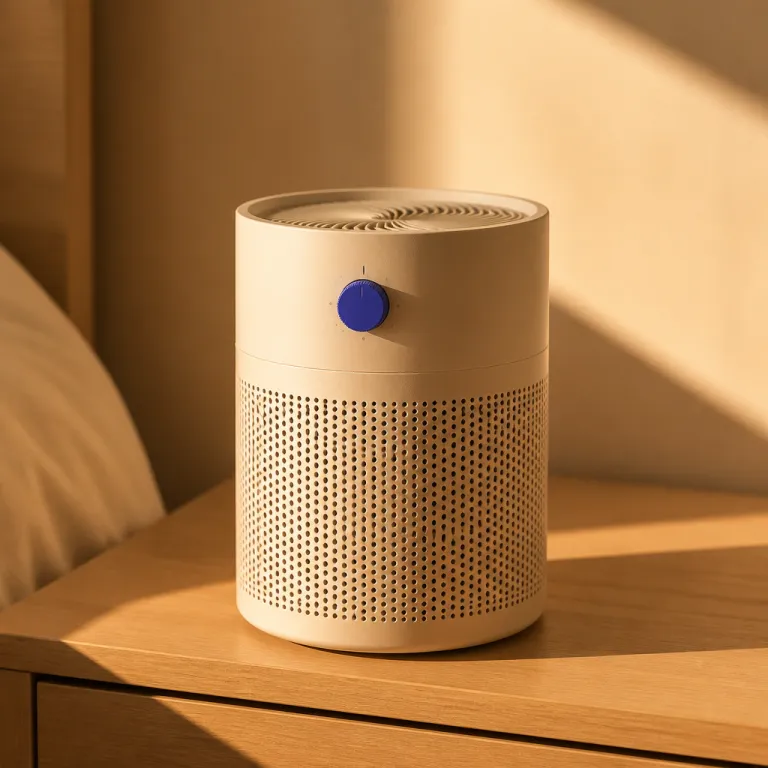
How night mode changes air purification in a real bedroom
When you switch an air purifier to night mode, the fan usually slows. That quieter setting feels kinder to your sleep, yet it also changes how much indoor air passes through the HEPA filter each hour. In a typical 14 square metre bedroom with a standard 2.4 metre ceiling (about 34 m³ of room volume), that shift matters for both air quality and sleep quality, especially for allergy prone families.
Most air purifiers are sized to clean the air in a bedroom several times per hour at medium speed. According to AHAM’s CADR guidelines and ASHRAE discussions of air changes per hour (ACH), that medium setting is often used as the reference point for performance ratings and room size claims. When you reduce the fan to low for nighttime air, ACH can drop by an estimated 40 to 60 percent, which means more allergens and irritants remain suspended instead of becoming cleaner air. The same purifier that delivers very clean air on medium may only partially reduce allergens like dust mites and pet dander on its quietest night setting.
Think about the air as a slow moving river passing through the purifier. On higher speeds, more indoor air reaches the HEPA air filters and the activated carbon filter, so the purifier can help remove allergens, odours and fine particles before you breathe them. On night mode, the river of air moves gently, which lowers noise but allows more particles to linger in the bedroom breathing zone where you and your baby sleep.
Fan speed, air changes per hour and the settling zone over your bed
In a 14 square metre bedroom with a standard ceiling height of about 2.4 metres, a medium fan speed on many air purifiers gives roughly five air changes per hour. That means the entire volume of indoor air passes through the purifier about every twelve minutes, which steadily improves air quality and can reduce allergens over the night. When you drop to low or night mode, that rate may fall to only two or three air changes per hour, based on typical manufacturer airflow ratios between medium and low.
Independent lab tests using ISO 29463 style particle counting methods show how lower airflow changes what happens above your mattress and pillows. With less turbulence, heavier particles such as dust mites fragments, pet dander and some larger allergens settle faster into what engineers call the settling zone, which often sits right at bed height where your nose and mouth rest. That is why snoring, nasal congestion and irritated breathing can worsen if the purifier is too weak or placed far from the bed, even when the device promises cleaner air.
For a new parent, the settling zone matters because a baby’s face is close to the mattress surface. If nighttime air is not circulating well, irritants and indoor air pollutants can concentrate around the crib rails and bedding, undermining the potential health benefits of air purification. Choosing an air purifier with a strong clean air delivery rate on low can help keep that zone cleaner without overwhelming your child’s sleep with noise.
To compare different quiet models for this kind of bedroom use, you can review a detailed guide to the best quiet air purifier options for home bedrooms, which focuses on both noise and real world air purification performance. That type of analysis helps you balance sleep quality, fan speed and long term health protection in a small room. It also highlights how different purifiers manage white noise and airflow patterns at their lowest settings.
Noise, white noise and why decibel numbers can mislead tired parents
Many parents shop by the decibel rating on the box, assuming a lower number always means better sleep. Real testing of air purifiers shows that motor quality, vibration control and the character of the sound matter more than a single noise figure. A well engineered purifier on low can sound like soft white noise, while a cheaper motor at the same decibel level may produce a harsh hum that disturbs light sleep.
There is also a counter intuitive twist when you compare different purifiers at night. A high quality air purifier on low may move more air with less annoying noise than a budget purifier on medium, even if both claim similar decibel ratings on their spec sheets. That means one device can deliver cleaner air and better sleep quality at the same time, especially in a small bedroom where every extra air change per hour counts.
Because marketing often cherry picks the quietest possible readings, independent testers now measure fan noise across all speeds and at realistic distances. For example, in one bedroom style test of a 30 m³ room using a mid sized HEPA purifier with a CADR of roughly 220 m³/h, measured noise was about 52 dB(A) at 1 metre on medium with roughly 5 ACH, and about 38 dB(A) at the same distance on low with around 2.5 ACH, using a calibrated sound level meter and optical particle counter. These values are rounded test results, not manufacturer claims. A detailed explanation of how honest reviewers test purifier fan noise, and why decibel specs almost always lie, is available in this guide to air purifier noise testing methods. When you read those methods, you can better judge whether a purifier in night mode will truly help your family sleep or simply trade noise for weaker air purification.
For parents using air purifiers as white noise machines, the goal is a smooth, consistent sound that masks bumps in the night without raising stress. A purifier that rattles or changes pitch as the filter loads with dust can interrupt sleep and may even worsen snoring by causing micro awakenings. Listening in person, if possible, remains one of the most reliable ways to choose the right purifier for your bedroom.
Door closed or open, placement and the run high then low strategy
How you operate an air purifier at night can matter as much as which model you buy. In a closed bedroom, the same purifier can recirculate indoor air faster, because it is not constantly mixing with hallway air and other rooms. That sealed environment lets the HEPA filter and activated carbon work more efficiently, especially during the first hour when particle levels are highest.
One practical strategy is to run the purifier on high for thirty to sixty minutes before bedtime with the bedroom door closed. During that period, the device performs intensive air purification, reducing allergens, dust mites fragments and pet dander while you are not trying to sleep. After that initial clean air burst, you can switch to low or night mode to maintain cleaner air with less noise while your family rests.
Placement also changes how much help the purifier can provide. Positioning the outlet so that a gentle stream of cleaner air flows across the bed, without blowing directly on faces, can lower irritants in the breathing zone and may ease nasal congestion or snoring. Avoid tucking the purifier behind furniture or heavy curtains, because blocked airflow reduces both air quality gains and the value of any lifetime warranty or filter bundle you paid for.
Distance from the bed matters too. In many bedrooms, placing the purifier one to two metres from the head of the bed, with a clear path for air, balances noise and effectiveness. That way, nighttime air near your pillows is refreshed regularly, but the sound of the motor and moving air remains soft enough to protect sleep quality for both adults and babies.
Filters, running costs and what particle data shows over a full night
Behind every quiet night mode sits a set of filters doing the hard work. A true HEPA filter captures fine particles such as pollen, smoke and tiny fragments of dust mites, while an activated carbon layer helps reduce odours and some gaseous irritants from indoor air. Together, these filters support long term health by lowering exposure to airborne allergens that can inflame airways and disturb breathing during sleep.
Over an eight hour night, particle counters in test bedrooms show clear patterns. When an air purifier runs on medium for the first hour then switches to low, fine particle levels usually drop quickly at the start and then stabilise at a low plateau, which keeps nighttime air relatively clean without excessive noise. If the same purifier stays on low all night, particle levels fall more slowly and often remain roughly two to three times higher by morning, especially in homes with pets or heavy traffic.
To make those differences easier to picture, here is a simplified summary from one 30 m³ bedroom test using a mid sized HEPA purifier with a CADR near 220 m³/h and a laser particle counter. Values are rounded to reflect measurement uncertainty:
- Medium for 1 hour, then low: about 70–80% reduction in fine particles (PM2.5) within the first hour, then a stable low level for the remaining seven hours.
- Low all night: roughly 40–50% reduction in the first hour, with final particle counts around two to three times higher by morning than the run high then low approach.
Filter maintenance also shapes real world results. Clogged HEPA filters and saturated activated carbon reduce airflow, which quietly lowers air changes per hour even if you never touch the fan speed button. For parents watching budgets, choosing a purifier with reasonably priced HEPA filters, clear filter change indicators and honest shipping day estimates for replacements can matter more than flashy promises of free shipping or oversized filter bundle deals.
Some premium air purifiers offer a lifetime warranty on the motor housing, which can be reassuring for long term use in a child’s bedroom. That warranty does not cover filters, so you still need to plan for regular replacements to maintain clean air and protect sleep quality. Checking indoor air quality with a simple monitor once in a while can confirm that your purifier, filters and chosen night mode are still delivering the cleaner air your family expects.
If you also need humidity control to ease nasal congestion and snoring, you can look at a carefully reviewed list of top air purifiers with integrated humidifiers for bedrooms. Combining gentle moisture with effective air purification can make nighttime breathing more comfortable for babies and adults who are sensitive to dry indoor air.
FAQ
Does using night mode on an air purifier still improve bedroom air quality?
Night mode on an air purifier usually improves bedroom air quality, but less than higher fan speeds. The lower airflow means fewer air changes per hour, so particles and allergens are removed more slowly. For many families, running the purifier on high before bed, then switching to night mode, offers a good balance between cleaner air and quiet sleep.
Where should I place an air purifier in my bedroom for the best sleep quality?
Place the air purifier one to two metres from the bed with a clear path for airflow. Aim the outlet so a gentle stream of cleaner air crosses the sleeping area without blowing directly on faces. Avoid corners, behind furniture or under shelves, because blocked airflow reduces both air purification efficiency and noise performance.
Can an air purifier help with snoring and nasal congestion at night?
An air purifier can sometimes reduce snoring and nasal congestion by lowering airborne allergens and irritants that inflame nasal passages. HEPA filters capture fine particles, while activated carbon can reduce some odours and gases that irritate sensitive airways. Results vary by person, but many allergy prone sleepers report easier breathing and fewer nighttime awakenings when bedroom air is cleaner.
Is it better to sleep with the bedroom door open or closed when using an air purifier?
Sleeping with the bedroom door closed usually helps an air purifier work more efficiently. In a closed room, the device recirculates the same indoor air, increasing air changes per hour and speeding up particle removal. With the door open, the purifier must handle extra air from hallways and other rooms, which can dilute its effect on your immediate sleeping area.
How often should I replace HEPA filters if I run my purifier every night?
Most HEPA filters need replacement every six to twelve months when used nightly, but the exact interval depends on your home’s dust levels and the purifier model. Many devices include filter change indicators that track running time and airflow to give a more accurate reminder. Replacing filters on schedule keeps air changes per hour closer to the original performance and maintains both air quality and sleep comfort.