Key office models compared: Blueair, Levoit and Coway Airmega
Several brands consistently appear among the best air purifiers for offices because they combine strong CADR with practical features. Blueair, Levoit, and Coway Airmega each offer an air purifier range that scales from small offices to large conference rooms. Understanding how their purifiers tested in independent labs perform will help you choose the right balance of power, noise, and energy use.
Blueair office purifiers often use a combination of mechanical particle filter media and electrostatic charging to capture particles efficiently. This design can deliver powerful air cleaning with relatively low fan speed, which keeps noise levels comfortable for open plan workspaces. Many Blueair air purifiers also include substantial activated carbon filters, making them strong candidates for offices affected by smoke from nearby traffic or seasonal wildfires.
Levoit has built a reputation on compact, affordable air purifiers that still use a true HEPA filter. The Levoit Core series, for example, offers cylindrical designs that pull air from all sides and push clean air upward, which works well when units are placed between desks. When you compare Levoit Core models, check the CADR CFM ratings carefully, because some are optimised for smaller rooms while others can handle larger office zones with several air changes per hour.
Coway Airmega purifiers target users who want smart controls and strong filtration in one package. A typical Coway Airmega air purifier combines a pre filter, a HEPA filter, and an activated carbon layer, then uses a quality sensor to adjust fan speed automatically. In auto mode, the purifier increases speed when particle levels rise, then drops back to a quieter mode once clean air levels are restored.
For facilities managers comparing several purifiers tested by independent reviewers, it helps to look at long term performance rather than just initial CADR. Some video review tests show that filters with more activated carbon maintain odour control longer in offices with frequent smoke incursions or heavy cooking nearby. When you read about purifiers tested on Amazon review aggregators, focus on comments about sustained air quality and filter replacement frequency rather than only first week impressions.
Energy efficiency should also influence your choice, because office air purifiers often run for many hours each day. Models with smart scheduling, eco mode, or responsive auto mode can reduce energy consumption while still delivering enough air changes per hour during peak occupancy. If you want a detailed example of how CADR, HEPA filter design, and auto mode interact in practice, examine a test of an air purifier with a PM2.5 monitor and washable pre filter, which illustrates how a balanced system behaves in real rooms.
While Amazon listings can be useful for comparing price and availability, they rarely tell the full story about particle removal in complex office environments. Look for independent lab data that measures particle counts over time, including ultrafine particles that bypass weaker filters. When in doubt between similar models, choose the air purifier with higher CADR, a thicker HEPA filter, and a more substantial activated carbon stage, because these elements directly influence long term air quality.
Representative office-ready models and typical pricing
| Model |
Typical smoke CADR |
Suggested office coverage (4–5 ACH) |
Key strengths |
Approx. price band |
| Blueair Blue Pure 211+ |
≈ 350 CFM (AHAM verified) |
About 50–55 m² open areas |
High airflow, low noise, strong gas and smoke control |
Mid to high $200s in many markets |
| Levoit Core 400S |
≈ 260 CFM (manufacturer and AHAM data) |
Roughly 30–40 m² meeting rooms or zones |
Compact footprint, app control, good value for smaller offices |
Low to mid $200 range |
| Coway Airmega 400 |
≈ 350 CFM (independent lab and AHAM reports) |
Up to about 50 m² large rooms or combined zones |
Robust filtration stack, responsive auto mode, suitable for high loads |
Commonly in the mid $400s |
Matching purifier capacity to office layout and occupancy
Even the best air purifiers for offices will disappoint if they are undersized for the space. Start by measuring each room in square metres and ceiling height, then calculate the volume to understand how much air the purifier must process. This allows you to translate CADR CFM figures into realistic air changes per hour for your specific office layout.
Open plan offices with many workstations generate more particles from movement, conversations, and shared equipment. In these spaces, you may need several air purifiers distributed strategically rather than one large purifier in a corner, because clean air must reach every occupied zone. Place units so that airflow paths are not blocked by tall partitions, and ensure that each purifier can achieve at least four air changes per hour in its coverage area.
Meeting rooms and phone booths present different challenges, because occupancy can spike suddenly when a group enters. For these enclosed spaces, choose an air purifier with a strong boost mode or high fan speed setting that quickly increases CADR when doors close and CO₂ and particle levels rise. A responsive auto mode driven by a sensitive quality sensor can also help maintain clean air between meetings without wasting energy when rooms are empty.
Reception areas and waiting rooms often face higher exposure to outdoor air pollution and smoke from nearby streets. Here, a purifier with a robust activated carbon filter and a true HEPA filter is essential to capture both particles and odours brought in by visitors. If your building is in a wildfire prone region, review research such as a wildfire smoke study on what many purifiers miss, which highlights how long fine particles can linger even after visible smoke clears.
For offices that include childcare rooms or spaces where employees occasionally bring infants, safety and noise become even more important. In such cases, models similar to those listed among the top air purifiers for babies can be appropriate, because they prioritise low noise, reliable HEPA filtration, and gentle airflow. These baby focused air purifiers often use a multi stage system with a pre filter, HEPA filter, and activated carbon, which also suits sensitive office occupants with asthma or allergies.
Do not forget corridors, copy rooms, and kitchenettes, where particles and odours can accumulate unnoticed. A compact air purifier with a modest CADR but strong particle filter can stabilise air quality in these secondary spaces without adding much noise. When planning your overall system, think in terms of overlapping clean air zones, where each purifier contributes to a network that keeps particles and smoke from migrating across the office.
Occupancy patterns should guide when and how fast purifiers run, especially if you want to control energy costs. Use smart scheduling or built in timers to increase fan speed before staff arrive, maintain moderate speed during working hours, then drop to a quieter mode in the evening. In offices with variable shifts, a smart air purifier that responds to real time particle levels may be more efficient than fixed schedules, because it only ramps up when air quality actually deteriorates.
Room size versus approximate CADR target (4–5 ACH, 2.5 m ceiling)
| Room type |
Floor area |
Approx. volume |
Suggested CADR range |
| Small office or phone booth |
10–15 m² |
25–38 m³ |
80–120 CFM |
| Typical meeting room |
20–30 m² |
50–75 m³ |
160–240 CFM |
| Open plan zone |
40–60 m² |
100–150 m³ |
320–400+ CFM (often split across 2 units) |
Filtration technologies that matter in professional environments
Office managers evaluating the best air purifiers for offices should understand what happens inside the casing. Air enters through a pre filter that traps larger particles, then passes through a dense HEPA filter or equivalent particle filter, and finally crosses an activated carbon layer that adsorbs gases and odours. Each stage contributes to overall air quality, so cutting corners on any filter layer can reduce the effectiveness of the entire air purifier.
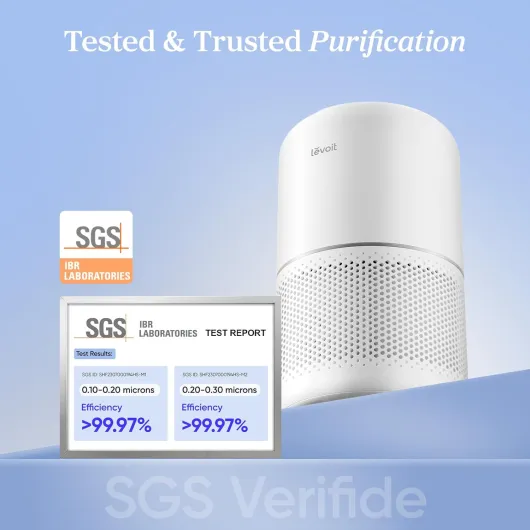
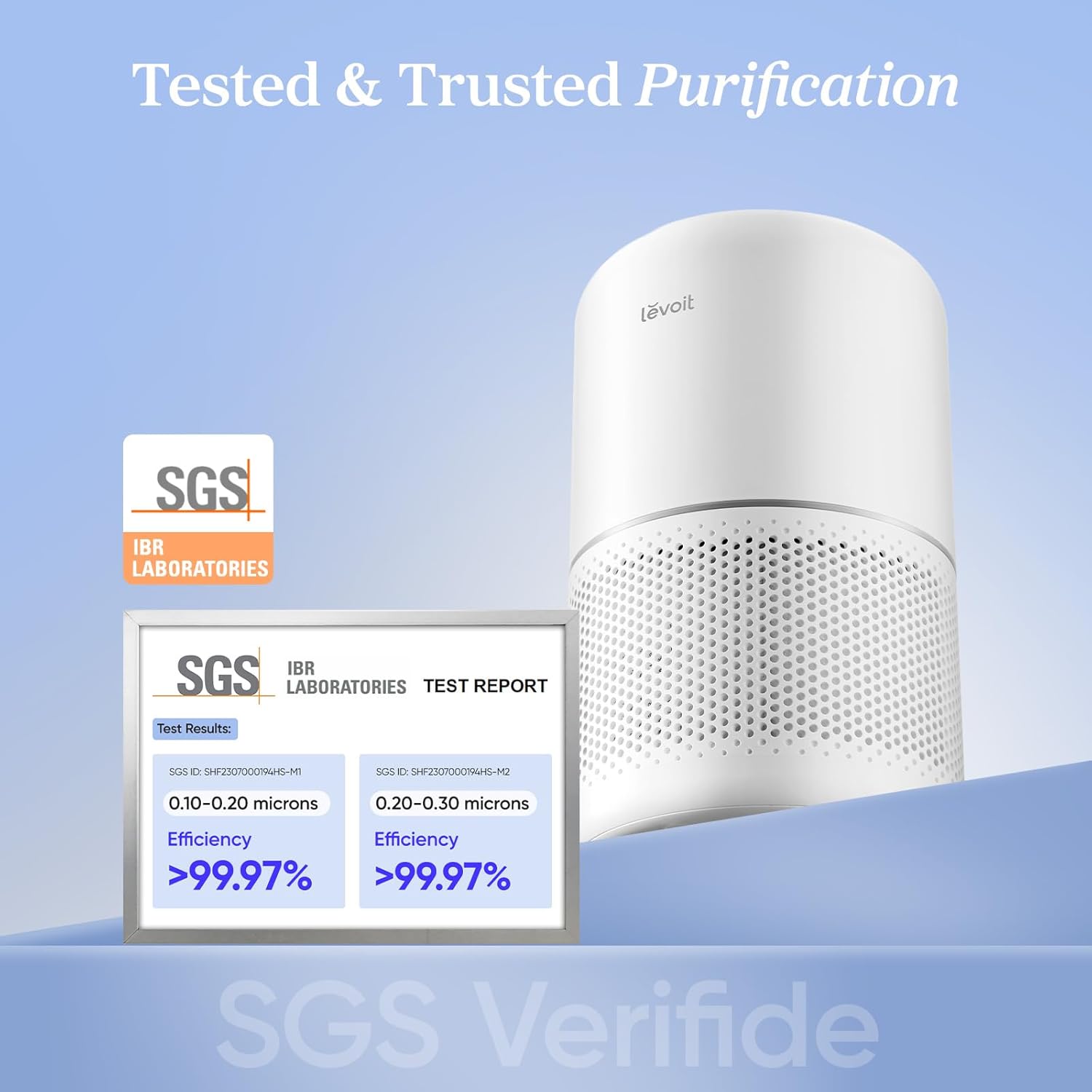
True HEPA filters are certified to capture at least 99.97 percent of 0.3 micrometre particles, which include many combustion particles from traffic and smoke. In practice, a high quality HEPA filter also captures a large share of smaller and larger particles, from fine dust to some bacteria and allergens, which is why they are standard in medical and clean room environments. For offices near busy roads or industrial zones, pairing a true HEPA filter with a strong particle filter stage ensures that staff inhale far fewer harmful particles during long workdays.
Activated carbon filters play a different but complementary role by targeting volatile organic compounds and odours. Printers, cleaning products, furniture, and building materials all emit gases that do not show up in simple particle counts but still affect perceived air quality and comfort. A thick activated carbon bed inside the purifier can reduce these compounds significantly, especially when combined with regular ventilation and careful product choices.
Some modern air purifiers add smart features that help you manage filtration more effectively across an office. A built in quality sensor can track particle levels continuously and adjust fan speed automatically, ensuring that the purifier only runs at maximum power when necessary. This auto mode not only maintains cleaner air but also reduces noise and energy consumption during quieter periods.
When comparing filters, pay attention to replacement intervals and costs, because these determine the long term economics of your air purifiers. A cheaper purifier with small filters that clog quickly may end up costing more than a premium model with larger, longer lasting HEPA and activated carbon cartridges. Check whether the pre filter is washable, because this simple feature can extend the life of the main filters and keep CADR performance closer to the original purifiers tested in laboratories.
Some brands, such as Blueair and Coway Airmega, design proprietary particle filter media that balance airflow resistance and capture efficiency. These designs allow higher CADR at a given fan speed, which means more clean air with less noise, a crucial advantage in quiet offices and meeting rooms. Levoit Core models, by contrast, often focus on compact cylindrical filters that are easy to replace, making maintenance simpler for small businesses without dedicated facility staff.
Before committing to a fleet of office air purifiers, review at least one independent video review or lab report for each candidate model. Look for tests that measure how quickly the purifier reduces smoke particles or fine dust in a controlled room, and how well it maintains low levels over time. This kind of evidence based comparison is far more reliable than marketing slogans about powerful air cleaning, because it reflects real particle removal rather than just airflow claims.
Noise, smart controls and energy use in daily office life
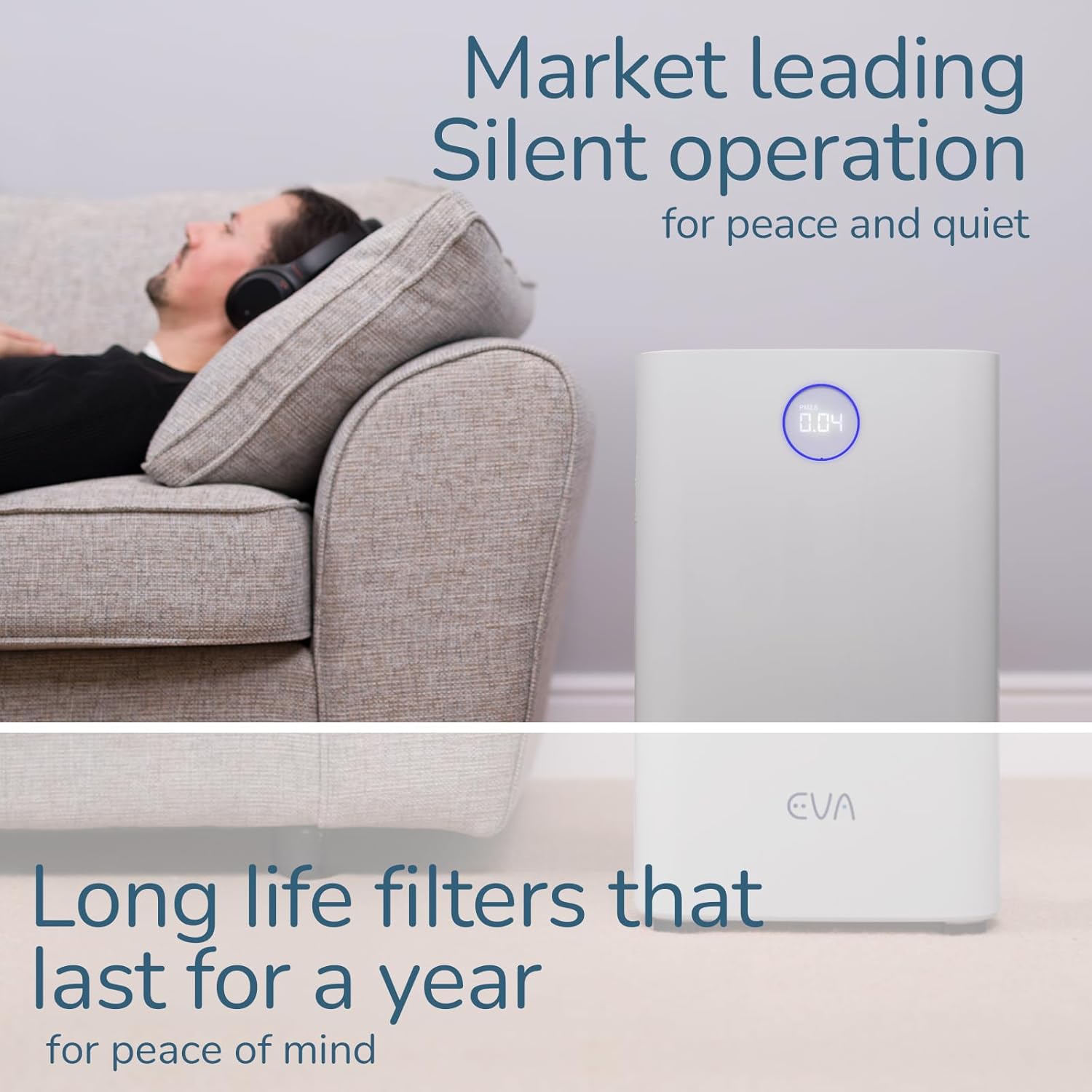
Even the best air purifiers for offices must coexist with phone calls, video meetings, and focused work. Noise levels therefore become a decisive factor, because a purifier that hums loudly at high fan speed will quickly be switched off by frustrated staff. Aim for models that remain below roughly 45 decibels on their typical operating mode, which blends into normal office background sound.
Smart controls can help balance noise, energy, and air quality without constant manual adjustments. Many modern air purifiers include Wi Fi connectivity, app control, and integration with building management systems, allowing facility teams to monitor multiple units from a central dashboard. With these tools, you can schedule higher fan speed during cleaning hours, then rely on auto mode and the onboard quality sensor to maintain clean air quietly during working hours.
Energy consumption matters because office purifiers often run for ten or more hours each day. Look for models with clear energy ratings and consider how often they will operate at maximum speed versus lower modes, since fan power rises sharply with speed. A smart air purifier that spends most of its time in an efficient medium mode while still delivering enough air changes per hour can cost significantly less to run than a basic purifier left on full power.
Auto mode is particularly useful in offices with fluctuating occupancy, such as coworking spaces or hybrid teams. When more people enter a room and generate additional particles from movement, conversations, and equipment, the quality sensor detects the change and increases fan speed automatically. Once particle levels drop and clean air is restored, the purifier returns to a quieter mode, reducing both noise and energy use without human intervention.
Some brands offer detailed air quality readouts on the device or in their apps, showing particle counts or colour coded indicators. These displays can reassure staff that the air purifiers are working, especially during events such as wildfire smoke episodes or nearby construction that raises dust levels. Transparent air quality data also supports communication with leadership about the value of investing in higher quality filters and regular maintenance.
When reading user feedback on Amazon or other retailers, pay close attention to comments about long term noise behaviour. Fans and bearings can change character over time, so a purifier that seems quiet in the first week might develop rattles or higher pitched tones later if build quality is poor. Choosing models from established brands such as Blueair, Levoit, or Coway Airmega can reduce this risk, because their purifiers tested in larger volumes often reveal design flaws before wide release.
Finally, consider how easily staff can interact with the controls without disrupting their workflow. Simple mode buttons, clear icons for fan speed, and intuitive indicators for filter replacement reduce the chance of accidental misconfiguration. In busy offices, the ideal air purifier quietly maintains clean air in the background, adjusting speed and energy use intelligently while demanding as little attention as possible from the people it protects.
Maintenance, monitoring and long term performance
Maintaining the best air purifiers for offices is not just about changing filters on schedule. It involves monitoring air quality trends, checking that each air purifier still delivers its rated CADR, and ensuring that noise and airflow remain acceptable for staff. A neglected purifier with clogged filters can become little more than an expensive fan that moves dirty air around.
Start with a clear maintenance plan that lists pre filter cleaning intervals, HEPA filter replacement dates, and activated carbon change schedules for every unit. Many smart air purifiers track filter life based on fan speed and operating hours, then alert you when performance may drop, which simplifies planning for larger offices. Keep a simple log so that you can correlate any changes in staff comfort or reported symptoms with filter ageing or recent replacements.
Portable particle counters have become more affordable, allowing facility teams to verify that purifiers tested well in labs still perform effectively in real offices. By measuring particle levels before and after running a purifier at a given fan speed, you can confirm whether air changes per hour remain adequate or whether filters are starting to clog. This data driven approach also helps justify investments in higher quality filters or additional units when air quality targets are not met.
Pay attention to how often staff report smells from smoke, cooking, or cleaning products, because these can indicate saturated activated carbon filters. Unlike HEPA filters, which gradually clog and reduce airflow, activated carbon can lose effectiveness suddenly once its adsorption sites are full, even if airflow seems normal. Replacing carbon on time is essential for maintaining perceived air quality, especially in offices near busy streets or restaurants.
Noise changes can also signal maintenance needs or mechanical wear in an air purifier. If a unit that once ran quietly at medium mode begins to rattle or whine, inspect the fan, housing, and filters for misalignment or debris, and consider warranty service if problems persist. Staff are more likely to tolerate continuous operation when purifiers remain unobtrusive, so addressing noise promptly protects both comfort and air quality.
Over several years, you may find that newer models offer better CADR CFM performance, lower energy use, or more accurate quality sensors than your original fleet. When planning replacements, compare not only purchase price but also filter costs, expected lifespan, and the value of features such as auto mode and remote monitoring. In many cases, upgrading a portion of your air purifiers to more efficient models can reduce overall energy consumption while improving clean air delivery.
Ultimately, treating office air purifiers as part of a broader indoor air quality strategy yields the best results. Combine filtration with adequate ventilation, humidity control, and source reduction measures such as low emission materials and careful cleaning product choices. When these elements work together, staff benefit from consistently cleaner air, fewer odours, and a more comfortable environment that supports concentration and health.
Key statistics on office air quality and purifiers
- In a controlled study by researchers at the Harvard T.H. Chan School of Public Health on cognitive function in office environments, workers in spaces with higher ventilation and lower particle levels scored substantially higher on decision making tests than those in conventional offices, highlighting the impact of clean air on performance (Allen et al., Environmental Health Perspectives, 2016).
- Research from the U.S. Environmental Protection Agency (EPA) indicates that people spend about 90 percent of their time indoors, and typical indoor air can be two to five times more polluted than outdoor air, which underscores the value of effective office air purifiers (EPA Report to Congress on Indoor Air Quality, 1989; EPA Indoor Air Quality publications).
- During severe wildfire smoke events in North America, fine particle (PM2.5) concentrations indoors have been measured at more than three times World Health Organization guideline levels in buildings without filtration, while rooms equipped with HEPA air purifiers achieved reductions of roughly 50 to 80 percent in PM2.5 levels (e.g., Barn et al., Indoor Air, 2016; WHO Global Air Quality Guidelines, 2021).
- Field measurements in offices using portable HEPA air purifiers have documented increases from roughly one to four or more air changes per hour, which is associated with significant reductions in airborne particle concentrations and potentially lower transmission risk for respiratory infections (Miller et al., ASHRAE Journal case studies; CDC and ASHRAE guidance on portable HEPA units).
- Energy Star estimates that certified room air purifiers are about 25 percent more energy efficient on average than standard models, which can translate into substantial electricity savings for offices running multiple units for many hours each day (ENERGY STAR Product Specification for Room Air Cleaners, Version 2.0).