
Summary
Editor's rating
Is it worth the price compared to cheaper purifiers?
Big cylinder that actually fits in a normal living room
Noise, daily use, and living with it 24/7
Build quality and filters over time
How it actually cleans the air day to day
What you actually get out of the box
Pros
- Very quiet in night and low modes, easy to sleep next to
- Strong CADR and effective at reducing dust, smells and allergy triggers in medium to large rooms
- Simple maintenance with app reminders and easy filter access
Cons
- Bulky and needs space around it for proper airflow
- App is quite limited in terms of air quality details and controls
- Replacement filters add noticeable long-term cost

Specifications
View full product page →| Brand | Philips |
Big purifier, small noise
I’ve been using the Philips Air Purifier 3200 Series (AC3220/10) for a few weeks now in a 2‑bed flat with a cat and occasional cooking smells that hang around way too long. I’m not an air quality geek, I just wanted less dust, fewer sneezing fits and a living room that doesn’t smell like last night’s stir fry. I’ve used cheaper Levoit and Silentnight purifiers before, and I’ve tried a Dyson Hot+Cool at a friend’s place, so I had a bit of a baseline for comparison.
The first thing that stood out is how quiet this thing is in real use. On night mode, I honestly stop noticing it after a few minutes. On medium you hear a soft whoosh, but it’s miles better than the low‑end units I had, which sounded like a PC fan on full blast. Philips makes a big deal about the 15 dB figure, and while I didn’t measure it, it does feel right that it’s way below any normal room noise at night.
In terms of air quality, the change is not some magic instant effect, but after 2–3 days running it mostly on auto/medium, I noticed less dust settling on the TV unit and shelves, and I woke up with less of that dry, irritated nose feeling. My partner, who is more sensitive to cat dander, also said their nose felt less blocked in the evenings. So it’s not life‑changing, but there’s a clear, practical improvement compared to having no purifier or the cheaper ones we used before.
Overall, my first impression is: this is a solid, no‑drama machine. It’s not cheap, it’s fairly big, and the app is useful but a bit basic. But if you care mainly about quieter operation and stronger filtration in a larger room, it feels like it actually does what the spec sheet promises, without turning the living room into an airplane cabin.
Is it worth the price compared to cheaper purifiers?
On value for money, this Philips sits in that awkward middle: more expensive than basic Levoit/Silentnight units, cheaper than high‑end Dyson setups. For the price, you’re mainly paying for three things: higher CADR (520 m³/h), quieter operation, and the Philips brand with app integration. If you live in a small studio and just want “some” air cleaning, honestly, a cheaper purifier will probably be enough. But if you have allergies, pets, or an open‑plan living area, the extra performance starts to make sense.
Compared to my Levoit 300, the Philips cleans faster, handles smells better, and is noticeably quieter at similar cleaning levels. The Levoit did okay in a bedroom, but struggled in the living room when cooking or with cat litter smells. The Philips doesn’t magically erase everything, but it keeps the background air quality more stable, so you get fewer spikes and less lingering odor. For me, that upgrade justified the extra cost, especially since it’s a device that runs almost non‑stop.
Against a Dyson Hot+Cool, it’s a different story. The Dyson is also a heater and fan, so you’re paying for a multi‑function device and a design statement. In pure air purification, I’d say the Philips holds its own or is better value because you’re not paying for the heater and the fancy design. If you only care about clean air, this Philips gives you strong filtration, decent app features, and low noise at a lower price than Dyson’s big models.
The downside on value is the ongoing filter cost and the fact the app is a bit limited for something marketed as “smart”. You get enough info to be useful, but not enough to feel like you’re getting full data nerd value. Still, if your priority is a reliable, quiet purifier for a medium to large room, I’d say the overall package is pretty solid. Not the cheapest way to clean air, but a fair balance of performance, comfort, and running costs.
Big cylinder that actually fits in a normal living room
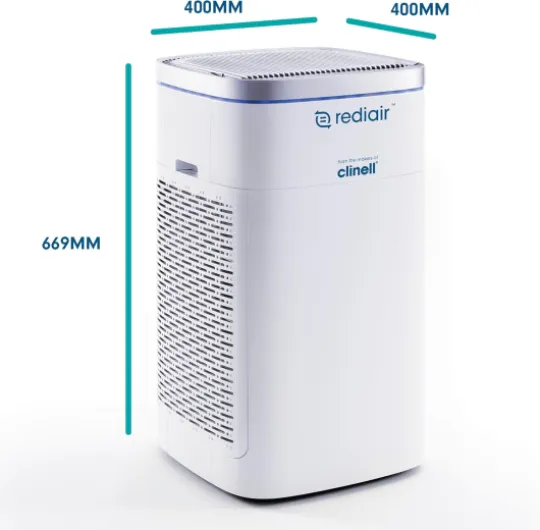
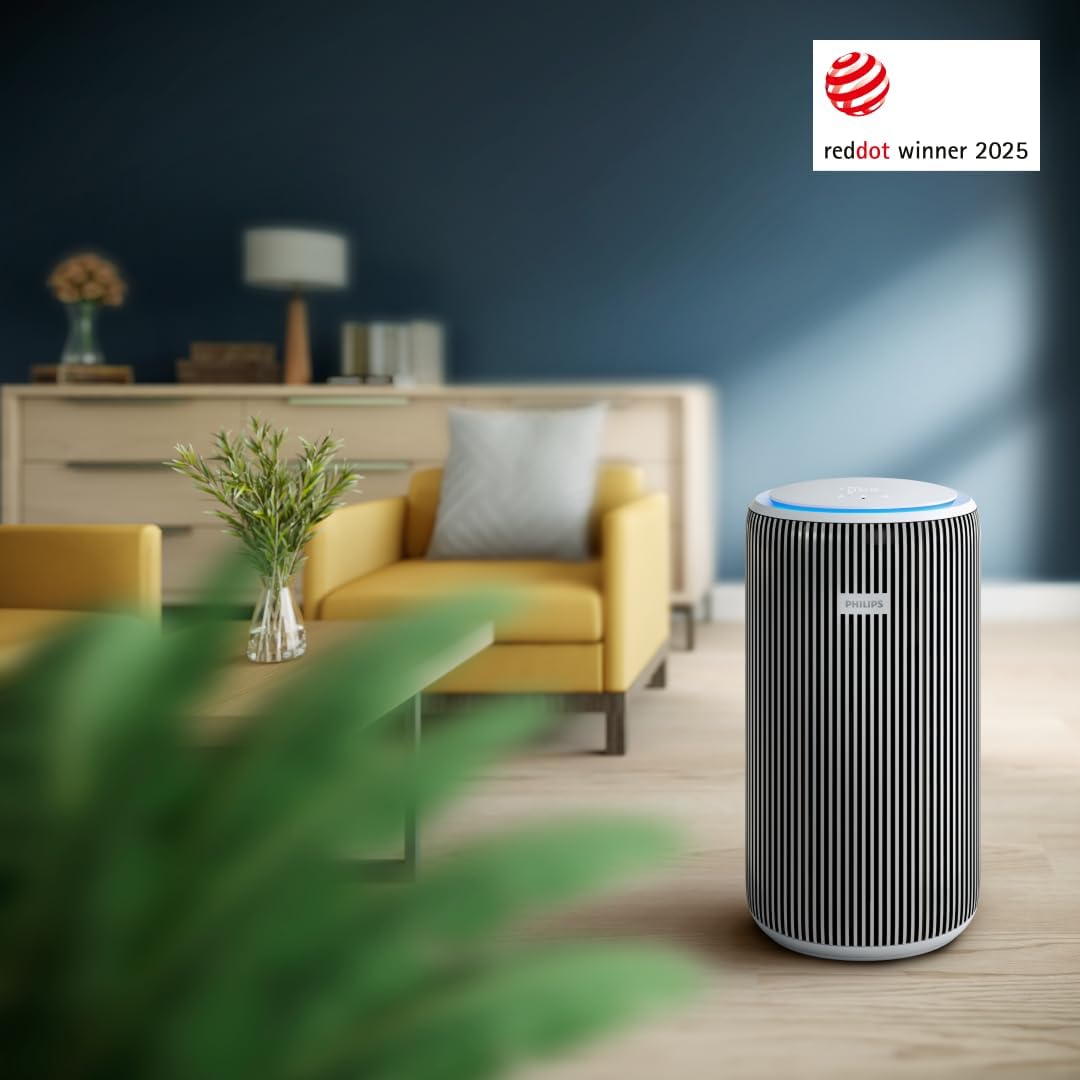
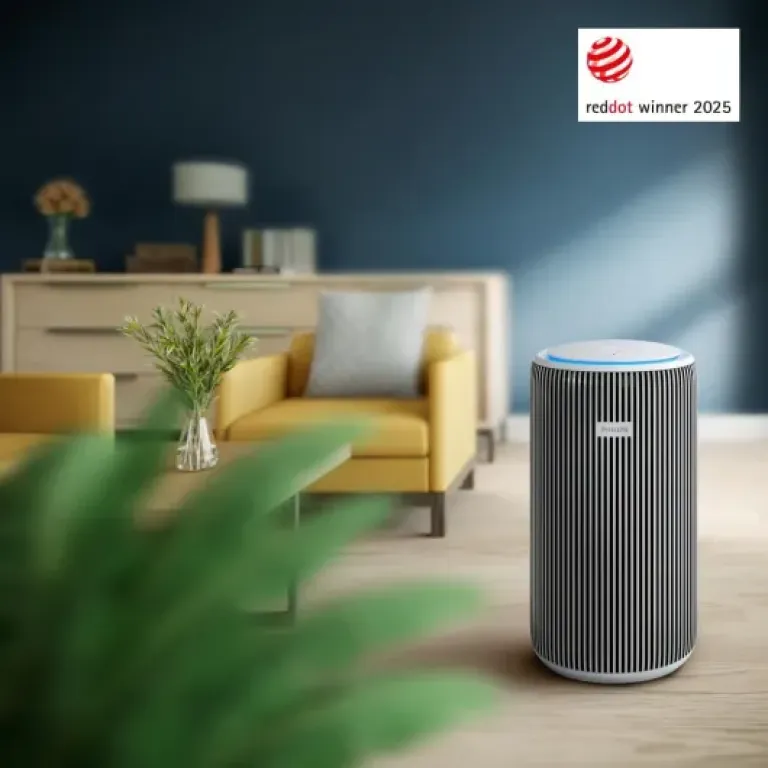
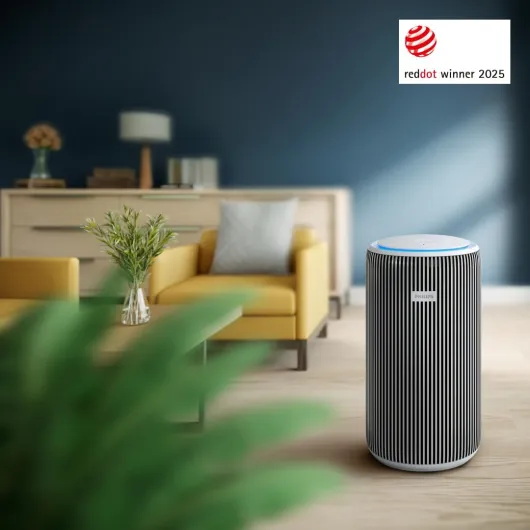
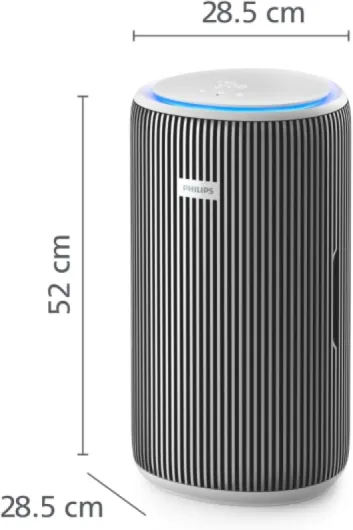
Design‑wise, this purifier is pretty neutral, which I appreciated. It’s a tall cylinder (around 52 cm high, 28.5 cm wide) in white and silver. No glossy plastic, no weird shapes. It blends in next to a TV unit or a low shelf without screaming “medical device”. The flat top is a small but very practical detail: dust doesn’t collect in awkward grills, and you can wipe it with one swipe. Compared to my older purifiers that had deep vents on top, this is much easier to keep clean.
The controls are on the top: a small touch panel with basic icons for power, mode (auto, night, turbo, maybe allergen mode depending on region), and a light ring that changes color with air quality. The feedback is clear enough that after the first day I didn’t really need to open the app to know what was going on. If the ring is blue, air is fine; if it goes purple or red, someone is cooking or spraying something. I like that you can dim or turn off the light for night use so it doesn’t turn the bedroom into a Christmas tree.
One thing to keep in mind: it’s not tiny. At 6.2 kg and that footprint, you need a proper spot. The air intake is all around the sides and the outlet is on the top, so you can’t shove it right up against a wall or under a table with no space. In my living room, I ended up putting it about 30 cm away from the wall and not too close to furniture, which looks okay but you do have to plan the placement a bit. If your room is cluttered or very small, it might feel in the way.
Build quality feels decent for the price bracket: the plastic doesn’t creak, the filter cover snaps on and off easily, and carrying it around by grabbing the sides is manageable. There’s no fancy handle, which is a small downside if you want to move it between floors regularly. Overall, the design is practical and discreet rather than stylish, and for a device that’s supposed to run quietly in the background, I think that’s exactly what it should be.
Noise, daily use, and living with it 24/7
In terms of comfort, this is where the Philips 3200 stands out compared to budget models. SilentWings or not, the main point is: you can actually sleep with it on. In night mode, it’s quiet enough that I forget it’s there unless the room is dead silent and I try to listen for it. There’s no annoying high‑pitched whine, just a soft airflow sound. My older Silentnight unit claimed to be quiet too, but on “low” it was still much more present than this Philips on night mode.
Daily interaction is minimal. I mostly use the touch panel to switch between auto, night and turbo, and the Air+ app when I’m on the sofa and don’t want to get up. The app is basic but handy: you can see real‑time PM2.5, allergen index, humidity and temperature. You can also set routines like “turbo for 15 minutes at 9 pm, then night mode”. This is useful if, for example, you always cook around the same time. That said, the app doesn’t show VOCs or more detailed pollution breakdowns, which feels a bit barebones given the price and the “smart” label.
Comfort also means maintenance. Cleaning the pre‑filter is easy: pop the back off, give it a vacuum or a rinse (depending on what Philips recommends), dry, and pop it back in. The app reminds you to clean the filter every few weeks and gives a rough estimate of remaining filter life. Compared to some brands where you have to guess or stick a label on the calendar, this is much more convenient. Filters are supposed to last about a year depending on use; that will obviously vary if you smoke inside or live in a very dusty area.
The only comfort downsides I ran into: it sometimes emits a random short beep with no clear reason, and it does require a bit of space around it, so in a crowded room you might feel like you’re constantly moving it to avoid blocking the airflow. But overall, as something that runs almost all the time, it’s one of the least annoying appliances I own – quiet, low effort, and not constantly demanding attention.
Build quality and filters over time
I obviously haven’t had this purifier for years, so I can’t pretend to know exactly how long it will last, but I can comment on build feel and how the filter system seems designed. The body feels solid enough for a home appliance: no rattling when the fan ramps up, no weird vibrations, and the plastic doesn’t feel paper‑thin. Philips is a known brand for this kind of thing, and it does give a bit more confidence than some no‑name units I’ve tried that started squeaking after a few months.
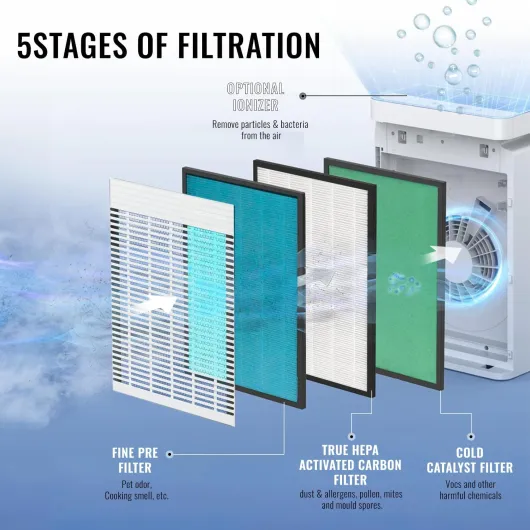
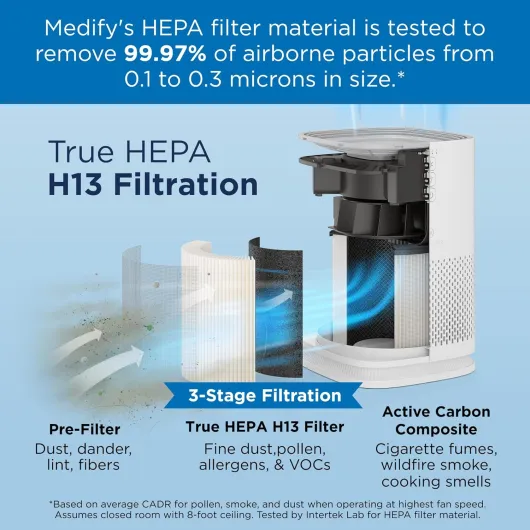
The main wear item is the 3‑in‑1 filter (HEPA + active carbon + pre‑filter). Philips claims it captures 99.97% of particles down to 0.003 microns and removes a good chunk of viruses and bacteria in the air. Marketing aside, what matters is how often you’ll need to replace it and how painful that is. Here, it’s one big cartridge that slides in and out easily. The app tracks usage and gives you a percentage of remaining life. With my usage (auto/medium most of the day, night mode at night), it estimates close to a year of life, which lines up with what Philips says. If you’re in a polluted city or run it on high all the time, expect less.
Filter price is not dirt cheap, and that’s something to factor into long‑term cost. It’s still better than some brands where you have to buy multiple separate filters every few months. Being able to vacuum the pre‑filter regularly helps extend the life of the main filter, and the reminder system means you’re less likely to forget and run it with a clogged filter for ages, which hurts both performance and the motor.
Given the low 36W power draw, the motor is not being pushed to extremes, which in theory should help durability. Also, noise levels stayed consistent during my test period – no new sounds, no rattles, which is a good sign. I’d still treat it as a long‑term purchase where you’ll probably swap filters once a year and expect the machine itself to last several years. There are definitely cheaper units out there, but many of them feel like something you’ll replace entirely when the first big issue appears. This one feels more like a device you maintain over time, not a disposable gadget.
How it actually cleans the air day to day
On raw performance, this Philips does a good job. With the HEPA NanoProtect + active carbon filter, it’s meant to handle dust, pollen, pet dander, smoke and everyday smells. I don’t have lab equipment, but I tested it in a few real‑life situations. After cooking something greasy in the open kitchen, the PM2.5 number in the app jumped up and the light ring went purple. On auto, it ramped up the fan speed on its own and, within about 10–15 minutes, the smell in the living room dropped to a faint trace. If I forced turbo mode, it was even faster, but then you hear it more.
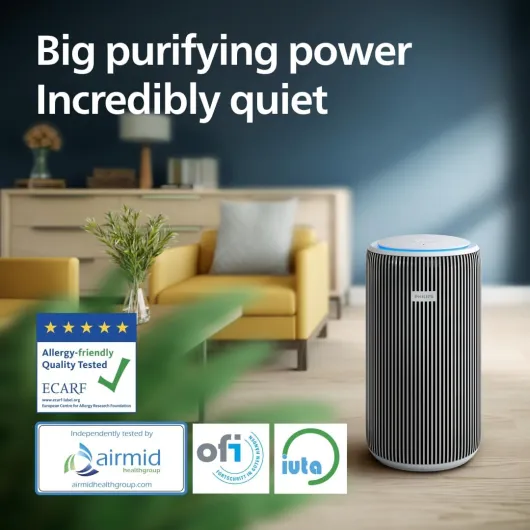
For allergies, it’s harder to measure, but I do notice less eye itching and fewer sneezes in the evening compared to when I just used a smaller Levoit. The ECARF allergy certification is nice on paper, but what matters to me is that after a few days running almost non‑stop, surfaces had less visible dust and my partner’s cat allergy symptoms were milder. Not gone, but clearly reduced. It also seems to handle cat toilet smells better than cheaper units, as long as the purifier isn’t blocked by furniture and is on at least medium speed.
The auto mode is decent but a bit conservative. In my living room, with a cat litter box on the opposite side of a sofa, auto sometimes didn’t pick up the smell strongly enough. The app still showed “good” air while my nose said otherwise. Bumping it manually to medium and leaving it there solved the issue, but it means you don’t always want to rely blindly on auto in more complex room layouts. The coverage spec of 135 m² is clearly “open space ideal conditions”; in a real home with walls and furniture, think in terms of one main room at a time.
Noise vs performance balance is actually pretty good. Night mode is very quiet and still seems to keep the numbers low in a bedroom. Medium is a soft background noise, roughly like a quiet fan on low. Turbo is noticeably louder, but you’ll probably only run it for short bursts. Given the 36W max power, it’s also not a huge energy hog, so leaving it on all day on auto or low doesn’t feel like a big deal. For everyday use – dust, allergies, cooking smells – it simply gets the job done better and more quietly than the cheaper purifiers I’ve owned.
What you actually get out of the box
Out of the box, the Philips 3200 feels like a mid‑to‑high end appliance, not a plastic toy. You get the unit itself, the combined HEPA + carbon filter already fitted inside (with the classic plastic wrap you must remove), a short manual, and that’s pretty much it. No remote in the box despite the “remote control” wording in some descriptions – the “remote” is basically your phone with the Air+ app. Setup is simple: peel off the filter plastic, plug it in, and it starts in auto mode right away.
The specs sound impressive on paper: CADR 520 m³/h and coverage up to 135 m². In reality, think of it more like: one large open‑plan living/dining room or a medium flat with doors open. I used it mainly in a 25–30 m² living room with the kitchen opening into it, and it had no issue dealing with cooking smells if I put it on turbo for 10–15 minutes. For bedrooms or smaller rooms it’s clearly overkill in terms of capacity, but the advantage is it can run very quietly while still cleaning well.
The app pairing was straightforward. It found the device quickly and connected to Wi‑Fi without drama. Once linked, you see PM2.5, an allergen index, plus temperature and humidity. It’s not a full “lab dashboard”, but it gives enough to see when something in the room is polluting the air – like cooking, aerosols, or opening a window onto traffic. You can also set schedules (for example, night mode at 10 pm, medium from 7 am, etc.), which is honestly one of the most useful features in daily use.
In practice, the presentation of the product is clean and simple: no unnecessary accessories, no complicated buttons, just a top touch panel and the app. If you like gadgets with tons of modes and graphs, you might find it a bit basic. If you just want to plug it in, connect once, and let it run on auto with an occasional manual boost, the way Philips has packaged and presented it fits that “set and forget” style pretty well.
Pros
- Very quiet in night and low modes, easy to sleep next to
- Strong CADR and effective at reducing dust, smells and allergy triggers in medium to large rooms
- Simple maintenance with app reminders and easy filter access
Cons
- Bulky and needs space around it for proper airflow
- App is quite limited in terms of air quality details and controls
- Replacement filters add noticeable long-term cost
Conclusion
Editor's rating
After living with the Philips Air Purifier 3200 Series for a while, my conclusion is simple: it’s a quiet, capable workhorse that does its job without drawing much attention. It cleans the air in a medium to large room faster and more quietly than the cheaper purifiers I’ve used, and it handles everyday issues like dust, pet dander and cooking smells in a steady, predictable way. The HEPA + carbon filter combo seems effective, and the allergy benefits in my case were noticeable, though not magical – fewer sneezes, less irritation, and less visible dust on surfaces.
Where it stands out is comfort: low noise, easy maintenance, and an app that, while basic, is actually useful for schedules and quick checks. On the other hand, it’s not perfect. It’s big, it needs a decent spot with space around it, the app data is limited, and the auto mode can be a bit too relaxed in tricky room layouts. Filters also add to the long‑term cost, so this isn’t the cheapest solution if you’re on a tight budget.
I’d recommend this model to people with allergies, pets, or open‑plan living spaces who want something they can run almost 24/7 without being driven mad by noise. If you’re in a small room, or you just want a basic purifier to use occasionally, you can save money with a simpler model. If you mainly want a stylish object or extra functions like heating, then a Dyson might fit you better. But if your priority is just clean air, quietly, from a known brand, this Philips 3200 is a pretty solid choice overall.