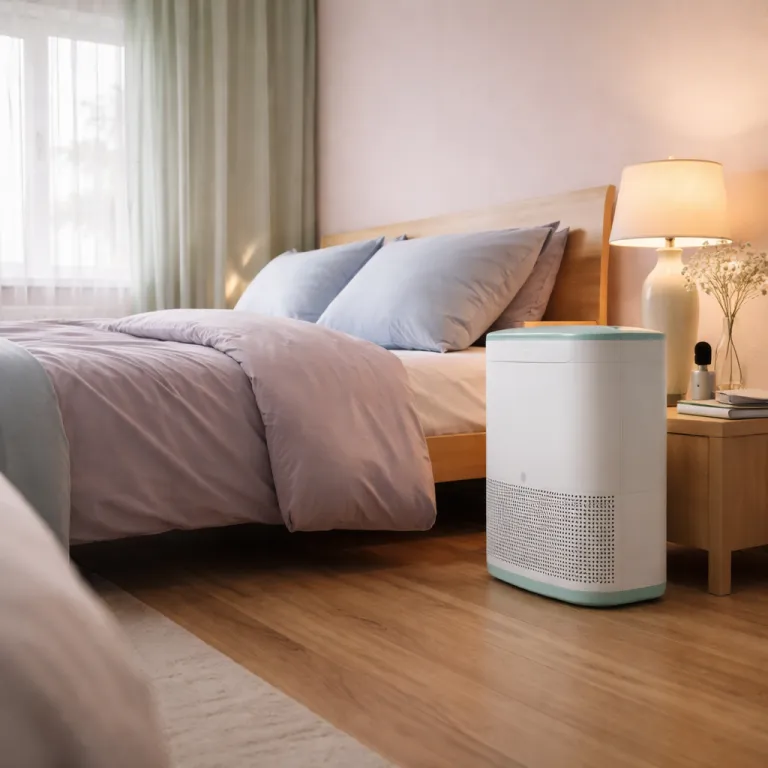

Why a quiet air purifier for bedroom is harder to find than it seems
Marketing promises about a quiet air purifier for bedroom use often collapse once a light sleeper or new parent tries to rest beside the device. A single decibel number on the box hides how the air, motor and fan interact to create different types of noise that either fade into the background or keep you awake. When you compare air purifiers, you need to judge not only raw performance and power but also how the sound feels in your specific room.
Most brands quote an A weighted decibel rating, typically measured at about one metre in front of the unit in a controlled test space that rarely matches the layout of a real bedroom. This A weighted standard downplays very low frequency hum and emphasises mid range frequencies where human ears are most sensitive, yet it still compresses a full sound spectrum into one tidy figure that tells you little about tonal character. A purifier that measures 26 dB(A) with a sharp high hiss can be far more disruptive to sleep than a model rated at 30 dB(A) that produces a smooth low rumble of quiet air.
For a baby’s room or a shared bedroom, think about how the purifier will sound at the pillow, not in a laboratory. Place the air cleaner where you actually intend to use it, then listen at different fan speed settings while the rest of the house is silent. If the noise changes pitch as the fan ramps up or down, that modulation may wake a sensitive sleeper even when the overall sound level remains technically low.
Decibels, tonal character and why sleep mode is not always your friend
Decibel ratings for air purifiers are usually taken at the lowest fan speed, which flatters the product but rarely reflects real night time use. When you switch to sleep mode, the purifier often cuts fan speed so aggressively that clean air delivery drops, and CADR CFM can fall by roughly 40 to 60 percent compared with the high setting according to typical manufacturer specifications and Consumer Reports style test summaries. In a small nursery this might still maintain acceptable air quality, yet in a medium or large room the same quiet setting may leave pollen and fine particles lingering for hours.
Sound quality matters as much as sound quantity, especially when you want a quiet air purifier for bedroom use near a cot or bassinet. High frequency hiss from turbulent air at the grille tends to pierce through closed doors and can wake a baby more easily than a low frequency hum from the motor, even when both are measured at the same dB(A) level. When you test purifiers, listen for rattles, whistles and tonal peaks rather than focusing only on the claimed quiet air performance on the packaging.
Sleep modes on many air purifiers also dim the quality sensor lights and lock fan speed, which can be helpful but sometimes risky. If outdoor smoke or pet dander suddenly increases, a fixed low fan speed will not react, so the purifier may fail to keep up with the pollution load in the room. For bedrooms between 20 and 50 m², a balanced approach is to use a mid fan speed that keeps CADR CFM high enough for clean air while still limiting noise to a gentle, consistent backdrop.
Some parents prefer a 2 in 1 air purifier and humidifier with a very low noise floor, especially in dry climates where nasal passages need protection during sleep. A tested H13 true HEPA filter combined with carbon filtration can manage dust, smoke and pollen while a 25 dB(A) sleep mode maintains comfort for the child. For a detailed example of such a product, you can look at a lab style test of a quiet bedroom purifier with integrated humidification and compare how its performance changes between modes.
Room size, CADR and how to calculate enough clean air for the night
Choosing the best quiet air purifier for bedroom use starts with matching CADR to room volume, not with chasing the lowest possible noise figure. CADR, or Clean Air Delivery Rate, combines filter efficiency and airflow to show how much clean air a purifier can supply each minute at a given fan speed. For a typical 12 m² nursery with a standard ceiling height, you want enough powerful air movement to achieve at least four to five air changes per hour while still keeping noise gentle.
Manufacturers often quote CADR CFM at the highest fan speed, yet many parents only use low or medium settings overnight. To estimate real performance, take the stated CADR CFM, assume sleep mode reduces it by roughly half, then check whether that reduced figure still supports your room size. For example, a unit with a CADR of 120 CFM in a 12 m² bedroom with a 2.4 m ceiling (about 1,000 cubic feet) delivers around seven air changes per hour on high, but only about three to four air changes per hour if sleep mode cuts CADR to 60 CFM.
Portable air purifiers such as the Levoit Core series or Blue Pure units illustrate how different designs balance power, noise and energy use. A Levoit Core air purifier might offer an efficient true HEPA filter and smart auto mode with a quality sensor, while a Blue Pure purifier relies on a large pre filter and high airflow to reach its rated stars for clean air delivery. Before you buy from Amazon or any other retailer, check whether purifiers tested by independent labs maintain enough CADR on quiet settings, and use any 14 day return policy to sleep beside the device and judge the sound for yourself.
Some readers also look at portable oxygen solutions for relatives with respiratory issues, and the same principles of noise, airflow and comfort apply. Devices such as those described in a guide to comfortable portable oxygen therapy show how continuous low level sound can either soothe or disturb depending on tonal character. When you evaluate any bedroom machine that moves air, think about how its sound will blend with your existing environment across a full night of sleep.
Auto mode, fan speed ramps and the white noise question
Auto mode on an air purifier sounds convenient, yet in a bedroom it can become a hidden source of sleep disruption. When the quality sensor detects a spike in particles from pollen, smoke or a door opening, the purifier may suddenly jump from low to high fan speed in the middle of the night. That abrupt change in noise, not the absolute volume, is what often wakes light sleepers and unsettles babies.
For a truly quiet air purifier for bedroom use, consider running the device in manual mode at a fixed fan speed during the night. Set a comfortable level that keeps noise steady while still providing enough clean air, then rely on auto mode only during the day when fluctuating sound is less intrusive. Some smart air purifiers allow you to schedule different fan speeds, so you can enjoy high performance and powerful air cleaning before bedtime and then lock in a quieter setting while everyone sleeps.
White noise is not automatically a problem; many adults and children find a consistent low hum soothing because it masks sudden sounds from traffic or neighbours. The key is consistency, so a purifier that maintains one stable tone at a moderate speed can double as a white noise machine while still improving air quality. When you read any video review or user feedback on Amazon, pay attention to comments about noise changes over time, not just the headline claim of quiet air operation.
Models such as the Levoit Core series or certain Blue Pure purifiers often include multiple filters, including a pre filter and true HEPA stage, which can slightly alter sound as they load with dust. If you notice new rattles or whistles, check whether the filter is seated correctly and whether the room placement near walls is causing echoes. A well designed purifier will keep its tonal character stable across different fan speeds, which is essential when you want predictable background sound for sleep.
Placement, maintenance and real world buying checks for bedroom purifiers
Even the best quiet air purifier for bedroom use can sound harsher than expected if you place it badly. Position the purifier at least one metre from the bed, slightly off the floor on a stable surface, and away from corners where walls can reflect noise and amplify certain frequencies. This placement also helps the air intake and outlet work efficiently, improving performance without needing maximum power or fan speed.
Filter design and maintenance strongly influence both noise and long term price. A clogged pre filter forces the fan to work harder, which raises noise and reduces clean air output, so washing or replacing that first stage regularly keeps the purifier running quietly. True HEPA filters and carbon filters also load over time; when they become saturated, the motor may strain, so following the product schedule for replacement is essential for both air quality and quiet air operation.
When you compare air purifiers on Amazon or in shops, look beyond glossy claims and check practical details. Examine how many filters the purifier uses, whether the quality sensor and auto mode can be disabled at night, and how many rated stars real users give to noise performance in bedrooms. A thorough independent test of a HEPA bedroom purifier with ultra quiet sleep mode can show how a model behaves across different fan speeds, not just in ideal marketing conditions.
For new parents, budget and energy use matter as much as technical specifications. A slightly higher upfront price for an efficient purifier with low standby power and long lasting filters can cost less over time than a cheaper unit that needs frequent replacements and runs loudly at high speed. Use any trial or return window to run the purifier every night for at least a week, listening from the bed and from the baby’s cot, and only then decide whether this particular air purifier truly earns its place in your bedroom.
FAQ
How quiet should a bedroom air purifier be for a baby?
For most nurseries, a bedroom air purifier should stay below roughly 30 dB(A) at the pillow, with a smooth, low hum rather than a sharp hiss. The exact number matters less than whether the sound is steady and free from rattles or sudden fan speed jumps. Test the purifier during naps and at night, and if your baby startles when the fan changes tone, switch from auto mode to a fixed low or medium setting.
Can I run an air purifier on high speed all night?
Running an air purifier on high speed all night usually delivers the strongest air cleaning but can be too noisy for light sleepers. A practical strategy is to use high speed for one or two hours before bedtime to flush the room, then drop to a quieter medium setting overnight. This approach keeps air quality high while reducing noise to a more comfortable level for continuous sleep.
Where should I place a purifier in a small bedroom?
In a small bedroom, place the purifier at least one metre from the bed and not directly against a wall or in a corner. Elevating it slightly on a stable table or stand helps airflow and often softens noise reflections. Avoid blocking the intake or outlet with curtains or furniture, as this can both reduce performance and create extra turbulence noise.
Do all true HEPA filters make purifiers louder?
True HEPA filters themselves do not automatically make purifiers louder; the noise mainly comes from how much air the fan pushes through them. A well designed purifier with a large filter surface can move enough air at lower speed, which keeps sound levels modest. Compact units with small filters often need higher fan speed to reach the same CADR, which can increase noise, so checking both filter size and CADR is important.
Is white noise from a purifier safe for children?
Consistent white noise from a purifier at moderate volume is generally considered safe for children and can even help mask sudden sounds that might wake them. The key is to keep the device at a reasonable distance and avoid very high fan speeds that produce sharp or fluctuating noise. If you can talk comfortably over the purifier without raising your voice, the sound level is usually appropriate for long term use in a child’s bedroom.
References
Consumer Reports – Air purifier ratings and testing methodology, including CADR and noise measurements at specific distances and fan speeds.
Environmental Protection Agency (EPA) – Guidance on indoor air quality, portable air cleaners and recommended air changes per hour for different room sizes.
World Health Organization (WHO) – Environmental noise guidelines and discussion of A weighted sound levels, night time exposure and health impacts.