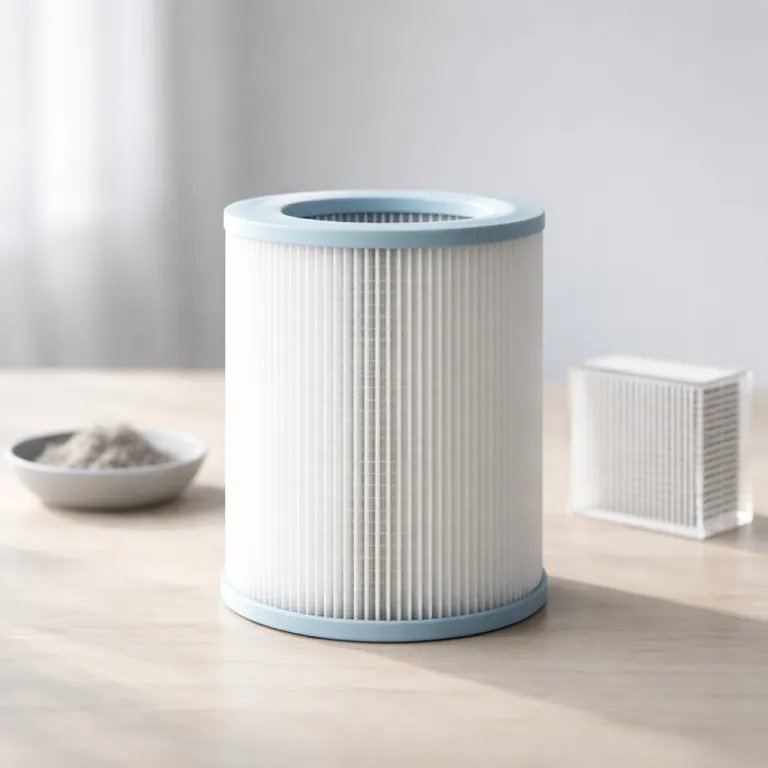

True HEPA vs H13 vs H14 filter grades: what the labels really mean
When you compare a true HEPA vs H13 vs H14 filter, the marketing on the box rarely explains what those grades mean in real indoor air. A true HEPA filter in the United States must capture at least 99.97 percent of particles with a size of 0.3 microns under controlled laboratory conditions, while European H13 and H14 filters follow the stricter EN 1822 standard that classifies each filter individually. For a person choosing an air purifier for a flat or house, the gap between these labels often matters less than the overall air filtration system design and how well it handles real airborne particles.
Under EN 1822, an H13 hepa filter must reach at least 99.95 percent filtration efficiency at the most penetrating particle size, and an H14 filter must reach 99.995 percent at the same benchmark. That most penetrating particle size, often around 0.1 to 0.3 microns, is where efficiency particulate performance is hardest to achieve, so testing at 0.3 microns gives a conservative measure of how well the filter can capture particles small enough to stay suspended in indoor air. In practice, both H13 and H14 hepa filters are high efficiency filters designed for demanding environments, but the extra nine in the H14 rating was originally intended for medical cleanrooms rather than typical living rooms.
In the United States, the term true HEPA was created to distinguish certified hepa filters from vague labels such as HEPA type or HEPA style that may use cheaper media and lower filtration efficiency. A true hepa filter should meet the 99.97 percent at 0.3 microns threshold, yet the standard focuses on the filter itself and not on leaks in the air purifier housing or gaps in the air filters seals. This is why two air purifiers that both claim true HEPA can deliver very different air quality results in the same indoor environment.
EN 1822 vs US HEPA: why H13 and H14 sound better than they perform at home
The European EN 1822 standard for hepa filters goes further than the looser US HEPA label because it tests each individual filter and classifies it as H13, H14 or even higher grades such as ulpa filters. When you see an H13 or H14 air filter, it has been checked for local leaks and overall filtration efficiency, which is reassuring for high risk medical environments where airborne particles and viruses must be tightly controlled. At home, though, the air purification benefit of moving from a solid true HEPA to an H14 filter is often much smaller than the numbers suggest.
Real world tests show that once you install a hepa filter inside an air purifier, the total system efficiency can drop to somewhere between 90 and 99.5 percent because of tiny leaks in the housing, imperfect gaskets, and turbulence in the airflow path. That means an H14 filter with theoretical 99.995 percent efficiency particulate capture may deliver almost the same indoor air quality as an H13 or true HEPA filter if the air filtration system around it is not perfectly sealed. For a smart home enthusiast who cares about indoor air and app controlled devices, it usually makes more sense to pay for a well engineered air purifier system than to chase the highest possible filter grade.
Manufacturers know that higher numbers sell, so they often highlight H14 or even mention medical grade without explaining that hospitals also control air with strict room pressure, regular maintenance, and carefully designed ventilation systems. In a typical bedroom or living room, the air environment is far more open, doors move, and people bring in new particles small and large every time they enter. If you want a deeper technical dive into how H13 and H14 compare in practice, a detailed guide on understanding the differences between HEPA 13 and HEPA 14 filters from Air Purifier Guru is a useful complement to this overview.
Filter grade vs system design: CADR, seals and airflow beat numbers on the box
When you evaluate a true HEPA vs H13 vs H14 filter, the most important question is not only how efficient the filter media is but how the entire air purifier system moves and cleans air in your room. Clean Air Delivery Rate, or CADR, measures how much filtered air a device can deliver per hour, and a mid range air purifier with a strong fan and tight seals can easily outperform a premium H14 unit that pushes too little air. For good indoor air quality, you want the air in your room to pass through the hepa filter several times per hour, which matters more than squeezing the last decimal of filtration efficiency from already high efficiency filters.
Look closely at how the air filters are installed inside the housing, because even a small gap can let airborne particles bypass the filter and reduce real world air purification. Some air purifiers use foam gaskets and metal clamps to press the hepa filters firmly into place, while cheaper models rely on loose plastic frames that can leak when the fan runs at high speed. A well sealed true hepa filter with a strong CADR will usually reduce indoor air pollutants and viruses more effectively than an H14 filter in a leaky system, especially in larger environments such as open plan living rooms.
Do not ignore the role of pre filters and carbon filters designed to capture larger particles and gases before they reach the main hepa filter, because this extends the life of the expensive media and keeps airflow stable. When you compare models, check both the CADR ratings and any mention of MERV or other efficiency particulate ratings on the air filter, then match those numbers to the size of your room. For more context on how MERV ratings relate to consumer labels, a technical explainer on understanding the differences between MERV and FPR ratings for air purifiers can help you interpret the jargon and choose a balanced system.
When H13 or H14 really matters: allergies, vulnerable people and medical style use
There are situations where choosing between a true HEPA vs H13 vs H14 filter is more than a marketing detail, especially when someone in the home faces a high medical risk from airborne particles. Families with severely allergic children, people undergoing chemotherapy, or households caring for elderly relatives with chronic lung disease may benefit from the extra safety margin of an H13 hepa filter in a well sealed air purifier. In these cases, the combination of high efficiency filtration and consistent airflow can reduce exposure to particles small enough to trigger asthma, as well as some viruses carried on droplets.
H14 filters were originally designed for hospital cleanrooms and pharmaceutical environments where even a tiny number of particles can compromise sterile procedures, so they are over specified for most domestic indoor air situations. If you are not running a home isolation room or a lab, the incremental gain from H13 to H14 is usually invisible in daily air quality, while the higher resistance of the denser media can reduce airflow and lower CADR. For a smart home user, that trade off can mean a quieter but less effective air purifier, which defeats the purpose of paying for the highest grade hepa filters.
A more balanced strategy for most homes is to choose a reliable true hepa or H13 air purifier with a strong fan, a good carbon filter, and a CADR matched to your room size, then run it continuously on an automatic mode. If you want help comparing specific models for allergies and sensitive indoor environments, independent roundups of top air purifiers for allergies can provide tested examples that combine high efficiency particulate filtration with practical features such as app control and integration with voice assistants. This approach focuses on real air filtration performance in your environment rather than chasing the most impressive sounding filter label.
HEPA vs carbon vs UV: building the right filtration stack for your home
Choosing between hepa, carbon and UV technologies is less about picking a single winner and more about understanding how each filter type handles different particles and pollutants in indoor air. A hepa filter, whether true HEPA, H13 or H14, is designed to capture particles small enough to stay airborne, including dust, pollen, pet dander and many bacteria, while an activated carbon filter targets gases, odours and some volatile organic compounds that pass straight through fibrous media. UV systems do not filter particles at all but instead expose airborne microorganisms to high energy light inside the air purifier, which can inactivate some viruses and bacteria if the exposure time and intensity are sufficient.
For most homes, the backbone of effective air purification is a high efficiency hepa filter combined with a decent carbon stage, because this pairing tackles both solid airborne particles and many gaseous pollutants that affect perceived air quality. UV can add a layer of protection in high risk environments such as medical waiting rooms, but in compact consumer air purifiers the contact time is often too short to guarantee strong disinfection, and poorly designed systems can even generate ozone, which harms indoor air quality. When you evaluate products, focus first on the quality of the hepa filters and the amount of carbon by weight, then treat UV as an optional extra rather than the main defence.
Remember that every additional filter in the airflow path increases resistance, which can reduce CADR if the fan is not powerful enough, so a simpler system with a strong hepa filter and carbon stage can outperform a complex stack of filters designed mainly for marketing. Check how often the manufacturer recommends replacing each air filter, because clogged filters reduce filtration efficiency and can let particles small and large slip through as the system strains. A well maintained air purifier with a solid true hepa filter and a generous carbon bed will usually deliver cleaner indoor air than a flashy device that advertises UV and multiple exotic filters but moves very little air.
How to read specs and choose the right HEPA grade for your space
Spec sheets for air purifiers can feel like a wall of numbers, but once you know what matters you can quickly compare a true HEPA vs H13 vs H14 filter in a meaningful way. Start with room size in square metres, then look for the CADR values for dust, pollen and smoke, aiming for at least two to five air changes per hour in the environments where you spend the most time. A compact bedroom might only need a mid range true hepa filter unit, while a large open plan living area could justify a bigger air filtration system with higher airflow and possibly an H13 hepa filter if someone has strong allergies.
Next, check the filter specifications and look for clear language such as true HEPA or H13 under EN 1822, avoiding vague claims like HEPA type, HEPA like or 99 percent HEPA that usually signal lower filtration efficiency. If the manufacturer lists a MERV rating for the air filter, values around MERV 13 to 16 indicate high efficiency particulate capture similar to hepa filters, though MERV is more common in central HVAC systems than in portable air purifiers. Pay attention to the stated minimum particle size, often 0.3 microns, and remember that a well sealed true hepa filter with strong airflow will usually capture particles small enough to matter for health, including many airborne viruses attached to droplets.
Finally, consider noise levels, energy use and filter replacement costs, because an air purifier only improves indoor air quality if you are willing to run it for many hours every day. A quiet device with affordable hepa filters that you replace on schedule will maintain stable air purification performance, while a louder unit with expensive H14 filters may tempt you to run it less often and stretch filter life, which undermines its theoretical advantage. By reading specs through the lens of whole system performance rather than chasing the highest filter grade, you can match the air filters and airflow to your real environment and habits.
Buying guide: HEPA vs carbon vs UV purifiers for connected homes
For a smart home enthusiast, the choice between hepa based, carbon heavy or UV focused air purifiers should start with how you actually live in your space and how you want to control devices. If your main concern is dust, pollen and pet dander in indoor air, prioritise an air purifier with a strong true hepa or H13 filter, a high CADR and reliable app integration, then treat carbon and UV as secondary features. Households bothered by cooking smells, traffic fumes or tobacco odour should look for generous carbon filters designed with several hundred grams of media, because this has more impact on perceived air quality than moving from H13 to H14.
Connected features such as PM2.5 sensors, indoor air quality graphs and automation with Alexa or Google Home can help you run the air filtration system more intelligently, but they do not compensate for weak filters or poor airflow. Use the app to schedule higher fan speeds during cooking, cleaning or peak pollen hours, then let the air purifier drop to a quieter mode at night while still pushing enough air through the hepa filter to maintain low levels of airborne particles. In multi room environments, consider several smaller air purifiers rather than a single large unit, because local filtration close to where you breathe is often more effective than trying to clean all the air from a distant corner.
When comparing product lines, ignore vague claims about medical grade performance unless the manufacturer clearly states the filter grade, CADR and noise levels at each fan speed, and instead focus on transparent specifications and realistic maintenance schedules. A trustworthy brand will specify how often to replace each air filter, provide clear pricing for hepa filters and carbon cartridges, and explain how their system maintains filtration efficiency over time. With that information, you can choose a combination of hepa, carbon and possibly UV that fits your budget, your environment and your expectations for cleaner indoor air without falling for marketing hype around filter numbers alone.
Key figures on HEPA filtration and indoor air quality
- True HEPA filters are rated to capture at least 99.97 percent of 0.3 micron particles, which means that out of ten thousand particles of that size, only about three pass through under laboratory conditions.
- H13 filters under the EN 1822 standard must reach at least 99.95 percent efficiency at the most penetrating particle size, while H14 filters must reach 99.995 percent, adding an extra nine that mainly benefits critical cleanroom environments.
- Real world tests of complete air purifier systems show overall filtration efficiencies between roughly 90 and 99.5 percent once housing leaks and imperfect seals are included, which explains why system design can outweigh small differences between H13 and H14 media.
- Many consumer air purifiers are sized to deliver two to five air changes per hour in typical bedrooms of 12 to 20 square metres, a range that significantly reduces airborne particles when combined with a well sealed hepa filter.
- Central HVAC filters with MERV ratings around 13 to 16 can capture a large share of fine particles, but portable air purifiers with true HEPA or H13 filters near the breathing zone often provide more immediate improvements in perceived indoor air quality.
Are H14 filters worth it for a normal home?
For most homes, H14 filters are not worth the extra cost because the real world gain over a good true HEPA or H13 filter is tiny once housing leaks and airflow limits are considered. The denser media can reduce CADR, so you may actually get less clean air per hour despite the higher theoretical efficiency. Unless you are managing extreme medical risk or building a near cleanroom environment, a well designed H13 or true HEPA air purifier is usually the more rational choice.
What is the difference between HEPA, HEPA type and true HEPA?
True HEPA refers to filters that meet the 99.97 percent at 0.3 microns standard, while generic HEPA on packaging may follow looser definitions and HEPA type or HEPA style usually indicate lower efficiency media. These weaker filters can improve air quality compared with no filtration but will let more fine particles pass through, especially at the most penetrating particle size. When buying an air purifier, always look for explicit true HEPA or H13 or H14 labels backed by test standards rather than vague marketing terms.
How often should I replace HEPA and carbon filters?
Most portable air purifiers need their hepa filters replaced every 6 to 12 months and their carbon filters every 3 to 6 months, depending on usage, pollution levels and manufacturer guidance. Running the device on higher speeds, living near busy roads or having multiple pets will clog filters faster and shorten that interval. If you notice reduced airflow, more noise at the same fan setting or a return of odours and dust, it is usually time to change the air filter set.
Is UV in an air purifier necessary for killing viruses?
UV systems can inactivate some viruses and bacteria, but they require sufficient light intensity and exposure time, which many compact consumer air purifiers do not provide consistently. A high efficiency hepa filter already captures most virus carrying droplets and fine particles, so UV is best seen as a secondary layer rather than a primary defence. If you choose a UV equipped model, ensure it is certified as ozone free and that the manufacturer explains the UV dose and safety measures.
Can a single air purifier clean the air in my entire home?
A single air purifier can significantly improve air quality in an open space if its CADR matches the total volume, but walls and closed doors limit how well filtered air circulates. In multi room homes, several smaller units placed where you spend the most time usually provide more consistent air purification than one large device in a hallway. For best results, size each air purifier to its specific room and run it continuously at a comfortable noise level.