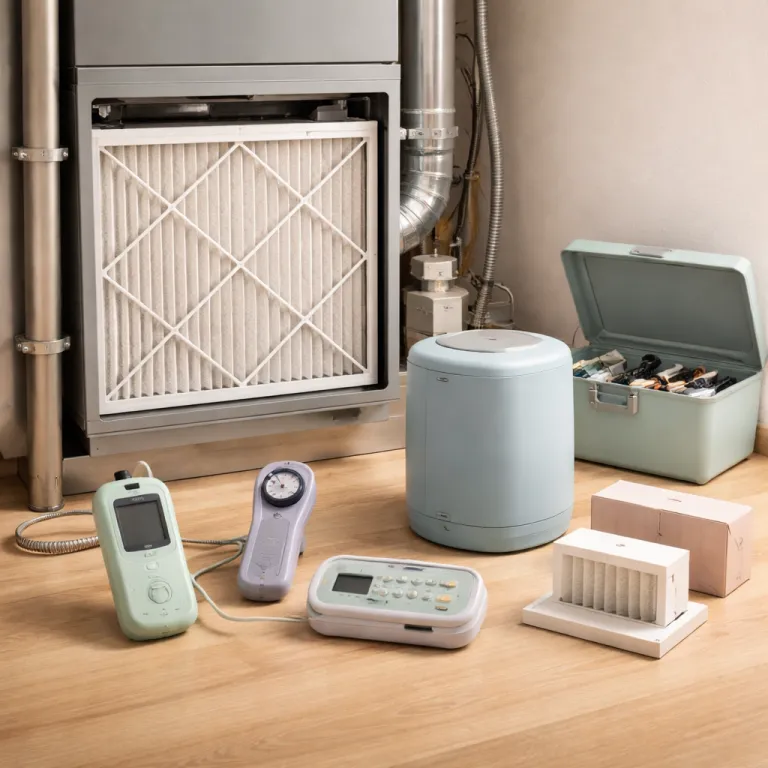
Two paths to clean air in a large room
When you shop for an air purifier for a large room, you are really choosing between two filtration strategies. One option is to rely on a central HVAC system with a high efficiency MERV 13 filter that cleans the air in multiple rooms at once, while the other is to use portable air purifiers with a dedicated HEPA filter for each priority room. Both approaches can deliver clean air and strong particle removal, but they differ in cost, noise, smart features, and how evenly they improve air quality across your home.
A central system with a MERV 13 air filter sits in the air handler and treats the air that passes through the ducts, so every connected room benefits whenever the fan runs at sufficient speed. Portable air purifiers, by contrast, sit directly in the large room or smaller rooms where you spend the most time, using a fan and filters to pull dirty air through a HEPA filter, a pre filter, and often a carbon filter or activated carbon stage. For a smart home enthusiast, the choice is not only about the best air cleaning performance but also about how the purifier or purifiers integrate with apps, voice assistants, and quality sensor data.
Before comparing specific purifiers or checking the regular price of a popular model on a retail site, you need to decide which strategy fits your home layout and lifestyle. If you already have central air with decent power and ductwork reaching all large rooms, upgrading to a MERV 13 filter can be the best first step for whole home clean air. If your large room is an open plan living area without central HVAC, then a high CADR portable air purifier for large room coverage becomes the primary tool, and you can later add more air purifiers for bedrooms or other rooms as needed.
Why MERV 13 HVAC filtration can beat portable units per square metre
MERV 13 filters are designed to capture a substantial share of particles in the 0.3 to 1 micron range, which includes smoke, bacteria, and fine dust that strongly affect indoor air quality. According to ASHRAE and United States Environmental Protection Agency guidance, this rating is near the upper end of what most residential HVAC systems can handle without excessive pressure drop, so you gain strong particle removal across all connected rooms without overloading the blower motor. When the central fan runs at a suitable speed for long enough each day, the system can quietly deliver clean air to every large room and small room on the duct network.
Cost over time is where MERV 13 often wins for large rooms and whole homes. A typical MERV 13 filter costs around 20 to 40 euros and should be replaced every three months, which means that over five years you might spend roughly the same as one or two portable air purifiers but cover many rooms instead of a single large room. By contrast, a top portable air purifier with a true HEPA filter and activated carbon filter for odours can cost 300 to 600 euros upfront, with 100 to 200 euros per year in replacement filters, especially if you run it at higher fan speed for smoke or allergy seasons.
For a smart home user, the main drawback of HVAC filtration is that most air handlers lack a built in quality sensor, auto mode, or app control, so you cannot easily see real time air quality data. You can solve this by pairing the MERV 13 filter with one or more independent air quality sensors in key rooms, then using those readings to decide when to run the fan continuously or at higher power. A detailed guide from sources such as the EPA or ASHRAE on how a high performance air filter transforms clean air in your home and car can help you understand how filtration stages work together, and it will make it easier to compare HVAC filters with portable air purifiers in a consistent way.
When a portable HEPA air purifier for large room is the better choice
Portable air purifiers shine when you need targeted relief in specific rooms, especially bedrooms or a single large room where someone with allergies or asthma spends many hours. A dedicated air purifier for large room coverage can deliver high clean air delivery rate (CADR) performance directly where you breathe, often with a quiet sleep mode that keeps noise low while maintaining clean air overnight. This room by room approach is also essential in homes without central air, where there is no ducted system to carry filtered air between rooms.
Models such as the Levoit Core series or the Levoit Vital line illustrate how modern purifiers combine HEPA filter technology, a pre filter for larger dust, and a carbon filter with activated carbon for gases and odours. These air purifiers often include a quality sensor that measures particulate levels, then adjusts fan speed automatically through an auto mode to balance noise, power use, and air quality. In a large room, you want a purifier with enough power and CADR to cycle the full room volume at least four to five times per hour, which usually means choosing a unit marketed for large rooms rather than small rooms.
Portable purifiers also appeal to smart home enthusiasts because many models offer Wi Fi control, app integration, and compatibility with Alexa or Google Home, especially those sold under well known brands like Levoit. You can schedule fan speed changes, monitor filter life, and even watch a video review before purchase to understand real world noise levels and tested performance. For readers comparing options, a budget ceiling mounted air filter that actually clears the dust can be an interesting alternative in workshops or garages, but for a living room or bedroom you will usually prefer a floor standing air purifier with a full HEPA filter stack and quiet operation.
Hybrid strategy: MERV 13 for baseline, HEPA in key large rooms
Most homes with central HVAC and at least one large room end up needing a hybrid strategy to get the best air quality for a reasonable price. In this setup, a MERV 13 filter in the air handler provides whole home baseline filtration, while one or two portable air purifiers with HEPA filter stages focus on bedrooms or a main large room where you want especially clean air. This combination balances cost, noise, and coverage, and it lets you choose the best air purifier features only where they matter most.
For example, you might install a MERV 13 filter and run the HVAC fan at low speed continuously, ensuring that all rooms receive steady particle removal and cleaner air. Then you place a Levoit Core or Levoit Vital purifier in the master bedroom and perhaps another in a large open plan living room, using their quality sensor and auto mode to ramp up fan speed when cooking, cleaning, or hosting guests. In this scenario, the HVAC system handles background dust and pollen, while the portable purifiers tackle spikes in pollutants and provide extra clean air where you sleep and relax.
Smart home users can take this further by integrating air quality sensors, smart plugs, and voice control to manage both HVAC runtime and portable purifiers. You might use a sensor in the largest room to trigger a scene that increases fan speed on the purifier and switches the HVAC fan from intermittent to continuous when PM2.5 levels rise. If you are comparing tower style purifiers for this role, a curated list of top tower air purifiers can help you find models with strong CADR ratings, low noise at night, and a reasonable regular price that fits your budget.
Why HEPA belongs in room purifiers, not in standard HVAC systems
Many readers assume that if a HEPA filter is good in a portable air purifier, then a HEPA filter in the HVAC system must be even better, but physics gets in the way. True HEPA filters create a much higher pressure drop than MERV 13 filters, which means a typical residential blower motor would struggle to push enough air through the filter to serve all rooms. The result would be reduced airflow, poor comfort, possible icing of the coil, and in some cases damage to the equipment, so HEPA in standard HVAC systems is not recommended unless the system is specifically engineered for it.
Portable air purifiers solve this by pairing a dedicated fan with a HEPA filter sized for a single room or a few connected rooms, so the motor only needs to move air for that limited volume. The purifier can then use multiple stages, including a pre filter for hair and lint, a HEPA filter for fine particles, and a carbon filter with activated carbon for gases, without worrying about the pressure constraints of long duct runs. Because the purifier serves one large room instead of the whole house, it can maintain high CADR and strong particle removal while keeping noise at acceptable levels, especially when you adjust fan speed manually or rely on auto mode.
If you truly want HEPA level filtration in the ductwork, you need a system designed for it, often called a HEPA bypass or a dedicated HEPA air handler, which is a different category from standard residential HVAC. For most households, the more practical path is to use MERV 13 in the central system and reserve HEPA filters for portable air purifiers placed in large rooms and bedrooms. This approach respects the engineering limits of your HVAC equipment while still delivering clean air where it matters most, and it avoids the hidden cost of oversized blowers or duct modifications.
Real world costs, duct cleanliness, and data driven decisions
When you compare an HVAC based strategy with portable air purifiers, you need to look beyond the sticker price and think in five year cycles. A household that installs a MERV 13 filter and replaces it every three months at 20 to 40 euros per filter will typically spend a few hundred euros over five years, while improving air quality in all connected rooms. The same household might spend 600 to 1 200 euros on two or three portable purifiers for large rooms, plus 500 to 1 000 euros on replacement filters, especially if they choose top models with HEPA filter stacks and strong CADR ratings.
Duct cleanliness is another factor that often gets ignored in discussions about the best air purifier strategy for a large room. If your ducts are heavily contaminated with dust or debris, even a MERV 13 filter cannot fully compensate, because particles can bypass the filter through leaks or get blown into rooms from dirty duct surfaces. In such cases, having the ducts inspected and cleaned every five to ten years can restore the effectiveness of the central filter and improve baseline clean air delivery to each room, while portable purifiers then handle local spikes and residual pollutants.
For a smart home enthusiast, the honest way to choose between more HVAC runtime and more portable purifier power is to monitor air quality with sensors and respond to real data rather than assumptions. Place sensors in at least one large room and one bedroom, track how PM2.5 and other metrics change when you adjust fan speed, and then tune your setup for the best balance of noise, power use, and clean air. Over time, you will see which rooms need extra purifiers, which filters reach the end of their tested life faster, and whether the regular price of premium models from brands like Levoit is justified by the comfort and health benefits they deliver.
Key statistics on large room air purification and HVAC integration
- MERV 13 filters are typically rated to capture a substantial fraction of particles in the 0.3 to 1 micron range, which includes many combustion particles and some bacteria, according to guidance from the United States Environmental Protection Agency and ASHRAE.
- Portable air purifiers are typically sized to provide four to five air changes per hour in a room, which means a unit with a CADR of about 300 cubic metres per hour (roughly 175 cubic feet per minute) is suitable for a large room of roughly 20 to 25 square metres with standard ceiling height.
- Running an HVAC fan continuously can increase electricity use by roughly 200 to 500 kilowatt hours per year, depending on the blower efficiency and duty cycle, but it also increases the total volume of air that passes through the MERV 13 filter and improves whole home air quality.
- Studies on indoor air quality have shown that high efficiency filtration can reduce fine particulate levels by around 30 to 60 percent in occupied homes, which is comparable to the reductions seen when using well sized portable HEPA air purifiers in key rooms.
- Professional duct cleaning is generally recommended every five to ten years in homes with central HVAC, especially if there has been renovation work or visible dust accumulation, because dirty ducts can undermine the benefits of upgraded filters and increase particle levels in rooms.
FAQ: choosing an air purifier for a large room with HVAC
How do I size an air purifier for a large room
To size an air purifier for a large room, calculate the room volume by multiplying floor area by ceiling height, then look for a purifier with a CADR rating that provides at least four to five air changes per hour. For example, a 25 square metre room with a 2.5 metre ceiling has a volume of about 62.5 cubic metres, so you would look for a CADR of roughly 250 to 310 cubic metres per hour to reach that target. Manufacturers often list recommended room sizes, but checking the CADR against your own room dimensions is more reliable, and for open plan spaces or rooms with high ceilings you may need either a more powerful purifier or two smaller purifiers placed in different zones.
Is a MERV 13 HVAC filter enough without any portable purifiers
A MERV 13 HVAC filter can significantly improve whole home air quality if your system runs the fan for many hours per day and the ducts reach all main rooms. However, people with allergies, asthma, or high sensitivity to smoke often benefit from adding a portable HEPA purifier in the bedroom or main living area for extra particle removal. The combination of whole home filtration and targeted room purifiers usually offers better comfort than either approach alone.
How loud are portable air purifiers in large rooms
Noise levels vary widely, but many modern air purifiers produce around 20 to 30 decibels on low fan speed and 50 to 60 decibels on high speed. In a large room, you can often run the purifier at a medium setting that balances clean air delivery with acceptable noise for conversation or television. Checking independent tested noise measurements or watching a video review before buying helps you understand how a purifier will sound in real use.
How often should I replace filters in air purifiers and HVAC systems
Most HVAC MERV 13 filters should be replaced every three months, though homes with pets, smokers, or heavy dust may need more frequent changes. Portable air purifiers usually require a pre filter cleaning or replacement every one to three months and a HEPA filter and carbon filter replacement every six to twelve months, depending on usage and pollution levels. Following the manufacturer schedule and watching for reduced airflow or increased odour is the safest way to maintain performance.
Can smart home integration really improve air quality management
Smart home integration helps you respond quickly to changes in air quality by automating fan speed and runtime based on sensor readings. For example, you can set a scene that increases purifier power and switches the HVAC fan to continuous mode when PM2.5 levels rise above a chosen threshold in a large room. Over time, this data driven approach lets you fine tune your system for better comfort, lower noise, and efficient use of filters and electricity.
Trusted references for further reading
- United States Environmental Protection Agency – Indoor Air Quality (IAQ) resources on filtration and ventilation.
- ASHRAE (American Society of Heating, Refrigerating and Air Conditioning Engineers) guidance on residential filtration and MERV ratings.
- Consumer testing organisations and independent reviews of portable air purifiers and HVAC filters.