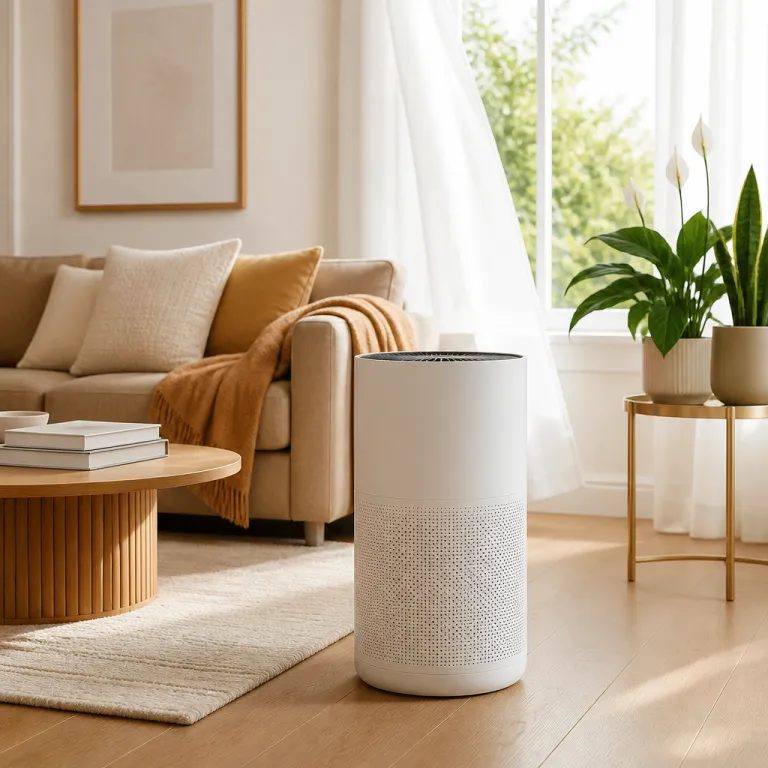
Why smoke is so hard to remove from indoor air
Smoke behaves differently from ordinary dust and quickly spreads through indoor air. Its tiniest particles are often smaller than 1 micrometre, which means only a high quality air purifier with a sealed body and a dense filter can reliably trap them. Many people buy the first purifiers they see on Amazon and then wonder why the performance against smoke feels weak and inconsistent.
When tobacco or wildfire smoke burns, it releases a mix of ultrafine particles, gases, and sticky tar that cling to surfaces and float in the air for hours. To get clean air in a living room or bedroom, you need an air purifier that combines a strong HEPA filter for particles with enough airflow to cycle the full room volume several times per hour. That is why experts focus on metrics such as CADR, fan speed, and air changes per hour instead of vague marketing claims about a single “best” product.
Standard dust filters only capture larger fragments and do almost nothing for the smallest smoke particles. A true HEPA filter rated to capture at least 99.97 percent of 0.3 micrometre particles is the current benchmark for the best air purifiers for smoke in homes and small offices. The U.S. Environmental Protection Agency (EPA) and the World Health Organization (WHO) both highlight HEPA filtration as an effective way to reduce fine particulate matter indoors during wildfire events in their public guidance on PM2.5 and indoor air quality. If you want the best air quality during a wildfire season or in a smoking household, you must look beyond price alone and evaluate CADR in cubic metres per hour, noise level, and energy efficient operation together.
Key specs that define the best air purifiers for smoke
Three technical details largely determine whether an air purifier can handle heavy smoke. First comes the HEPA filter or true HEPA filter rating, which tells you how effectively the product captures fine dust, smoke, and dust pollen from the air. Second comes the clean air delivery rate, or CADR, which measures how much filtered air the purifier can push out each minute at a given fan speed. In North America CADR is usually expressed in cubic feet per minute (CFM), while many European and Asian manufacturers quote cubic metres per hour (m³/h); 1 CFM is approximately equal to 1.7 m³/h.
For smoke control, many independent reviewers recommend choosing a tobacco smoke CADR that is roughly equal to your room’s floor area in square metres multiplied by a factor that reflects ceiling height and desired air changes per hour. A large room of 35 m² with a typical 2.4–2.5 m ceiling, for example, has a volume close to 85–90 m³ and benefits from an air purifier with a CADR around 230 m³/h (about 135 CFM) if you want around two to three air changes per hour during long evenings. When you compare models on Amazon or in local shops, check whether the CADR value is listed clearly and whether the manufacturer states how many air changes the unit can deliver each hour at its higher fan speed settings.
The third critical spec is noise, because a quiet purifier is the only one you will actually run all night. Some models offer multiple fan speed settings, letting you use a high speed for fast air cleaning and a low speed for sleep. Parents choosing air purifiers for nurseries or children’s rooms often prioritise low watts consumption and gentle sound, and guides to top air purifiers for babies can be a useful reference when you want a smoke capable unit that still feels calm and unobtrusive.
Room size, air changes, and how to match a purifier to your space
Many buyers underestimate how large their rooms really are and end up with air purifiers that are too small for serious smoke. To avoid that mistake, measure the length and width of your room in metres, multiply them to get the floor area, then multiply again by the ceiling height to estimate the total air volume. Once you know that volume, you can calculate how many air changes per hour a given air purifier will provide at its maximum fan speed using the simple relationship ACH = CADR (m³/h) ÷ room volume (m³).
For heavy smoke from cigarettes or wildfires, aim for at least four to five air changes each hour in a large room, which means the purifier completely cycles the air every 12 to 15 minutes. As a worked example, a 5 m × 4 m room with a 2.5 m ceiling has a volume of 50 m³; to reach 5 ACH you need a CADR of about 250 m³/h (50 × 5). Smaller bedrooms can sometimes manage with three air changes per hour, but sensitive people with asthma or allergies often feel better when the air cleaning rate is higher. When you compare a compact product with a larger tower model, check both the CADR and the recommended room size, because a low price on Amazon is meaningless if the unit cannot keep up with your real air volume.
Manufacturers like Coway and Blueair publish clear guidance on room coverage for models such as the Coway Airmega series and the Blue Pure range. A Coway Airmega air purifier with a strong HEPA filter and a washable pre filter can be a top pick for a medium to large room, especially when smoke is seasonal but intense. For parents or carers, detailed buying advice on the best air purifier for a baby’s room also highlights how air changes per hour and CADR capacity matter more than brand reputation alone.
Filters, maintenance, and the real cost of clean air
The filter system inside an air purifier determines both its smoke performance and its long term running costs. Most serious air purifiers for smoke use a multi stage design with a pre filter, a HEPA filter, and often an activated carbon layer to tackle odours and gases. The pre filter catches larger dust and hair, protecting the main HEPA filter so it can focus on the finest smoke particles and dust pollen that cause respiratory irritation.
Some brands offer a washable pre filter, which you can rinse or vacuum every few weeks to maintain airflow and reduce waste. This simple step keeps the purifier’s fan speed from creeping up unnecessarily and helps the motor use fewer watts for the same clean air output. Over a year of heavy smoke use, a washable pre filter can save you the cost of one or two replacement HEPA filters, especially in a large room where the unit runs at higher speed for longer hours.
Replacement HEPA filter price varies widely between models, so always check the cost on Amazon or the manufacturer’s website before choosing your best air purifiers for smoke. A slightly higher upfront price for a Coway Airmega or Blue Pure product can be offset by lower annual filter costs and more energy efficient motors. When you calculate the real cost of clean air, include electricity use in watts, filter replacement intervals, and how many hours per day you expect the air cleaning system to run during peak smoke seasons.
Real world performance: noise, energy use, and daily living
Laboratory numbers such as CADR and watts matter, but daily experience with an air purifier often comes down to noise and ease of use. People living with wildfire smoke or indoor tobacco smoke need purifiers that can run at higher fan speed for hours without sounding like a jet engine. That is why independent tests of fan noise and real world performance are so valuable when you are choosing the best air purifiers for smoke for a bedroom or living space.
Some manufacturers publish optimistic decibel ratings measured in ideal conditions that do not match how the product sounds in a real large room. Independent reviewers who measure sound at different distances and fan speeds often find that the quiet setting is acceptable for sleep, while the maximum speed is best reserved for quick air cleaning when you are out of the room. For example, several well known testing labs have reported that many popular HEPA purifiers measure around 30 dB on low and 50–60 dB on high, which feels similar to a quiet library versus normal conversation. If you want to understand how honest reviewers test fan noise and why some decibel specs are misleading, a detailed guide on air purifier noise testing methods can help you interpret the numbers more confidently.
Energy efficient models with modern motors can deliver strong clean air output while drawing surprisingly few watts, which matters when purifiers run for many hours each day. A well designed air purifier with an auto mode can adjust fan speed based on real time air quality readings, increasing airflow when smoke levels rise and slowing down once the air cleaning is complete. Over months of use, this intelligent control can reduce electricity costs and filter wear while still keeping indoor air free from dust, smoke, and lingering odours.
Comparing popular smoke focused air purifiers and how to choose your top pick
Several well known brands compete for the title of best air purifiers for smoke, but their strengths differ in meaningful ways. Coway Airmega models, for example, combine a compact footprint with strong CADR ratings and a dual intake design that pulls air from both sides. Many users praise how quiet these purifiers remain at low fan speed while still delivering enough air changes per hour for a medium or large room.
The Blue Pure series from Blueair takes a slightly different approach, using a cylindrical design with a 360 degree intake and colourful fabric pre filters that double as décor. These units often rank as a top pick for people who want simple controls, strong smoke performance, and easy access to replacement filters on Amazon. Their washable pre filter sleeves help capture dust and hair before it reaches the main HEPA filter, which keeps airflow high and maintains clean air output even in dusty homes.
When you compare specific product options, look beyond the word “best” in marketing and focus on measurable criteria. Check the smoke CADR, the stated room size, the number of air changes per hour at maximum speed, and the long term filter price for both HEPA and carbon layers. If you live in a region with frequent wildfires or share a home with smokers, prioritise a higher CADR, a robust true HEPA filter, and an energy efficient motor over cosmetic features, because those are the elements that truly protect your air quality every day.
Key statistics on smoke, indoor air, and purifier performance
- Fine particulate matter from smoke smaller than 2.5 micrometres, often called PM2.5, can penetrate deep into the lungs and is linked to increased hospital admissions for heart and lung disease according to the World Health Organization, which summarises these effects in its air quality guidelines.
- The Association of Home Appliance Manufacturers (AHAM) CADR standard shows that air purifiers with a true HEPA filter can remove more than 99 percent of smoke sized particles from the air when operated at their highest fan speed in a correctly sized room, based on standardised chamber tests.
- During severe wildfire events, indoor PM2.5 levels in homes without air cleaning can exceed outdoor levels by more than 50 percent, while homes using high CADR purifiers often keep indoor levels below one third of the outdoor concentration according to reports from regional air quality agencies in North America and Europe.
- Energy Star certified air purifiers are typically about 25 percent more energy efficient than standard models, which can save households several kilowatt hours per week when units run continuously during long smoke seasons, as noted in Energy Star programme summaries.
- Clinical guidance from organisations such as the American Lung Association notes that many people with asthma or chronic obstructive pulmonary disease report noticeable symptom relief when using HEPA based air purifiers during periods of heavy smoke or urban pollution, especially when combined with other exposure reduction steps.
FAQ: best air purifiers for smoke
Do I really need a HEPA filter for smoke removal ?
Yes, a true HEPA filter is essential for effective smoke removal because it captures the ultrafine particles that standard dust filters miss. Without a HEPA filter, an air purifier may reduce visible haze but leave the most harmful particles in the air. For heavy smoke exposure, choose a model that clearly states a true HEPA or H13 HEPA standard and pair it with enough CADR for your room size.
How many air changes per hour should I aim for in a smoky room ?
For regular smoke exposure from cigarettes or nearby wildfires, aim for at least four to five air changes per hour in the main living areas. Bedrooms for sensitive people may benefit from six or more air changes per hour, especially at night. Check the manufacturer’s CADR rating and recommended room size to ensure the purifier can reach those air changes at a realistic fan speed.
Are air purifiers with carbon filters better for smoke odour ?
Carbon filters are very helpful for reducing smoke odours and some gases, while HEPA filters focus on particles. A purifier that combines a true HEPA filter with a substantial activated carbon layer will usually perform better against both visible smoke and lingering smells. If odour control is a priority, look for a product that lists the weight or thickness of its carbon filter rather than a thin perfumed pad.
Can a single air purifier handle a whole large home during wildfire season ?
A single air purifier rarely provides enough clean air for an entire large home, especially during intense wildfire smoke. Most units are designed for one large room or an open plan area, and their CADR drops quickly when asked to cover multiple closed rooms. For multi room homes, consider one strong purifier in the main living space and smaller units in key bedrooms to maintain consistent air quality.
How often should I replace filters when using a purifier for smoke ?
Filter life shortens noticeably when a purifier runs in heavy smoke, so expect to replace HEPA and carbon filters more often than in normal conditions. Many manufacturers suggest six to twelve months for HEPA filters, but daily use during a long smoke season can push you toward the shorter end of that range. Check the filter status indicators on your purifier and inspect the pre filter regularly, cleaning or replacing components as soon as airflow or odour control declines.