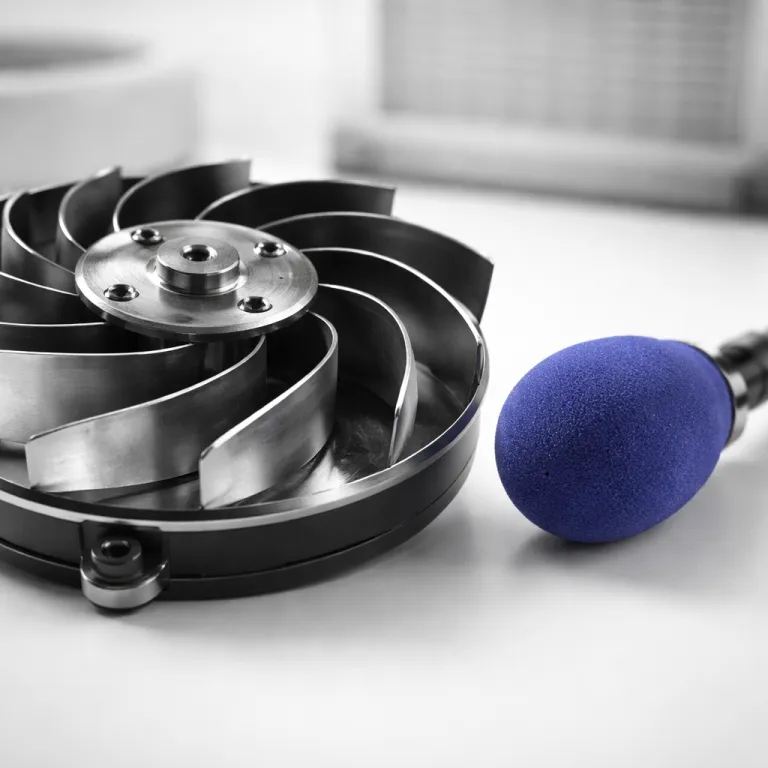
Why air purifier noise testing in a real room matters more than specs
Manufacturers love to highlight a whisper quiet air purifier on the box. Yet genuine air purifier noise testing in a real room is rare, because most brands measure sound in an anechoic chamber at exactly 1 metre. In your bedroom or living room, that same purifier will sound very different and often noticeably louder.
In a furnished room, walls, wardrobes, and ceilings reflect air movement and fan noise. This reverberation typically adds around 5 to 10 decibels to the quoted noise level in small domestic rooms, as shown in building acoustics work on room gain and sound reflections (for example, Kuttruff’s Room Acoustics and ISO 3382 guidance on reverberation). That means a claimed 24 dB can easily become 32 to 35 dB at the pillow. For an allergy sufferer trying to sleep, that difference in sound pressure and frequency balance can decide whether the air purifiers stay on or get switched off at midnight.
Real world testing focuses on how the purifier behaves with real indoor air and real furniture. Careful reviewers place each air purifier where you would actually use it, then measure noise at the position of your head on the mattress. They also track air quality changes, particle removal, and clean air delivery rate (CADR) to see whether the quietest speed still delivers enough clean air for the room size.
To judge performance properly, you need to link noise and air cleaning efficiency instead of looking at sound alone. A purifier that sounds soft but has weak CADR and poor removal efficiency will not protect your lungs from fine particle pollution. The best purifiers balance fan speed, filter design, and motor quality so that clean air and quiet operation coexist in the same compact machine.
For people with asthma or rhinitis, the quality of sleep is as important as air quality. Deep sleep starts to be disturbed around 35 to 40 dB, according to ASHRAE-linked bedroom noise guidance and World Health Organization night-noise recommendations (for example, the WHO Night Noise Guidelines for Europe and ASHRAE Handbook chapters on sound and vibration), while long exposure above 45 dB increases awakenings. That is why serious reviewers never rely only on a single speed dBA figure from the product sheet, and always repeat measurements at several fan speed settings.
Noise testing in a real room also reveals tonal problems that specifications hide. Two purifiers tested at the same noise level can feel very different if one has a low frequency hum and the other a higher pitched hiss. The human ear is more sensitive to some frequencies, so a 30 dB buzz near 200 Hz may feel more intrusive than a 33 dB airflow noise centred around 1 kHz.
When you read a video review or written test, look for details about the test room. A credible reviewer will mention room size in square metres, ceiling height, and whether doors or windows were closed during air cleaning tests. They will also describe the type of HEPA filter, any pre filter used for coarse dust, and whether the purifier includes a quality sensor to adjust fan speed automatically.
Good testing also compares several air purifiers under identical conditions. With multiple purifiers tested in the same bedroom, you can see which model offers the best combination of CADR, noise level, and filter life. This comparative approach quickly shows whether a top rated purifier on paper actually delivers powerful air cleaning in a real flat or house.
Section takeaway: Real-room noise and CADR measurements reveal how an air purifier will truly sound and perform in your home, far beyond the optimistic figures on the box.
How to measure fan noise where your head actually rests
Honest air purifier noise testing in a real room starts from the pillow, not from the marketing brochure. Reviewers place a calibrated sound level meter at the height and position of the sleeper’s head, usually 60 to 80 cm above the mattress. A typical setup might use a Class 1 or Class 2 meter (for example, a Brüel & Kjær or NTi Audio model) calibrated with an acoustic calibrator at 94 dB and 1 kHz before each test session. The purifier then runs at each fan speed while the tester records the noise level in dBA over several minutes.
This method reflects how the ear experiences sound in a real bedroom. The distance between the air purifier and the bed, the angle of the airflow, and the presence of curtains or shelves all change the measured noise. A device that seems quiet at 1 metre in an empty lab can sound much louder at 2.5 metres in a small room with reflective walls.
To keep results reliable, reviewers measure background noise first with the purifier off. If the base noise of the room is already 28 to 30 dBA, a purifier running at 32 dBA will barely stand out, while one at 38 dBA will be clearly audible. This comparison helps allergy sufferers judge whether a given fan speed will blend into the night or disturb light sleep.
Serious tests also log noise at every fan speed, from the lowest sleep mode to the top turbo setting. At low speed, the purifier may deliver only modest CADR and limited particle removal, but it should stay under about 30 to 32 dBA for most sleepers. At medium and high speed, reviewers check whether the gain in clean air justifies the jump in noise level, especially for people with severe pollen or dust mite allergies.
For home users, a free smartphone app such as the NIOSH Sound Level Meter on iOS offers a simple way to repeat this process. Place your phone where your head usually rests, set the purifier to the speed you use at night, and record the average dBA for at least 30 seconds. While this method is less precise than a professional meter, it still reveals whether the claimed quiet air mode matches your own room reality.
Noise testing should always be linked to air cleaning performance, not treated as a separate checklist item. Reviewers often pair sound measurements with CADR tests, using incense smoke or fine particle counters to track how quickly the purifier reduces indoor air pollution. If a model is silent but needs hours to reach clean air, it fails the basic requirement of protecting your lungs while you sleep.
When comparing models, pay attention to how far the purifier sits from the bed during tests. A compact unit like a Levoit air purifier might be placed 1.5 metres from the pillow, while a larger tower sits at 3 metres near the door. The same speed dBA reading at different distances does not mean the same subjective comfort, so reviewers should always state both distance and room layout.
If you are especially sensitive to noise, look for independent tests of quiet air purifiers that include both dBA charts and subjective comments. Resources that specialise in the best quiet air purifiers for bedrooms often combine lab style measurements with long term night use. This blend of data and lived experience is crucial when you choose a purifier for a child’s room or for a partner who already struggles with insomnia.
Section takeaway: Measure noise at your actual sleeping position and compare it with CADR to find a fan speed that keeps both your air and your nights comfortably quiet.
Why decibels lie without frequency, CADR and distance
On most product pages, you will see a single noise figure next to each fan speed. That number usually comes from air purifier noise testing in a real room substitute, namely an anechoic chamber with the microphone at 1 metre. Without context about frequency spectrum, CADR, and distance, this dBA value tells you very little about how the purifier will sound at night.
Human ears do not react equally to all frequencies. A low frequency hum around 200 Hz can feel like a constant engine in the background, while a higher pitched hiss around 1 kHz may fade into the general air movement. Two purifiers tested at 30 dBA can therefore produce very different levels of annoyance, depending on the balance between motor noise, airflow turbulence, and vibration.
For sleep quality, research suggests that 30 dBA is a good target for deep rest. Discomfort often begins around 40 dBA, and sustained levels above 45 dBA can disturb REM sleep cycles and increase micro awakenings, as shown in environmental noise and sleep studies referenced by ASHRAE and WHO guidelines on night-time sound exposure. That is why honest reviewers always compare the manufacturer’s claimed noise level with their own measurements at the pillow, then relate those numbers to known sleep thresholds.
Noise also needs to be weighed against clean air delivery. A purifier that reaches high CADR only at its top fan speed may force you to choose between clean air and quiet air. In practice, many users end up running such a device at medium speed, accepting slightly lower removal efficiency to keep noise tolerable through the night.
Good testing therefore reports CADR or CADR CFM alongside noise at each speed. Reviewers may state that at low speed the purifier delivers 80 cubic metres per hour of clean air at 30 dBA, while at high speed it reaches 200 cubic metres per hour at 45 dBA. This pairing of airflow and sound helps you judge whether the best setting for your allergies is also realistic for your sleep.
Some modern air purifiers include a quality sensor that adjusts fan speed automatically. In theory, this keeps indoor air clean without constant manual changes, but in practice sudden jumps in fan speed can wake light sleepers. Honest tests therefore check how often the sensor triggers higher speeds at night, and how abrupt the change in noise level feels in a quiet bedroom.
When you read a long form review or watch a detailed video review, look for graphs that show both particle removal and noise over time. A strong purifier will quickly reduce fine particle counts while keeping noise stable and moderate, especially in the first hour after you close windows. Resources that focus on the best quiet air purifier for home use often highlight this balance between performance and acoustic comfort.
Finally, remember that distance doubles matter as much as raw dBA. Moving a purifier from 1 metre to 2 metres from the bed can reduce perceived loudness significantly, especially if you angle the airflow away from your head. Honest reviewers therefore test several placements in the same room, helping you understand how to position your own purifier for the best mix of clean air and low noise.
Section takeaway: A single dBA figure is misleading unless you also know the frequency character, CADR, and distance at which that sound was measured.
How filters, CADR and design shape real world bedroom noise
Air purifier noise testing in a real room quickly shows that design choices matter as much as fan size. A well engineered air purifier with a smooth airflow path and a balanced motor can move powerful air at lower fan speed. A cheaper box with sharp bends and a rattling fan often needs higher speed to reach the same CADR, which raises both noise and vibration.
The filter stack plays a central role in this balance. A dense HEPA filter with a fine mesh captures more particle pollution, but it also increases resistance to airflow. To compensate, the fan must spin faster, which can raise the noise level unless the housing and motor are carefully tuned to damp vibrations.
Many modern air purifiers use a multi stage system with a pre filter, a HEPA filter, and sometimes an activated carbon layer. The pre filter catches hair and coarse dust, protecting the main filters and keeping CADR stable over time. If you forget to clean or replace this first layer, airflow drops, the fan ramps up speed, and the purifier becomes noisier at every setting.
Models like the Levoit Core series illustrate how compact design can still deliver strong performance. A Levoit air purifier typically combines a cylindrical HEPA filter with a 360 degree air intake, which allows good particle removal at moderate fan speed. In real room tests, this design often keeps noise lower at equivalent CADR compared with flat front purifiers that pull air through a narrow grille.
However, even a top rated Levoit Core or similar unit will sound different in various rooms. In a small bedroom with hard floors and bare walls, reflections amplify both motor hum and airflow hiss. In a larger room with carpets and curtains, the same purifier may feel much quieter at the same speed dBA, because soft surfaces absorb sound energy.
Honest reviewers therefore repeat tests in at least one bedroom and one living room. They track how quickly each purifier reaches clean air in both spaces, then compare noise at the fan speed needed to maintain good air quality. This method reveals whether a model that shines in a lab still offers the best comfort in a real flat with mixed furniture.
Filter maintenance also affects long term noise behaviour. As filters clog with fine particles, CADR drops and the motor may work harder to push air through the dense media. Reviewers who keep purifiers tested for months can report whether noise creeps up over time, especially on auto mode where the quality sensor reacts to reduced removal efficiency.
For office workers or people who need quiet concentration, the same principles apply outside the bedroom. Guides that compare the top air purifiers for offices often weigh CADR CFM against noise at typical desk distances. These tests help you choose a purifier that keeps indoor air clean without adding a constant drone to your workday.
Section takeaway: Filter design, airflow path, and maintenance habits all shape how loud an air purifier will sound in real rooms at the CADR you actually need.
Practical checklist to test your own purifier’s noise and efficiency
You do not need a lab to perform basic air purifier noise testing in a real room. With a smartphone, a simple particle counter if available, and some patience, you can evaluate your current purifier or compare new air purifiers at home. This hands on approach gives you more confidence than relying only on glossy marketing claims.
Start by choosing the room where you care most about quiet air, usually the bedroom. Close windows and doors, place the purifier where you intend to keep it, and note the distance from the bed or sofa. Then measure background noise with a sound level app at the position of your head, followed by readings at each fan speed while the purifier runs.
Next, link these noise readings to air cleaning performance. If you own a basic particle meter, burn a stick of incense or spray a fine mist, then track how quickly particle counts fall at different fan speeds. Even without instruments, you can observe how fast cooking smells or visible dust clear when you run the purifier at low, medium, and high speed.
Pay attention to how the noise feels, not just the numbers. A steady airflow sound is often easier to ignore than a pulsing motor or a rattling housing, even at the same dBA. If a particular speed produces a low frequency rumble that you feel in your chest, that setting may be unsuitable for sleep even if the meter shows an acceptable noise level.
Check the condition of your filters before judging the purifier too harshly. A clogged pre filter or an overloaded HEPA filter can force the fan to work harder, raising both noise and energy use. Cleaning or replacing filters often restores both CADR and acoustic comfort, improving removal efficiency without changing the device itself.
Finally, compare your findings with independent tests from reviewers who publish both noise and CADR data. Look for models where the best balance between clean air and low noise occurs at a speed you can tolerate all night. When you align your own measurements with trusted external reviews, you greatly reduce the risk of buying a purifier that either keeps you awake or leaves your indoor air under cleaned.
Example: real-world dBA vs CADR data
| Model | Speed | Noise level (dBA) | Approx. frequency character | CADR (m³/h) | Typical test distance |
|---|---|---|---|---|---|
| Compact bedroom purifier A | Low / Medium / High | 28 / 35 / 44 | Soft airflow hiss, slight mid-frequency hum at high | 70 / 120 / 200 | 1.5 m from pillow |
| Tower purifier B | Low / Medium / High | 31 / 38 / 47 | Deeper fan tone, more low-frequency rumble on turbo | 90 / 170 / 260 | 2.5 m from pillow |
| Desk purifier C | Low / Medium / High | 27 / 34 / 42 | Light airflow noise, minimal motor hum | 50 / 90 / 150 | 1.0 m from head |
These kinds of paired measurements, often reported in independent test reports, make it easier to choose a setting that keeps noise near 30 dBA while still delivering enough CADR for your room volume.
Section takeaway: Simple at-home tests, combined with published dBA and CADR data, let you verify whether your purifier truly delivers quiet, effective air cleaning.
FAQ
How loud should an air purifier be in a bedroom for good sleep ?
For most adults, a bedroom air purifier should stay below about 30 to 32 dBA at the pillow to protect deep sleep. Discomfort often begins around 40 dBA, and sustained levels above 45 dBA can disturb REM sleep and increase awakenings, as reported in environmental noise and sleep research cited by ASHRAE and WHO night-noise documents. Aim for a fan speed that keeps noise low while still delivering enough CADR to maintain clean air through the night.
Why does my purifier sound louder at home than in reviews ?
Many manufacturer tests use anechoic chambers and measure at 1 metre, which underestimates noise in real rooms. At home, hard walls, floors, and furniture reflect sound, typically adding roughly 5 to 10 dB compared with lab figures in small domestic spaces. Your distance from the purifier and the room’s shape also change how loud the same speed feels at your bed or desk.
Can a very quiet purifier still clean the air effectively ?
Yes, but only if the purifier combines efficient filters, a well designed airflow path, and a quality motor. Some models deliver strong CADR at relatively low fan speed, keeping both noise and energy use modest. Others are quiet only at very low speeds where CADR is too weak, forcing you to increase speed and accept more noise to reach healthy air quality.
How can I test my air purifier’s noise without special equipment ?
You can use a free smartphone sound level app, placing the phone where your head rests on the pillow. Measure background noise first, then record dBA at each fan speed for at least 30 seconds. While not as precise as a professional meter, this method still shows whether the claimed quiet mode matches your real bedroom conditions.
Does filter maintenance affect how noisy a purifier becomes over time ?
Clogged filters increase resistance to airflow, so the fan must work harder to push air through. As a result, the purifier may become louder at every speed and still deliver less clean air than when the filters were new. Regularly cleaning the pre filter and replacing the main HEPA filter according to the manual helps keep both noise and CADR stable.