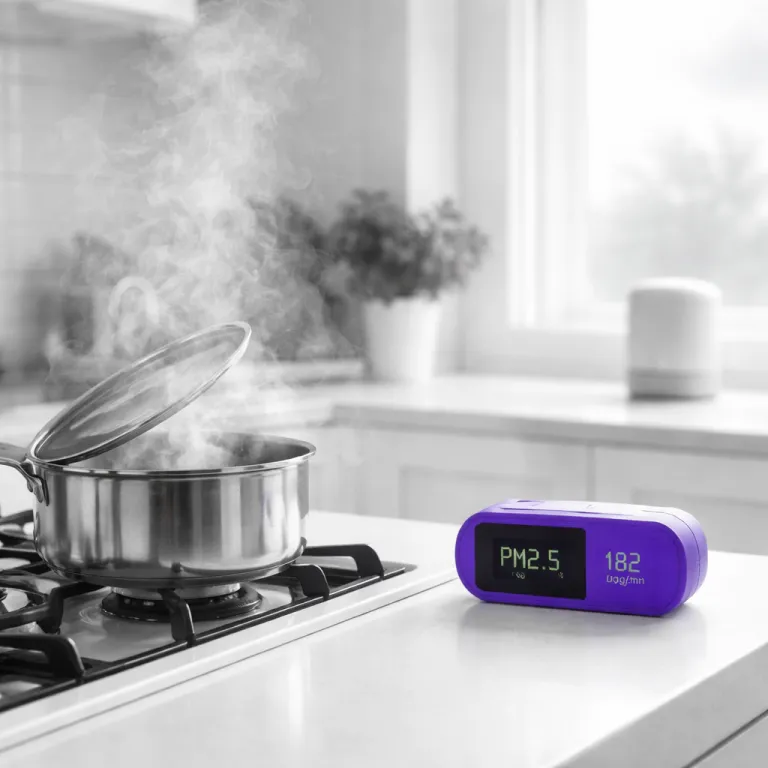
Gas stove indoor air pollution during wildfire smoke episodes
When outdoor wildfire smoke drifts across the United States, many families shut windows and keep children indoors. Yet a growing body of peer reviewed study data shows that cooking with a gas stove during these wildfires can quietly push indoor air quality into the unhealthy range. For new parents and older adults, that combination of gas combustion and wildfire smoke infiltration can significantly raise both heart and lung risks and increase long term respiratory burden.
Researchers in Colorado recently measured indoor air in homes using gas for cooking while wildfire smoke increased outdoor air pollution. In that field study, they found that cumulative indoor air concentrations of fine particulate matter, known as PM2.5, exceeded an Air Quality Index (AQI) of 100 for about 99 minutes per day on average, even when outdoor air quality already looked poor. In those homes, the gas burners and oven added fresh pollutants to indoor air that was already contaminated by wildfire smoke seeping indoors from outdoors through cracks, vents, and leaky window frames. These findings are consistent with other indoor air quality research that links gas cooking to elevated PM2.5 and nitrogen dioxide levels, including work by Clark et al. (2022) on wildfire smoke and gas stoves in Colorado homes.
Gas stoves emit particulate matter at roughly twice the rate of comparable electric cooktops, and oven emissions can be 2.6 to 29 times higher than surface burners under typical roasting conditions, according to controlled laboratory measurements reported by Logue et al. (2014) and subsequent emission testing. That means a single roasting session can create a high indoor air pollution spike that rivals a smoky outdoor air event, especially when wildfire smoke is already present in the neighborhood. For households trying to protect family members with asthma or sensitive lung conditions, this combined indoor and outdoor exposure can quietly undermine public health guidance that simply says to stay inside during wildfires.
During wildfire season, the Environmental Protection Agency (EPA) already warns about the dangers of fine particulate matter for heart and lung health. Yet most alerts focus on outdoor air, while the wildfires indoor reality in gas cooking kitchens receives far less attention. In practice, the kitchen can become the most polluted room in the home, even when windows are closed and the air conditioning or central HVAC system is running on high efficiency filtration settings designed for wildfire smoke.
For parents of infants, the concern is not only the short sharp peaks of smoke but the repeated daily exposure to gas combustion by products. Nitrogen dioxide from gas flames, combined with wildfire smoke particles, can irritate small airways and reduce overall indoor air quality in the nursery and living room. Over time, this pattern of cumulative exposure indoors and outdoors may matter more for long term health than any single dramatic smoke plume visible outside, especially for babies whose lungs are still developing and for older adults with existing heart disease.
Experts in public health now emphasize that indoor air should be treated as a critical part of wildfire response planning, not an afterthought. That means looking beyond a single portable air cleaner in the living room and examining how the entire system of cooking, ventilation, and filtration works together. For families relying on gas, the question is no longer whether the stove alone is safe, but how it behaves when wildfire smoke already loads the background air with pollutants and when sensitive people spend long hours indoors.
Why most living room purifiers miss the kitchen PM2.5 spike
Many households now own at least one portable air purifier, often placed in the lounge or bedroom near a crib. These devices can improve indoor air quality during mild wildfire smoke days, especially when they use a high efficiency particulate air (HEPA) filter rated for fine pollutants. Yet the recent Colorado study and similar work on cooking emissions suggest that a single air cleaner in the living room rarely keeps up with the intense PM2.5 plume generated by gas cooking in a semi enclosed kitchen.
Most consumer purifiers are sized for steady background pollution, not the sharp indoor air pollution bursts that occur when a gas oven preheats or a pan smokes on high heat. Typical units offer a clean air delivery rate (CADR) far below the airflow that would be needed to rapidly dilute a heavy cooking plume in a large kitchen. For example, clearing a big open plan kitchen and dining area of about 400 square feet with 8 foot ceilings (roughly 3,200 cubic feet of air) in 15 minutes would require around 850 cubic feet per minute of filtered air, while many compact devices provide only 150 to 300 CFM. When doors are open between rooms, the fan inside a small portable air device cannot move enough air through its filter to protect family members in both the kitchen and the adjacent living space.
Airflow patterns also work against families during wildfires indoors, because warm gas combustion pushes smoke and particulate matter upward before it slowly drifts into the rest of the home. A purifier parked in the far corner of a lounge may only start pulling that polluted air after it has already spread past a baby’s play area. Without a coordinated HVAC system strategy, including continuous fan operation and upgraded filters, the home effectively runs two separate air zones that do not mix in a controlled way and leave pockets of high pollution near the stove.
Upgrading the central HVAC system filter from a basic panel to a higher MERV rating can significantly reduce particulate matter recirculating through ducts. As a concrete example, a MERV 8 filter may capture only a modest share of wildfire smoke sized particles, while a properly fitted MERV 13 filter is designed to remove a much larger fraction of PM2.5 as air passes through the system. Guidance on choosing between options such as MERV 8 and MERV 13 for better indoor air protection is available in specialised resources on selecting the right protection for your indoor air. When the air conditioning blower runs continuously on low, that high efficiency filter can capture a larger share of wildfire smoke that leaks indoors, but it still may not fully address the intense plume right above a gas stove or the nitrogen dioxide gas that is not removed by standard particle filters.
Kitchen range hoods are often the missing link in this system, because many households either do not use them consistently or own recirculating models without proper outdoor venting. To reduce indoor air pollution from gas burners, experts recommend a strict hood ritual that starts a few minutes before cooking and continues for at least ten minutes after the flame is turned off. This extended run time helps clear lingering pollutants and complements the work of any portable air cleaner or central filter operating elsewhere in the home, especially when the hood is ducted outdoors and captures both particles and some combustion gases at the source.
For families in wildfire prone regions facing climate change driven smoke seasons, relying solely on a lounge purifier is a fragile strategy. The combination of gas combustion, limited kitchen ventilation, and infiltrating wildfire smoke can overwhelm devices that were never designed for such high pollutant loads. A more resilient approach treats the kitchen as a separate high risk zone that needs its own targeted filtration and ventilation plan, with clear roles for the range hood, the HVAC system, and any portable purifiers.
Practical kitchen and living room protocol for homes with babies or asthma
Health focused researchers now advise that households using gas during wildfire season adopt a structured routine that covers both cooking and relaxation spaces. The goal is to reduce cumulative exposure to particulate matter and gases rather than chasing every visible puff of smoke. For new parents and people with asthma, this protocol can make the difference between manageable indoor air and repeated flare ups that send children or older adults to the doctor.
Step one is to treat the kitchen as a controlled zone whenever the gas burners or oven are on, especially during days with visible wildfire smoke outdoors. Close interior doors where possible, switch the range hood to its highest safe setting, and keep it running for at least ten minutes after cooking stops to clear residual pollutants. During this period, keep babies and sensitive older adults in another room with a dedicated portable air purifier running on high, so their lung exposure to the cooking plume stays as low as practical.
Because many range hoods are weak or poorly vented, a compact kitchen specific air cleaner can provide an extra layer of protection. Look for a model with a high efficiency particulate filter and a substantial clean air delivery rate for PM2.5, paired with a thick activated carbon stage to help reduce odours and some combustion by products from gas flames. Place this portable air unit near the main cooking zone, but not directly above the stove where heat could damage the filter or fan system or interfere with safe cooking.
For families on a tighter budget, a do it yourself Corsi Rosenthal box placed near the cooking area during wildfire events can significantly improve indoor air quality. This simple device uses multiple high efficiency filters and a box fan to move large volumes of air, capturing particulate matter from both wildfire smoke and gas cooking. For safety, use a modern box fan with a fused plug, keep the intake and exhaust clear, avoid draping fabric over the unit, and do not leave it running unattended on unstable surfaces or near open flames. While it does not remove gases such as nitrogen dioxide or carbon monoxide, it can sharply cut the particle load that would otherwise drift from the kitchen into the living room and nursery, especially when combined with a well used range hood.
Once cooking ends and the hood has run its course, shift focus to the main living space where the family spends evenings. Keep windows closed when outdoor air quality is poor, run the air conditioning or HVAC system fan continuously on low, and operate a living room purifier sized for the full volume of that area. Detailed guidance on bedroom and lounge settings that help more than the specific purifier model can be found in specialised advice on optimising room configurations for asthma sensitive households, including where to place devices and how to choose fan speeds.
Throughout wildfire season, monitor both outdoor air and indoor air using reliable sensors or regional alerts, and adjust this protocol on days with especially high smoke levels. When outdoor air briefly improves, short ventilation bursts with windows open can help flush accumulated indoor pollutants before the next gas cooking session. By combining targeted kitchen controls, whole home filtration, and thoughtful room use, families can better protect family members with vulnerable heart and lung systems from the hidden spike implied by the phrase gas stove indoor air pollution wildfire.
Quick checklist for parents and caregivers during wildfire smoke:
- Use a vented range hood on high every time the gas stove or oven is on, and keep it running after cooking.
- Keep babies, toddlers, and people with asthma out of the kitchen during cooking when smoke is present outdoors.
- Run a portable HEPA purifier in both the main living area and the bedroom or nursery, sized for each room.
- Upgrade HVAC filters to a higher MERV rating where the system allows, and run the fan continuously on low.
- Consider a Corsi Rosenthal box or similar DIY unit for extra particle removal, while remembering it does not remove gases.