Ionizer purifiers and ozone: when clean air quietly turns into pollution
Public health officials are using Air Quality Awareness Week 2026 to warn allergy sufferers about ionizer purifiers that generate ozone instead of providing truly clean air. For people following the national Air Quality Awareness Week (often shortened to AQAW) themes from the United States Environmental Protection Agency (EPA) and Washington State Department of Ecology, the message is blunt: ozone is a regulated air pollutant, not a feature, and it can quietly worsen asthma symptoms in sensitive lungs. When a device promises filter free operation yet lacks clear environmental protection certification, it risks turning your indoor air into a low level smog chamber rather than a safe indoor air refuge.
Ozone is considered a secondary air pollution problem because it forms when electrical charges interact with oxygen and other gases in the air, and in California any indoor level above 0.050 parts per million is illegal for consumer air cleaners under the California Air Resources Board (CARB) ozone emission standard. During Air Quality Awareness Week 2026, state agencies are reminding residents that several ionizer models were removed from the California market after CARB enforcement actions showed they could exceed this 0.050 ppm limit, which directly contradicts the goal of national air quality campaigns that promote clean air and quality awareness for vulnerable groups. For an adult with mild asthma who already tracks outdoor smoke and wildfires through the AirNow smoke map and local air quality data, adding extra ozone indoors can trigger more coughing, chest tightness, and night time symptoms even when the outdoor air and nearby plants and animals around the home seem unaffected.
Experts involved in national air programs stress that ozone can irritate the lining of the lungs in the same way that fire smoke from wildland fires does, especially when the person already has asthma or allergic rhinitis. The EPA notes that even short term exposure can reduce lung function and inflame airways, which is why public health officials now advise checking any purifier label for explicit statements about ozone free operation and CARB compliance if you live in California. They encourage residents to use the EPA AirNow website or local ecology department resources to confirm whether a model has been tested for safe indoor air use. During this awareness week, the practical advice is simple for anyone seeking better quality air at home: if the purifier markets itself mainly as an ionizer, or if it emphasizes negative ions without a substantial HEPA filter, treat it as a potential source of air pollution and choose a certified HEPA based unit instead.
Undersized units, bad placement and forgotten filters: three quiet ways you waste your purifier
Another major theme of Air Quality Awareness Week 2026 is that many households own a purifier yet still breathe poor quality air because the device is too small, badly placed, or poorly maintained. Testing in real apartments shows that a purifier rated for about 18 square metres delivers a very low air change rate when used in a 37 square metre living room, which means the indoor air remains loaded with dust, pollen, and smoke particles even while the machine hums quietly in a corner. As a simple rule of thumb, EPA consumer guidance suggests choosing a clean air delivery rate (CADR) that is at least two thirds of the room’s floor area in square feet, so a 300 square foot room needs a CADR of roughly 200 or higher to keep up with everyday indoor air pollution; this mirrors the CADR sizing method used by the Association of Home Appliance Manufacturers (AHAM) and is consistent with ASHRAE recommendations on adequate air changes. For allergy sufferers who already monitor national air bulletins, check the AirNow map for fire smoke alerts, and read EPA resources about asthma health, this mismatch between expectation and performance can feel like a betrayal.
Placement errors compound the problem, and public health officials are using this awareness week to highlight how pushing a purifier against a wall or sofa can cut airflow by 30 to 50 percent. In independent consumer tests with typical household units, a purifier placed flush against a bookcase removed far less indoor air pollution than the same model positioned one metre away with clear space around the intake and outlet, even though the clean air delivery rate on the box remained identical; this kind of reduction in effective CADR has been documented in several laboratory chamber studies that measure particle removal with obstructed versus unobstructed airflow. This is why Washington State’s campaign materials for Air Quality Awareness Week link indoor air themes with practical layout tips, urging residents to treat the purifier like a small fan that needs breathing room to deliver quality air throughout the room.
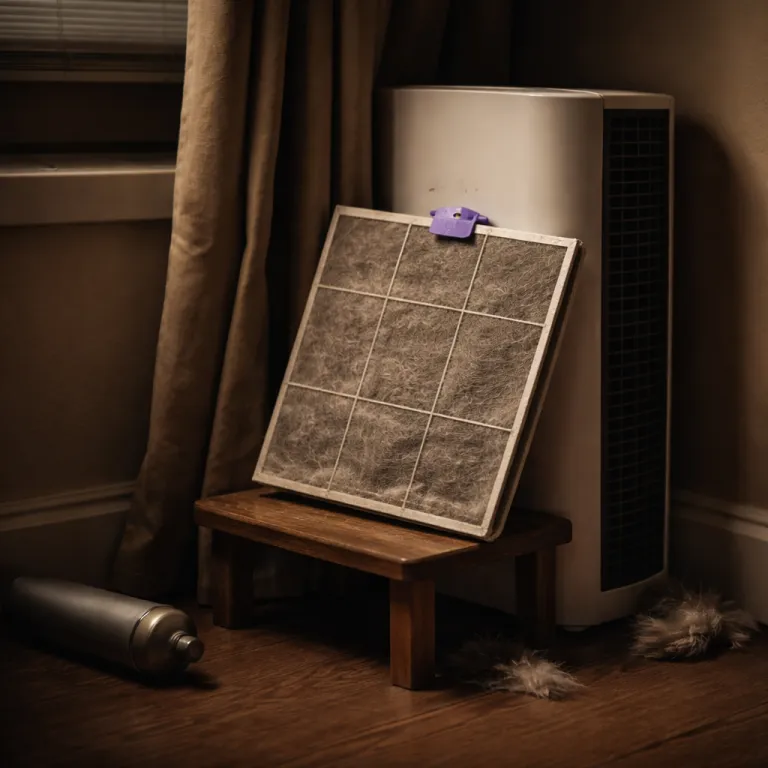
Filter neglect is the third quiet failure, and it often shows up about a year after purchase when the original enthusiasm from Air Quality Awareness Week 2026 has faded. Many people run their purifier for 12 months or more without changing the HEPA filter, which slowly clogs with particles from wildfires, fire smoke, pet dander, and cooking fumes until the device moves less clean air and leaves more pollutants suspended in the indoor air. As a practical benchmark, most manufacturers and indoor air quality programs recommend checking the filter every three months and replacing it every 6 to 12 months depending on smoke exposure and run time. For a deeper look at how hidden contaminants accumulate in living spaces, readers can consult this analysis of six hidden pollutants in your living room, then use that knowledge during this national air awareness week to set a firm reminder to check and replace filters on a realistic schedule.
UV‑C myths, wildfire smoke reality and a 15 minute home audit for this week
Public health agencies coordinating Air Quality Awareness Week 2026 say one myth keeps resurfacing in email campaigns and social media posts: the belief that small UV C lamps inside consumer purifiers meaningfully sterilise the air. In practice, the contact time between the indoor air stream and the light is far too short for reliable disinfection, and several independent tests have shown that the main benefit still comes from the mechanical HEPA filter that captures particles from smoke, dust, and pollen. For people with asthma who already follow Tuesday asthma and Thursday air themes in the national AQAW schedule, the safest strategy is to focus on proven filtration performance rather than paying extra for weak UV features that do little for asthma health.
Wildfire seasons in the western United States have made this point painfully clear, as residents in Washington, Oregon, and California now use the AirNow smoke map and local data dashboards to track wildland fires and fire smoke plumes in real time. During heavy smoke days, indoor air quality can deteriorate quickly if windows are left open or if a purifier is turned off because the room feels cool, which is why EPA and state environmental protection agencies urge people to run a properly sized HEPA purifier continuously in the main living area and bedroom. For allergy sufferers who also care about wildlife and native plants affected by national air pollution, this habit protects both personal health and the broader environment by reducing the need for improvised, energy intensive cooling solutions when smoke rolls in.
Officials suggest using this awareness week as a trigger for a simple 15 minute home audit that aligns with the Wednesday indoor theme promoted by several state programs. First, check the CADR rating on your purifier and compare it with your room size using the two thirds rule, then reposition the unit so that it has at least one metre of clearance on all sides and verify that the filter status light or calendar reminder for replacement is up to date. Next, confirm that your purifier is labelled ozone free or CARB compliant if you live in California, disable any ionizer or weak UV C feature that is not essential, and set a recurring reminder to inspect the HEPA filter every three months. Readers who want practical guidance on how purifiers fit into a broader asthma management plan can review these honest answers about what a purifier can and cannot do, and they can also explore bedroom focused advice in this related guide on three bedroom settings that help more than the purifier you buy to ensure that clean air, quality awareness, and realistic expectations all work together beyond this single week of national campaigns.