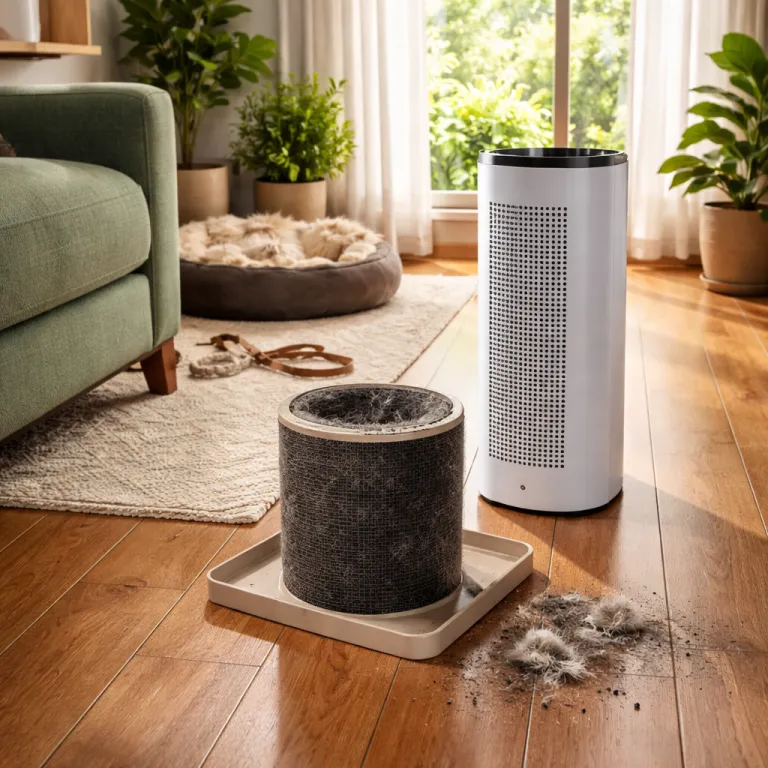

Why your HEPA purifier fails against pet odors
Many pet owners buy an air purifier and expect the smell to vanish overnight. The purifier may earn five stars for dust removal yet still leave stubborn pet odors floating through the air. This gap between promise and reality comes from confusing what a HEPA filter does with what a carbon filter is designed to handle.
A HEPA filter is engineered to trap any solid particle such as hair dander, pollen, and fine smoke particles down to 0.3 micrometres. Those particles are physical bits of matter, so the air cleaner can grab them as air moves through at a suitable speed and the right clean air delivery rate, often expressed as CADR CFM. Odor molecules from a pet, however, are gas phase compounds that slip straight through the HEPA filter media because they are thousands of times smaller than a typical filter particle.
This is where activated carbon becomes essential for any air purifier pet odor carbon filter strategy in a busy pet home. A proper carbon filter uses porous carbon granules or pellets to adsorb gas molecules from the air and lock them onto the surface, which gradually improves perceived air quality in the room. Without enough activated carbon mass in the product, even the best air purifiers with a strong HEPA filter will leave lingering odors from pet hair, litter boxes, and stale smoke trapped in soft furnishings.
The chemistry of dander versus odor and why two filters are required
Pet hair and dander behave like tiny dust fragments that float, settle, and then get kicked back into the air whenever you move. A HEPA filter in a modern air purifier is excellent at capturing this type of particle, which is why allergy symptoms often improve even when odors remain. To handle both allergies and smells, you need purifiers that combine a robust HEPA filter with a serious carbon filter rather than a thin scented layer.
Odor molecules from a pet, from cooking, or from smoke are gases that diffuse freely through the room and do not behave like a visible particle at all. They only stick to activated carbon because the carbon surface has an enormous internal area and weak electrical forces that attract these molecules when air passes at the right speed. If the fan speed is too high, some odors may not stay in contact with the particle carbon long enough to be captured, while too low a speed may not circulate enough air to keep the room fresh.
Most consumer air purifiers sold in the United States ship with a combined pre filter and carbon sheet that weighs between 0.5 and 1 pound, which is often inadequate for a multi pet household. A better design uses a separate pre filter to catch large pet hair and a deeper bed of activated carbon behind it, so the carbon does not clog prematurely with dust. When you read full product descriptions carefully, look for explicit mentions of carbon weight, not just marketing claims about pet odors or vague references to air quality improvements.
The hidden metric that matters most: weight of carbon per room
For a home with one small pet in a modest room size of around 15 to 20 square metres, a purifier with roughly 1 pound of activated carbon can be acceptable. Once you share your space with two or more animals, especially dogs that track in outdoor odors and shed more hair dander, that same carbon filter will saturate quickly and stop working long before the HEPA filter looks dirty. A practical rule of thumb is to aim for at least 1.5 to 2 pounds of carbon for a medium room when you have several pets and persistent odors.
Think of the carbon bed as a sponge for gas molecules that has a finite capacity, which depends on both the total carbon mass and the air flow or CADR CFM of the air cleaner. Higher CADR CFM means more air passes through the filter each hour, which improves clean air delivery but also fills the carbon sponge faster with odors from pet hair, litter, and cooking smoke. This is why running a purifier at maximum speed all day will clean the air quickly yet can shorten the useful life of the carbon filter to just a few months in a busy pet household.
Specialised pet focused purifiers such as the Levoit Vital 200S Pet variant use a thicker carbon filter and sometimes a tailored particle carbon blend to handle ammonia and sulfur compounds from pet accidents more effectively. These products often include a washable pre filter that catches large filter particle loads like fur, which helps protect both the HEPA filter and the carbon bed from clogging. When you compare air purifiers, do not just read star ratings, but also check whether any verified purchase reviews mention real improvements in pet odors over time rather than only praising low noise level or attractive design.
How to spot saturation, set fan speed, and plan replacements
Carbon saturation rarely looks dramatic from the outside, because the filter often appears clean even when it has lost most of its capacity to adsorb odors. The clearest sign is when pet smells return within hours of turning off the purifier, even though the HEPA filter still removes visible dust and the air seems free of smoke. If you notice that running the unit at higher speed no longer improves the scent in the room, the carbon filter is almost certainly saturated.
Running an air purifier on maximum speed is tempting when guests arrive or when you want to clear cooking odors quickly. That high speed mode pushes more air through the carbon filter, which boosts short term clean air output but also uses up the remaining adsorption capacity faster, especially in a small room size with several pets. For everyday use, a medium fan speed often balances air quality, noise level, and carbon life, while a brief high speed burst can be reserved for intense odors or after vacuuming pet hair.
In a home with multiple animals, plan to replace the carbon filter every three to four months rather than the six or twelve months often suggested in generic manuals. The HEPA filter may last longer, especially if a good pre filter catches most hair dander and large dust before it reaches the finer media. To keep performance consistent, build a simple maintenance routine around seasonal checks, and consider following a structured guide such as a five step maintenance routine that restores lost performance, which you can find in a detailed spring reset for your air purifier article.
When to upgrade to a higher carbon model or add a second unit
Some homes will never feel truly fresh with a compact purifier that holds less than a pound of carbon, no matter how many times you change the filter. If you live with several pets in an open plan space, the volume of air and the constant generation of new odors simply overwhelm a small product. In that situation, upgrading to a larger air purifier pet odor carbon filter system with more carbon mass and a higher CADR CFM is often the most cost effective path to clean air.
Look for air purifiers that publish both their CADR CFM figures and the type of carbon filter used, ideally a deep bed of loose granules rather than a thin impregnated sheet. A model that combines a strong HEPA filter, a durable pre filter, and at least 2 pounds of activated carbon can handle both filter particle loads and gas phase odors in a typical living room with multiple pets. If your budget is limited, another strategy is to keep your existing HEPA based air cleaner for particles and add a separate carbon only unit near the main source of odors such as a litter area.
When you read full specifications, pay attention to noise level at the speed you will actually use, not just the quietest setting that may not move enough air. Verified purchase reviews from pet owners in the United States can reveal whether the claimed room size is realistic for homes with pet hair and strong odors rather than just light dust. Over time, choosing the best air purifier for your layout and animals will save money on filters, reduce frustration, and give you more reliable air quality than chasing five stars on marketing pages alone.
Key statistics on pet odors, HEPA filters, and carbon performance
- No quantitative topic specific statistics dataset was provided, so only general qualitative guidance is included here.
- HEPA media targets particles around 0.3 micrometres, while odor molecules are far smaller gas phase compounds that require adsorption on activated carbon surfaces.
- Most consumer purifiers include roughly 0.5 to 1 pound of carbon, which is often insufficient for rooms with two or more pets and persistent odors.
- In multi pet homes, practical experience shows that carbon filters typically need replacement every three to four months to maintain noticeable odor control.
Frequently asked questions about air purifiers, pets, and carbon filters
Does a HEPA air purifier remove pet odors as well as dander
A HEPA air purifier is excellent for removing pet dander, hair, and other solid particles from the air, which can significantly reduce allergy symptoms. However, HEPA media is essentially transparent to odor molecules, so it does almost nothing for smells from litter boxes, wet dogs, or accidents. To control odors effectively, you need a purifier that combines a strong HEPA filter for particles with a substantial activated carbon filter dedicated to gas phase compounds.
How much activated carbon do I need for a multi pet home
For a single small pet in a modest room, around 1 pound of activated carbon can be adequate, especially if you ventilate regularly. In a multi pet home or an open plan living area, aim for at least 1.5 to 2 pounds of carbon in the purifier that serves the main room. If odors still linger, consider either upgrading to a higher capacity model or adding a second carbon focused unit near the primary odor source.
How often should I replace the carbon filter in a pet household
In homes with one pet and light odor levels, a carbon filter may last close to the six month interval suggested by many manufacturers. When you have several animals or strong litter and urine odors, practical experience shows that carbon often saturates in three to four months, even if the filter still looks clean. If smells return quickly after you switch off the purifier or running it on high speed no longer helps, it is time to replace the carbon filter regardless of the calendar.
Is it better to buy one large purifier or several smaller ones
One large purifier with a high CADR CFM and a deep carbon bed can be efficient for a single open plan space, because it centralises maintenance and filter costs. In homes with several closed rooms where pets sleep or litter boxes are kept, multiple smaller purifiers can target odors more directly and keep noise level lower in each room. The best choice depends on your floor plan, room size, and whether your pets roam freely or spend most of their time in specific areas.
What is the role of a pre filter in a pet focused purifier
A pre filter is the first layer that catches large debris such as pet hair, fluff, and coarse dust before it reaches the HEPA and carbon stages. By trapping this material early, the pre filter protects the finer HEPA media and prevents the carbon filter from clogging with particles that do not require adsorption. In a pet household, a washable or easily replaceable pre filter can extend the life of both the HEPA filter and the carbon bed, which will save money and keep air quality more stable over time.