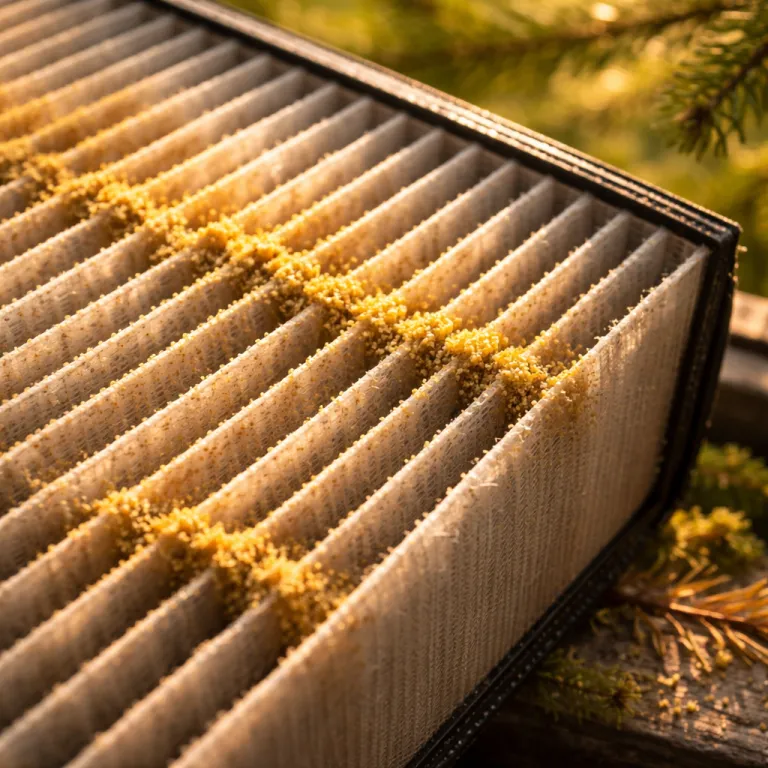

Bedroom high pollen count air purifier setup during peak days
Tree pollen counts are surging across the Pacific Northwest and Southern United States, with some monitors reporting more than 1 500 pollen grains per cubic meter of air on extreme days.1 For anyone with a pollen allergy or broader seasonal allergies, this means indoor air can quickly mirror outdoor conditions unless you act fast. A focused high pollen count air purifier setup in the bedroom can sharply cut airborne particles and ease night time allergy symptoms.
Place the air purifier designed for bedroom use within two to three meters of your bed, ideally at roughly mattress height so the clean air stream flows across your breathing zone rather than toward a window or door. Keep it away from curtains, large furniture and tight corners that trap room air, because obstacles slow filtration and let airborne pollen and other allergens linger. During the most intense pollen season days, close bedroom windows fully and rely on the purifier and your home’s HVAC system to manage air quality instead of natural ventilation.
For a typical 12 square meter bedroom with a standard 2.4 meter ceiling height, target an air purifier with a pollen Clean Air Delivery Rate around 150 to 200 cubic meters per hour (about 90 to 120 CFM) to handle airborne particles effectively.2 Larger rooms of 20 to 25 square meters need higher CADR ratings, closer to 250 to 300 cubic meters per hour (roughly 150 to 180 CFM), to keep indoor air reasonably free of airborne pollen and fine particles. HEPA filter technology can reduce airborne allergen concentrations by roughly 80 to 95 percent in controlled tests,3 but even strong filtration cannot remove every pollen grain or fully erase allergy related symptoms.
Fan speeds, smart controls and sealed home strategy
During the current pollen season spike, run your bedroom air purifier on a high or turbo fan speed for at least one to two hours before bedtime to pre clean room air. Many smart air purifiers default to an auto mode that reacts to particles detected by onboard sensors, yet these sensors often miss lighter airborne pollen grains that still trigger allergies. When local pollen count alerts show extreme levels, override smart air automation and lock the fan at a higher regular speed, then switch to a quieter sleep mode only once the air feels cleaner.
Keep windows closed throughout the day in high pollen regions such as Atlanta and Portland, and use a sealed home strategy to limit fresh airborne pollen entering indoor air. Run your central HVAC fan continuously on low with a MERV 13 filter, which captures a large share of airborne particles roughly 0.3 to 3 microns in size, including many allergens that slip past cheaper filters.4 This combined filtration approach reduces the energy penalty of running several devices at maximum power, while still prioritising clean air in the rooms where allergy symptoms are worst.
Clothing, hair and pets carry outdoor pollen grains deep into the home, undermining even the best high pollen count air purifier setup if you ignore them. Change clothes immediately after coming indoors, place worn items in a closed hamper and shower before bed to rinse pollen from skin and hair. Wipe pets with a damp microfibre cloth after walks, keep them off the bed during peak allergy days and let the purifier designed for the bedroom handle the remaining airborne particles overnight.
Filter checks, costs and realistic expectations during a pollen surge
A clogged pre filter or overloaded HEPA filter quietly cuts your air purifier’s effective CADR just when airborne pollen is peaking. During a severe pollen season, rinse or vacuum the pre filter every one to two weeks, following the manufacturer’s guidance to avoid damaging the mesh. Check the main HEPA filter and any activated carbon filters monthly for visible dust and particles build up, even if the smart air indicator still shows a regular status.
Manufacturers often advertise a regular price that assumes light use, but a real world high pollen count air purifier setup means filters reach end of life faster. Track the price regular for replacement filters before the season starts, then budget for at least one extra HEPA filter if you run the purifier on higher speeds for many hours daily. Comparing the ongoing filter price to the reduction in allergy symptoms, fewer sleepless nights and less reliance on medication helps many households justify the energy and maintenance costs.
Even with strong filtration and disciplined placement, no set of air purifiers can create perfectly clean air or eliminate all allergy symptoms for people with severe pollen issues. HEPA based filtration significantly lowers airborne allergens and airborne particles, but some pollen grains still settle on surfaces, bedding and carpets between cleaning cycles. Combine your high pollen count air purifier setup with regular wet dusting, weekly hot water laundry for bedding and careful control of indoor humidity to get the most health benefit from every purifier designed for allergy control.
Key statistics on pollen, air quality and purifiers
- Tree pollen levels above 1 500 grains per cubic meter are considered extremely high and can trigger intense allergy symptoms in sensitive adults, according to regional monitoring networks.1
- HEPA filter based air purifiers typically reduce airborne allergen concentrations by about 80 to 95 percent in controlled indoor air tests that follow standard laboratory protocols.3
- Running a room air purifier with an appropriate CADR for the room volume can cut airborne pollen and other allergens within 30 to 60 minutes of continuous operation.2
- MERV 13 HVAC filters capture a substantial share of airborne particles in the 0.3 to 3 micron range, which includes many common indoor allergens and fine dust.4
Quick TL;DR checklist for high pollen count bedroom setup
- Place purifier 2–3 m from the bed, roughly at pillow height, blowing toward your face, not a window.
- Shut bedroom windows on peak pollen days; use HVAC with a MERV 13 filter running on low.
- Run high or turbo speed 1–2 hours before sleep, then switch to quiet mode once air feels fresher.
- Choose CADR ~150–200 m³/h (≈90–120 CFM) for 10–15 m² rooms, 250–300 m³/h (≈150–180 CFM) for larger spaces.
- Clean pre filter every 1–2 weeks; inspect HEPA monthly and replace as needed when airflow drops.
- Change clothes, shower at night and wipe pets to keep outdoor pollen out of bed and soft furnishings.
Questions people also ask about high pollen count air purifier setup
Where should I place an air purifier in my bedroom during high pollen days ?
Place the air purifier two to three meters from your bed, with the clean air flow directed toward your breathing zone and not blocked by furniture or curtains. Keep it away from windows and doors where fresh pollen laden air enters, and avoid tight corners that restrict circulation. This placement helps the purifier capture airborne pollen and other allergens before they reach your nose and eyes while you sleep.
What fan speed should I use on my air purifier when pollen counts are high ?
Use a high or turbo fan speed for at least one to two hours when you first enter the room, especially in the evening. After the initial clean up, you can shift to a medium or sleep mode to balance noise, energy use and filtration. During extreme pollen spikes, override auto mode and keep the fan slightly higher than usual, because built in sensors may underestimate airborne pollen levels.
How often should I change filters in pollen season ?
Check and clean the pre filter every one to two weeks during heavy pollen periods, since it traps larger particles and protects the HEPA filter. Inspect the HEPA filter monthly for visible dust and discolouration, and replace it as soon as airflow drops or the indicator light signals end of life. Many households in high pollen regions find they need one extra HEPA filter change compared with the regular schedule printed on the box.
Can an air purifier completely stop my allergy symptoms ?
An air purifier with a true HEPA filter can significantly reduce airborne allergens, but it cannot remove every pollen grain or fully prevent allergy symptoms. Pollen also settles on bedding, carpets and surfaces, and it travels indoors on clothes, hair and pets. Combining filtration with cleaning routines, closed windows and HVAC filters gives the best overall relief for seasonal allergies.
What CADR rating do I need for pollen in a typical bedroom ?
For a bedroom around 10 to 15 square meters, aim for a pollen CADR of roughly 150 to 200 cubic meters per hour, which corresponds to about 90 to 120 cubic feet per minute. Larger rooms up to 25 square meters benefit from CADR values closer to 250 to 300 cubic meters per hour, or roughly 150 to 180 CFM. Choosing a purifier with a higher CADR than the bare minimum helps maintain cleaner air when you run it on quieter, lower fan speeds at night.
Sources: (1) Regional pollen monitoring networks and local health agencies; (2) AHAM CADR room size guidance and standard air changes per hour calculations; (3) Laboratory studies on HEPA filtration efficiency for airborne allergens; (4) ASHRAE and filter manufacturer data on MERV 13 performance ranges.