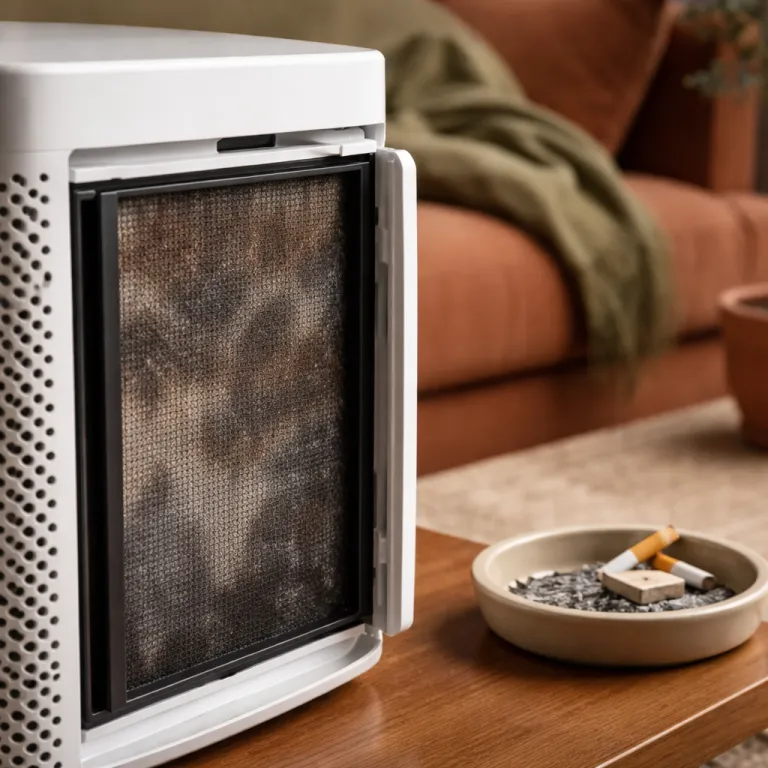
Why cigarette smoke lingers and how an air purifier helps
Cigarette smoke behaves differently from ordinary household air pollution. It releases ultra fine particles into the air that stay suspended for hours, while sticky tar compounds cling to walls, fabrics, and every surface in the room. An air purifier for cigarette smell must therefore manage both airborne particles and stubborn gases, which requires more than a basic fan and a simple filter.
When you read product claims, focus on how the purifier handles smoke rather than generic dust. The best air purifiers for cigarette smoke combine a strong fan speed, a high Clean Air Delivery Rate expressed as CADR CFM, and a deep carbon filter to trap odours. Without enough CFM and a well designed filter, even the best air purifier on paper will struggle to keep up in a busy smoking room.
True HEPA filtration is central to effective particle removal from cigarette smoke. A certified HEPA filter captures at least 99.97 percent of particles down to 0.3 microns, which includes most smoke particles and ash. However, HEPA alone cannot neutralise the smell, so a robust layer of activated carbon is needed to absorb volatile organic compounds and tobacco related gases.
Many air purifiers tested in independent labs show that combining a pre filter, a HEPA filter, and a thick carbon filter delivers the most balanced performance. The pre filter catches larger dust and hair, protecting the main filter and improving long term air quality. This layered approach also helps maintain fan speed and reduces overall noise because the system does not clog as quickly.
Room size is another critical factor when choosing an air purifier for cigarette smell. Manufacturers usually specify a recommended room area in square metres and a corresponding CADR CFM value, which indicates how much clean air the unit can produce each minute. To control cigarette smoke effectively, the purifier should be sized so that it can exchange the full volume of air in the room at least four to five times per hour.
Key technologies that remove cigarette smell from indoor air
Modern air purifiers use a mix of mechanical and chemical filtration to handle cigarette smoke. The mechanical side relies on a pre filter and a true HEPA filter for particle removal, while the chemical side uses activated carbon to capture odour molecules. When these systems are balanced correctly, the air purifier can reduce both visible smoke and the lingering smell that clings to soft furnishings.
The quality and quantity of carbon matter more than many buyers realise. A thin carbon filter may improve air quality slightly, but heavy smokers usually need a deeper bed of activated carbon to manage continuous cigarette smoke. Premium brands such as Austin Air and IQAir HealthPro often use several kilograms of carbon filter media, which significantly increases odour holding capacity but also affects price and inches weight.
Some devices add ionisation or electrostatic technologies to boost particle capture. Before choosing such a model, it is wise to read an in depth review of a quiet ionizer that cleans the air, such as the analysis available in this specialist ionizer review. These systems can reduce visible smoke quickly, yet they still need a strong HEPA filter and carbon filter to manage long term cigarette smell.
Smart features now play a growing role in how air purifiers manage smoke. A built in sensor monitors air quality and automatically adjusts fan speed or auto mode when it detects higher levels of particles. This automation helps maintain consistent performance against cigarette smoke while limiting unnecessary energy consumption and noise level during cleaner periods.
Noise is a frequent concern for people running an air purifier all day. Higher fan speed improves CFM and CADR CFM, but it also raises noise, which can be disruptive in a bedroom or small room. Checking the specified noise level at each mode, especially sleep mode and maximum mode, helps you balance comfort with the need to clear smoke quickly.
Energy consumption is another practical factor, particularly when the air purifier must run continuously in a smoking household. Models with efficient motors and well designed airflow paths can deliver strong CFM while keeping electricity use modest. Over time, the combination of filter cost, power consumption, and initial price determines the real cost of keeping cigarette smell under control.
Comparing popular air purifiers for cigarette smoke in real rooms
When comparing air purifiers tested for cigarette smoke, it helps to focus on real room performance rather than only marketing claims. Look at how quickly each air purifier can reduce smoke concentration in a defined room size, and how well it maintains low odour levels over several hours. Independent test data that measure CADR CFM, particle removal efficiency, and gas reduction provide a more reliable picture than vague promises about fresh air.
Levoit air purifiers are widely available and often promoted as the best budget option for smoke. Many Levoit models combine a pre filter, a true HEPA filter, and a modest carbon filter, which can handle light to moderate cigarette smoke in a small room. However, heavy smokers or larger rooms may require a higher CFM and a thicker filter activated carbon section than typical compact Levoit units provide.
At the higher end, Austin Air and IQAir HealthPro purifiers are designed for demanding environments. Austin Air units use large cylindrical beds of activated carbon and a substantial HEPA filter, which makes them effective for persistent cigarette smell but also increases inches weight and price. IQAir HealthPro models focus on extremely fine particle removal with advanced HEPA media, and some configurations add specialised gas and odour cartridges for tobacco smoke.
Ioniser based air purifiers and hybrid systems offer another path for dealing with smoke. To understand their strengths and limitations, you can consult a detailed guide to top ionizer air purifiers that explains how they complement traditional filters. These devices can reduce airborne particles quickly, but they still rely on carbon filter stages to handle the stubborn smell of cigarette smoke.
Room layout and placement also influence how well any purifier handles smoke. Positioning the unit away from walls, with clear space around the air intake and outlet, allows better circulation and more uniform air quality. In multi room homes, using several smaller air purifiers instead of one large purifier can sometimes deliver better coverage and more flexible fan speed control.
Before purchasing, it is wise to read multiple user reports and professional test summaries. Pay attention to comments about noise level at higher modes, filter longevity, and real world performance against cigarette smell. This qualitative feedback complements laboratory data and helps you identify the best air purifiers for your specific smoking patterns and room conditions.
How to size and position an air purifier for cigarette smell
Correct sizing is essential when choosing an air purifier for cigarette smell. Start by measuring the room in metres and calculating the volume by multiplying length, width, and height. With this figure, you can compare it to the purifier’s CADR CFM rating and estimate how many air changes per hour the unit will deliver at each fan speed.
For rooms where people smoke regularly, aim for at least four to five air changes per hour. This usually means selecting a purifier with a higher CFM than you might choose for pollen or dust alone, because cigarette smoke is more persistent. If the purifier’s CFM is too low, smoke will accumulate faster than the system can perform particle removal and odour reduction.
Placement within the room affects both air quality and noise. Position the air purifier where airflow is not blocked by furniture, ideally near the main source of cigarette smoke but not so close that hot smoke enters the intake directly. Keeping at least several inches of clearance around the unit helps maintain efficient circulation and prevents unnecessary strain on the fan.
Many modern air purifiers include an air quality sensor that guides auto mode. In a smoking environment, auto mode may quickly ramp up fan speed when it detects rising particle levels, then slow down once the air clears. This dynamic adjustment can reduce energy consumption and noise level while still keeping cigarette smell under control throughout the day.
However, some users prefer manual control of mode and fan speed when dealing with heavy smoke. Running the purifier at a medium or high setting during and after smoking sessions, then switching to a quieter mode at night, can balance comfort and effectiveness. Monitoring how quickly the smell fades after each cigarette helps you fine tune these settings.
It is also important to consider the combined inches weight and footprint of the purifier, especially in small flats. Larger units with deep carbon filter beds and big HEPA filter cartridges often weigh more but provide superior performance per unit of air. Evaluating both physical size and CFM ensures that the purifier fits your room practically while still delivering the best air cleaning for cigarette smoke.
Running costs, maintenance, and realistic expectations for smoke removal
Owning an air purifier for cigarette smell involves ongoing costs beyond the initial price. Replacement filters, particularly HEPA filter cartridges and activated carbon blocks, must be changed regularly to maintain strong particle removal and odour control. Ignoring filter schedules leads to reduced CFM, higher noise, and weaker performance against cigarette smoke.
Most manufacturers specify a filter life in months based on average air quality and usage. In a smoking household, the pre filter and carbon filter usually saturate faster, so you may need to replace them more often than the standard recommendation. Checking the colour and smell of the filter activated carbon section can help you judge when odour capacity is nearly exhausted.
Energy consumption also contributes to long term cost. Running a medium sized air purifier continuously at moderate fan speed typically uses less electricity than many people expect, but high speed operation for heavy smoke can increase usage. Comparing wattage ratings and estimating daily hours of operation allows you to project annual running costs more accurately.
Noise level is another practical consideration when the purifier must run for many hours. Some models remain relatively quiet even at higher fan speed, while others become intrusive in a bedroom or study. Reading detailed noise measurements in decibels for each mode helps you choose a purifier that will not disturb sleep or concentration.
It is important to maintain realistic expectations about what air purifiers can and cannot do for cigarette smoke. They significantly reduce airborne particles and odours, improving indoor air quality and comfort, but they cannot reverse damage already done to walls, carpets, and furniture. Deep cleaning, repainting, and fabric replacement may still be necessary in rooms exposed to heavy smoke over long periods.
For a broader perspective on how different technologies handle odours in everyday homes, you can consult this guide on whether an air purifier can really remove odours. Combining such insights with careful reading of specifications, including CFM, CADR CFM, filter types, and sensor features, will help you choose the best air purifiers for your budget and lifestyle. Over time, consistent use and proper maintenance provide the most reliable defence against persistent cigarette smell.
Practical tips to maximise performance against cigarette smell
To get the best air cleaning from any purifier, start by reducing smoke at the source. Encouraging smoking near open windows or on balconies lowers the overall load of cigarette smoke entering the room. Even small changes in behaviour can make it easier for the air purifier to maintain good air quality with moderate fan speed.
Next, optimise the purifier’s settings for your daily routine. During periods of active smoking, switch from quiet mode to a higher mode to boost CFM and accelerate particle removal. After the session, leaving the purifier on high for at least thirty minutes helps the HEPA filter and activated carbon filter capture remaining smoke and odour molecules.
Regular cleaning of the pre filter is essential for sustained performance. Dust, pet hair, and ash can clog the pre filter quickly, forcing the fan to work harder and increasing noise level. Rinsing or vacuuming this layer according to the manufacturer’s instructions restores airflow and protects the more expensive HEPA filter and carbon filter stages.
Monitoring the air quality sensor, if present, provides useful feedback on how well your strategy works. If the sensor frequently indicates poor air quality even with the purifier running, you may need a higher capacity unit or additional air purifiers in adjacent rooms. In some cases, upgrading to a model like Austin Air or IQAir HealthPro, with larger filter volumes and stronger CFM, can make a noticeable difference.
Pay attention to the physical condition and inches weight of the purifier when moving it between rooms. Heavier units with substantial activated carbon beds may be less convenient to relocate but often provide better long term odour control. Using furniture sliders or choosing a model with wheels can make repositioning easier without compromising stability.
Finally, keep a simple log of filter changes, perceived smoke levels, and any adjustments to fan speed or mode. Over several months, this record helps you understand how quickly filters saturate in your environment and whether your current air purifiers remain the best choice. Such careful observation turns a basic appliance into a tailored tool for managing cigarette smell in your home.
Common questions about air purifiers for cigarette smell
Can an air purifier completely remove cigarette smell from a room ?
An air purifier with a true HEPA filter and a substantial activated carbon filter can greatly reduce cigarette smoke particles and odours, but it rarely removes every trace of smell from heavily contaminated rooms. Tar and gases that have penetrated walls, carpets, and furniture may continue to emit odours even when the air is clean. Combining purification with deep cleaning and better ventilation offers the most comprehensive improvement.
What type of filter is best for cigarette smoke ?
The most effective combination for cigarette smoke is a true HEPA filter for fine particle removal and a thick bed of activated carbon for gas and odour adsorption. A washable pre filter helps capture larger debris and protects the main filters, extending their life. Thin carbon coated pads may help with light odours, but heavy smokers usually need a deeper carbon filter to manage persistent smell.
How often should filters be replaced in a smoking household ?
Filter life depends on smoking frequency, room size, and overall air quality, so manufacturer estimates are only a starting point. In homes with regular indoor smoking, carbon filters may need replacement every few months, while HEPA filters might last somewhat longer. Monitoring odour return and checking filter condition allow you to adjust replacement intervals more accurately.
Does running an air purifier for smoke use a lot of electricity ?
Most residential air purifiers are relatively efficient, especially at low or medium fan speed. Continuous operation in a smoking environment will increase energy consumption compared with occasional use, but the cost is usually comparable to running a small household appliance. Choosing an energy efficient model and using auto mode where appropriate can limit unnecessary power use.
Where should I place an air purifier to handle cigarette smoke effectively ?
Place the air purifier in the room where smoking occurs most often, with clear space around the intake and outlet for unobstructed airflow. Avoid corners, tight alcoves, and locations directly behind large furniture, which can trap air and reduce effective CFM. Positioning the unit near, but not directly beside, the smoking area helps it capture smoke quickly while protecting the filters from concentrated heat and tar.