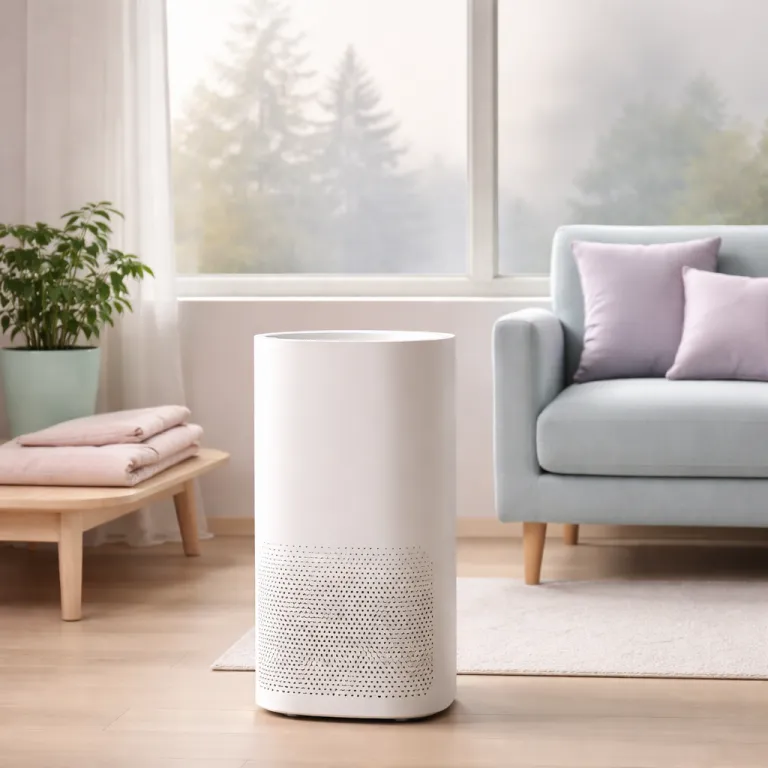
Why the best air purifier for smoke is not the one with the biggest CADR number
When you look for the best air purifier for smoke, the marketing often pushes huge CADR numbers and vague promises about clean air. Those claims usually highlight pollen CADR performance, while the real protection against wildfire smoke depends on the smoke CADR rating and the quality of the filter. If you live with wildfire plumes, chimney fumes or weed smoke drifting indoors, you need to understand how air changes and particle size interact with your room size.
CADR, or Clean Air Delivery Rate, is a standardized measure of how much filtered air a purifier can produce, and AHAM typically reports it in cubic feet per minute (cfm) for smoke, dust and pollen. Smoke CADR focuses on the smallest particles, typically between about 0.1 and 1 micron, which are the hardest for a HEPA filter to capture and among the most dangerous for your lungs, according to AHAM’s ANSI/AHAM AC-1 standard and U.S. EPA PM2.5 guidance. Many air purifiers advertise a high pollen CADR figure, but their smoke CADR and actual clean air delivery for fine particles are much lower, so the real world performance against wildfire pollution is weaker than the box suggests.
To avoid that trap, always check the AHAM Verifide label for the smoke CADR number, not just the generic CADR figure. A purifier with a modest overall CADR but a strong smoke rating will usually protect your air quality better during fires than a flashy tower with inflated pollen numbers. When you compare purifiers, think in terms of smoke CADR per watts of power, because an energy efficient air cleaner that delivers high smoke filtration per watt will cost less to run during long smoke seasons.
Room sizing, air changes per hour and why 5 ACH is the wildfire baseline
Choosing the best air purifier for smoke starts with simple room size maths, not with the prettiest fan design or the most aggressive advertising. For wildfire events, indoor air cleaning needs to be fast enough to keep up with infiltration, which means targeting at least five air changes per hour instead of the usual four for allergies. That higher target ensures that the purifier cycles the full room volume every 12 minutes, which is crucial when outdoor smoke levels spike suddenly. The U.S. Environmental Protection Agency recommends this kind of higher ACH in a designated clean room during wildfire smoke episodes.
To calculate the required smoke CADR, first measure your room size in square metres, then multiply by the ceiling height to get cubic metres of air. Convert that volume into the airflow needed for five air changes per hour, then match it to the purifier’s smoke CADR rating in cfm, remembering that the official AHAM tables already translate CADR into recommended room sizes. As a worked example, a 25 m² room with a 2.4 m ceiling has a volume of 60 m³; five ACH means 300 m³/h of clean air, which is roughly 176 cfm (300 ÷ 1.7). If you want a quick rule of thumb, a smoke CADR of around 170 cfm suits a medium room of roughly 25 square metres at four ACH, so for five ACH you should either choose a higher CADR or run two air purifiers together.
Many tower air purifiers, including some promoted as the best for large rooms, only reach their advertised CADR at the highest fan speed, which can be noisy for bedroom use. When you read reviews or guides to top tower air purifiers, pay attention to how much clean air they deliver at medium speed, because that is the setting you will probably use for hours at night. During extreme smoke days, you can run the purifier on high for the first 30 minutes to one hour to clear the air quickly, then drop to medium once the indoor air quality stabilizes.
Why wildfire smoke demands both HEPA filtration and substantial activated carbon
Wildfire smoke is not just visible soot in the air, it is a complex mix of ultrafine particles and volatile organic compounds that seep through tiny gaps in your home. The best air purifier for smoke therefore needs a true HEPA filter for particles and a thick bed of activated carbon for gases, because HEPA alone will not capture the odours and chemical fumes from charred materials. When you see purifiers marketed for smoke with only a thin carbon coating on a pre filter, treat those claims with caution.
A true HEPA filter, usually rated H13 or higher under standards such as EN 1822, captures at least 99.95 percent of particles around the most penetrating particle size near 0.1 to 0.3 microns, which covers most smoke and weed smoke aerosols documented in combustion studies. If you want to understand the technical grades and avoid paying for marketing fluff, a detailed guide to decoding true HEPA filter grades can help you compare HEPA filters and HEPA purifiers more confidently. For gases, look for several hundred grams of activated carbon in the filter, because a heavier carbon load extends filter lifespan and improves performance against wildfire odours, cooking fumes and VOCs from paint or cleaning products, as shown in adsorption capacity tests for granular carbon media.
Models like the Coway Airmega series and the Blue Pure range illustrate how different designs balance particle and gas filtration for smoke sensitive users. A Coway Airmega purifier typically combines a high efficiency HEPA filter with a substantial carbon layer, while a Blue Pure air purifier uses a large cylindrical filter and a powerful fan to push more clean air through the media. When you compare these purifiers, check not only the smoke CADR and watts consumption, but also how often the manufacturer expects you to replace the combined HEPA and carbon filter, because frequent changes during long smoke seasons can raise the total cost of ownership.
Smart sensors, sealed homes and the role of automation during smoke events
Once you have chosen the best air purifier for smoke, the next step is to integrate it into a broader indoor protection strategy. During wildfire episodes, experts recommend a sealed home approach, which means closing windows, limiting door openings and using smart purifiers with particle sensors to respond automatically to indoor pollution spikes. This combination of building envelope discipline and responsive air cleaning can keep indoor air quality significantly better than outdoors, even when the sky turns orange.
Smart air purifiers use built in PM2.5 sensors to track fine particle levels and adjust fan speed in real time, which is especially useful when smoke infiltration varies with wind shifts. If you want to compare different sensor implementations, a dedicated overview of top air purifiers with air quality sensors can show how brands like Coway Airmega and Blue Pure handle automatic modes, colour coded indicators and app controls. In practice, a smart purifier will ramp up to high speed within minutes when it detects a spike, then drop back to medium once the air cleaning has restored clean air levels, saving watts and reducing noise.
Automation does not remove the need for manual control, especially during severe smoke days when you may want to override the default settings and run the fan on high for several hours. Some users prefer to set a timer for 60 minutes of maximum air delivery after cooking, vacuuming or opening the front door, then let the smart mode handle the rest of the hour. When evaluating smart purifiers, look for clear information about their CADR at different speeds, because a model that only reaches its advertised smoke CADR on turbo mode will not protect you as well if you mostly run it on quiet settings.
Marketing claims, AHAM smoke certification and how to verify wildfire suitability
Retail packaging for air purifiers is full of bold statements about smoke removal, but many of those claims rely on vague language rather than standardized tests. To identify the best air purifier for smoke in a crowded market, focus on models that carry AHAM Verifide certification with clearly listed smoke, dust and pollen CADR values. That independent testing gives you a reliable measure of clean air delivery, instead of trusting generic phrases like “captures wildfire smoke” or “ideal for large rooms”.
When a purifier claims to work for wildfire smoke, check whether the smoke CADR is high enough for your room size at five air changes per hour, not just at the lower four ACH baseline used for general allergy use. A model with a smoke CADR of 300 cfm might be the best choice for a 40 square metre living room, while the same purifier would struggle to keep up in an open plan space twice that size, even if the box suggests a larger coverage area. Always remember that the official AHAM room size recommendations assume a certain number of air changes per hour, so if you want faster air cleaning during extreme smoke days, you either need a higher CADR or multiple purifiers.
Some brands highlight impressive pollen CADR numbers because larger particles are easier to capture, but for wildfire scenarios the smoke CADR is the only rating that truly matters. When you compare purifiers like Coway Airmega models, Blue Pure units and premium machines such as the Dyson Big+Quiet, look at how their smoke CADR, watts consumption and filter lifespan interact over a full season of use. A slightly lower CADR purifier that is more energy efficient and uses a durable HEPA filter with thick activated carbon may offer better long term performance and lower running costs than a power hungry flagship with only marginally higher airflow.
Maintenance discipline, pre filters and the portable versus whole home decision
Even the best air purifier for smoke will underperform if you neglect maintenance, especially during long wildfire seasons when filters load quickly. The pre filter, which catches larger dust and hair before they reach the HEPA filter, needs particular attention because a clogged pre filter reduces airflow, lowers effective CADR and forces the fan to work harder. During active fires, washing or replacing the pre filter weekly can preserve both performance and filter lifespan, while also keeping noise levels down at medium and high speeds.
For the main HEPA filter and activated carbon stage, follow the manufacturer’s hour based or months based replacement guidance, but be prepared to change more often if you run the purifier on high speed for many hours per day. Heavy smoke, including weed smoke indoors, saturates carbon faster, so a purifier used in a small smoking room may need new filters sooner than the same model in a bedroom with occasional outdoor smoke infiltration. When you budget for a new air purifier, always factor in the cost of replacement filters over several years, because cheap units with expensive cartridges can end up costing more than premium purifiers with longer lasting media.
Residents in regions with multi week wildfire events often face a choice between several portable air purifiers and upgrades to whole home filtration. Portable purifiers like the Coway Airmega or Blue Pure series are flexible, letting you concentrate clean air in bedrooms at night and living areas by day, while a central system with a high MERV filter can handle background air cleaning throughout the house. A practical compromise is to use a central system for baseline filtration and one or two high CADR portables in key rooms, running them on high for the first 20 minutes after you close windows, then on medium for the rest of the hour to maintain safe air quality.
Real world examples of smoke focused purifiers and how to read their specs
Looking at specific models helps clarify what the best air purifier for smoke really offers beyond marketing slogans. A high performance flagship purifier, for example, may pair a powerful fan with a very high smoke CADR, making it suitable for roughly 70 to 90 square metres at four to five air changes per hour, depending on the exact rating. That kind of performance usually comes with higher watts consumption, so it suits large open spaces where a single purifier must handle significant air delivery without help from other units.
In the mid range, a Coway Airmega purifier often balances strong smoke CADR with reasonable energy efficient operation, using a true HEPA filter and a substantial activated carbon layer to tackle both particles and gases. A typical Coway Airmega model might deliver a few hundred cfm of smoke CADR at high speed, enough for a medium to large living room, while drawing far fewer watts than some premium competitors, which keeps running costs manageable during long smoke seasons. Blue Pure purifiers, by contrast, usually emphasize simple controls, cylindrical filters and strong airflow, making them a solid choice for users who value straightforward air cleaning and easy filter changes over advanced smart features.
When you compare these purifiers, always read the detailed specifications rather than relying on marketing phrases like “ideal for smoke” or “covers up to 100 square metres”. Focus on the smoke CADR, the number of air changes per hour at your actual room size, the presence of true HEPA and thick activated carbon, the rated filter lifespan and the watts drawn at medium and high fan speeds. A simple comparison table that lists, for example, a Coway Airmega with around 250 to 350 cfm smoke CADR, 40 to 70 watts at medium to high, several hundred grams of carbon and 12 month filter life next to a Blue Pure unit with similar CADR but different power draw and 6 to 12 month filters can quickly reveal which purifier fits your budget and usage pattern. That disciplined approach will guide you toward purifiers that genuinely improve your indoor air quality during wildfire events, instead of models that only look impressive on the shelf.
Key statistics about smoke, CADR and indoor air protection
- Wildfire smoke particles typically range from well below 1 micron in diameter, with a large fraction in the fine and ultrafine range that can penetrate deep into the lungs and are hard for low grade filters to capture effectively, according to data from the United States Environmental Protection Agency and peer reviewed PM2.5 exposure studies.
- The EPA recommends targeting at least five air changes per hour in a clean room or designated safe room during wildfire smoke events, which is higher than the four ACH often used for general allergy control and requires a proportionally higher smoke CADR for the same room size.
- AHAM’s CADR standard defines separate ratings for smoke, dust and pollen, and the smoke CADR is usually the lowest of the three because fine particles are more difficult to remove, so a purifier with a smoke CADR of 200 cfm may show dust and pollen CADR values 20 to 40 percent higher.
- Energy Star certified air purifiers are typically about 25 percent more energy efficient than standard models, which can save dozens of kilowatt hours over a long wildfire season when purifiers run for many hours per day at medium or high speed.
- Studies of indoor air quality during wildfire episodes have shown that using a properly sized HEPA air purifier in a closed room can reduce indoor PM2.5 concentrations by roughly 50 to 80 percent compared with outdoor levels, depending on building tightness and the purifier’s smoke CADR.
FAQ about choosing the best air purifier for smoke
How do I size an air purifier for wildfire smoke in my room ?
Start by measuring your room size in square metres and multiplying by the ceiling height to get the volume, then calculate the airflow needed for at least five air changes per hour. Match that requirement to the purifier’s smoke CADR, not just the generic CADR or coverage area printed on the box. If your room is irregular or open plan, consider either a higher smoke CADR model or two smaller purifiers placed at opposite ends of the space.
Is a HEPA filter alone enough for wildfire smoke odours and gases ?
A true HEPA filter is excellent for capturing fine smoke particles, but it does not remove most of the gases and odours released by burning vegetation, plastics and building materials. For wildfire scenarios, you need both HEPA and a substantial activated carbon stage, ideally with several hundred grams of carbon to adsorb volatile organic compounds. Thin carbon coatings or scented filters are not sufficient for sustained smoke events, especially if you are sensitive to smells or chemical fumes.
How often should I change filters during an active wildfire season ?
During heavy smoke periods, wash or replace the pre filter weekly, because it loads quickly with ash and dust and can restrict airflow if neglected. The main HEPA and carbon filter may need replacement sooner than the standard schedule if you run the purifier on high speed for many hours per day or if you notice persistent odours despite normal operation. Always follow the manufacturer’s guidance, but be prepared for shorter filter lifespan when outdoor air quality remains poor for weeks.
Are smart air purifiers with sensors worth paying extra for during smoke events ?
Smart air purifiers with built in particle sensors can be very useful during wildfire seasons, because they automatically increase fan speed when indoor PM2.5 levels rise and slow down when the air is clean. This automation helps maintain consistent air quality without constant manual adjustments and can save energy by avoiding unnecessary high speed operation. For the best results, combine smart control with a sealed home strategy, keeping windows closed and limiting door openings when outdoor smoke is heavy.
Should I choose one large purifier or several smaller units for my home ?
One large purifier with a high smoke CADR can be effective in an open plan area, but it may not protect closed bedrooms or home offices as well as multiple smaller units. Several medium sized purifiers let you create clean air zones where you spend the most time, such as sleeping areas at night and living spaces during the day. Many wildfire exposed residents use a mix of a central system or large purifier for background cleaning and one or two room specific units for targeted protection.