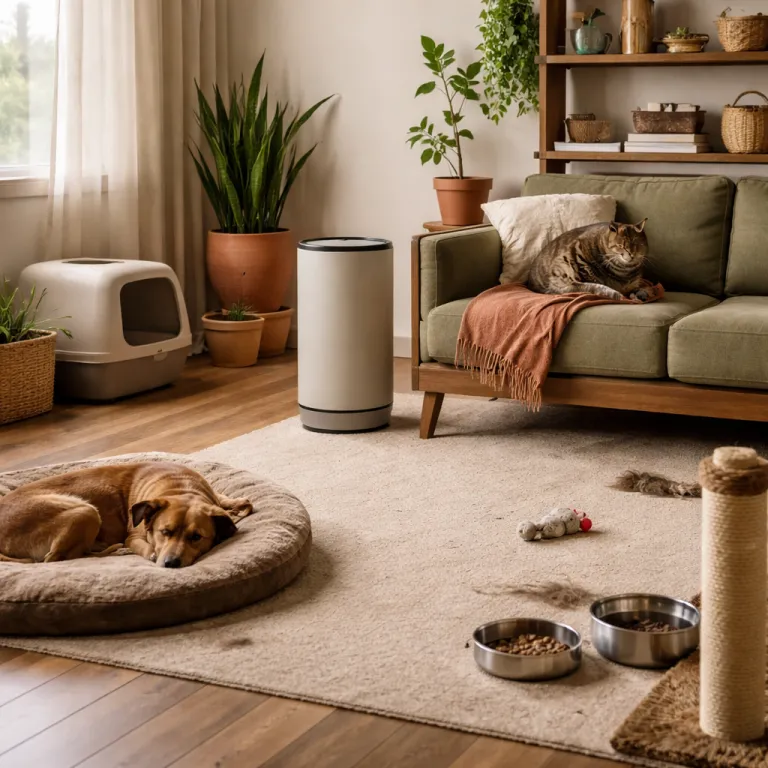
Why the best air purifier for pets changes when you have more than one animal
Choosing the best air purifier for pets is very different in a home with two cats or a dog and a rabbit. All that extra pet hair and dander means more particle load in the air, faster saturation of every filter, and a much steeper curve in long term running costs. When you add more pets, the air quality challenge grows faster than linearly, because animals share rooms, groom each other, and spread allergens into every corner.
In practice, this means a single purifier that felt powerful enough months ago can suddenly feel overwhelmed once a second pet arrives. The same HEPA filter that used to last a year may now clog in nine months, while the carbon filter that traps odors can reach saturation in half the time. Multi pet owners therefore need to think beyond the headline “best air” marketing claims and look closely at clean air delivery rate, carbon capacity, and real noise level data.
Any serious buying guide for air purifiers must explain how air, power, and room size interact in real apartments. To keep air quality stable, the total CADR CFM of your purifiers should match your floor area at four to five air changes per hour, not just the optimistic coverage printed on the box. Only then can a purifier or several purifiers keep up with continuous pet hair shedding, tracked in dust, and the fine particle pollution that drifts in from outdoors.
One large purifier or two medium purifiers for pets
Many pet owners ask whether a single large air purifier in the hallway can replace two smaller air purifiers placed in separate rooms. A big unit with strong power and a high CADR CFM rating can move a lot of air, but walls, doors, and furniture create dead zones where pet hair and odors linger. Two medium purifiers, one in the main pet room and one in the bedroom, usually give more even air quality and useful redundancy if one purifier fails.
Noise matters as much as power, especially for anxious pets that react to every new sound. A large purifier running in turbo mode can reach a noise level that exceeds 55 dBA, which may bother a nervous cat more than two smaller purifiers running in a quiet mode at 30 to 35 dBA each. When you read any video review, listen for comments about dBA at different fan settings, not just the maximum airflow claims.
Cost is the other side of this trade off, because two sets of HEPA filter and carbon filter replacements add up. However, two units let you run auto mode in the living room where pets sleep and a lower manual mode in the bedroom, trimming energy consumption while still protecting your lungs. For a detailed look at how a quiet workhorse handles pet hair in real life, you can study this pet hair air purifier review and compare its CADR CFM and noise level to your own room dimensions in inches.
Why pet specific filters, HEPA stages, and carbon matter more with multiple pets
In a single pet home, a standard HEPA filter can often keep up with dander and dust, but in a multi pet home the story changes. Each extra pet adds more hair, more skin flakes, and more odors, so the best air purifier for pets usually combines a robust HEPA filter for particle capture with a deep activated carbon layer for gases. Pet specific purifiers also use a washable pre filter to trap coarse pet hair before it reaches the main HEPA media.
That washable pre filter is not just a marketing extra, because it directly extends the life of the HEPA filter and the carbon filter behind it. When you rinse or vacuum the pre filter every two months, you remove a thick mat of pet hair and dust that would otherwise clog the finer fibers and increase power consumption. In multi pet homes, this simple washable step can delay HEPA replacement from six to nine months, which saves money and keeps airflow high.
Odors are where pet specific air purifiers really earn their keep, especially in homes with litter boxes or large dogs. A filter activated with a generous mass of activated carbon can adsorb ammonia, volatile organic compounds, and the complex molecules that create “wet dog” smells far better than a thin generic carbon sheet. For a broader comparison of how different purifiers for pets handle both particle and odor control, you can consult this guide to top air purifiers for pets and note which models pair HEPA stages with serious carbon beds.
Noise level, modes, and placement when pets share your bedroom
Living with pets often means sharing a bedroom, so the best air purifier for pets must balance clean air with sleep friendly sound. High CADR CFM ratings usually require more fan power, and more power means more dBA, which can disturb both humans and animals at night. Sensitive pets may avoid a room if the purifier roars in turbo mode, even if that room has the best air quality in the home.
Look for purifiers that offer a genuine sleep mode or low mode with a noise level under 30 dBA, while still maintaining enough airflow for your room size. Auto mode can help by ramping the fan up only when air quality sensors detect a spike in particle concentration, such as during vacuuming or litter box cleaning. This way, the purifier works hardest when you are awake and drops back to a quiet mode when you and your pets settle down.
Placement is just as critical as mode selection, because airflow patterns decide which air your purifier actually cleans. In a bedroom, position the air purifier about 30 to 60 centimeters from the wall, with the outlet pointing toward the bed but not directly at your face, and keep it away from curtains that can block the pre filter. In the main pet room, place purifiers near the area where pets sleep or where litter boxes sit, so the HEPA filter and carbon filter can intercept particle and odor plumes before they spread through the entire home.
Real world maintenance schedules and running costs in multi pet homes
Marketing often promises long filter life, but multi pet homes rarely match those optimistic numbers. With two or three pets, you should expect to wash or vacuum the washable pre filter every two months, replace the carbon filter roughly every three months, and change the HEPA filter about every nine months. This schedule reflects how quickly pet hair and dander load the pre filter and how fast odors saturate the activated carbon in real living rooms.
Running costs also include electricity, so pay attention to power consumption at different fan settings, not just the maximum wattage on the label. A purifier that draws 60 watts in high mode but only 10 to 15 watts in low mode can be left running continuously without a painful energy bill, especially if you use auto mode to boost power only when air quality drops. Over time, the combination of efficient motors, smart modes, and realistic filter prices matters more than a small difference in purchase price.
Some brands, such as Austin Air, focus on very large combined HEPA and carbon cartridges that last several years, which can suit owners who prefer fewer maintenance tasks. Others, like Levoit with its Levoit Vital series, use separate HEPA and carbon filter stages that are easier to replace individually when odors become noticeable. When you read a video review or user comments, look for details about how the purifier handles pet hair buildup on the pre filter and how often real owners replace each filter stage, rather than relying only on the official months ago marketing claims.
Sizing, brands, and when to step up to whole home pet air purifiers
Getting the size right is non negotiable if you want the best air purifier for pets to handle multiple animals. As a rule of thumb, total CADR CFM from all purifiers in your home should match your floor area multiplied by four or five, to achieve four to five air changes per hour. For example, a 60 square meter flat with average ceiling height may need a combined CADR of around 240 to 300 cubic meters per hour to keep particle levels low despite constant pet hair shedding.
In smaller apartments, a compact purifier like a Levoit Vital model can handle a single main room, while a second purifier in the bedroom covers nighttime needs. In larger homes or open plan spaces, premium units such as the Alen BreatheSmart 75i or some Austin Air models target areas up to about 120 square meters, which can suit whole home pet households if doors stay mostly open. When comparing these purifiers, check the dimensions in inches, the inches weight, and the stated CADR CFM to ensure the unit physically fits your room and can move enough air.
Households with severe allergies or several pets may benefit from pairing a whole home style purifier with a strong bedroom unit that uses both HEPA and activated carbon. For instance, a high CADR bedroom purifier with a smart app and a robust carbon filter, such as the model reviewed here as a bedroom HEPA and carbon air purifier, can ensure clean air where you actually sleep. In the living area, a larger purifier can run in a moderate mode all day, keeping background air quality high while pets roam, nap, and shed across the entire room.
Key statistics for multi pet air purifier decisions
- In typical homes, pet allergen levels can be two to five times higher in rooms where animals sleep compared with pet free rooms, which justifies placing at least one purifier directly in the main pet room (data reported by allergy clinics in Europe).
- Clean air delivery rate guidelines suggest that achieving four to five air changes per hour can reduce fine particle concentrations by more than 80 percent compared with unfiltered rooms of the same size, based on laboratory chamber tests by independent air quality labs.
- Measurements from consumer testing organizations show that carbon filters in multi pet homes can saturate 1.5 to 2 times faster than in single pet homes, which aligns with owner reports of odor breakthrough after about three months instead of six.
- Noise measurements indicate that many large purifiers exceed 55 dBA in high mode, while quiet bedroom focused models can operate below 30 dBA in sleep mode, a range that most people perceive as similar to a whisper or rustling leaves.
- Energy audits on modern purifiers with efficient motors show that running a 20 watt purifier continuously for a full year typically costs less than running a single 100 watt incandescent bulb for the same duration, in regions with average European electricity prices.
FAQ about choosing the best air purifier for pets
How many air purifiers do I need if I have two or three pets ?
Most multi pet homes benefit from at least two air purifiers, one in the main living or pet sleeping area and one in the bedroom. Aim for a combined CADR CFM that matches your total floor area at four to five air changes per hour. This setup controls both daytime dander buildup and nighttime exposure where you spend many hours breathing the same air.
Do I really need a carbon filter for pet odors, or is HEPA enough ?
HEPA filters capture particles such as pet hair, dander, and dust, but they do not remove gases or smells. A carbon filter, especially one with a thick bed of activated carbon, is essential for tackling litter box odors, wet dog smells, and cooking fumes that cling to fur. In multi pet homes, skipping carbon usually means clean looking air that still smells strongly of animals.
How often should I replace filters in a multi pet household ?
With two or more pets, plan to clean the washable pre filter every two months, replace the carbon filter roughly every three months, and change the HEPA filter about every nine months. These intervals can vary depending on shedding levels, smoking, and outdoor pollution, but they are realistic starting points. If you notice rising odors or visible dust on vents, shorten the interval for the relevant filter stage.
What noise level is acceptable for pets and light sleepers ?
For bedrooms and sensitive pets, look for purifiers that stay under about 30 dBA in sleep or low mode, which most people find unobtrusive. Living rooms can tolerate higher noise levels, around 40 to 50 dBA, especially during the day. Always check independent measurements or user reports, because manufacturer claims about quiet mode can be optimistic.
Is one big purifier in the hallway as effective as several smaller units ?
One powerful purifier in a central hallway can help, but walls and closed doors limit how much air it actually cleans in distant rooms. Two medium purifiers placed where pets sleep and where you sleep usually provide better coverage and more consistent air quality. This approach also offers redundancy, so you still have protection if one purifier needs maintenance or a filter change.