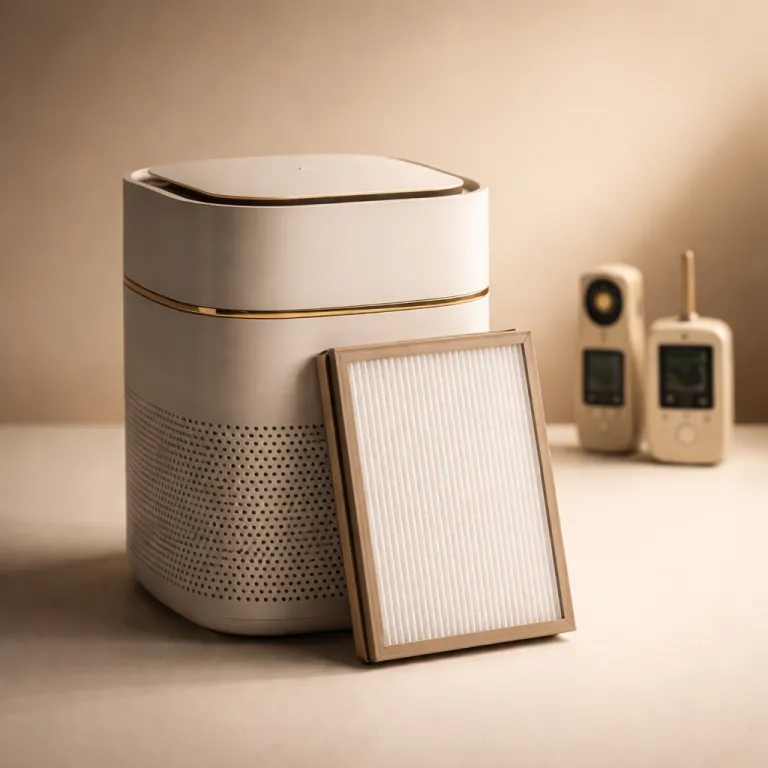

Why the best air purifier for allergies starts with three numbers
Choosing the best air purifier for allergies feels overwhelming when every brand shouts about technology and smart air features. Yet for real allergy relief in a bedroom or living room, only three numbers consistently predict how much cleaner the air will feel. Focus on pollen CADR, air changes per hour, and the integrity of the HEPA filter seal, and most other specs become secondary.
Allergy specialists often remind patients that indoor air quality matters as much as outdoor pollen counts, because you spend most hours breathing the same enclosed air. When you run the right air purifier at the right fan speed, you can cut airborne allergen particle levels by roughly 80 to 95 percent, which aligns with controlled HEPA studies on dust mite, pet dander, and pollen reduction. That level of clean air will not cure an allergy, but it usually lowers symptoms enough that sleep and daily comfort improve.
Think of the purifier as a volume knob for allergens in the room, not a magic eraser that removes every particle. A compact air purifier with weak performance may sound quiet and look stylish, yet it will barely change the air in a medium size bedroom each hour. A stronger purifier with verified CADR, robust filters, and a sealed body can feel like opening a window to clean air in the middle of pollen season, especially when you match it correctly to your room size.
The first spec that matters for allergy relief: pollen CADR
When you compare air purifiers for allergies, the most useful single number is the pollen CADR, which stands for Clean Air Delivery Rate. This rating measures how quickly a purifier can remove fine particle pollution such as pollen and dust from a test room, and it is verified by AHAM rather than by the manufacturer alone. For an adult with seasonal allergy symptoms, a higher pollen CADR usually translates into faster relief and more stable air quality during peak hours.
Many product pages highlight smoke CADR or generic air quality claims, but if pollen is your main trigger you should prioritize the pollen figure instead. A purifier tested and certified with a strong pollen CADR will push more clean air through its filters every hour, which matters more than exotic marketing terms about ionization or plasma waves. When you see several models lined up in a best buy comparison, the one with the highest pollen CADR for your budget is often the top practical choice.
To go deeper into how CADR, room size, and air changes per hour interact, you can read a detailed guide on choosing an air purifier for allergies using the three key specs. That kind of breakdown helps you ignore noise about extra smart air features that add watts and cost but not much performance. Once you understand that CADR to room ratio, you will see why some compact purifiers struggle in large rooms even when their filters look impressive on paper.
The second spec: air changes per hour and real room size
Marketing often quotes coverage for an air purifier based on only two air changes per hour, which is not enough for meaningful allergy control. For someone with asthma or a strong dust allergy, you should aim for at least four to five air changes per hour in the actual room size where you sleep or work. That means the purifier must push the full volume of air in the room through its filter four to five times every hour at a realistic fan speed.
To calculate this, you match the CADR and airflow of different purifiers to the cubic metres of your bedroom or living room. A small purifier with low watts and modest performance might technically handle a large room at two changes per hour, yet it will leave too many particle pollutants floating around for sensitive lungs. A stronger model such as a Coway Airmega or a Levoit Core series unit can achieve higher air changes per hour in the same space, especially when you run it at medium fan speed instead of the quietest setting.
Pet owners face an extra challenge because dander and hair constantly add new allergens to indoor air, so they benefit from higher air changes and better pre filters. If you share your home with cats or dogs, it is worth reading a focused comparison of the top air purifiers for pets and allergies before choosing a model. Those guides usually highlight which purifiers maintain clean air in real homes with both pollen and pet particles, rather than only in lab rooms.
The third spec: HEPA filters, seals, and activated carbon stages
Many boxes claim to use a HEPA filter, but the quality of the seal around that filter often decides whether the purifier truly protects an allergy sufferer. If air can leak around the edges instead of passing through the HEPA filters, a large share of pollen and dust particle pollution will slip back into the room unfiltered. That leak around problem quietly kills real world performance even when the CADR on paper looks strong.
Look for purifiers where the HEPA filter cartridge fits tightly, with gaskets or firm plastic frames that prevent bypass, and where pre filters catch larger dust before it clogs the main filter. Models such as the Coway Airmega series, the Levoit Core range, and the Blue Pure line from Blueair use multi stage filters that combine a pre filter, a true HEPA filter, and activated carbon or carbon filters for odours and gases. While activated carbon does not directly treat an allergy, it improves overall indoor air quality by removing smoke and volatile compounds, which can irritate sensitive airways.
When you compare different purifiers, pay attention to how often the manufacturer expects you to change each filter and how easy that process feels in daily life. A purifier tested in independent labs with a robust HEPA seal will usually maintain its clean air performance longer between filter changes, especially if you vacuum the pre filter regularly. Over the long term, that combination of strong seals, efficient filters, and reasonable replacement costs matters more than extra smart air features that you rarely use.
Matching specific models to your bedroom, budget, and allergy profile
Once you understand CADR, air changes per hour, and HEPA seal quality, choosing the best air purifier for allergies becomes a practical matching exercise. Start with your main room, usually the bedroom, and measure its size in square metres and approximate ceiling height to estimate volume. Then shortlist purifiers whose pollen CADR and airflow can deliver at least four air changes per hour in that room at a medium fan speed you can tolerate overnight.
For medium bedrooms, compact models like the Levoit Core series or the smaller Blue Pure purifiers often balance noise, watts, and performance well. Larger rooms or open plan spaces may need a more powerful Coway Airmega or similar top tier purifiers, which can move more air without running at maximum speed all the time. When you read best buy style rankings, look beyond the word top and check whether each purifier tested actually lists CADR, room size recommendations, and filter replacement costs clearly.
If you want a connected device, some smart air purifiers add app control, air quality sensors, and automatic fan speed adjustments, which can help maintain clean air with less manual tweaking. A detailed product page such as the one for this HEPA and carbon filter bedroom air purifier with smart app control shows how CADR, filter stages, and smart features can work together. Always check the watts draw at the speed you plan to use most, because that determines long term running cost as much as the purchase price.
Placement, daily use, and realistic expectations for allergy relief
Even the best air purifier for allergies will disappoint if you place it badly or run it too slowly. For most people, the bedroom should come first, because you spend six to eight hours each night breathing the same indoor air while your body tries to recover. Position the purifier so that it has at least a few centimetres of clearance on all sides, with the clean air outlet facing the centre of the room rather than a wall.
Run the purifier on a higher fan speed for the first hour when you enter the room, then drop to a quieter setting once the air quality stabilizes. Many smart air models can adjust fan speed automatically based on particle sensors, but allergy sufferers often prefer to lock in a steady medium speed to guarantee consistent air changes per hour. Remember that HEPA filters reduce airborne allergens significantly yet never remove every particle, so you still need mattress covers, regular vacuuming with a HEPA vacuum, and pet routines that keep animals out of the bedroom if possible.
Noise tolerance varies, so test different fan speeds during the day before committing to a night setting. Some purifiers remain surprisingly quiet even at useful speeds, while others only reach their claimed performance at a loud maximum setting that few people can sleep through. Over the long term, the purifier that you actually run for many hours each day at an effective speed will protect you better than a more powerful machine that stays switched off.
Marketing traps, running costs, and how to think long term
Labels such as allergy grade or medical grade on air purifiers often sound reassuring, yet many of these claims lack independent testing or clear definitions. Instead of trusting vague badges, rely on measurable data such as AHAM verified CADR, stated air changes per hour for your room size, and transparent information about HEPA filters and carbon filters. When a purifier brand refuses to publish CADR or watt usage at different fan speeds, that should raise questions about its real performance.
Running costs matter because filters and electricity add up over the years, sometimes exceeding the original price of the purifier. Check how many watts the purifier draws at the fan speed you plan to use for most of the day, then multiply by hours to estimate annual energy use, especially if you run it 24 hours. Look at the price and expected lifespan of each filter, including pre filters, HEPA filters, and activated carbon stages, because cheap units with tiny filters may require frequent replacements that erode any initial savings.
Think of the purchase as a long term health tool rather than a seasonal gadget, especially if you live with chronic allergy or mild asthma. A solid purifier tested by independent labs, with a strong HEPA seal and honest CADR ratings, will keep indoor air cleaner for many years if you maintain it properly. When you combine that with sensible habits such as regular cleaning, controlled ventilation, and pet management, you give your lungs a quieter background of clean air in which to heal between allergy flares.
Key figures on air purifiers and allergy relief
- Controlled studies on HEPA based air purifiers show roughly 80 to 95 percent reductions in airborne allergen concentrations in sealed test rooms, which translates into noticeable but not total symptom relief for many allergy sufferers.
- For meaningful allergy control, experts typically recommend at least four to five air changes per hour in the main bedroom, which is roughly double the two changes per hour often used in marketing coverage claims.
- Independent AHAM CADR testing rates purifiers separately for smoke, dust, and pollen, and for pollen the recommended maximum room area in square metres is usually about 1.5 times the CADR value expressed in cubic metres per hour.
- Multi stage systems such as the Coway Airmega 400 and 450 series have shown measurable improvements in allergy symptoms in user testing, especially when run continuously in bedrooms at medium fan speed.
- Energy use for typical residential air purifiers ranges from about 20 to 80 watts at medium speed, which means that running a mid range unit 24 hours a day often costs less than many people expect when compared with other household appliances.
FAQ about choosing the best air purifier for allergies
Does a HEPA air purifier completely remove allergy symptoms ?
A HEPA based air purifier can reduce airborne allergen levels by around 80 to 95 percent in controlled conditions, which usually eases symptoms but does not eliminate them entirely. You still need to manage bedding, cleaning routines, and pet access to rooms. Think of the purifier as one strong layer in a broader allergy control strategy.
How do I size an air purifier for my bedroom ?
Measure the length, width, and height of the room to calculate its volume, then choose a purifier whose pollen CADR and airflow can deliver at least four to five air changes per hour at a tolerable fan speed. Many manufacturers list a maximum room size, but that often assumes only two air changes per hour. For allergy relief, pick a stronger model or use the next size up from the suggested coverage.
Is smoke CADR important if pollen is my main trigger ?
Smoke CADR measures how well a purifier handles very fine particles from smoke, which is useful for wildfire or tobacco exposure but less central for pollen driven allergies. If pollen or dust mites are your main triggers, prioritize the pollen and dust CADR ratings instead. Smoke CADR still indicates general performance, yet it should not override pollen CADR when you compare models for allergy use.
Do I need activated carbon filters for allergies ?
Activated carbon filters mainly remove gases and odours such as smoke, cooking smells, and volatile organic compounds, which do not directly cause most allergies. However, cleaner smelling indoor air can feel more comfortable for sensitive lungs, and some irritant gases can worsen asthma symptoms. If you also care about odours or live with smokers, a purifier with both HEPA and carbon filters is a sensible choice.
How often should I run my air purifier during allergy season ?
For consistent relief, it is best to run the purifier continuously in your main room, especially the bedroom, rather than switching it on only when symptoms flare. Many people use a higher fan speed for the first hour in the evening, then drop to a quieter medium setting overnight to maintain steady air changes per hour. Continuous operation keeps indoor air quality more stable and prevents allergen build up between short cleaning bursts.