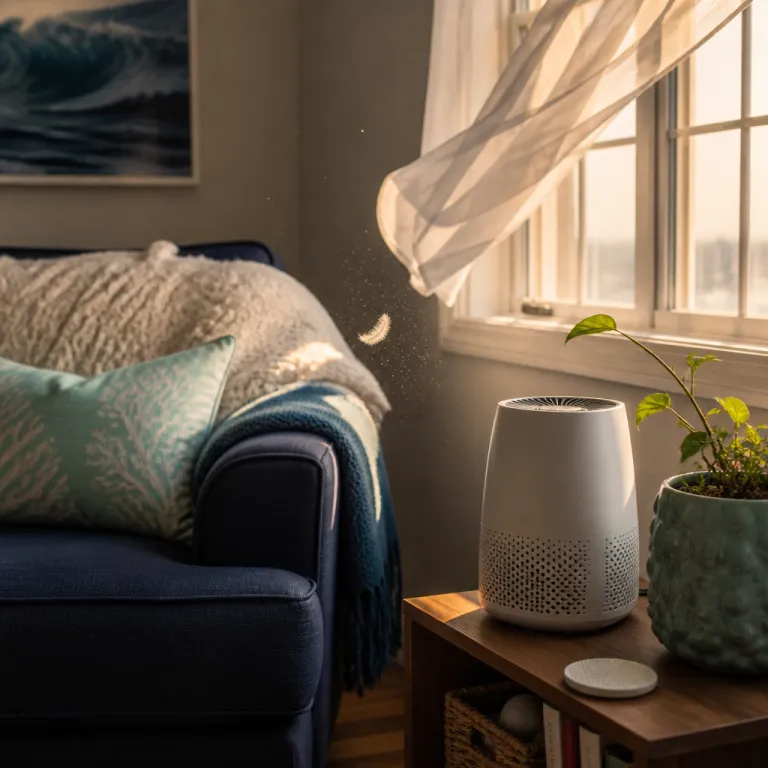

What makes the Airfree Tulip air purifier different from typical compact purifiers
The Airfree Tulip air purifier stands out because it sterilizes air with heat instead of pushing it through a traditional filter. This compact air purifier uses a patented air sterilization process that heats incoming air to very high temperatures (Airfree cites around 400°F / 200°C inside the ceramic core in its technical documentation), then cools it before releasing the treated premium air back into the room. The result is a silent operation without a fan, which appeals to people who want modern compact air purifiers that do not add background noise.
Unlike many purifiers that rely on HEPA filters and fans, the Airfree Tulip air purifier targets microorganisms directly inside its ceramic core. This internal chamber is designed to neutralize bacteria, fungi, mould spores, and many airborne viruses that contribute to allergies and respiratory irritation, which means the Airfree technology focuses on high efficiency sterilization rather than simple particle trapping. Because the Airfree Tulip process does not use a fan, the purifier avoids drafts and maintains a consistent flow of treated air, although the clean air delivery rate is not measured in the same way as fan-based purifiers and is not expressed as a conventional CADR value.
The tulip-shaped design is not only aesthetic but also functional for vertical air circulation. Warm air naturally rises through the compact design, passes through the heated core for air sterilization, and then exits at the top as cooler, cleaner air, which supports continuous convection without mechanical movement. This modern approach allows the Airfree Tulip air purifier to remain completely silent while still treating air in small to medium rooms, making it suitable for bedrooms, nurseries or home offices where noise is a concern and a silent purifier is preferred over a faster fan model.
Design, size and weight dimensions of the Airfree Tulip for real homes
The Airfree Tulip air purifier has a slim tulip profile that blends into modern interiors more like a decorative object than a typical appliance. Its compact size and low weight dimensions (roughly 13 in / 33 cm tall and around 2 lb / 1 kg, depending on the specific version sold in the United States) make it easy to move between rooms, so a single purifier can serve a bedroom at night and a workspace during the day. For many buyers in apartments or smaller homes, this compact design is a practical way to choose best use of limited floor or desk space.
When you compare purifiers in the same category, the Airfree Tulip usually occupies less surface area than a small fan-based purifier with a cylindrical filter. The modern compact body stands roughly the height of a table lamp, which means it fits on a bedside table, a shelf or a corner of a desk without blocking views or creating clutter, and this design modern choice clearly targets style-conscious users. Because there is no internal fan or heavy motor, the overall weight dimensions remain low, which is helpful for older adults or people with limited mobility who still want to reposition their air purifiers easily without lifting a bulky unit.
For readers comparing a tulip-shaped purifier with a more conventional HEPA model, it can be useful to look at a detailed test of a quiet HEPA air purifier for bedrooms and offices. That type of review highlights how fan-based purifiers specify coverage in square metres and clean air delivery rates, while the Airfree Tulip air purifier focuses on air sterilization volume and continuous convection instead. When you read several reviews side by side, pay attention to room coverage claims, noise levels, physical size and energy consumption, because these practical features matter more in daily life than abstract marketing terms or vague promises about premium air quality.
How the Airfree Tulip handles allergens, dust and microorganisms
The core promise of the Airfree Tulip air purifier is to reduce biological contaminants in indoor air rather than simply trap them in a filter. Inside the Airfree ceramic chamber, high efficiency heat treatment aims to neutralize bacteria, fungi, mould and many airborne viruses that would otherwise circulate through your home, which is particularly relevant for people with recurrent respiratory infections. This air sterilization approach is different from mechanical filtration, because the treated particles are destroyed by heat instead of being stored in a filter that needs regular replacement and can become a reservoir for microorganisms.
For allergy sufferers, the main concern is often a mix of allergens organic, allergens dust, dust mite fragments, mite allergens and pet allergens that accumulate in carpets, bedding and upholstery. The Airfree Tulip air purifier can help by treating the fraction of these particles that becomes airborne, especially the smaller components that stay suspended longer and reach deeper into the lungs, while regular cleaning still remains essential to remove settled dust. Pollen and pollen pet particles that drift indoors from open windows or clothing can also be reduced in the treated air volume, although no purifier can fully compensate for heavy outdoor pollen seasons without complementary measures like closing windows or using window screens.
Another advantage of a heat-based process is its potential impact on viruses pollen, pollen-sized particles and certain fungi viruses that float invisibly in indoor environments. Independent laboratory tests on Airfree technology, such as trials performed by institutions like the University of Porto and microbiology labs in the United States, report high reduction rates for airborne microorganisms under controlled conditions, although real-world results vary with room layout and usage patterns. While the Airfree Tulip air purifier does not replace ventilation or medical treatment, its continuous operation can contribute to a lower concentration of airborne microorganisms, which is particularly relevant in small bedrooms or home offices where people spend many hours and want to improve overall air quality.
Noise, smart features and everyday use of a silent purifier
One of the strongest arguments in favour of the Airfree Tulip air purifier is its silent operation. Because the Airfree system relies on natural convection instead of a mechanical fan, the purifier produces no audible noise during normal use, which is rare among compact air purifiers in this performance class. For light sleepers, parents of young children or people who work in very quiet offices, this silent profile can be more valuable than a marginal gain in filtration speed, especially when a constant hum from a fan would be distracting.
In terms of smart functions, the Airfree Tulip air purifier is relatively minimalist compared with some connected purifiers sold on Amazon or in large electronics chains. You will not find Wi-Fi connectivity, app-based control or voice assistant integration in this model, which may disappoint buyers who want a fully smart purifier that integrates with home automation, but it also means fewer potential points of failure and no need to manage firmware updates. For readers evaluating whether smart features justify a higher price, it can be helpful to think about how often you actually change fan speeds, check sensors or use voice commands on other devices before paying extra for those options.
Everyday use of the Airfree Tulip is straightforward, because there are no filters to replace and no fan speeds to adjust. You simply place the purifier on a stable surface, ensure adequate clearance around the unit for air circulation, and let the air sterilization process run continuously, which suits people who prefer low maintenance appliances. The absence of a fan also means there is no fan noise ramping up and down during automatic modes, so the acoustic environment of your room remains stable while the purifier quietly treats the air, and energy use stays modest because the heating element typically draws less power than a large multi-speed fan.
Buying the Airfree Tulip in the United States and comparing reviews
For buyers in the United States, the Airfree Tulip air purifier is typically available through major online retailers and selected specialist stores. On platforms such as Amazon, you will find a mix of user review comments that highlight the silent operation and compact design, while some reviews question the lack of visible filters or measurable clean air delivery rates. When reading any review, focus on specific experiences in rooms similar in size to yours, because performance perceptions change significantly between a small bedroom and a large open-plan living area.
Professional comparison articles often place the Airfree Tulip alongside HEPA-based purifiers in the same price range, which can initially seem unfair because the underlying process is different. A fan-driven purifier with a HEPA filter usually excels at removing larger particles like allergens dust and pollen pet fragments quickly, while the Airfree Tulip system focuses on continuous air sterilization of microorganisms such as bacteria fungi and certain viruses, so the best choice depends on your primary concern. When you compare purifiers, pay attention to whether the author distinguishes between filtration and sterilization, because mixing these concepts leads to misleading claims about high efficiency performance and can confuse readers who are trying to choose best option for their home.
Some buyers prefer to choose best value by combining a small HEPA purifier for visible dust mite particles and pet allergens with an Airfree Tulip air purifier for continuous microbial reduction. This hybrid strategy can be particularly relevant for households where one person is sensitive to mite allergens while another worries more about viruses pollen and pollen-sized particles during flu seasons. Whatever your approach, read multiple reviews from different sources, and look for consistent comments about build quality, reliability, long-term satisfaction and running costs rather than isolated praise or criticism that may not reflect typical use.
Is the Airfree Tulip the best choice for your specific air quality needs
Choosing whether the Airfree Tulip air purifier is the best option for you starts with clarifying your main air quality problems. If your priority is reducing airborne microorganisms such as bacteria, fungi and certain viruses in a quiet bedroom or study, the Airfree heat-based process offers a compelling balance of silent operation, low maintenance and compact size. If your main concern is heavy visible dust, smoke or strong odours, a fan-based purifier with a HEPA and activated carbon filter may provide faster and more measurable particle reduction, especially when you want clear CADR figures for direct comparison.
People with complex allergies often face a mixture of allergens organic, allergens dust, dust mite fragments, mite allergens, pet allergens and pollen pet particles that vary by season. In such cases, the Airfree Tulip air purifier can form one part of a broader strategy that includes regular cleaning, mattress encasements, vacuuming with HEPA-equipped machines and controlling humidity to discourage dust mite populations, because no single purifier can solve every trigger alone. When you evaluate purifiers, think in terms of how each device fits into your overall indoor air plan rather than expecting one product to handle every pollutant perfectly, and consider whether a silent sterilizer plus a separate fan purifier might cover more scenarios.
From a design perspective, the tulip-shaped body and modern compact profile make the Airfree Tulip easier to integrate into living spaces where aesthetics matter. Some buyers value this design modern approach as much as raw performance, especially when the purifier will sit in a visible location like a living room shelf or a bedside table. If you are sensitive to noise, prefer low maintenance appliances and want a purifier that quietly supports premium air quality in smaller rooms, the Airfree Tulip air purifier deserves a place on your shortlist and is worth comparing directly with other compact air purifiers before you buy.
Key figures and statistics about portable air purifiers and indoor air quality
- The World Health Organization estimates that household air pollution contributes to millions of premature deaths globally each year, which underlines why choosing effective air purifiers is more than a lifestyle decision.
- Studies from the United States Environmental Protection Agency indicate that indoor air can be two to five times more polluted than outdoor air, so a well-chosen purifier can significantly reduce exposure to indoor contaminants.
- Research on allergy management shows that reducing indoor dust mite and pet allergens can lower asthma symptoms and medication use, which explains the strong interest in purifiers that target allergens dust and mite allergens effectively.
- Clinical studies on HEPA-based purifiers have reported reductions in airborne particulate matter of up to 50 percent or more in controlled environments, while heat-based air sterilization technologies focus on inactivating microorganisms rather than measuring particle counts alone.
- Market analyses of portable air purifiers show steady growth in demand for compact design and silent models, reflecting consumer preferences for devices that integrate into modern homes without adding noise or visual clutter.
FAQ: Airfree Tulip air purifier and portable air purifiers
Does the Airfree Tulip air purifier remove dust and pet hair as well as a HEPA purifier
The Airfree Tulip air purifier focuses on air sterilization of microorganisms rather than mechanical filtration of larger particles. It can reduce the airborne fraction of allergens dust, dust mite fragments and pet allergens, but it does not capture visible dust or hair as efficiently as a HEPA-based purifier with a fan. For heavy dust or pet hair, many users pair the Airfree Tulip with regular cleaning and sometimes a separate HEPA purifier to handle coarse particles.
How large a room can the Airfree Tulip effectively treat
The Airfree Tulip air purifier is designed for small to medium rooms, such as bedrooms, nurseries or home offices. Manufacturers typically specify a maximum room size in square metres, often around 450 ft² / 40–45 m² for this type of unit, and performance is best when the purifier runs continuously in a closed or semi-closed space. In very large or open-plan rooms, multiple purifiers or a different model with a stronger fan may be necessary.
Is the Airfree Tulip really silent during operation
Yes, the Airfree Tulip air purifier operates without a fan, so it does not generate the airflow noise common to many purifiers. Users generally report that the unit is effectively silent in bedrooms and offices, with only a faint warmth detectable near the top outlet. This makes it suitable for light sleepers and noise-sensitive environments where a constant fan sound would be intrusive.
What maintenance does the Airfree Tulip require compared with other purifiers
The Airfree Tulip air purifier does not use replaceable filters, so there are no filter cartridges to buy or install. Routine maintenance mainly involves keeping the exterior clean and ensuring that air inlets and outlets are not blocked by dust or objects. This low maintenance profile contrasts with many HEPA purifiers, which require filter changes every few months depending on use and can add significantly to long-term ownership costs.
How should I compare the Airfree Tulip with other compact air purifiers before buying
When comparing the Airfree Tulip air purifier with other compact purifiers, focus on your main concerns, such as allergens, microorganisms, dust or odours. Check whether each purifier uses filtration, air sterilization or a combination, and compare room coverage, noise levels, energy use and long-term maintenance costs. Reading several independent reviews and looking at real user experiences in rooms similar to yours will help you choose best for your situation and decide whether a silent heat-based process or a traditional fan-and-filter design fits your priorities.