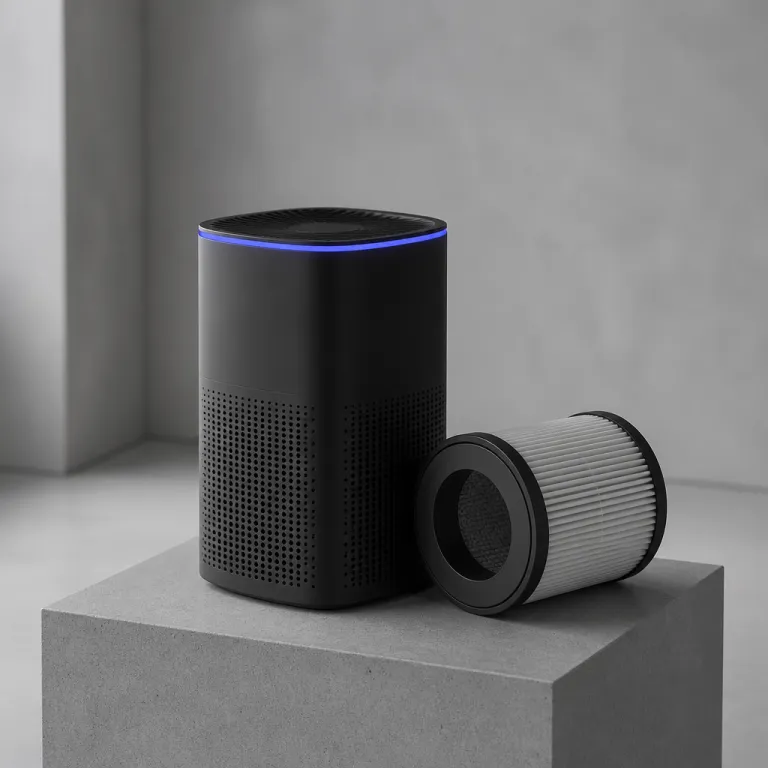
How the HealthMate Junior air purifier in black tackles everyday indoor air
The HealthMate Junior air purifier in black is designed as a compact unit for people who want serious air cleaning in smaller rooms. This junior model from Austin Air uses a multi stage filtration system that targets particles, gases, and odors with a medical grade approach. In practice, the HealthMate Junior behaves like a scaled down professional air cleaner that still prioritizes health focused performance.
At the heart of this Austin Air unit sits a large cylindrical HEPA filter surrounded by activated carbon and zeolite, which together form the core filtration system. The HEPA filter is a high grade HEPA media that captures fine particles such as pollen, dust, and pet dander, while the surrounding carbon bed adsorbs volatile organic compounds and smoke. Because the filter removes both particles and many gases in one integrated cartridge, the HealthMate Air concept offers broader protection than a basic particle pre filter alone.
The black steel housing of this air purifier feels robust, and the same unit is also available in white, sandstone, and midnight blue finishes for different interiors. Many buyers compare the black and white versions in the HealthMate Junior range, but performance remains identical across colors, so the choice is mainly aesthetic. What matters more is that each unit is rated for continuous operation, with a fan and motor engineered by Austin Air to run 24 hours a day without complicated maintenance.
This junior size air purifier is often chosen for bedrooms, home offices, and nurseries where people spend long hours breathing the same indoor air. For asthma sufferers or those with allergies, the combination of a particle pre filter and deep bed carbon can reduce airborne triggers that accumulate overnight. When the filter removes a large share of fine particles and common irritants, many users report fewer morning symptoms and a more comfortable breathing experience.
Because the HealthMate Junior air purifier in black uses a true medical style design, it relies on mechanical filtration rather than ionizers or ozone generating technologies. The medical grade HEPA filter is tested by the manufacturer to capture very small particles, while the carbon section focuses on gases that standard filters often miss. This focus on proven, passive filtration reassures people who want an air cleaner that improves air quality without adding new pollutants.
From a practical perspective, the unit price of the HealthMate Junior reflects its long life filter system, which Austin Air publishes as up to five years under typical home use. While the regular price may seem higher than some plastic competitors, the extended replacement interval for the combined HEPA filter and carbon bed often balances the total cost. For buyers comparing price and performance, it helps to calculate the cost per year of clean air rather than only the initial ticket price of the unit.
Inside the multi stage filtration system of the HealthMate Junior
Understanding the internal filtration stages of the HealthMate Junior air purifier in black helps you judge whether it suits your specific air quality concerns. The Austin Air engineering philosophy is simple but rigorous, using a layered filter HealthMate cartridge that forces air through several barriers. Each stage filtration element plays a distinct role, from capturing visible dust to trapping microscopic particles and absorbing gases.
First, incoming air passes through a particle pre filter that wraps around the main cartridge inside the unit. This pre filter collects larger contaminants such as lint, hair, and coarse dust, which protects the inner HEPA filter and extends its service life significantly. Because this pre stage is inexpensive and easy to replace, it keeps the more costly medical grade HEPA section working efficiently for longer periods.
Behind the pre filter sits the main HEPA filter, which is the core of the HealthMate Air concept. This grade HEPA media is densely pleated to maximize surface area, allowing the air purifier to move substantial volumes of air while still trapping fine particles. For people with asthma or seasonal allergies, this HEPA filter is crucial because it captures many of the airborne allergens that trigger symptoms.
Surrounding the HEPA core is a thick layer of activated carbon and zeolite, which forms the gas and odor control stage of the filtration system. This section is where the filter removes many volatile organic compounds from paints, cleaning products, and new furniture, along with smoke and cooking odors. If you are comparing different activated carbon air purifiers, a helpful reference guide is available through this overview of top activated carbon air purifiers, which explains how carbon quantity and contact time affect performance.
The HealthMate Junior air purifier in black uses this same multi stage filtration approach as larger Austin Air models, but in a more compact housing. Air enters through the full 360 degree intake around the base of the unit, passes through the particle pre and HEPA layers, then exits cleanly from the top. This vertical airflow pattern helps distribute filtered air evenly through the room, which is especially useful in bedrooms where people sleep close to the floor.
When you compare this junior unit with other HEPA based devices, pay attention to how each air cleaner balances airflow, noise, and filter size. Some competitors emphasize ultra quiet operation but use smaller filters, while others prioritize high airflow at the cost of higher sound levels. For a different style of HEPA air purifier with dual sided air intake and washable pre filter, you can review this detailed test of a large room HEPA air cleaner to understand how design choices influence performance.
Performance, room size, and what the ratings really mean
Performance claims for the HealthMate Junior air purifier in black often mention room coverage and rated airflow, but these numbers can be confusing. In practice, the effective coverage of any air purifier depends on how many times per hour it can cycle the room air through its filters. For people with asthma or strong sensitivities, aiming for four to five air changes per hour in the main living or sleeping area is a realistic target.
The Austin Air HealthMate Junior unit is typically positioned for small to medium rooms such as bedrooms, nurseries, and home offices. Austin Air lists airflow at approximately 125 to 200 cubic feet per minute (CFM) across its three fan speeds, which translates into roughly 3 to 5 air changes per hour in a 200 square foot room with an 8 foot ceiling. Because the unit draws air from all sides and pushes it upward, it can handle slightly larger spaces than some front intake designs with similar fan power. However, if you place the air purifier in a very large open plan living area, you should not expect the same intensity of filtration as in a compact bedroom.
When you read that a unit is rated for a certain square meter coverage, check whether the manufacturer specifies the number of air changes per hour behind that figure. A model that is rated for 35 square meters at two air changes per hour will perform differently from one rated for the same area at four air changes. For the HealthMate Junior air purifier in black, many users choose to slightly oversize the unit relative to the room to ensure stronger filtration for asthma and allergy control.
Noise is another key performance factor, especially for a bedroom air cleaner that may run all night. The Austin Air design uses a permanent split capacitor motor and steel housing, which together help reduce vibration and resonance compared with some plastic units. Manufacturer data and independent user measurements typically place sound levels in the range of about 40 to 60 decibels from low to high speed, and on lower fan speeds the HealthMate Junior produces a steady airflow sound that many people describe as a gentle background hum.
Energy consumption matters as well, because a medical grade air purifier is most effective when it runs continuously rather than only for short bursts. The HealthMate Junior unit draws roughly 80 watts on its highest setting and less on lower speeds, which keeps operating costs reasonable over time. If you are comparing long term efficiency, consider not only electricity use but also the expected interval and price of each replacement HEPA filter and carbon cartridge.
For readers interested in a different approach to long life filters, a useful comparison is this review of a five year HEPA filter air purifier, which illustrates how extended filter life can influence total cost of ownership. By weighing these factors against the regular price and unit price of the HealthMate Junior air purifier in black, you can decide which balance of performance, noise, and maintenance best fits your home. The goal is not to chase the highest rated specifications on paper, but to match real world performance with your specific room size and health priorities.
Design, colors, and how the black finish fits into your home
Design may seem secondary to filtration, yet it strongly influences whether you will actually use the HealthMate Junior air purifier in black every day. A unit that clashes with your décor or feels intrusive is more likely to be unplugged or moved to a corner where airflow is compromised. The Austin Air HealthMate Junior range addresses this by offering several finishes, including black, white, sandstone, and midnight blue, all built around the same steel chassis.
The black version of this compact air purifier tends to blend discreetly into darker interiors, home offices, and media rooms. Its matte finish reduces reflections, so the unit does not draw attention even when placed near a television or computer setup. In contrast, the white and white sandstone finishes can suit Scandinavian or minimalist spaces, while the midnight blue option adds a subtle accent in bedrooms or children’s rooms.
Because the housing is made of powder coated steel rather than plastic, the air purifier feels more like a durable appliance than a temporary gadget. This robust construction supports the medical grade positioning of the HealthMate Air line, signaling that the unit is intended for continuous, long term use. For households with pets or children, the sturdy casing also resists knocks and scratches better than many lightweight plastic air cleaners.
Placement is critical for any air purifier, and the HealthMate Junior air purifier in black is no exception. The 360 degree intake means you should leave some space around the unit, ideally at least 10 to 15 centimeters from walls or furniture, so that air can flow freely into the particle pre filter. Positioning the unit near the center of the room or along an open wall, rather than hidden behind curtains or under desks, helps the filtration system perform at its rated capacity.
The simple control panel on the front of the Austin Air HealthMate Junior uses a single rotary knob to select fan speeds. This minimalist interface contrasts with some competitors that offer digital displays, timers, and app connectivity, but it also reduces complexity and potential failure points. For many users, especially older adults or those who prefer straightforward appliances, the absence of touchscreens and Wi Fi feels like an advantage rather than a limitation.
From an aesthetic standpoint, the black unit can visually recede into the background when placed on a dark floor or near dark furniture. If you prefer the air purifier to be less noticeable, choosing the HealthMate Junior air purifier in black rather than a bright white model can make daily use feel more natural. Ultimately, a design that fits your space encourages consistent operation, which is what delivers real air quality benefits over time.
Costs, filters, and what to expect over the life of the unit
When evaluating the HealthMate Junior air purifier in black, many readers focus first on the regular price of the unit, but long term costs matter more. A serious medical grade air purifier is an investment, and its value depends on how often you need to buy a replacement filter and how well the filtration system maintains performance between changes. Thinking in terms of cost per year of clean air provides a clearer picture than simply comparing shelf prices.
The Austin Air HealthMate Junior uses a combined HEPA filter and carbon cartridge that is designed to last several years under typical home conditions. This integrated filter HealthMate design means you replace the entire cartridge rather than swapping separate HEPA and carbon elements at different times. While the replacement HEPA filter and carbon assembly may appear expensive compared with smaller filters from compact air cleaners, the extended lifespan often results in a competitive unit price over the full service interval.
Pre filters play a crucial role in protecting the main HEPA and carbon stages from premature clogging. The particle pre layer in the HealthMate Junior air purifier in black is relatively inexpensive and should be checked regularly for visible dust buildup. By replacing this pre filter on schedule, you help ensure that the grade HEPA media inside the main cartridge can continue to capture fine particles effectively.
Operating costs also include electricity, which can add up if you run the air purifier continuously for asthma or allergy management. The Austin Air motor is engineered for efficiency, so the power draw remains modest even when the unit operates around the clock on a medium setting. For many households, the monthly electricity cost of running a HealthMate Junior is comparable to that of a small fan or low wattage light.
Warranty and support contribute to the overall value proposition of any air cleaner. Austin Air is known for offering multi year warranties on both the unit and the filter, reflecting confidence in the durability of the steel housing and the true medical style filtration components. When you factor in this extended coverage, the regular price and replacement filter costs become part of a longer horizon calculation rather than a short term expense.
For buyers comparing multiple air purifiers, it can be helpful to list the unit price, expected filter life, replacement filter cost, and estimated electricity use side by side. This simple table often reveals that a higher initial price for a medical grade unit like the HealthMate Junior air purifier in black may translate into a lower cost per year of effective filtration. Such an analysis supports a more informed decision, especially for families managing chronic respiratory conditions who rely on consistent air quality improvements.
Who benefits most from the HealthMate Junior air purifier in black ?
The HealthMate Junior air purifier in black is not a one size fits all solution, so it helps to identify who gains the most from its specific strengths. People with asthma, allergies, or chemical sensitivities often prioritize medical grade filtration over smart features or ultra compact designs. For these users, the combination of a deep bed carbon section and a dense HEPA filter in a robust Austin Air unit offers tangible health oriented benefits.
Asthma sufferers may notice fewer flare ups when airborne triggers such as dust mites, pet dander, and pollen are reduced by the HEPA stage. The filter removes many of these particles before they can accumulate on bedding and soft furnishings, which is especially important in bedrooms where people spend long hours. For individuals sensitive to traffic pollution or wildfire smoke, the carbon and zeolite layer in the HealthMate Air system helps reduce odors and some gaseous pollutants that standard particle only filters cannot address.
Families with pets often struggle with both hair and fine dander, which can linger in the air and settle on surfaces. The particle pre filter in the HealthMate Junior air purifier in black captures larger pet hair and fluff, while the inner HEPA filter traps the microscopic dander that triggers allergies. Because the unit is rated for continuous operation, it can quietly maintain lower background levels of these irritants throughout the day.
People living in urban apartments near busy roads or in areas affected by seasonal wildfires also stand to benefit from a robust filtration system. The medical grade HEPA and substantial carbon bed in the HealthMate Junior air purifier in black provide a layered defense against both particulate pollution and many combustion related gases. While no air cleaner can eliminate all outdoor pollutants that infiltrate a home, a strong filtration system can significantly reduce indoor concentrations.
Finally, those who value simplicity and durability over frequent upgrades may appreciate the straightforward design of the Austin Air HealthMate Junior. There are no complex apps to configure, no fragile plastic panels, and no consumables beyond the long life filter HealthMate cartridge and occasional pre filter changes. For many households, this reliability and ease of use are as important as the technical specifications, because an air purifier only protects health when it runs consistently and correctly.
Understanding ratings, reviews, and how to interpret user feedback
When researching the HealthMate Junior air purifier in black, you will encounter ratings, stars, and user reviews that can either clarify or confuse your decision. Star ratings on retail platforms provide a quick snapshot of overall satisfaction, but they rarely explain how well the unit addresses specific issues such as asthma, smoke, or chemical odors. To interpret these ratings meaningfully, you need to read beyond the stars and examine the context of each review.
Positive reviews often highlight the perceived improvement in air freshness, reduction in dust on surfaces, and fewer allergy symptoms after several weeks of continuous use. Users who award high stars to the HealthMate Junior air purifier in black frequently mention the solid build quality of the Austin Air unit and the sense of security provided by its medical grade HEPA and carbon filtration. One typical comment from long term owners is that the purifier is “built like a tank” and “just keeps running” year after year, which reinforces the brand’s durability claims.
Critical reviews may focus on factors such as noise at higher fan speeds, the weight of the steel housing, or the price of replacement filters. These comments are valuable because they reveal trade offs inherent in a robust filtration system, where a powerful fan and thick filter media are necessary to move and clean substantial volumes of air. When you read such feedback, consider whether the reviewer’s priorities match your own, especially regarding noise tolerance and budget for long term maintenance.
Expert reviews and independent tests can complement user feedback by providing measured data on airflow, particle removal efficiency, and gas reduction. While the HealthMate Junior air purifier in black is not always included in every comparative test, Austin Air models have a long history of use in clinical and institutional settings, which supports their reputation for reliability. When experts evaluate air cleaners, they often emphasize the importance of true medical style HEPA filtration and substantial carbon beds over cosmetic features.
Price comparisons should also account for differences in filter life, housing materials, and warranty coverage. A plastic air purifier with a lower regular price but short lived filters and limited warranty may cost more over five years than a steel cased HealthMate Junior with a long life filter HealthMate cartridge. By calculating the total cost of ownership, including unit price, replacement filter costs, and expected lifespan, you can interpret value more accurately than by looking at stars alone.
In the end, ratings and reviews are most useful when combined with a clear understanding of your own needs and the technical capabilities of the HealthMate Junior air purifier in black. If your priority is robust, medical grade filtration for asthma or allergy management in a small to medium room, user feedback that focuses on these outcomes should carry more weight than comments about color or packaging. This balanced approach helps you move from scattered opinions toward a confident, evidence based purchasing decision.
Key figures and statistics about indoor air and filtration
- According to the World Health Organization, fine particulate matter known as PM2.5 contributes to millions of premature deaths globally each year, highlighting the importance of effective HEPA based air filtration in homes.
- Studies from the United States Environmental Protection Agency show that indoor air can be two to five times more polluted than outdoor air, which underscores the value of running an air purifier continuously in occupied rooms.
- Clinical research on HEPA filtration in bedrooms has found reductions of up to 50 percent in airborne particulate levels, which can translate into measurable improvements in asthma symptoms for sensitive individuals.
- Energy Star data indicate that efficient room air cleaners typically consume between 20 and 100 watts, meaning that the monthly electricity cost of continuous operation is often comparable to that of a small household fan.
- Market analyses report that consumer demand for medical grade HEPA air purifiers has grown significantly in recent years, driven by increased awareness of wildfire smoke, urban pollution, and indoor allergen exposure.
FAQ about the HealthMate Junior air purifier in black
Is the HealthMate Junior air purifier in black suitable for asthma sufferers ?
The HealthMate Junior air purifier in black is well suited to many asthma sufferers because it combines a medical grade HEPA filter with a substantial activated carbon bed. This multi stage filtration system captures common asthma triggers such as dust, pollen, and pet dander, while also reducing some gases and odors that can irritate sensitive airways. For best results, the unit should run continuously in the main sleeping or living area where the person spends the most time.
How often do I need to replace the filters in the HealthMate Junior ?
The combined HEPA and carbon filter in the HealthMate Junior air purifier in black is designed to last several years under typical home conditions, assuming continuous operation. The outer pre filter should be inspected regularly and replaced when visibly dirty, because it protects the inner cartridge from premature clogging. Actual replacement intervals depend on pollution levels, smoking, and pet presence, so households in heavily polluted or smoky environments may need more frequent changes.
What room size can the HealthMate Junior air purifier in black handle effectively ?
The HealthMate Junior air purifier in black is generally recommended for small to medium rooms such as bedrooms, nurseries, and home offices. Its rated coverage assumes several air changes per hour, which is important for people with allergies or asthma who need consistent particle reduction. In very large open plan spaces, performance will be less intense, so some users either move the unit between rooms or choose a larger model for main living areas.
Does the HealthMate Junior produce ozone or use ionization ?
The HealthMate Junior air purifier in black relies on mechanical filtration only and does not use ionization or ozone generating technologies. Air passes through a particle pre filter, a medical grade HEPA layer, and a deep bed carbon and zeolite section, all housed in a steel casing. This design appeals to users who want an air cleaner that improves indoor air quality without introducing additional reactive substances into the room.
How noisy is the HealthMate Junior air purifier in black during night use ?
On its lowest fan setting, the HealthMate Junior air purifier in black produces a steady airflow sound that many users find acceptable for sleeping. Higher speeds are audibly louder but provide stronger filtration, so some people run the unit on high during the day and switch to low at night. Because noise perception is subjective, placing the unit a few meters from the bed and experimenting with different speeds is the best way to find a comfortable balance.