Why a PM2.5 monitor sees more than your purifier panel
A PM2.5 sensor home air purifier promises cleaner air with minimal effort. Yet the internal quality sensor inside most air purifiers is not a full quality monitor for your whole room, because it only samples the air that flows directly through the purifier air intake. When you rely only on a tiny display icon or a green LED, you see a simplified story about indoor air that can hide the real particulate matter peaks affecting your health.
Inside a typical smart air purifier, a compact laser beam sensor sits just behind the grille and measures fine particles in the incoming stream. That sensor works well enough to rank air quality from good to bad, but it does not meet any regulatory standard and it rarely matches the accuracy of dedicated quality monitors that cost between 80 and 150 dollars. The purifier brand may advertise smart air automation and an intuitive app, yet the internal product design often prioritises cost over precision, so the quality monitoring you get is closer to a rough estimate than a scientific measurement.
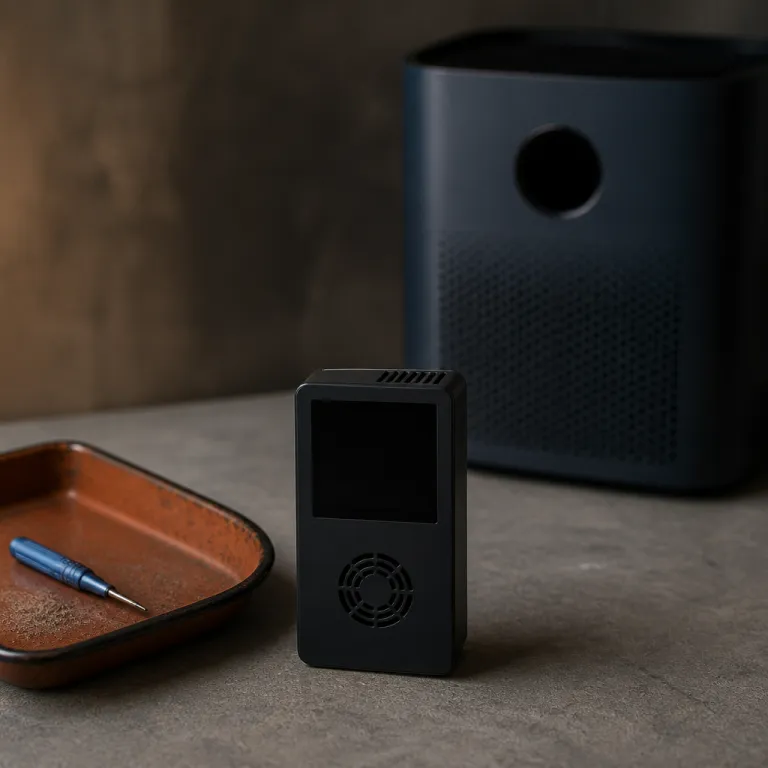
A separate portable air quality monitor with a PM2.5 laser beam can sit at breathing height, away from the purifier, and track particulate matter where you actually inhale it. This external monitor measures the air in the whole home zone, not just the narrow source of air entering the purifier, so it reveals how well the filter air circulation really works. When you pair a PM2.5 monitor with a PM2.5 sensor home air purifier, you finally see in real time how quickly purifiers can cut fine particles after cooking, vacuuming, or lighting candles, and you can compare the purifier panel reading with the independent trace instead of guessing.
How internal sensors misread the air you breathe
The sensor inside a PM2.5 sensor home air purifier sits in the cleanest possible spot. Air has already started to pass through the pre filter air path, so the particulate matter concentration at the intake can be lower than in the middle of the room, where your lungs are. During pollution peaks, measurements at the purifier intake can underestimate fine particles in the breathing zone by 30 to 50 percent, especially in large rooms or complex layouts, as shown in side by side tests where a portable monitor at head height consistently reported higher PM2.5 values than the built in sensor.
This gap matters when you use the automatic mode that many air purifiers promote as the best feature for comfort and health. The internal quality sensor may decide that the air quality is already acceptable and slow the fan, while a separate quality monitor on your desk still shows elevated particulate matter levels that exceed health guideline values. In practice, the purifier works less than it should, the app reports a reassuring green standard icon, and you keep inhaling more fine particles than the marketing promised.
Independent tests on smart air products repeatedly show that internal quality monitors drift over time and rarely receive recalibration. A dedicated portable air quality monitor from brands such as Awair, Airthings, PurpleAir, or IQAir uses more advanced quality monitoring algorithms and often combines a PM2.5 quality sensor with carbon dioxide and volatile organic compound tracking. When you compare the purifier display reading with a trusted monitor, you quickly learn how your specific product behaves and whether the automatic mode deserves your trust or needs manual tuning, for example on a connected model like this HEPA and carbon filter smart app purifier for home. For readers who want to verify typical error ranges and intake underestimation, manufacturer datasheets and Environmental Protection Agency evaluation summaries provide accessible reference points without requiring specialist training.
What a dedicated PM2.5 monitor reveals in daily home life
Place a 90 dollar portable air quality monitor at table height and let it run for a week. You will see that indoor air quality is not a flat line but a jagged profile, with sharp spikes of particulate matter whenever you cook, toast bread, fry food, or vacuum carpets. Many of these peaks never appear on the purifier display panel, because the source is across the room and the plume of fine particles reaches your nose long before it reaches the purifier intake.
In one kitchen test, a PM2.5 sensor home air purifier in automatic mode stayed on low while a separate quality monitor jumped from 5 to 120 micrograms per cubic metre during pan frying. The internal quality sensor only reacted once the polluted air finally reached the purifier, which took several minutes and allowed a large dose of fine particles into the breathing zone. When the same test used manual high speed triggered by the external monitor, the purifier system cleared the particulate matter peak roughly twice as fast and kept the average air quality within a healthier standard range, as confirmed by a simple before and after PM2.5 trace with a steep drop instead of a long plateau.
A second case involved a bedroom where the owner trusted the app from a smart air purifier that claimed excellent air quality all night. A portable air quality monitor on the nightstand showed repeated PM2.5 spikes every time a neighbour smoked on the balcony, because infiltration through a leaky window created a hidden source of pollution. A third example came from a living room where a HEPA filter looked clean but a dedicated quality monitor showed that particulate matter stayed high after vacuuming, revealing that the HEPA filter was saturated and no longer able to filter air effectively, which prompted a timely replacement and restored the best performance, as confirmed by another test with a PM2.5 display air quality sensor purifier described here: large room air purifier with PM2.5 display and washable filters. Together, these scenarios form a simple before and after snapshot: without an external monitor, peaks go unnoticed; with one, you see the spikes, adjust purifier settings, and watch the curve fall back to baseline.
Choosing a sub-200 dollar PM2.5 monitor that matches your smart home
When you shop for a PM2.5 sensor home air purifier on Amazon or in a specialist store, the list of features can feel overwhelming. The same happens with portable air quality monitors, where the list price ranges from about 80 to nearly 200 dollars depending on the product, the quality sensor technology, and the extra metrics such as carbon dioxide or humidity. To make a rational choice, focus on how each monitor works with your existing air purifiers and smart air ecosystem rather than chasing the absolute best specification on paper.
Awair Element offers a clean display interface, a strong app, and tracks particulate matter, carbon dioxide, and volatile compounds, which makes it a solid quality monitor for living rooms and bedrooms. Airthings View Plus adds radon and has flexible quality monitoring widgets, while PurpleAir Flex focuses on highly granular particulate matter data and feeds a global network that researchers use to compare against Environmental Protection Agency reference sensors that cost between 5000 and 10000 dollars and keep a margin of error below 5 percent in controlled evaluations. IQAir AirVisual Pro combines a bright screen with indoor air and outdoor air comparisons, so you can learn when to open windows and when to rely on purifiers instead.
All these products use laser beam based PM2.5 quality sensors with typical errors of 10 to 20 percent compared with reference instruments, which is precise enough to tune a PM2.5 sensor home air purifier in real time. Before buying, check whether the monitor integrates with your preferred app platform, whether it supports quality monitors in plural for multi room setups, and whether the list price fits your budget. If you already own several air purifiers with HEPA filter and carbon filter stages, investing in one robust quality monitor often brings more health value than adding yet another purifier to the home. A short buyer checklist can help: confirm PM2.5 resolution and update speed, look for clear historical graphs, verify power options for continuous use, and note whether firmware updates and calibration guidance are available from the manufacturer.
Building an automated air quality safety net with PM2.5 data
Once you own both a PM2.5 sensor home air purifier and a dedicated portable air quality monitor, you can turn raw particulate matter data into practical protection. Many monitors expose their readings to services such as IFTTT or Home Assistant, which lets you trigger air purifiers automatically when PM2.5 crosses a threshold instead of trusting the internal quality sensor alone. This external control loop often reacts faster to pollution events and keeps indoor air closer to the health based standard you choose.
A typical setup links the quality monitor to several smart air purifiers across the home, so that a spike in the kitchen can start the living room purifier if doors are open and air flows freely. You can also create rules that combine carbon dioxide and particulate matter, for example opening a window when CO2 rises but keeping purifiers on high when outdoor air quality is poor due to wildfire smoke. For a smart home enthusiast, this approach turns each purifier product into part of a coordinated system rather than an isolated gadget with a pretty display panel.
Public networks such as the PurpleAir map, which aggregates data from more than 30000 consumer quality monitors, show that well calibrated low cost sensors can meaningfully support Environmental Protection Agency models. The same principle applies at home, where one well placed quality monitor can validate that every PM2.5 sensor home air purifier really works as promised and that each HEPA filter still performs after months of use. For households with asthma, allergies, or exposure to wildfire smoke, the return on investment from this level of quality monitoring is rapid, because it reduces guesswork, optimises filter air replacement schedules, and helps you learn which activities are the biggest source of fine particles in your daily life, while curated comparison guides such as this overview of top air purifiers with app control can help you align devices with your automation plans.
FAQ
Is the PM2.5 sensor in my purifier enough to judge air quality ?
The PM2.5 sensor built into a purifier measures only the air entering the device, not the air at your breathing height across the room. This often underestimates particulate matter levels during pollution peaks by 30 to 50 percent. A separate portable air quality monitor gives a more representative picture of indoor air quality for health decisions.
Where should I place a portable PM2.5 monitor at home ?
Place the monitor at about head height in the area where you spend the most time, such as near your bed or sofa. Keep it away from direct purifier outlets, windows, and cooking hobs to avoid misleading spikes. For larger homes, consider several quality monitors to cover different rooms.
How does a HEPA filter interact with PM2.5 measurements ?
A true HEPA filter is designed to capture at least 99.97 percent of fine particles around 0.3 micrometres, which includes most PM2.5. When the filter becomes saturated or clogged, a portable air quality monitor will show slower declines in particulate matter after pollution events. That pattern signals that it is time to replace the HEPA filter even if it still looks visually clean.
Do low cost PM2.5 monitors provide reliable data for health decisions ?
Consumer grade monitors in the 80 to 150 dollar range typically have a 10 to 20 percent error compared with reference instruments, which is sufficient to track trends and detect harmful peaks. They are not laboratory tools, but they are accurate enough to optimise purifier use, window opening, and filter replacement. For people with asthma or allergies, this level of quality monitoring can significantly improve day to day comfort.
Can I automate my purifier using a PM2.5 monitor instead of the built in sensor ?
Many modern quality monitors connect to platforms such as IFTTT or Home Assistant, which can send commands to compatible smart air purifiers. This allows you to base automation on readings from the monitor placed at breathing height rather than the internal quality sensor. Such setups often respond faster to pollution events and maintain more stable indoor air quality.