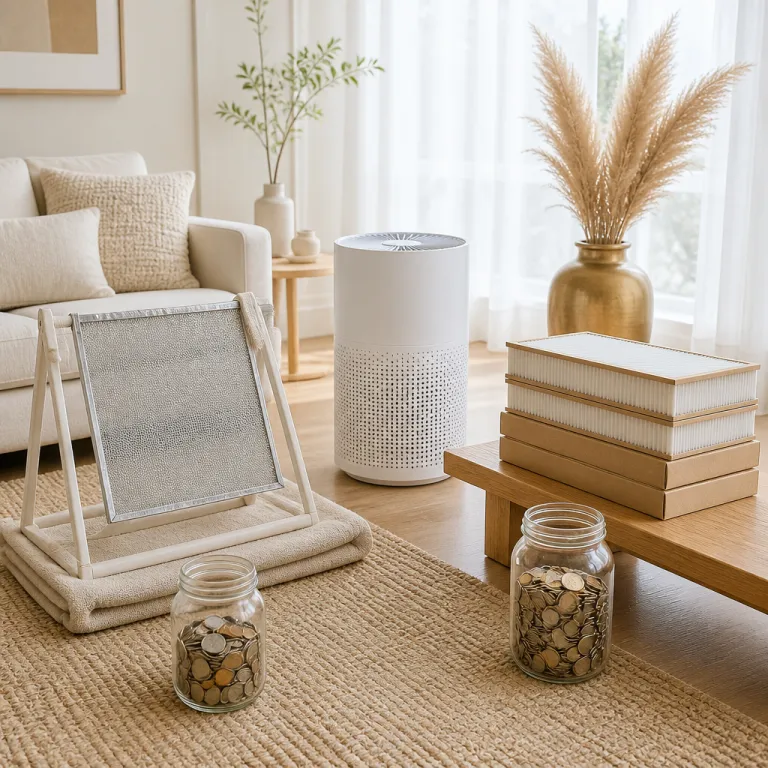
What “washable HEPA style” really means for allergy control
Many buyers assume a washable filter labeled HEPA style works like a true HEPA air filter. In reality, most reusable filters in portable air purifiers perform closer to medium MERV ratings and rarely match the efficiency of certified H13 or H14 HEPA filters for the smallest particles. For an allergy sufferer who reacts to pollen, pet dander and fine dust, this gap in filtration performance can decide whether symptoms calm down or persist.
A true HEPA disposable filter is built from dense fibers that trap at least 99.97 percent of 0.3 micrometer particles, a benchmark referenced by the U.S. EPA and AHAM test protocols, but that same dense media cannot survive repeated cleaning with water without losing structure and electrostatic charge. Washable filters marketed as HEPA type usually use a more open fiber matrix or plastic mesh that tolerates regular rinsing, yet this design leads to lower efficiency for the tiniest particles that trigger asthma and rhinitis. When you compare washable vs disposable air purifier filter cost over two years, you must weigh not only money but also the health value of consistent high efficiency filtration.
Inside a typical home air purifier system, air passes first through a pre filter, then through the main HEPA or HEPA style media, and sometimes through an activated carbon stage for gases. The washable component is often that pre filter, which captures hair, lint and larger particles before they reach the more delicate disposable filter that handles fine particles. For allergy focused users, the pros of this layered system are clear, because a cleanable pre stage protects the more expensive disposable filters and keeps the overall hvac style airflow stable for longer.
How MERV ratings, airflow and efficiency change with each cleaning
MERV, which stands for Minimum Efficiency Reporting Value, is a scale used mainly for furnace and hvac system filters, yet the same logic applies to portable air filters. A higher MERV rating means the filter captures smaller particles, but it also increases resistance to air flow, so the system fan must work harder to push air through. When washable filters are cleaned repeatedly, their effective MERV performance often drifts downward as fibers stretch and lose their original structure.
In a home with heating cooling ducts, a reusable filter installed in the central hvac system might be advertised as a MERV disposable alternative, but repeated washing can create lower efficiency compared with a fresh effective disposable filter of the same nominal rating. Laboratory and field studies on residential systems, including work summarized by the U.S. Department of Energy, report that a heavily loaded or damaged filter can reduce airflow by more than 30 percent, which in turn raises fan power draw. Dust, oils and detergent residues that remain after imperfect filter cleaning can clog pores and reduce clean air delivery rate, even if the filter looks visually clean and dry. Over two years, this hidden performance drop can mean more particles circulating in the air and more strain on the fan motor, which slightly increases electricity cost.
Portable air purifiers do not always print a formal MERV system rating, yet their internal filters follow similar physics and trade offs. A washable filter that starts near the performance of a mid range disposable filter may fall behind after six or eight cleaning cycles, especially if the user does not follow the recommended schedule or uses hot water that warps the media. For readers comparing washable vs disposable air purifier filter cost, it is crucial to remember that a cheaper filter that lets more particles pass is not really cheaper for an allergy sufferer who then needs more medication or doctor visits.
For more detail on how filter ratings relate to real world indoor air quality, you can review this guide on choosing the right furnace filters for cleaner indoor air, which explains how MERV, airflow and system design interact. The same principles help you judge whether a washable filter or a disposable filter will keep your bedroom air consistently clean enough for sensitive lungs. Thinking in terms of both efficiency and long term performance, not just the purchase price, will keep your decision grounded in health rather than marketing claims.
The hidden time and hygiene costs of washing filters every month
On paper, a washable filter looks like a simple way to avoid buying replacement filters every few months. In practice, the schedule for proper filter cleaning can feel demanding, especially for someone already juggling work, family and allergy management. A typical manufacturer recommendation for washable filters is to rinse them every two to four weeks, then let them dry completely before reinstallation.
Each cleaning session involves removing the air filter from the system, taking it to a sink or shower, rinsing from the clean side out to push particles away, and sometimes using a mild detergent to cut through oily pet dander or cooking aerosols. After that, the filter must air dry for many hours, often overnight, because any moisture trapped in the pleats can encourage mold growth once the air purifier pushes warm air through the damp media. If the filter is reinstalled before it is fully dry, spores can colonize the fibers and then spread through the room, which is the opposite of what an allergy sufferer needs.
There is also the question of water and energy use, because every wash cycle consumes several liters of water and often hot water, which adds to utility cost over two years. Some households run the air purifier without the washable filter while it dries, which reduces filtration efficiency and allows more particles to circulate during that gap. Others buy a second reusable filter to rotate, which raises the upfront cost and narrows the price difference compared with simply using high quality disposable filters on a predictable replacement schedule.
When you factor in your own time as a real cost, the pros of a low maintenance disposable filter become clearer, especially if your allergies flare whenever you handle dusty filters. For those who want to keep the inside of the purifier itself clean, a dedicated evaporator or coil cleaner can help, and resources such as this guide on how to choose the right evaporator cleaner for your air purifier explain how to do that safely. The key is to separate occasional system cleaning from frequent filter cleaning, so you do not underestimate the ongoing effort that a fully washable setup will demand.
Two year cost breakdown: washable vs disposable filters in real homes
To compare washable vs disposable air purifier filter cost fairly, you need to look at all the elements that add up over two years. That means counting the price of the air filters themselves, the electricity used by the air purifier or hvac system, the water and time spent on filter cleaning, and any extra filters bought because of performance concerns. Only then can you see whether a washable filter or a disposable filter truly saves money for an allergy focused household.
The table below shows a simple two year scenario for a single bedroom purifier. These are illustrative numbers, based on common retail prices and typical usage patterns, so you can adjust them to match your own situation.
| Assumption (2 years) | Disposable HEPA setup | Washable main filter setup |
|---|---|---|
| Filter hardware cost | $40 per set × 4 changes = $160 | $60 reusable filter, no replacement |
| Cleaning time | Pre filter vacuuming: 10 minutes every 3 months ≈ 1 hour total | Monthly wash: 10 minutes × 24 cycles ≈ 4 hours total |
| Value of time | $15/hour × 1 hour ≈ $15 | $15/hour × 4 hours ≈ $60 |
| Water and hot water energy | Minimal (quick rinse of pre filter) | Roughly $5–$10 in water and energy |
| Estimated total direct cost | About $175 including time | About $125–$130 including time |
| Sensitivity to assumptions | If filters last 9 months instead of 6, cost drops toward $130 | If the filter needs early replacement or time is valued at $25/hour, cost rises toward $180 |
Over two years, that washable filter might not need to be replaced if you are careful, so the direct filter cost stays at 60 dollars, but you have invested four hours of your time and a modest but real amount of water and energy. If you value your time at even 15 dollars per hour, the effective cost of the washable filter system rises to around 120 dollars, narrowing the gap with the disposable filters while still delivering lower efficiency for the smallest particles. For many allergy sufferers, the pros of the more effective disposable filters outweigh the ongoing expense, because fewer symptoms and better sleep carry their own value.
There is also the risk that a reusable filter will degrade faster than expected, especially if cleaning routines are rushed or harsh, forcing an earlier replacement and erasing the projected savings. By contrast, an effective disposable HEPA filter maintains its rated performance until it is replaced, so the air quality remains predictable across the full schedule. When you add in the fact that some households also run their central hvac system fan with a high MERV disposable filter to complement room purifiers, the overall two year cost picture becomes a balance between filter price, health benefits and maintenance effort rather than a simple race to the lowest number.
The smart compromise: washable pre filters plus disposable true HEPA
For many homes, the most balanced approach is to combine a washable filter at the pre stage with a high quality disposable filter as the main HEPA barrier. In this setup, the washable filters catch hair, lint and larger particles, while the disposable filters focus on fine particles such as smoke, pet dander and pollen that drive allergy symptoms. This hybrid design uses the strengths of both technologies while reducing their cons.
When the pre filter is washable, you can perform quick filter cleaning every few weeks to keep the system airflow high and protect the more expensive HEPA cartridge. Because the pre filter handles mostly coarse particles, its lower efficiency for ultrafine particles does not matter, and any lower efficiency that appears after many cleaning cycles has little impact on overall performance. The main HEPA disposable filter then operates in a cleaner environment, so it can stay in place closer to the full recommended schedule without clogging prematurely, which improves cost efficiency over two years.
Many modern air purifiers and even some hvac system setups already use this layered approach, pairing foam or mesh filters that can be rinsed with pleated MERV disposable or HEPA cartridges. In a central heating cooling system, for example, a washable pre filter in a return grille can catch large debris before air reaches a high MERV disposable filter at the furnace, which protects both the blower and the evaporator coil. For portable units, this hybrid strategy also reduces the frequency of handling dusty HEPA media, which is a practical benefit for anyone whose allergies flare when they touch used air filters.
If you live in an area with wildfire smoke or heavy seasonal pollen, planning ahead is crucial, and resources such as this air purifier preparation checklist before wildfire season can help you align your filter schedule with outdoor air risks. In such conditions, relying solely on a reusable filter with lower efficiency can leave you exposed when the air is at its worst. A hybrid washable disposable strategy gives you both resilience and flexibility, so you can step up protection quickly by installing fresh disposable filters when outdoor particles spike.
Health, sustainability and when each filter type actually makes sense
Choosing between washable filters and disposable filters is not only about money, because health outcomes and environmental impact also matter. For an adult with asthma or strong seasonal allergies, a high efficiency disposable filter that reliably captures fine particles may justify its recurring cost, especially in the bedroom where you spend many hours each night. In a less critical room, such as a hallway or home office, a reusable filter with moderate efficiency might be acceptable if it keeps dust down without demanding constant attention.
From a sustainability angle, washable filters reduce solid waste going to landfill, yet they require water, energy and cleaning agents, which carry their own environmental footprint. Disposable filters generate more physical waste, particularly when both air filters and hvac system filters are replaced on a tight schedule, but they often provide better filtration per unit of energy used by the fan because they maintain their rated efficiency until the end of life. A thoughtful hybrid approach, where a washable filter handles coarse debris and an effective disposable HEPA cartridge manages fine particles, can strike a reasonable balance between waste reduction and health protection.
There are also personal comfort factors that influence when each type makes sense. Some people dislike handling dirty filters and prefer the simplicity of sliding in a fresh disposable filter, accepting the higher ongoing cost as the price of convenience and cleaner hands. Others are comfortable with regular filter cleaning and are willing to accept some drawbacks of washable designs, such as lower efficiency and the need to let filters dry fully, in exchange for lower direct filter cost and less frequent purchases.
In homes with pets, where pet dander and hair load filters quickly, a washable pre filter can be especially valuable because it can be rinsed often without generating extra waste. The main HEPA disposable filter then focuses on the smaller particles that matter most for lungs, and it can be replaced on a schedule that reflects real performance rather than guesswork. Over two years, this targeted use of both reusable filter elements and disposable filters often delivers the best mix of cost control, air quality and day to day practicality.
Practical maintenance schedules and warning signs your filter should be replaced
Whatever filter type you choose, a clear maintenance schedule is essential to keep your air purifier or hvac system working as designed. For most portable units with disposable filters, replacing the main HEPA cartridge every six to twelve months is reasonable, while washing or vacuuming the pre filter every one to three months keeps airflow strong. Washable filters in standalone purifiers often need more frequent attention, especially in homes with pets, smokers or heavy outdoor pollution.
Signs that any air filter should be replaced or cleaned include visible dust caking on the surface, a noticeable drop in airflow from the purifier outlet, or a rise in allergy symptoms even though the device is running at its usual speed. If your hvac system begins to sound strained, cycles more often, or fails to maintain comfortable heating cooling levels, a clogged filter may be forcing the blower to work harder, which wastes energy and can shorten equipment life. In such cases, installing a fresh effective disposable filter or performing thorough filter cleaning on a reusable filter can restore both performance and efficiency.
For washable filters, always allow them to dry completely before reinstallation, ideally for at least 12 to 24 hours in a well ventilated area, because any trapped moisture can support mold growth inside the system. If a washable filter begins to show frayed edges, warped frames or lingering odors even after careful cleaning, it is time to replace it, because these are signs of structural breakdown and lower efficiency. Over a two year horizon, planning your filter purchases and cleaning tasks on a simple calendar or digital reminder will help you avoid both over cleaning, which wears out filters early, and neglect, which undermines the whole purpose of running an air purifier.
Key figures on filter performance, cost and maintenance
- Certified true HEPA filters capture at least 99.97 percent of particles with a diameter of 0.3 micrometers, while many HEPA style or HEPA type washable filters capture a lower fraction of these fine particles, which matters greatly for allergy and asthma control according to testing protocols used by AHAM and independent labs.
- Energy Star rated portable air purifiers typically consume between about 15 and 60 watts on their medium setting, so running one continuously for a full year can cost roughly 20 to 80 dollars in electricity at common residential rates, and this cost is similar whether you use washable filters or disposable filters as long as airflow remains within design limits.
- Studies on residential hvac system performance, including research cited by the U.S. EPA and DOE, show that a clogged filter can reduce airflow by more than 30 percent, which forces the blower motor to draw more power and can increase heating and cooling energy use by 5 to 15 percent, highlighting the financial value of timely filter replacement or cleaning.
- Field measurements in homes with pets indicate that pre filters can load with hair and pet dander up to three times faster than in pet free homes, which supports the practice of using washable pre filters to protect more expensive HEPA disposable filters in such environments.
- Life cycle assessments comparing reusable and disposable filters suggest that while washable filters reduce solid waste, the water and energy used for repeated cleaning can offset part of the environmental benefit, so a hybrid strategy that combines washable pre filters with long lasting high efficiency disposable filters often yields the most balanced sustainability profile.
FAQ: washable and disposable air purifier filters
How often should I replace disposable air purifier filters in a bedroom?
For most bedroom air purifiers used on a medium setting, replacing the main disposable filter every six to twelve months is appropriate, while washing or vacuuming any pre filter every one to three months keeps airflow stable. If you live with pets, smoke indoors or face heavy outdoor pollution, lean toward the shorter end of that schedule. Always follow the manufacturer guidance and adjust based on visible dirt and any change in allergy symptoms.
Are washable filters safe for people with asthma or severe allergies?
Washable filters can help with larger particles such as dust and hair, but they usually do not match the fine particle efficiency of certified true HEPA disposable filters, which are often recommended for asthma and severe allergies. If you rely on a washable filter, you must clean and dry it thoroughly on a strict schedule to avoid mold growth, which can worsen respiratory issues. Many specialists suggest using washable pre filters together with high quality disposable HEPA filters in bedrooms for the best protection.
Does washing a filter really reduce its efficiency over time?
Repeated washing can stretch fibers, remove electrostatic charge and leave behind residues, all of which can reduce a filter’s ability to capture the smallest particles. This effect is more pronounced in filters that start with higher efficiency, which is why true HEPA media is generally not designed to be washed. Over two years, a frequently washed filter may show noticeably lower efficiency compared with a series of fresh disposable filters used according to the recommended schedule.
Is a reusable filter cheaper than disposable filters in the long run?
A reusable filter often has a lower direct filter cost over two years, especially if it does not need to be replaced during that period. However, when you factor in your time for cleaning, the water and energy used, and any loss of efficiency that leads to worse air quality, the savings may be smaller than expected. For many allergy sufferers, a hybrid setup with washable pre filters and disposable HEPA filters offers a better balance between cost, performance and convenience.
What is the best filter setup if I have pets at home?
In homes with cats or dogs, a washable pre filter is very useful for catching hair and larger pet dander, because it can be rinsed frequently without generating extra waste. Behind that, a high efficiency disposable HEPA filter should handle the finer particles that trigger sneezing and wheezing. This combination keeps the main filter cleaner for longer, reduces replacement frequency and maintains strong overall performance for both air purifiers and central hvac systems.
Key takeaways: choosing between washable and disposable filters
- For serious allergies or asthma, a certified true HEPA disposable filter usually offers more reliable fine particle removal than a washable HEPA style filter.
- Washable filters can cut direct filter purchases but demand regular cleaning time, careful drying and some extra water and energy.
- A hybrid setup, with a washable pre filter and a disposable HEPA main filter, often delivers the best mix of cost control, air quality and sustainability over a two year period.