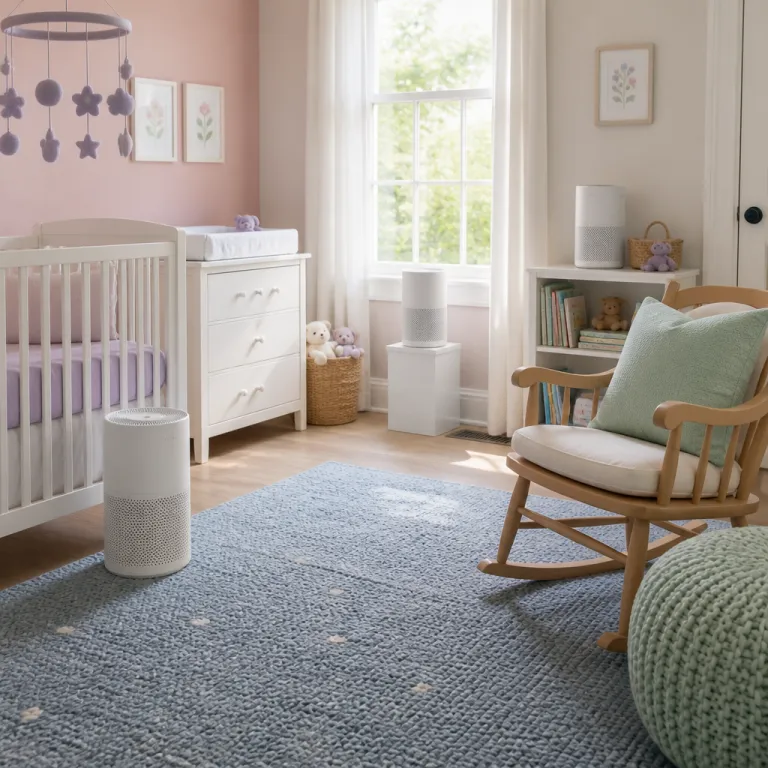
Why air purifier placement in a nursery matters more than the model
Parents often buy excellent air purifiers for the baby nursery yet still measure high airborne particles around the crib. The problem is rarely the air purifier itself ; in most cases, poor purifier placement wastes clean air and leaves pollutants hanging exactly where your baby breathes. When you optimise air purifier placement in the nursery, you can cut fine particles and other air pollutants by half or more in the baby room without upgrading to a bigger machine.
In a small nursery or shared bedroom, indoor air behaves like a slow moving river that bends around furniture and walls. If you place air purifiers hard against a wall or in a corner, you choke air circulation and lose 30 to 50 percent of the effective coverage area because the clean air jet cannot mix with the rest of the indoor air. Good purifier placement keeps a clear path for air purification so that airborne particles, pet dander and other pollutants are pulled from the room and pushed back as clean air where your baby actually sleeps.
Think about the baby’s breathing zone as a horizontal slice of air between 30 and 90 cm above the floor. This is the height where indoor air quality really matters in a purifier nursery, because heavier particles and some air pollutants tend to settle lower than adult head height. Every placement decision for the air purifier in the nursery should aim to move clean air through that slice, not just near the ceiling or trapped behind furniture in a forgotten corner of the room.
Spot 1: 1.5 to 2 metres from the crib, aligned with airflow
The first high impact place for an air purifier in a nursery is on the floor or a low stand, about 1.5 to 2 metres from the crib, with the outlet facing across the room rather than directly at the baby. This placement lets the purifier pull in polluted indoor air from around the door or window and then send clean air past the crib without creating a cold draft on the baby’s face. When you place air purifiers this way, you create a gentle loop of air circulation that steadily reduces airborne particles and improves overall air quality in the baby room.
Position the purifier so its intake is not blocked by curtains, a changing table or a wardrobe, because any obstacle will reduce the effective coverage area and leave pockets of air pollution untouched. Avoid pushing the purifier against the wall ; studies on airflow show that an air purifier placed flush to a surface can lose 30 to 50 percent of its clean air delivery rate, which means more pollutants and fewer captured particles in the nursery. Leave at least 20 to 30 cm of space behind and beside the purifier, so the filters can pull in dirty indoor air from all directions and send out clean air efficiently.
For this first spot, think of the purifier as a quiet fan that also traps airborne particles, pet dander and other air pollutants in its filter and activated carbon stage. The goal is not to blast white noise at the crib but to bathe the baby nursery in clean air that passes repeatedly through the purifier filters. If you want a deeper technical guide to optimal placement in different room shapes, you can read this detailed advice on optimal placement for your air purifier and then adapt the principles to your own nursery layout.
Spot 2: on a stable shelf 40 to 60 cm above the floor
The second effective place to put an air purifier in a nursery is on a sturdy shelf or low table, roughly 40 to 60 cm above the floor, as long as the unit is stable and cannot be pulled down. This height lines up the outlet of many purifiers with the baby’s breathing zone, so the clean air stream passes through the same layer where airborne particles and pollutants accumulate. In a compact baby nursery, this elevated purifier placement often works better than floor placement, because it avoids low obstacles and improves air circulation around the crib.
When placing air purifiers on furniture, keep at least 10 cm of clearance under and behind the unit so the intake can pull in indoor air from multiple directions. Never slide the purifier under a low shelf or push it tight against books, because that traps heat, increases noise and reduces the effective filter performance on particles and pet dander. A well ventilated shelf placement lets the filter and activated carbon stage work together, capturing airborne particles while also reducing some gases and odours that contribute to poor indoor air quality in the bedroom.
This second spot is especially useful in small rooms where the floor area is crowded with toys, a rocking chair and storage boxes that block air circulation. By placing air purifiers slightly higher, you send clean air across the top of these obstacles and then down around the crib, which improves air purification without increasing fan speed or noise. To fine tune this setup, some parents pair the purifier with an outdoor temperature sensor, using guidance such as this article on how an outdoor temperature sensor can enhance your air purifier experience to decide when to close windows and rely fully on indoor air filtration.
Spot 3: diagonal from the main vent to complete the room circuit
The third strategic place for an air purifier in a nursery is diagonally opposite the main source of airflow, such as the HVAC vent, window or door gap. This placement uses the existing movement of indoor air to create a full circuit, where polluted air travels from the vent across the room into the purifier and then returns as clean air along a different path. In practice, this diagonal purifier placement often lowers airborne particles more evenly across the baby room, instead of just near the machine.
To set up this circuit, stand in the nursery and feel where the natural air moves when the heating or cooling turns on, then place air purifiers so their intake faces that gentle stream. The purifier will then pull in air pollutants, pet dander and other particles carried from the vent, trapping them in the filter and activated carbon media before pushing clean air back toward the opposite wall. Over time, this loop improves overall indoor air quality and reduces stagnant pockets of air pollution that might otherwise linger near the crib or changing area.
In some bedrooms, the best diagonal spot might be near a corner but never jammed directly into it, because that kills air circulation and increases noise as the fan struggles. Leave open space around the purifier nursery setup so the air purifier can breathe and maintain its rated coverage area without running at maximum speed. If you ever own a recalled model or notice unusual heat or smell, check safety guidance such as this recall checklist for an air purifier fire hazard before continuing to use it in any baby nursery or bedroom.
What to avoid: common placement mistakes that keep pollution high
Certain habits with air purifier placement in a nursery quietly sabotage air purification, even when you own a high quality unit. The most common mistake is placing air purifiers directly in a corner, under a low shelf or pressed against a wall, which blocks intake vents and traps clean air in a tiny pocket instead of mixing it through the room. Another frequent error is putting the air purifier right next to the crib, where the airflow can feel drafty, the noise can disturb sleep and the baby can reach the controls or cable.
Avoid placing air purifiers behind large furniture such as a dresser or armchair, because these pieces act like dams that stop air circulation and leave airborne particles floating around the baby’s breathing zone. Never balance a purifier on an unstable surface or near dangling cords in the nursery, since safety always comes before marginal gains in air quality. Keep humidifiers at least 1.5 metres away from the purifier, otherwise the moist stream can saturate the filter prematurely and reduce its ability to capture particles and pet dander from the indoor air.
Parents sometimes use the highest fan speed to compensate for poor purifier placement, but this only adds noise without fixing the underlying airflow problem. A better approach is to choose one of the three recommended spots, then run the air purifier at a moderate setting that maintains clean air while keeping noise levels gentle enough for baby sleep. When you avoid these placement traps, you allow the filters and activated carbon stage to work as designed, quietly reducing air pollutants and supporting healthier indoor air quality in the nursery and adjoining bedroom.
Noise, sleep and safety: tuning your purifier for a baby nursery
Once you have chosen the right place for the air purifier in the nursery, the next priority is balancing noise, sleep and safety. For most babies, a low steady hum from air purifiers acts like white noise that can even support deeper sleep, as long as the sound level stays below roughly 35 dB near the crib. If you need to raise the fan speed temporarily after a pollution spike, do it before bedtime, then return to a quieter mode once the indoor air is clean.
Check whether your model’s night mode maintains real air purification or simply dims the lights and slows the fan to the point where air pollutants are barely filtered. Some purifiers almost stop moving air in their quietest setting, which defeats the purpose of careful purifier placement in a nursery with sensitive lungs. Aim for a setting where you can still feel a gentle stream of clean air at the baby’s breathing height, even if the noise is soft enough to blend into the background of the bedroom.
Safety checks matter as much as air quality, especially in a baby nursery where curious hands will eventually explore. Secure cables along the wall, avoid running the cord under a rug where heat can build up, and keep the purifier stable so it cannot tip if a toddler leans on it. When you shop for new air purifiers, look for models with child lock features, sealed filters and clear information about coverage area, noise levels and indoor air performance, so you can match the purifier nursery setup to your specific room size and family habits.
Monitoring results and maintaining filters for lasting clean air
After placing air purifiers in one of the three recommended spots, you need proof that the air purification is actually working for your baby. A simple way to check is to use a portable PM2.5 monitor at crib height, measuring indoor air before turning on the air purifier and again after 60 minutes of operation. If purifier placement and fan speed are well chosen, you should see particle counts drop significantly, often by half or more in a typical nursery or small bedroom.
Filter maintenance is the next pillar of reliable air quality, because even perfect placement cannot compensate for a clogged filter or exhausted activated carbon stage. Follow the manufacturer’s schedule for replacing the main filter and pre filter, but also adjust based on your real indoor air conditions, such as nearby traffic, wildfire smoke or pets that shed dander. When you shop for replacement filters, choose genuine parts rather than generic copies, since poor fit can leak air around the edges and let airborne particles bypass the filtration media entirely.
Regular vacuuming of the nursery floor, washing soft toys and keeping windows closed during high outdoor air pollution events all support the work of your air purifier. Together, these habits reduce the load of particles and air pollutants that the purifier must handle, extending filter life and keeping noise levels lower because the fan can run at moderate speeds. Over time, a well maintained air purifier, placed thoughtfully in the room and supported by good cleaning routines, becomes a quiet ally in protecting your baby’s lungs and improving the overall quality of indoor air throughout your home.
Key figures on nursery air quality and purifier performance
- Studies on airflow in small rooms show that an air purifier placed directly against a wall or in a tight corner can lose 30 to 50 percent of its effective clean air delivery rate, which means slower removal of airborne particles in a nursery of the same coverage area.
- Paediatric respiratory specialists often recommend targeting 5 to 6 air changes per hour in a baby nursery, compared with about 3 to 4 air changes per hour in a typical living room, because infants breathe more air per kilogram of body weight than adults.
- Noise guidelines for healthy sleep suggest keeping continuous background sound below roughly 35 dB at the pillow, so parents should choose air purifiers and placement strategies that maintain this level near the crib while still moving enough indoor air.
- Measurements in real homes show that moving a purifier from a corner to a central, unobstructed spot about 1.5 to 2 metres from the crib can reduce PM2.5 particle concentrations at baby height by 40 to 60 percent within one hour of operation.
- Filter life can vary by a factor of two or more depending on indoor air pollution sources such as smoking, nearby traffic or pets, so households with higher pollutant loads should check filters visually every month rather than relying only on time based indicators.
FAQ: air purifier placement in a nursery
How close can I safely place an air purifier to my baby’s crib ?
A practical rule is to keep the air purifier about 1.5 to 2 metres from the crib, with the outlet facing across the room rather than directly at the baby. This distance allows clean air to mix through the nursery without creating a draft or excessive noise at the baby’s head. It also keeps cables and controls out of immediate reach as your child becomes more mobile.
Should I run the air purifier in the nursery all night ?
For most families, running the air purifier continuously on a low or medium setting provides the most stable indoor air quality for baby sleep. Continuous operation keeps airborne particles and other pollutants from building up again between cycles, especially in well sealed bedrooms. Just ensure the noise level near the crib stays below about 35 dB and that the purifier is placed safely with good air circulation.
Is a HEPA filter enough, or do I need activated carbon in the nursery ?
A true HEPA filter is essential for capturing fine particles such as dust, pollen and pet dander that affect a baby’s lungs. Activated carbon is useful when the nursery is exposed to odours, traffic fumes or wildfire smoke, because it can adsorb some gases that HEPA alone cannot remove. Many parents choose a purifier that combines both filter types to cover a wider range of indoor air pollutants.
How do I know if my purifier is the right size for the nursery ?
Check the manufacturer’s recommended coverage area and match it to the floor space and ceiling height of your baby’s room, then aim for 5 to 6 air changes per hour for a nursery. If your purifier is undersized, it will need to run on higher speeds, creating more noise while still leaving particle levels elevated. A correctly sized unit can run more quietly while maintaining clean air throughout the sleep period.
Can I use one air purifier for both the nursery and the parents’ bedroom ?
Using a single air purifier for multiple rooms is possible only if doors stay open and the coverage area rating comfortably exceeds the combined space, which is rare in practice. For the most reliable air quality at baby height, it is better to dedicate one purifier to the nursery and place it optimally there. Parents can then use a separate unit in their own bedroom or move a portable model between rooms only when the baby is not sleeping.
References
- World Health Organization – Air quality guidelines for particulate matter and indoor environments.
- American Academy of Pediatrics – Guidance on environmental health and infant respiratory protection.
- U.S. Environmental Protection Agency – Residential air cleaners and indoor air quality reports.