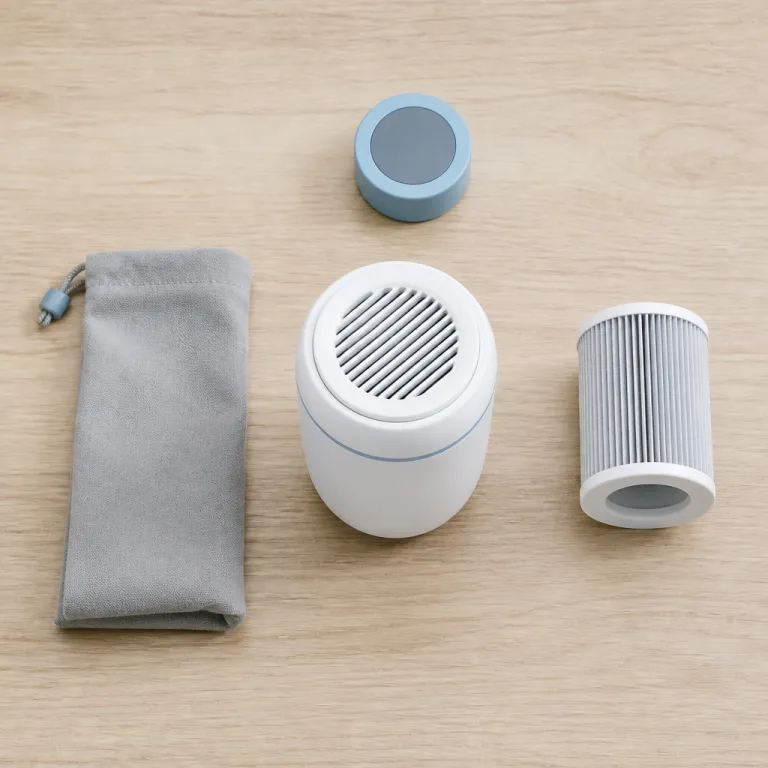

Why a portable personal air filter matters when air quality turns bad
When outdoor air quality drops suddenly, a portable personal air filter can create a small but vital clean air bubble around you. This kind of compact air purifier focuses on the air you actually breathe, reducing particles, dust, and smoke close to your nose and mouth. For people with asthma or allergies, that targeted personal air protection often feels like the difference between a manageable day and a difficult one.
Unlike large room air purifiers that chase every particle in a whole apartment, portable air devices concentrate on a radius of roughly 30 to 60 centimeters around your head. They pull surrounding air through a true HEPA filter and sometimes an activated carbon layer, capturing fine particles and volatile organic compounds, often called VOCs. Because the airflow is localized, these personal air purifiers can achieve a surprisingly high effective air changes per hour, or ACH, in that small breathing zone; controlled chamber studies published in indoor air quality journals have measured rapid particle reductions in similarly sized volumes when HEPA units are positioned close to the breathing area, consistent with findings summarized by agencies such as the U.S. Environmental Protection Agency (EPA) and the World Health Organization (WHO).
Many portable personal air filter models are designed to be ozone free, which is essential if you already struggle with sensitive lungs. Ozone generating purifiers can irritate airways, and agencies such as the U.S. Environmental Protection Agency (EPA) warn that even relatively low levels may aggravate asthma and other respiratory conditions. When you see a device advertised as tested for ozone safety, check that independent laboratories have confirmed zero or near zero ozone emissions under realistic operating conditions, ideally reporting results in parts per billion (ppb) that remain well below health based limits described in standards like UL 867 for electronic air cleaners.
How portable personal air filters actually work to trap particles
Every portable personal air filter relies on the same basic air filtration chain, even if the housing looks stylish or minimal. First, a pre filter catches larger dust and hair, which protects the finer HEPA filters from clogging too quickly. Then the main HEPA filter captures microscopic particles such as pollen, combustion particles from traffic, and tiny fragments from wildfire smoke.
True HEPA media is engineered to trap at least 99.97 percent of particles down to 0.3 micrometers, a specification originally defined in U.S. Department of Energy standards and widely cited by the EPA and health agencies, which covers most airborne allergens and many combustion by products. When manufacturers describe a device as a quiet HEPA air purifier, they usually mean the fan can move enough air for effective filtration while keeping noise below about 40 decibels at low speed. That balance between clean air delivery and acoustic comfort is crucial for personal air purifiers used on desks, bedside tables, or in shared offices, and it is often reflected in independent noise measurements reported alongside clean air delivery rate (CADR) values.
Some portable air designs add an activated carbon filter stage to deal with VOCs and odours from smoke, perfumes, or cleaning products. This carbon layer does not trap particles but instead adsorbs gaseous pollutants, improving perceived air quality in cramped spaces like small bedrooms or home offices. If you want to see how a larger quiet HEPA filter system is tested for coverage and performance, you can study a detailed product test of an energy efficient air purifier for home and office rooms on this dedicated review page, which explains CADR, room coverage, and filter design in depth, often referencing standardized test methods such as AHAM AC-1 for clean air delivery rate and comparing measured CADR values in cubic meters per hour or cubic feet per minute.
Choosing the right portable personal air filter for commuting and travel
Daily commuters often face a mix of traffic exhaust, dust, and indoor smoke from cooking or vaping in shared spaces. A portable personal air filter that fits into a backpack or laptop bag can provide clean air on trains, buses, and in open plan offices where central air quality control is limited. Look for compact air purifiers with a robust HEPA filter and a small activated carbon pad, because this combination handles both particles and VOCs from fuels or fragrances.
Neck worn personal air purifiers and small desktop units each have strengths and weaknesses, so match the format to your routine. A desktop style portable air purifier with a quiet HEPA fan is better for stationary work, while a battery powered personal air device suits walking or standing commutes. When comparing models, check whether the air filtration system has been independently tested for particle removal and whether the manufacturer publishes clear data on airflow and ACH in realistic personal air zones, ideally including measured clean air delivery rates in cubic meters per hour or cubic feet per minute.
Travelers who stay in hotels or rentals can use a portable personal air filter to offset unknown air quality issues such as residual smoke or cleaning VOCs. Compact purifiers like some Blue Pure travel sized units or smaller Austin Air style designs focus on simplicity, with easy access pre filters and straightforward HEPA filters. For a deeper look at how compact air purifiers behave in real homes, a detailed review of a small room purifier such as the Airfree Tulip can help you understand noise, energy use, and filter performance in tight spaces, especially when reviewers disclose both manufacturer specifications and independent measurement results, including CADR, ACH, and measured sound levels at each fan speed.
Understanding specifications: HEPA, ACH, and what clean air really means
Product boxes for any portable personal air filter are crowded with technical terms, but a few matter more than others. The phrase true HEPA indicates that the main filter meets a defined efficiency standard for capturing fine particles, while generic HEPA like labels may not guarantee the same performance. When you see hepa air or hepa filters mentioned, always look for explicit efficiency numbers and particle size ranges rather than vague marketing language.
ACH, or air changes per hour, describes how many times a purifier can theoretically replace the air in a defined volume each hour. For a personal air purifier, that volume is small, but a higher ACH still means faster reduction of particles and dust in your breathing zone. If you use your portable air device in a slightly larger area such as a small office, pairing it with a well chosen office air purifier that truly improves air quality at work can create layered protection, with the larger purifier handling background pollution and the personal unit focusing on your immediate space; peer reviewed studies on indoor environments often describe similar multi layer strategies for reducing exposure and reference metrics such as CADR, ACH, and particle decay rates to quantify performance.
Clean air is not only about particle counts, because VOCs and odours also affect comfort and perceived freshness. An activated carbon filter helps remove some VOCs, but no compact purifier can eliminate every gas, especially in poorly ventilated rooms. That is why experts recommend combining an energy efficient air purifier with regular ventilation, source control for smoke and chemicals, and sensible cleaning habits that reduce dust and particles before they ever reach the filter, a set of practices echoed in guidance from organizations such as the World Health Organization (WHO) and national public health agencies that publish indoor air quality recommendations.
Noise, energy use, and long term costs of personal air purifiers
Noise is often the deciding factor when people choose a portable personal air filter for bedrooms or shared offices. A quiet HEPA fan setting around 25 to 35 decibels usually allows sleep or focused work, while higher speeds are best reserved for short bursts when air quality suddenly worsens. Some air purifiers include automatic modes that increase fan speed when onboard sensors detect rising particles or VOCs, then return to quieter levels once clean air is restored.
Energy efficient designs matter because personal air purifiers often run for many hours each day. A small portable air unit with a modern brushless motor can consume less than 5 to 10 watts on low, which keeps electricity costs modest even with continuous use. When comparing air purifiers, check both the stated power draw and the clean air delivery rate, because a slightly higher energy use may be justified if the purifier delivers significantly better air filtration performance; independent lab tests sometimes report energy efficiency in terms of CADR per watt to make these comparisons clearer.
Filter replacement schedules and costs shape the real price of owning a portable personal air filter over several years. Look for clear guidance on how often the HEPA filter, pre filter, and activated carbon layer need replacement, and whether the manufacturer offers a multi year warranty that covers fan or motor failures. Brands such as Blue Pure and Austin Air often highlight their year warranty terms and tested filter lifespans, which can help you estimate long term costs and avoid unpleasant surprises after the first set of filters wears out, especially when those lifespans are supported by documented loading tests or third party verification.
Safety, testing, and what to expect from medical grade claims
Safety should always come first when you bring a portable personal air filter close to your face for many hours. Reputable manufacturers submit their air purifiers to independent laboratories, where devices are tested for ozone emissions, electrical safety, and verified particle removal efficiency. When a purifier is advertised as ozone free, you should expect documented test results showing negligible ozone production even at maximum fan speed, often reported as below the 50 ppb limit used in voluntary standards such as UL 867 for electronic air cleaners.
The term medical grade HEPA is widely used in marketing, but its meaning varies between brands and regions. In practice, a medical grade HEPA filter usually refers to a higher efficiency class that captures an even greater percentage of tiny particles, often used in healthcare settings where air quality must be tightly controlled. For personal air devices, this level of filtration can be beneficial for people with severe allergies or compromised immune systems, but only if the rest of the air filtration design, including seals and fan performance, is equally robust and verified through standardized test protocols rather than marketing claims alone.
Consumers should also pay attention to build quality, material safety, and the transparency of performance data when choosing among the many portable air purifiers on the market. A top tier portable personal air filter will provide clear specifications for particle removal, VOC reduction, noise levels, and energy use, along with a straightforward year warranty policy. When all these elements align, and when key performance figures are supported by independent laboratory reports or peer reviewed studies rather than unverified advertising, you can trust that your personal air purifier is not only effective at removing particles, dust, and smoke but also a safe, reliable companion for everyday clean air.
Key figures about portable personal air filters and indoor air quality
- In many large cities, indoor air can contain two to five times more particles and VOCs than outdoor air, according to national environmental agencies and summaries from the World Health Organization, which makes a portable personal air filter a practical line of defense in sealed buildings.
- True HEPA filters used in quality air purifiers are rated to capture at least 99.97 percent of particles measuring 0.3 micrometers, a size that includes many combustion particles from traffic and wildfire smoke, as documented in filtration standards and referenced by the U.S. EPA.
- Independent laboratory tests show that small desktop air purifiers can reduce fine particle concentrations in a 10 cubic meter room by more than 80 percent within one hour, provided the device delivers sufficient ACH for that volume; these results are typically based on standardized decay measurements of test aerosols such as salt or smoke.
- Energy efficient portable air purifiers running at low speed often consume less than 10 kilowatt hours per month, which is comparable to the standby consumption of several small electronic devices combined and is consistent with power draw figures reported in manufacturer specifications and third party energy audits.
- Studies on perceived air quality report that users notice significant improvements in comfort and odour reduction when activated carbon filters are combined with HEPA filters, especially in homes affected by smoke or strong cooking smells, a finding echoed in peer reviewed indoor air research and field trials.
FAQ about portable personal air filters
Do portable personal air filters really protect me from pollution on public transport ?
A well designed portable personal air filter can significantly reduce the concentration of particles and some VOCs in the immediate air you breathe on buses, trains, or planes. It cannot clean the entire cabin, but it can lower your personal exposure to dust, smoke, and other pollutants near your face. For best results, position the purifier close to your breathing zone and use a speed that balances noise with effective airflow, and remember that public health agencies still recommend combining filtration with ventilation and other protective behaviors.
What is the difference between a personal air purifier and a small room purifier ?
A personal air purifier focuses on a very small volume of air around your head, while a small room purifier is sized to handle the full volume of a bedroom or office. Personal devices usually have lower airflow but can achieve high effective ACH in that tiny breathing zone. Room purifiers are better for overall air quality in a space, and many people use both for layered protection, a strategy that mirrors approaches described in indoor air quality guidance from environmental and occupational health organizations.
How often should I replace HEPA and carbon filters in a portable device ?
Most manufacturers recommend replacing HEPA filters every six to twelve months and activated carbon filters every three to six months, depending on pollution levels and usage hours. Heavy exposure to smoke, dust, or strong odours will shorten filter life, while cleaner environments allow longer intervals. Always follow the specific guidance in your purifier manual and watch for signs such as reduced airflow or persistent smells, and note that some independent tests have shown performance dropping sharply once filters are overloaded with particles or VOCs.
Are ozone free claims reliable for compact air purifiers ?
Ozone free claims are reliable when backed by independent testing from recognized laboratories that measure ozone emissions under realistic operating conditions. Look for certifications or test reports that specify ozone levels well below health based limits, even at maximum fan speed. Avoid devices that rely on ionization or ozone generation as their primary cleaning method, especially if you have respiratory sensitivities, because agencies like the EPA and health focused organizations have repeatedly cautioned against using ozone generators in occupied indoor spaces.
Can a portable personal air filter help with allergies and asthma symptoms ?
Many people with allergies or asthma report fewer symptoms when using a portable personal air filter that includes a true HEPA filter and, ideally, an activated carbon layer. These devices reduce exposure to pollen, pet dander, dust mites, and some irritant gases in the air you breathe most directly. They work best as part of a broader strategy that includes medical care, regular cleaning, and control of indoor moisture and mould, in line with recommendations from allergy and respiratory health organizations that emphasize combining filtration with source control and ventilation.