
Why every modern workspace needs a dedicated office air purifier
Office workers spend most of their day breathing shared indoor air. In a closed room with computers, printers, and people, an efficient office air purifier quickly becomes essential for maintaining healthy air quality. A well chosen unit can quietly reduce particles, odours, and smoke while supporting better focus, fewer headaches, and potentially fewer sick days.
Indoor air in offices often contains fine dust, volatile organic compounds from furniture and cleaning products, and particles from outdoor traffic that slip through ventilation systems. When these pollutants accumulate, even a large open plan space can feel stuffy, and the noise level from HVAC systems may rise as building managers increase fan speed to compensate. A targeted air cleaning strategy using one or several purifiers tested in real offices is usually more energy efficient than constantly overdriving central ventilation.
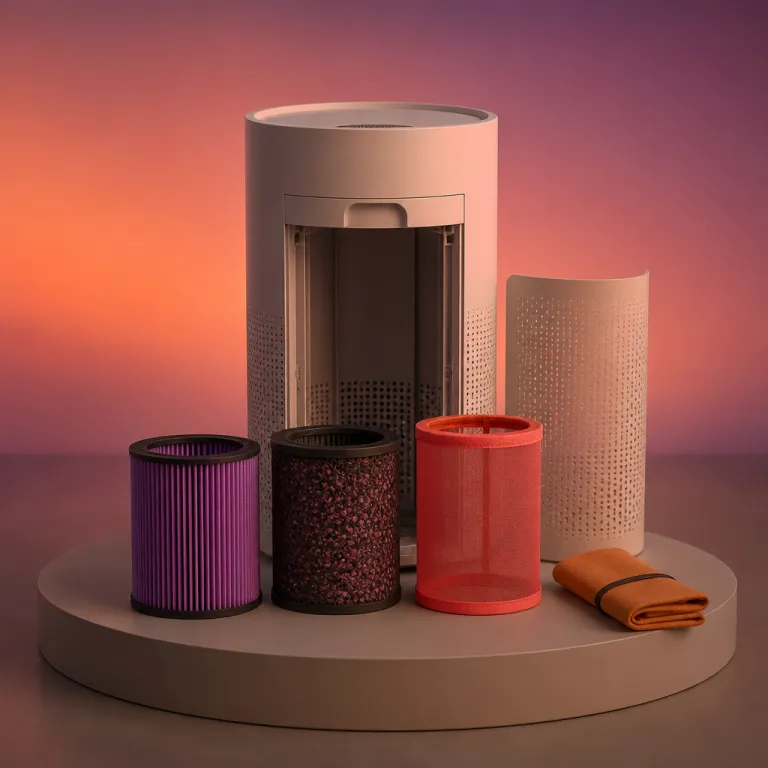
People frequently search on Amazon for the best product without understanding how a HEPA filter, a carbon filter, and a pre filter work together. In a typical multi stage office air purifier, the pre filter traps hair and coarse dust to protect the main filter, the true HEPA filter captures fine particles, and the activated carbon filter helps reduce odours and some gases. When these filters are combined with a smart quality sensor and a well designed fan, the purifier can deliver clean air with a high clean air delivery rate that matches the size of the room.
How HEPA office air purifiers work in real offices
A HEPA based office air purifier pulls air through several filtration stages before releasing it back into the room. The pre filter catches visible dust and fibres, then the true HEPA filter removes at least 99.97 percent of particles with a diameter of 0.3 micrometres under standard laboratory conditions, a performance level described in guidance from the United States Environmental Protection Agency. A separate carbon filter helps reduce smells from food, smoke, or office equipment. This layered air cleaning process is what separates serious air purifiers from decorative gadgets that only move air without improving air quality.
In a typical open plan office, one large purifier can support a shared area, while smaller desktop air purifiers can protect individual workstations. A compact desktop air purifier placed near a monitor can quietly filter the air around a single worker, especially useful for people sensitive to printer emissions or colleagues’ perfume. When several purifiers are positioned correctly, the combined clean air delivery rate, or CADR, can match the total office volume without creating excessive noise.
Many people now buy a Levoit Core model or a similar product after watching a video review that highlights noise level and energy use. These reviews often compare auto mode performance, fan speed options, and how quickly the purifier clears visible smoke in a test room. Before relying on any review, check whether the purifiers tested were measured with a particle counter and whether the test space resembles a real office, and look for data consistent with protocols used by organisations such as the Association of Home Appliance Manufacturers, which defines standard CADR test rooms and particle types.
Choosing the right size and specifications for your office space
Selecting the best office air purifier starts with measuring the room in square metres and estimating ceiling height. Once you know the volume, you can match it to the CADR rating of different purifiers to ensure the air is fully cycled at least four to five times per hour. As a simple rule of thumb, required CADR in cubic metres per hour is approximately equal to room volume multiplied by the desired air changes per hour. A purifier that is too small will run at maximum speed, create more noise, and still fail to deliver truly clean air.
For a small meeting room or private office, a compact air purifier with a true HEPA filter and a modest CADR can be sufficient, especially if it includes an accurate quality sensor and auto mode. In contrast, a large open plan floor often needs several air purifiers placed strategically to avoid dead zones where air barely moves. When comparing models, pay attention to the stated coverage area, the type of particle filter used, and whether the carbon filter is substantial or just a thin perfumed sheet.
As a rough example, an office of about 20 square metres with a 2.5 metre ceiling has a volume of 50 cubic metres. At a target of five air changes per hour, you would multiply 50 by 5 and look for a CADR of roughly 250 cubic metres per hour. A 50 square metre space at the same height has a volume of 125 cubic metres, so at five air changes per hour it needs closer to 625 cubic metres per hour. Brands such as Coway Airmega and Levoit Core series publish detailed specifications, including fan speed levels, noise level ranges, and energy consumption, which makes it easier to match these figures to your own room calculations.
Noise, energy use, and comfort during the workday and sleep hours
Noise level is one of the most underestimated factors when choosing an office air purifier. A purifier that hums loudly at high speed can distract staff, yet a unit that is too quiet at low speed may not move enough air to improve air quality. The best balance comes from purifiers tested in independent labs, where noise is measured at each fan speed and compared with their clean air output.
Look for models that publish decibel ratings for both sleep mode and maximum power, then compare these figures with typical office background noise. In many workplaces, a purifier running at medium speed blends into the general soundscape, while sleep mode can be reserved for quiet rooms or overnight operation. Some air purifiers include an auto mode that increases fan speed only when the quality sensor detects a spike in particles, such as when someone prints large jobs or when outdoor smoke drifts indoors.
Energy consumption also matters, especially when several purifiers run all day in a large office. Modern HEPA purifiers are usually efficient, but you should still compare wattage and calculate the annual cost based on local electricity prices. Energy Star guidance notes that certified air purifiers typically use about 40 percent less energy than standard models under comparable operating conditions, so choosing efficient units can significantly reduce operating costs when multiple devices run for thousands of hours per year.
Filters, maintenance, and total price over the purifier’s lifetime
When you compare the price of an office air purifier, always include the cost of replacement filters over several years. A product with a low purchase price but expensive HEPA filter and carbon filter replacements can end up costing more than a premium purifier with longer lasting components. The most transparent brands clearly state expected filter life in hours of use and provide guidance based on air quality levels.
Regular maintenance keeps both single purifiers and fleets of purifiers working at their best in busy offices. The pre filter should be vacuumed or washed according to the manual, because a clogged pre filter forces the fan to run at higher speed, raising noise and energy use. When the HEPA filter and carbon filter are replaced on schedule, the purifier maintains its original CADR and continues to deliver clean air to every room.
Many facility managers now track filter changes the same way they track other building maintenance tasks, sometimes using simple spreadsheets rather than complex CRM tools. Before buying multiple air purifiers on Amazon or through a distributor, ask for bulk pricing on filters and check whether the brand offers clear video review style tutorials for maintenance. Models such as the Levoit Core series and the Coway Airmega line are popular partly because their filters are easy to access, and because purifiers tested by many users tend to reveal any design flaws quickly.
Comparing leading office air purifier brands and models
Several brands dominate the office air purifier market, each with strengths in different room sizes and budgets. Coway Airmega purifiers are often praised for their strong HEPA filter performance, reliable quality sensor, and balanced noise level across fan speed settings. Levoit Core models, by contrast, tend to offer attractive price points and compact designs that suit desktop air use in smaller offices.
When comparing these products, focus on measurable criteria rather than marketing slogans about best in class performance. Check whether the purifiers tested by independent organisations publish CADR values for smoke, dust, and pollen, and whether the particle filter is certified as true HEPA rather than a vague HEPA like label. For offices near busy roads or industrial areas, a thicker carbon filter and a higher smoke CADR can make a noticeable difference in perceived air quality.
Some buyers rely heavily on Amazon ratings and a popular video review when choosing an air purifier, but these signals can be misleading without context. A model that performs well in a small bedroom may struggle in a large open plan room, especially if it lacks auto mode or a precise quality sensor to adjust fan speed. For professional environments, it is worth paying slightly more for a product with documented lab testing, clear filter specifications, and a track record of reliable air cleaning in offices rather than only in homes.
Key figures and statistics about office air quality and purifiers
- Summaries from the United States Environmental Protection Agency report that indoor air can be roughly two to five times more polluted than outdoor air in typical buildings, which underlines the need for effective office air purifiers in sealed modern offices.
- Research from the Harvard T H Chan School of Public Health has shown that improved air quality and ventilation can raise certain cognitive function scores by around 60 percent in controlled office environments, under specific test conditions that combined higher ventilation rates with lower pollutant levels, suggesting that investment in clean air can directly support productivity.
- Independent testing by the Association of Home Appliance Manufacturers indicates that a properly sized HEPA purifier can remove up to about 99 percent of airborne particles in a standardised test room within 30 minutes, provided the CADR rating matches the room volume and the unit runs at the specified fan speed.
- Field measurements in offices with high traffic exposure have found that portable HEPA purifiers can reduce fine particle concentrations by roughly 50 to 80 percent when operated continuously at medium fan speed, compared with similar spaces without purifiers, assuming doors and windows remain mostly closed.
- Energy Star documentation notes that certified air purifiers typically use about 40 percent less energy than standard models when tested under comparable duty cycles, which can translate into significant savings when multiple units run for more than 3 000 hours per year in large workplaces.
FAQ about office air purifiers
How do I size an office air purifier for my room
Measure the floor area in square metres, multiply by the ceiling height to get room volume in cubic metres, then choose a purifier with a CADR that can cycle that air volume at least four times per hour. For example, a 40 cubic metre room with a target of five air changes per hour would need a CADR of about 200 cubic metres per hour. Manufacturers often list a recommended coverage area, but you should cross check this with your own calculations. If your office has many partitions or separate zones, it is usually better to use several smaller purifiers rather than one oversized unit.
Are HEPA filters necessary for office air cleaning
A true HEPA filter is strongly recommended for offices because it captures fine particles from traffic, printers, and human activity that standard filters miss. Without HEPA filtration, a purifier may move air but leave a large fraction of harmful particles in circulation. For most workplaces, a combination of a HEPA filter, a pre filter, and a carbon filter offers the best balance of particle removal and odour reduction.
How loud should an office air purifier be during work hours
Most people tolerate continuous background noise around 40 to 50 decibels in an office, which corresponds to many purifiers running at low or medium fan speed. Check the manufacturer’s noise level specifications and aim for a model that stays within this range while still delivering enough clean air. Sleep mode can be useful for meeting rooms or shared spaces that require extra quiet during calls or presentations.
How often do filters need to be replaced in office purifiers
Pre filters usually need cleaning every one to three months, while HEPA and carbon filters often require replacement every six to twelve months, depending on air quality and usage hours. Many modern air purifiers include a filter change indicator based on operating time and quality sensor data. In heavily polluted areas or offices with high occupancy, filters may need more frequent replacement to maintain performance.
Can one purifier handle both smoke and general office pollution
A well designed office air purifier with a strong HEPA filter and a substantial carbon filter can reduce both smoke particles and everyday office pollutants. For spaces exposed to wildfire smoke or heavy traffic, choose a model with a high smoke CADR and multiple fan speed settings so you can increase power during pollution peaks. In normal conditions, auto mode can maintain good air quality while keeping energy use and noise under control.