Why a dedicated smoke purifier matters for modern homes
Smoke behaves differently from ordinary dust, so a general air purifier often struggles. A dedicated smoke purifier combines a high efficiency particulate air or HEPA filter with a deep activated carbon bed to trap both smoke particles and gases, which gives far cleaner air in real living spaces. When you compare purifiers side by side, the models designed for wildfire smoke or cigarette smoke usually have higher Clean Air Delivery Rate or CADR ratings for smoke and a larger carbon filter volume, expressed in cubic metres per hour (m³/h) under standardised test conditions.
People usually focus on the headline price, but the long term cost of filters and replacement filters often matters more for a smoke focused product. A compact air purifier with a low list price can become expensive after several months if each HEPA filter and smoke filter set costs almost as much as the original purifier, so you must calculate the total cost over at least three years. Look carefully at the recommended filter change interval in months, the availability of genuine HEPA filters and carbon filters, and whether the brand offers long lasting air filter designs that keep performance stable between changes.
Room size is another critical factor when you choose any air purifiers for smoke. A purifier that looks powerful on an online list may have a smoke CADR suited only to a small bedroom, while wildfire smoke often infiltrates large open plan living areas that need higher airflow and fan speed. Check the manufacturer’s CADR for smoke, match it to your room in square metres, and remember that a higher speed setting will be noisier but also clean air more quickly during heavy smoke events.
How HEPA and activated carbon work together against smoke
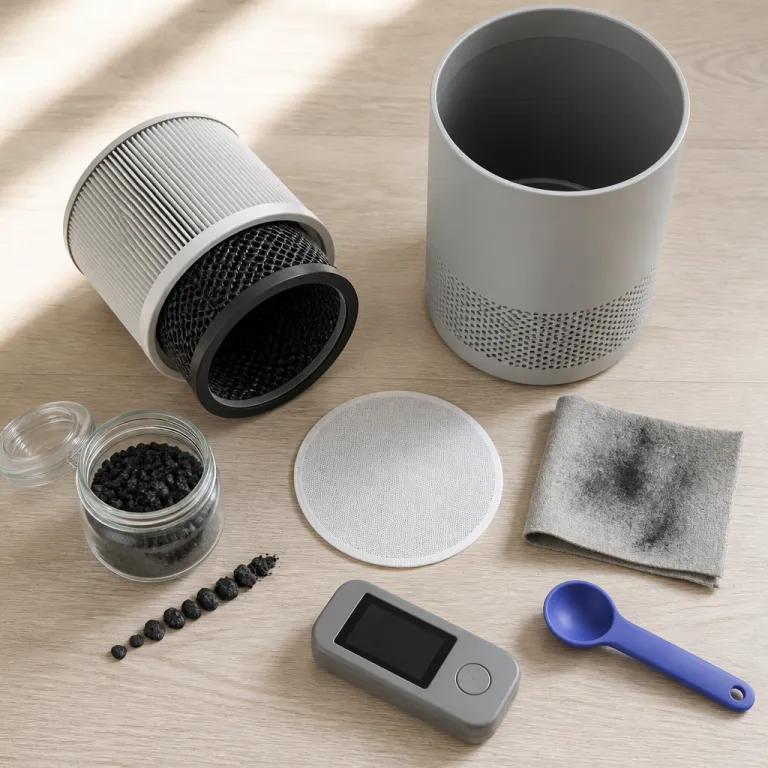
Effective smoke purifiers rely on a two stage system that treats particles and gases separately. The HEPA filter captures fine smoke particles down to 0.3 micrometres, while the activated carbon layer adsorbs volatile organic compounds and odours from cigarette smoke or wildfire smoke that would otherwise pass through the filters. Without this combination, an air purifier may clear visible haze yet still leave a sharp smoke smell and irritating gases in the air.
When you compare products on Amazon or other retailers, you will often see star ratings that praise quiet operation but complain about lingering smoke odours. Those reviews usually indicate a small or thin carbon filter, which saturates quickly and loses effectiveness after only a few months of heavy smoke exposure, so the purifier will no longer neutralise smells even if the HEPA filters still look clean. For people sensitive to odours, it is worth paying a higher price for a smoke purifier with a thick activated carbon bed and clearly specified carbon weight rather than a vague mention of deodorising filters.
Odour control is especially important in homes affected by cigarette smoke or cooking fumes that accumulate over a long period. Readers who want a deeper technical explanation of how air purifiers eliminate odours can consult this detailed guide on whether air purifiers effectively eliminate odours, which clarifies the role of each filter type. In practice, the best air purifiers for smoke combine a sealed HEPA filter, a substantial activated carbon layer, and a fan with enough speed options to balance noise and clean air output.
Evaluating performance: CADR, room size and real world smoke
Laboratory ratings only help if you understand how they translate into real rooms filled with smoke. CADR for smoke measures how quickly an air purifier reduces smoke particles in a standard test chamber, and higher numbers mean faster clean air delivery in a given room size. For a typical 20 square metre bedroom with a standard ceiling height, a smoke purifier with a CADR around 200 cubic metres per hour can usually turn over the air several times per hour at medium speed.
Wildfire smoke behaves differently from cigarette smoke because it often arrives in intense waves that push outdoor air pollution far above normal levels. During such events, you may need to run your air purifier at its highest speed for several hours, then drop to a lower speed once the indoor air filter has removed most smoke particles and gases, which helps reduce noise and extend filter life. A model with multiple speed settings and an accurate particle sensor will respond better to these fluctuations than a basic purifier with only one or two fan speeds.
Independent testing and third party sensors can reveal gaps between marketing claims and real performance. A useful technical analysis on what a mid range PM2.5 sensor reveals about purifier displays shows how some products overstate their ability to deliver clean air in challenging smoke conditions. When you read full reviews, look for measured CADR values, time to clear a defined room size, and performance against both fresh wildfire smoke and aged indoor cigarette smoke.
As a quick guide, many manufacturers and independent reviewers suggest the following smoke CADR ranges for typical rooms with standard ceilings and closed windows:
- Up to 15 m² (small bedroom or office): smoke CADR around 120–180 m³/h, filters often replaced every 9–12 months under light smoke exposure.
- 20–25 m² (medium bedroom or small living room): smoke CADR roughly 200–300 m³/h, with combined HEPA and carbon filters commonly changed every 6–12 months depending on use.
- 30–40 m² (large living room or open plan area): smoke CADR in the 320–450 m³/h range or higher, with filter replacement intervals closer to 6 months in homes affected by regular wildfire smoke or indoor smoking.
Understanding brands, models and the role of Levoit Core
Brand reputation matters when you choose a smoke purifier that must run for many months without failure. The Levoit Core series, for example, has become one of the best known ranges of compact air purifiers on Amazon, with strong star ratings for quiet operation and effective HEPA filters in small and medium rooms. These models use cylindrical HEPA filter and activated carbon combinations that draw air from all sides, which improves clean air distribution when the purifier sits in the centre of a room.
However, even a popular product like a Levoit Core purifier has limitations that you should weigh carefully. The room size ratings often assume continuous operation at high speed, so real world performance at lower speed settings may fall short in large living rooms, and the relatively small carbon filter volume can saturate quickly in homes with constant cigarette smoke or frequent wildfire smoke intrusions. When you read full product descriptions and independent tests, check whether the manufacturer specifies separate CADR values for smoke, dust and pollen, and whether the list price includes at least one set of replacement filters.
Other brands offer larger smoke purifiers with higher CADR and thicker activated carbon beds, which suit open plan spaces or households with multiple smokers. These units usually cost more at the time of purchase, but the long lasting filters and higher clean air output can make the effective price per cubic metre of filtered air lower over several years. Whatever brand you choose, prioritise a sealed HEPA filter, a substantial smoke filter with real activated carbon, and a clear schedule for replacement filters that matches your expected smoke exposure.
Running costs, filter changes and long term ownership
Owning a smoke purifier is a long term commitment rather than a one time purchase. The initial list price often represents less than half of the total cost over five years, because HEPA filters, carbon filters and pre filters must be replaced regularly to maintain clean air performance. When you compare air purifiers, calculate the annual cost of each air filter set, multiply by the recommended change interval in months, and factor in electricity use at your typical fan speed.
Manufacturers usually specify a filter life based on average urban air, not on heavy wildfire smoke or daily cigarette smoke. In practice, a household exposed to frequent smoke particles may need to replace the HEPA filter and smoke filter twice as often as the manual suggests, especially if the purifier runs at high speed for many hours, which increases airflow and deposits more pollutants in the filters. Look for models that offer washable pre filters to capture large dust and ash, because this simple feature can extend the life of the more expensive HEPA filters and activated carbon layers.
Energy efficiency also influences the long term price of running a purifier. A unit with a high CADR for smoke at a moderate wattage will deliver more clean air per kilowatt hour than a weaker purifier that must run at maximum speed all day, which matters in regions with high electricity costs. Some premium models include auto modes that adjust fan speed based on particle sensors, but you should still monitor filter condition visually and by smell, because a sudden return of smoke odour usually signals that the carbon filter has reached saturation.
Practical placement, usage tips and expectations for clean air
Even the best air purifier cannot protect you from smoke if it sits in the wrong place. Position your smoke purifier away from walls and furniture, ideally in the centre of the room or at least 30 centimetres from obstacles, so that air can flow freely into the intake and out of the clean air outlet. In multi room homes, consider one purifier per main room size rather than relying on a single unit in a hallway, because smoke particles move slowly through doorways and corners.
Usage patterns should match your specific smoke risks and lifestyle. If you live in a region prone to wildfire smoke, run your air purifiers continuously on low or medium speed during the season, then switch to higher speed when outdoor air quality alerts indicate a spike, while households with cigarette smoke indoors may need a dedicated purifier in the main smoking room plus another in the bedroom. For odour sensitive people, this detailed article on how air purifiers eliminate unpleasant odours explains why a robust activated carbon stage is essential for comfort as well as health.
Expectations also need to be realistic, because no purifier can remove all pollutants or replace ventilation. A high quality smoke purifier with a sealed HEPA filter, a generous activated carbon bed and a strong smoke CADR will dramatically reduce indoor smoke particles and smells, but you still need to limit indoor cigarette smoke, close windows during heavy outdoor smoke, and ventilate when outdoor air improves. Over time, consistent use of suitable purifiers, timely replacement filters and thoughtful placement will create a noticeably cleaner, more comfortable indoor environment for you and your family.
Key statistics on smoke purifiers and indoor air quality
- In controlled tests by the Association of Home Appliance Manufacturers (AHAM), smoke CADR ratings show that a purifier with a CADR of 240 cubic metres per hour can reduce indoor smoke particles by up to 80 percent in a 20 square metre room within 30 minutes, compared with less than 30 percent reduction from a basic fan with no filter, assuming a standard ceiling height and closed windows. These figures are drawn from AHAM’s standardised ANSI/AHAM AC-1 test procedure for portable room air cleaners.
- Studies from the United States Environmental Protection Agency, including EPA guidance on residential air cleaners and wildfire smoke, have found that portable HEPA air purifiers can lower indoor fine particle concentrations from wildfire smoke by 50 to 80 percent when sized correctly for the room and operated continuously on at least medium speed.
- Research on second hand cigarette smoke exposure, including peer reviewed indoor air quality studies published in the last decade, indicates that using a HEPA and activated carbon purifier in a smoking room can cut airborne nicotine and particulate levels by roughly half, but complete elimination requires combining purifiers with strict smoking restrictions indoors.
- Market analyses of air purifiers from consumer organisations and industry reports consistently show that replacement filters account for approximately 60 percent of total ownership cost over five years, which highlights the importance of checking filter prices and lifespans before purchase and comparing several models on cost per year of use.
- Consumer testing organisations have reported that some compact purifiers deliver less than half of their claimed smoke CADR in real world rooms, underscoring the value of independent measurements, clear CADR units in m³/h, and careful review of performance data.
FAQ: smoke purifiers and activated carbon air purifiers
Do I really need a smoke specific purifier if I already own a dust purifier ?
A purifier designed mainly for dust may use a basic HEPA filter without much activated carbon, so it will capture particles but leave many smoke gases and odours. For occasional light smoke, your existing air purifier might be adequate, but for regular wildfire smoke or indoor cigarette smoke, a smoke purifier with a substantial carbon filter is strongly recommended. The difference in odour control and overall comfort is usually very noticeable.
How often should I replace filters when dealing with wildfire smoke ?
Filter life shortens significantly under heavy smoke exposure, because the HEPA filter loads quickly with fine ash and soot while the activated carbon saturates with gases. As a rule of thumb, expect to replace the combined HEPA and carbon filters at least twice as often as the manual suggests if you run the purifier continuously during a severe wildfire season. Always follow any visual indicators, odour changes or filter change lights on your specific product.
What CADR rating should I look for in a medium sized room ?
For a typical bedroom or small living room around 20 to 25 square metres, a smoke CADR between 200 and 300 cubic metres per hour usually provides four to five air changes per hour, which is suitable for most smoke situations. If you are highly sensitive or live in an area with frequent wildfire smoke, choosing a purifier at the upper end of that range gives more headroom. Always match the CADR to your actual room size and preferred fan speed.
Can a smoke purifier remove all smells from cigarette smoke ?
A high quality smoke purifier with a thick activated carbon filter can greatly reduce cigarette smoke odours and particles, but it cannot erase all traces, especially from fabrics and surfaces. Nicotine and tar cling to walls, carpets and furniture, so you may still notice residual smells even with excellent air filtration. For best results, combine a smoke purifier with strict smoking rules, regular cleaning and, when possible, outdoor smoking.
Is a more expensive purifier always better for smoke ?
Higher price often brings better build quality, stronger fans and larger filters, but not every expensive model excels at smoke removal. Some premium purifiers focus on design or smart features rather than maximising smoke CADR and activated carbon capacity, so you must examine specifications carefully. Prioritise measured smoke CADR, HEPA filter quality and carbon filter weight over cosmetic features when you choose a purifier for serious smoke problems.