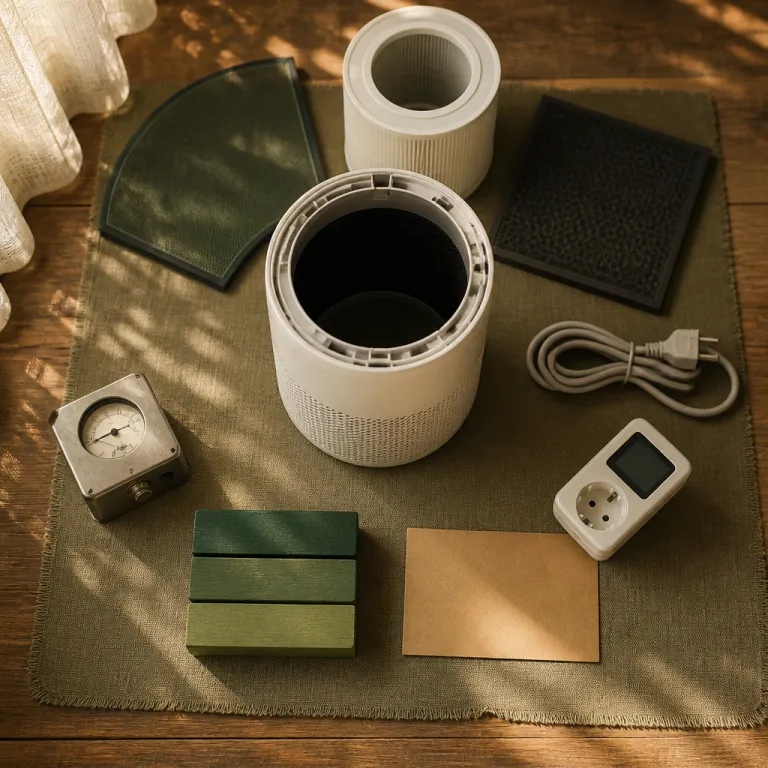
Why clean air now comes with a hidden electricity price tag
Most buyers compare air purifiers by CADR ratings and HEPA filtration, not by watts. Yet over thousands of hours of operation, the electricity cost from one air cleaner can quietly match or exceed the purchase price of the unit. For anyone relying on continuous air cleaning to protect indoor air in a small apartment or smart home, ignoring air purifier energy consumption and running cost is no longer a harmless oversight.
The global market for air purifiers has grown into a multibillion dollar industry, and that growth is powered by anxiety about indoor air quality rather than transparency about power consumption. Manufacturers highlight clean air delivery, advanced filtration stages and premium HEPA filters, while the impact on electricity usage is buried in fine print near the back of the manual. When a purifier runs for 24 hours per day to maintain clean indoor air, even a modest difference in energy consumption per hour quickly multiplies into a serious operating cost.
Consider a typical connected air purifier drawing 40 watts on medium fan speed, which is a common real world power level for compact units used in bedrooms. At that power consumption, continuous running for 24 hours over a full year translates to roughly 350 kilowatt hours, which directly shapes the electricity cost on a household bill. In many parts of the United States, that kWh usage means one purifier electricity bill of around 40 dollars annually, while a less efficient air purifier using 70 watts can push the running cost toward 70 dollars or more.
For a tech savvy household with multiple air purifiers, the combined energy consumption can rival a refrigerator or even a window air conditioner. Yet there is no dedicated energy efficiency label for purifiers comparable to the stickers on fridges, dishwashers or heat pumps, despite similar long term electricity usage. The absence of a clear efficiency standard leaves consumers guessing about which air purifier design truly balances air cleaning performance with reasonable power consumption and fair running cost.
Manufacturers benefit from this information gap because it keeps attention on premium filters and sleek app interfaces instead of on electrical draw. A purifier can advertise impressive air quality improvements and advanced purification modes while quietly wasting energy in standby or at high fan speed settings that few users monitor. Without a transparent way to compare models by kWh per cubic metre of clean air delivered, the market rewards marketing claims rather than genuine energy efficiency.
How to read wattage, kWh and fan speed like a pro buyer
When you evaluate an air purifier, the most honest number on the box is often the wattage, yet it is rarely explained. Wattage tells you the power draw at a given fan speed, and from that you can estimate annual energy consumption and the likely electricity cost for your specific usage pattern. A smart home enthusiast who understands these basic kWh calculations can compare purifiers with the same clarity they already apply to TVs, routers and other always on devices.
Start with the rated power consumption at medium fan speed, because that is where most people actually run their air purifiers for indoor air cleaning. Multiply that wattage by the number of hours per day you expect the unit to run, then by 365, and divide by 1000 to convert to kilowatt hours. Once you have that annual kWh figure, you can multiply by your local electricity cost per kWh to see the real running cost of keeping clean air in your bedroom or living room.
To make this concrete, imagine three similarly sized purifiers with comparable CADR tested under AHAM or ISO clean air delivery standards. Purifier A draws 35 watts on low, 45 watts on medium and 70 watts on high, with a CADR of 220 cubic feet per minute on medium. Purifier B draws 25 watts on low, 32 watts on medium and 55 watts on high, with a CADR of 200 cubic feet per minute on medium. Purifier C draws 50 watts on medium with a CADR of 230 CFM but uses cheaper filters that need replacing more often. If all three run 24 hours per day on medium, Purifier A uses about 394 kWh per year, Purifier B uses roughly 281 kWh and Purifier C uses around 438 kWh, so at 0.15 dollars per kWh the annual electricity cost is about 59 dollars, 42 dollars and 66 dollars.
Now add realistic purchase and filter replacement costs to see the full picture. Suppose Purifier A costs 220 dollars to buy with 60 dollar filters replaced once per year, Purifier B costs 260 dollars with 40 dollar filters replaced annually and Purifier C costs 180 dollars with 30 dollar filters replaced twice per year. Over five years, the combined electricity and filter cost is roughly 595 dollars for A, 570 dollars for B and 690 dollars for C, even before you factor in the initial purchase price. On a simple efficiency metric of CADR per watt at medium speed, Purifier A delivers around 4.9 CFM per watt, Purifier B delivers about 6.3 CFM per watt and Purifier C delivers about 4.6 CFM per watt, making B the more energy efficient choice despite a slightly lower CADR.
Noise ratings complicate this picture because many buyers choose low fan speed to keep the purifier quiet at night. A unit that seems energy efficient at low fan speed may need to run for more hours to achieve the same air quality, which can erase the apparent savings. That is why a detailed review of a quiet air purifier for the bedroom that explains how decibel ratings interact with airflow is more valuable than a simple spec sheet, especially when you care about both noise and energy efficiency.
Auto mode adds another layer of complexity, because the purifier adjusts fan speed based on sensor readings of indoor air quality. On paper, the power consumption in auto mode may look low, but short bursts at maximum fan speed can spike energy consumption when cooking, cleaning or opening windows. For a household that generates frequent indoor air pollution from frying, candles or pets, the real world electricity usage in auto mode can be much higher than the nominal rating suggests.
Then there are extra features such as UV C lamps, ionizers or plasma modules that promise deeper air purification but often add little measurable improvement in clean air delivery. These modules can increase power consumption by several watts, which seems minor until you multiply by thousands of hours of running time. An energy efficient air purifier that focuses on strong mechanical filtration with HEPA filters and a well designed fan can often deliver better air cleaning per kWh than a feature heavy purifier that wastes electricity on marginal add ons.
For buyers in smaller homes or apartments, every watt of power draw matters because it contributes to the monthly electricity bill. A difference of just 10 watts in continuous usage equals roughly 88 kilowatt hours per year, which is not trivial when you are watching every dollar. Learning to read the unit label, understand the filter configuration and interpret fan speed curves turns you from a passive buyer into an informed evaluator of both air quality and energy efficiency.
Why filtration specs dominate while energy efficiency stays in the shadows
The industry narrative around air purifiers is built on fear of polluted indoor air and reassurance through filtration technology. Marketing campaigns highlight HEPA filters, multi stage filters and advanced purification claims, while the quieter story about energy consumption and long term running cost rarely appears in bold type. This imbalance is not accidental, because focusing on filtration specs allows manufacturers to justify higher prices without drawing attention to the ongoing electricity cost borne by the user.
Clean air is a powerful promise, especially for people with asthma, allergies or concerns about wildfire smoke, and it is easy to frame the purchase of an air purifier as a health investment. When a parent reads about improved air quality for a child with asthma, they are understandably less focused on the kWh usage that will accumulate over years of continuous running. That emotional framing makes it even more important to have independent testing and long term reviews that examine both air cleaning performance and power consumption in realistic home conditions.
Some reviewers now run the same air purifiers for many months to track filter wear, noise changes and electricity usage over time. A long term test of five purifiers, for example, can reveal how real world power consumption drifts as filters clog and fan speed ramps up to maintain air quality. Those extended running hours often show that a purifier which looked energy efficient in a lab can become a heavier load on electricity bills once filters age and airflow resistance increases.
There is also a structural reason why energy efficiency lags behind filtration specs in marketing materials. CADR and HEPA filters are easy to explain in a single chart, while nuanced discussions of kWh per cubic metre of clean air, standby power and impact on electricity cost require more space and more technical literacy. In a crowded retail aisle or on a small product page, the simple story about clean air usually wins over the more complex story about energy consumption and running cost.
Yet for many households, especially renters and lower income families, the electricity cost of running air purifiers is not an abstract concern. When you must run a unit for long hours to keep indoor air breathable near a busy road or industrial area, every extra watt of power consumption becomes a monthly budget issue. The absence of a clear energy efficiency label effectively shifts the burden of inefficient design onto those who can least afford higher utility bills.
Smart home enthusiasts who already track plug level power usage with connected sockets are starting to push back by sharing real data on purifier electricity draw. Their measurements of fan speed versus kWh usage, combined with independent clinical evidence on how purifiers help with asthma, are slowly reshaping expectations about what an energy efficient air purifier should deliver. As these user generated datasets grow, they expose the gap between glossy filtration promises and the actual running cost of maintaining clean indoor air.
The case for a dedicated energy label for air purifiers
Household appliances from refrigerators to washing machines now carry standardized labels that summarize energy efficiency in a format anyone can understand. Air purifiers, despite their growing role in maintaining indoor air quality, still lack a universally adopted label that links clean air performance to energy consumption in a transparent way. An honest label tailored to air purification would change how both manufacturers design products and how consumers judge value over the full lifetime of a unit.
One model for such a system is the existing Energy Star program, which already certifies some air purifiers under its room air cleaner criteria but does not yet dominate packaging or consumer awareness. A purifier that meets Energy Star requirements is generally more energy efficient than a non certified competitor, yet the label is often small and overshadowed by claims about HEPA filters and advanced air cleaning modes. Expanding and standardizing this kind of rating, with clear metrics like clean air delivered per kWh, would make energy efficiency as visible as filtration specs.
A robust label should account for multiple fan speed settings, because real world usage rarely matches a single laboratory point. That means measuring power consumption and clean air output at low, medium and high speeds, then expressing efficiency as clean air per unit of electricity across typical usage patterns. Including standby power and sensor driven auto modes would prevent manufacturers from gaming the system by optimizing only one narrow operating point while leaving hidden inefficiencies elsewhere.
Equity must sit at the center of this conversation, because the people who most need clean indoor air often face the steepest electricity bills. Residents near highways, factories or wildfire prone regions may need to run air purifiers for many hours each day, sometimes across multiple rooms. For these households, a transparent label that highlights both energy consumption and expected running cost could be the difference between choosing a sustainable solution and abandoning air cleaning altogether due to electricity cost shocks.
Smart home users would also benefit from a standardized label that integrates with connected platforms and energy dashboards. Imagine being able to compare air purifiers in an app by projected annual kWh usage, electricity cost and clean air output, just as you compare thermostats or lighting scenes today. That level of visibility would reward efficient designs that deliver high air quality with minimal impact on electricity, rather than simply rewarding the highest CADR numbers.
Until such a label exists, the burden falls on reviewers, consumer advocates and technically minded buyers to calculate and publicize the real running cost of popular purifiers. Detailed guides that explain how to balance noise, energy efficiency and filtration performance help close the information gap for ordinary users. Over time, as more people demand clear data on power consumption and lifetime cost, manufacturers will have fewer excuses to hide inefficient designs behind glossy promises of clean air.
Key figures on air purifier energy use and running costs
- Many compact air purifiers draw between 30 and 70 watts on medium fan speed, which translates to roughly 260 to 610 kilowatt hours per year when run continuously for 24 hours per day.
- At an average residential electricity cost of around 0.12 to 0.20 dollars per kWh in the United States, that typical usage range produces an annual running cost of approximately 30 to 120 dollars per unit.
- A difference of just 10 watts in continuous power consumption equals about 88 kilowatt hours per year, which can add 10 to 18 dollars to the yearly electricity bill for each purifier in a home.
- Households that operate two or three air purifiers continuously can see combined electricity usage comparable to a major appliance, with total annual consumption exceeding 700 kilowatt hours in many real world scenarios.
- Independent market analyses from firms such as Grand View Research and Coherent Market Insights estimate the global air purifier sector at well over 10 billion dollars in value, with energy efficient designs, lower running costs and compliance with standards like AHAM CADR, ISO clean air test methods and Energy Star room air cleaner criteria identified as key drivers of future product development.
References
- Grand View Research – Global air purifier market analysis and energy efficiency trends (for example, the “Air Purifier Market Size, Share & Trends” report, which quantifies sector value and highlights demand for efficient room air cleaners)
- Coherent Market Insights – Residential air purification demand and sustainability drivers in the home air cleaner segment, including adoption of low power consumption designs
- United States Energy Information Administration – Average residential electricity prices and household appliance consumption data (for example, the “Average Price of Electricity to Ultimate Customers” tables used to estimate annual running cost ranges)
- Energy Star – Room air cleaner criteria and test methods for certified air purifiers, including guidance on clean air delivery per watt and standby power limits
- AHAM and ISO standards – CADR and particulate removal test procedures that define how clean air delivery rate is measured for portable air purifiers in controlled conditions