Why a mid year air purifier filter check matters for allergy relief
For an allergy sufferer, a mid year air purifier filter check is not a gadget ritual but a health checkpoint. When an air purifier runs every night in a bedroom, its air filter quietly traps dust, pollen and other particles that would otherwise inflame your nose and lungs, so a neglected filter can slowly undo months of symptom control. By June, most households have logged enough operating time that purifier filters deserve the same attention you give to a seasonal medical follow up.
Manufacturers design each air purifier and each purifier filter with a theoretical filter lifespan measured in hours, then translate that into a generic range of months that appears in the manual. Those estimates rarely account for real indoor air conditions such as a shedding dog, nearby traffic, wildfire smoke or a smoker in the home, which means the indicator that signals a filter change often misjudges the true state of your hepa filter and carbon filters. A smart air model may track fan speed and time, yet it still cannot see the actual dust load or smell the gases saturating the carbon layer, so you must learn to read the filter itself.
For most hepa filters and carbon filters, the advertised replacement interval runs from six to twelve months, but that assumes moderate air quality and eight hours of daily use. In homes exposed to wildfire plumes or heavy indoor air pollution from cooking and candles, the effective filter lifespan can shrink to three or four months for the carbon layer and four to six months for the hepa layer. A mid season filter change strategy built around simple tests lets you keep clean air flowing without wasting money on premature replacement.
How indicator lights really work on air purifiers
The replace filter light on most air purifiers is not a pollution sensor but a timer tied to fan runtime. Inside the purifier, a small counter adds up operating hours until it reaches a preset threshold, often between 2 160 and 2 880 hours, then triggers the filter change warning regardless of the real dust load or particle buildup. If you only run the air purifier at night or on low speed, that timer may wait many extra months before it tells you to replace the air filter, even though the hepa media is already clogged with fine particles.
The opposite problem appears in homes where the air purifiers run on turbo mode during a wildfire episode or a pollen surge, because the timer does not adjust for the much higher volume of filters air passing through the purifier filter. In that case, the replace filter light may stay off while the hepa filter quietly loses efficiency, allowing more particles to slip through and degrade indoor air quality without any visible sign. A study on indoor air pollution and filtration performance has shown that a saturated hepa stage can fall to roughly half its original capture efficiency, which means your lungs become the backup filter.
For a person with asthma or allergic rhinitis, that hidden drop in air quality translates into more night time coughing, itchy eyes and morning congestion. The mid year air purifier filter check is therefore a way to verify whether the indicator is aligned with reality, not a reason to ignore the built in reminder altogether. Think of the light as a rough calendar for maintenance and the three practical tests as your on site inspection tools.
Test 1 and test 2: paper and sniff tests that beat the timer
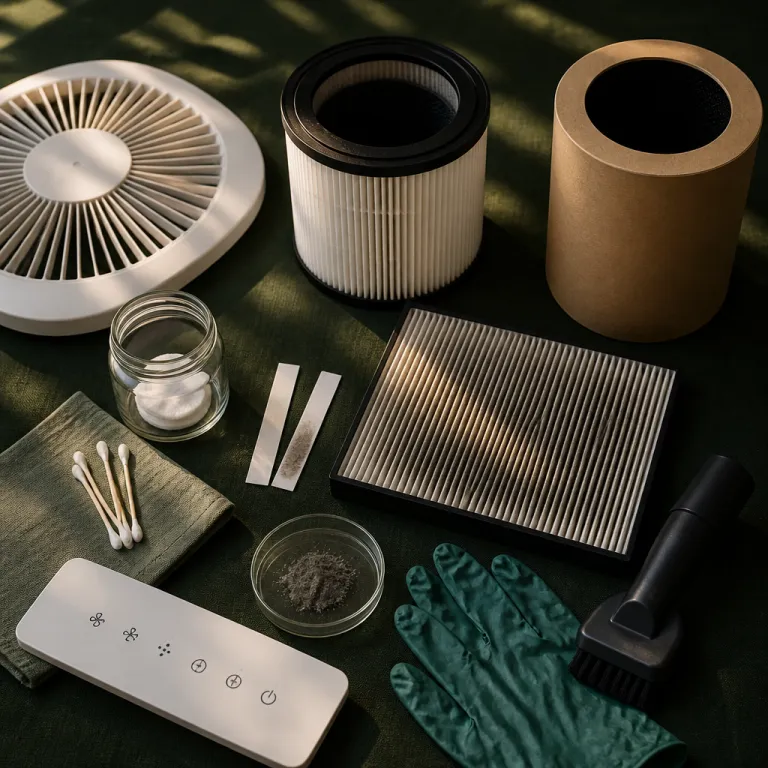
The first practical mid year air purifier filter check is the white paper test, which helps you judge how much dust and soot your hepa filter has captured. Switch off the air purifier, open the housing and gently slide out the hepa filter cartridge without shaking it, then press a clean sheet of white printer paper against the air facing side and swipe lightly across the surface. When you compare that paper to a fresh sheet or to a new air filter, a dark grey smear or visible particles indicate that the filter media is heavily loaded and likely needs replacement soon.
If the paper stays almost as clean as a new sheet, your hepa filters may still have usable lifespan even if the replace filter light has already come on, which can save you a filter replacement that costs a significant price in USD for each set. This simple test works across different merv ratings and brands of air filters, because it relies on the visible accumulation of dust and particles rather than a theoretical time estimate. For allergy sufferers who run multiple air purifiers in bedrooms and living rooms, repeating the paper test on all purifier filters every few months gives a clearer picture of which rooms are hardest on indoor air and which filters air the most pollution.
The second mid year check focuses on the carbon filters that handle odours and gases, and here the sniff test outperforms any indicator light. After removing the carbon filter from the purifier, hold it close and take a short, careful sniff to gauge whether it still has that faint “new carbon” smell, which often resembles a neutral, slightly dusty scent. When the carbon layer has fully adsorbed cooking fumes, smoke and volatile organic compounds, it tends to lose that characteristic odour and may even smell stale, signalling that it is time to replace the purifier filter even if the hepa stage still looks relatively clean.
Using odour tests to time carbon replacement
Because carbon filters target gases rather than visible particles, you cannot rely on the paper test alone to judge their condition. In a home affected by wildfire smoke or a smoker, the carbon stage often reaches saturation after only three or four months, while the hepa filter behind it may still have acceptable airflow and particle capture, so a combined paper and sniff routine gives a more accurate mid year air purifier filter check. If you notice that cooking smells or pet odours linger longer in your indoor air even with the air purifier running, that is another sign that a carbon replacement is overdue.
When planning a filter change schedule, remember that many manufacturers sell combined packs where the hepa filter and carbon filters are fused into a single purifier filter, which forces you to replace both stages at once. In those cases, the sniff test still helps you decide whether to change air earlier than the indicator suggests, especially before wildfire season when demand spikes and the price in USD for compatible filter replacement kits often climbs. For models with separate pre filters, hepa layers and carbon cartridges, you can stagger replacement to match each component’s real filter lifespan and avoid unnecessary waste.
If you use a connected or smart air purifier, log your paper and sniff test results in the app notes or a simple spreadsheet so you can correlate them with runtime and seasonal changes. Over a year or two, patterns emerge that show how many months your specific indoor air conditions allow each type of air filter to last, which is far more useful than a generic six to twelve month guideline. This evidence based approach turns maintenance from guesswork into a personalised plan that protects both your lungs and your budget.
Linking to detailed replacement guides
Some brands require particular steps for safe filter replacement, especially when handling tightly packed hepa media and delicate carbon layers. If you own a Clorox model, for example, you can follow a dedicated guide on how to handle Clorox air purifier filter replacement for better air quality to avoid damaging the housing or compromising the seal. Combining such brand specific instructions with your mid year paper and sniff tests ensures that every change air operation restores clean air performance instead of introducing leaks or gaps.
Test 3 and what not to do: match test, washing myths and pre filters
The third mid year air purifier filter check is the match test, which evaluates how quickly your purifier clears odours from indoor air. Light a match or unscented candle about one metre from the air purifier, let it burn for a few seconds, then blow it out and immediately switch the purifier to a higher fan speed while you start a timer. In a bedroom with a correctly sized air purifier and reasonably fresh filters, the smoky smell should fade noticeably within a couple of minutes and almost vanish within five to ten minutes, depending on room size and baseline air quality.
If the odour lingers much longer despite strong airflow, your hepa filter or carbon filters may be too saturated to capture fine particles and gases efficiently, even if the replace filter light has not yet activated. Repeat the match test after a filter change and you will often notice a sharper improvement in how quickly the air smells clean, which confirms that the previous purifier filter had reached the end of its practical lifespan. This simple weekend experiment gives allergy sufferers a tangible way to connect maintenance actions with real improvements in indoor air, rather than relying solely on abstract specifications like merv ratings or cubic metres per hour.
One practice that consistently misleads consumers is washing or vacuuming a hepa filter that was not explicitly designed as washable. The dense fibres that give a hepa filter its ability to trap microscopic particles can break or shift when exposed to water or aggressive suction, which reduces filtration efficiency even if the filter looks clean on the surface. Manufacturers sometimes market “washable” hepa filters, but repeated washing still tends to shorten their filter lifespan compared with regular, dry replacement filters, so it is safer to budget for periodic replacement than to gamble with your lungs.
Respecting pre filters and safe cleaning routines
Where you should focus your cleaning energy is on the pre filters that sit in front of the main hepa stage and catch larger dust, hair and lint. These pre filters are often washable or vacuum safe, and rinsing or gently vacuuming them every two weeks can significantly extend the life of the hepa filter behind them by preventing coarse particles from clogging the fine media. For a person with allergies, keeping pre filters clean also reduces the amount of dust that gets stirred up when you open the purifier housing for maintenance, which helps keep indoor air calmer during the process.
When cleaning pre filters, use lukewarm water and mild soap if the manual allows, then let them dry completely before reinstalling to avoid mould growth inside the air purifier. Never use harsh chemicals or scented detergents, because residues can off gas into indoor air and undermine your goal of clean air, especially in a small bedroom where you sleep for many hours. A consistent routine that pairs gentle pre filter cleaning with periodic hepa and carbon filter change events gives you the best balance between performance, cost and health.
What to do with used filters
Used air filters are loaded with particles, allergens and sometimes smoke residues, so tossing them loosely into household trash can release some of that material back into the air. Many manufacturers now offer guidance on recycling or safe disposal, and some municipal programmes accept certain types of furnace and purifier filters through dedicated waste streams, so it is worth checking your local options. For a deeper look at these practices, you can read a detailed explainer on whether you can recycle furnace filters and what you need to know, then apply the same principles to your air purifier cartridges.
Until you find a suitable recycling route, seal used hepa filters and carbon filters in a sturdy bag before disposal to limit dust escape, especially if someone in the home has asthma or severe allergies. Handle the purifier filter gently to avoid shaking loose particles, and wash your hands afterwards as a basic maintenance hygiene step. Treating used filters as contaminated items rather than ordinary trash reinforces the idea that they have been doing an important job for your indoor air, and that they deserve careful handling at the end of their lifespan.
Planning ahead: timing, budgets and wildfire season for smart air care
Once you have run the three mid year tests, you can turn the results into a practical maintenance calendar that fits your home and budget. Note how many months each hepa filter and carbon stage lasted before failing the paper, sniff or match tests, then average those durations across your different air purifiers to estimate a realistic filter lifespan for your conditions. This personalised data is far more reliable than a generic six to twelve month claim, and it helps you avoid both premature replacement and late filter change that silently erodes air quality.
For households in regions affected by wildfires, planning becomes even more critical because smoke can keep indoor PM2.5 levels elevated for weeks after the visible haze disappears, which means your air purifier works harder and its filters saturate faster. A detailed analysis on what your purifier should be doing during and after wildfire events, available at a guide on indoor PM2.5 after wildfires, shows why pre ordering replacement filters two or three weeks before peak season is wise. When demand spikes, compatible purifier filters often sell out or climb sharply in price in USD, so early planning protects both your lungs and your wallet.
Budgeting for filter replacement also means comparing the long term cost of different air purifiers, not just the purchase price of the machine. A model with cheaper air filters that need changing every three months may cost more over five years than a unit with higher price in USD per purifier filter but a longer, proven lifespan confirmed by your mid year tests. For an allergy sufferer who relies on clean air every night, it is worth calculating the annual cost per square metre of treated indoor air rather than focusing only on the sticker price.
Choosing filters and purifiers with real performance in mind
When selecting replacement filters, look for clear specifications such as hepa H13 or a high merv rating that matches your allergy needs, rather than vague claims about “advanced filtration”. Genuine hepa filters capture at least 99.95 percent of particles in the most penetrating size range, which includes many allergens, while well designed carbon filters target odours and gases that standard particle media cannot handle. Matching the right combination of hepa filter, carbon layer and pre filters to your indoor air challenges ensures that each filter change delivers a measurable improvement in symptoms.
Smart air purifiers with particle sensors and air quality indicators can help you see how quickly the unit reduces pollution spikes after cooking, cleaning or opening windows, but they still benefit from the mid year paper, sniff and match tests. If you notice that the sensor takes longer to return indoor air quality to a “good” level, or that the fan runs on high more often, those are behavioural clues that your filters air less efficiently than before. Combining digital feedback with hands on checks gives you a robust, trustworthy picture of how well your air purifier and its filters are protecting your health.
For many readers, the most empowering shift is to treat the mid year air purifier filter check as a standing appointment, much like a dental cleaning or seasonal tyre change. Set a reminder in your calendar for early June, gather a few sheets of white paper, a small timer and your notes from previous checks, then walk through each bedroom and living area where an air purifier runs. In less than an hour, you can make informed decisions about which filters to replace, which to keep and when to order the next set, ensuring that clean air remains a quiet, reliable ally against allergies all year long.
FAQ
How often should I replace my hepa filter if I have allergies?
For most allergy sufferers, a hepa filter in a bedroom air purifier needs replacement every six to twelve months, but real world conditions can shorten that interval. Homes with pets, heavy traffic pollution or wildfire smoke often push the practical filter lifespan down to four to six months. Using the mid year paper and match tests helps you decide whether your specific indoor air requires more frequent filter change than the manual suggests.
Is it safe to vacuum or wash a non washable hepa filter?
Vacuuming or washing a hepa filter that is not explicitly labelled washable is not recommended, because it can damage the fine fibres that trap particles. Even if the filter looks cleaner afterward, its ability to capture tiny allergens may be permanently reduced. It is safer to clean only the pre filters and then replace the hepa stage according to your mid year test results.
Do I need to replace carbon filters as often as hepa filters?
Carbon filters usually saturate faster than hepa filters in homes with strong odours, smoke or cooking fumes, sometimes in as little as three to four months. Because they target gases rather than visible dust, you should rely on the sniff test and lingering odours to judge when to replace them. If your model uses a combined hepa and carbon purifier filter, you will need to change both stages together when the carbon layer is exhausted.
Why does my filter indicator light come on even when the filter looks clean?
The replace filter light on most air purifiers is triggered by a runtime counter, not by a sensor that measures dust or particles in the filter. That means it may activate after a fixed number of hours even if your indoor air has been relatively clean and the filter still has capacity. Use the paper and match tests to decide whether to follow the light immediately or safely extend the filter’s use for a few more months.
How can I reduce the long term cost of air purifier filters?
To lower long term costs, keep pre filters clean so they protect the main hepa stage, and avoid running the purifier on maximum speed longer than necessary. Plan purchases ahead of wildfire or pollen seasons, when demand can raise the price in USD for replacement packs. Finally, track how many months each filter actually lasts in your home so you can choose future air purifiers with the best balance between filter lifespan, air quality performance and ongoing maintenance expenses.