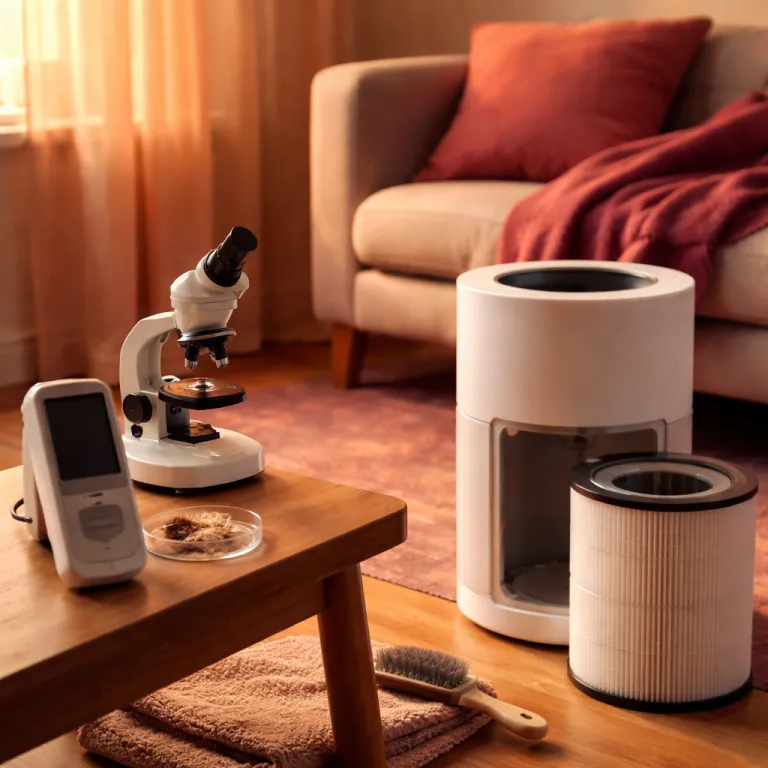
Why cat dander demands a different air purifier strategy
Cat owners often buy the same air purifier that works for dogs, then wonder why their pet allergies barely improve. Fel d 1, the dominant cat allergen, is carried on tiny skin flakes and saliva residues that typically behave like particles in roughly the 1–10 micrometre range, so this fine dander can stay suspended in the air for many hours in a closed room while larger dog particles settle much faster. Published measurements place most airborne Fel d 1 in the respirable fraction below 10 µm, with a substantial share in the 1–5 µm band, which explains why it lingers so stubbornly in indoor air. For anyone comparing a cat allergy air purifier with a generic pet air cleaner, that single difference should immediately change what you look for in filters, clean air delivery and fan speed. (For technical background, see summaries from the American Academy of Allergy, Asthma & Immunology and AHAM guidance on air cleaner testing.)
Because cat dander remains airborne for so long, the air purifier must process a high volume of air, not just rely on a good HEPA filter. You should target at least four to five air changes per hour (ACH) in rooms where pets sleep, which usually means choosing air purifiers with higher CADR and CFM ratings than you would for dogs. CADR (Clean Air Delivery Rate, as used in AHAM testing) combines filtration efficiency with airflow, while CFM simply measures how many cubic feet of air move through the machine each minute. When you read full specifications, focus less on marketing claims like “best air for pets” and more on hard numbers such as CFM, room size at that CFM, and the noise level at the fan speed you will actually use every day.
True HEPA filters in the H13 class are tested to capture 99.95 percent of the most penetrating particle size under EN 1822, while AHAM and many manufacturers quote 99.97 percent at 0.3 micrometres as a benchmark. That 0.3 µm figure is a worst‑case test point, not a hard cut‑off, so a properly sealed H13 HEPA cartridge will also trap both cat and dog pet dander effectively across a wide size range. The difference is that with cats you need the air purifier to pull that allergen‑laden air through the HEPA media many more times per hour, otherwise the particles simply keep circulating. For multi‑pet owners, that means prioritising a purifier with strong airflow, a sealed HEPA filter plus carbon filter combination, and smart features like auto mode that react to changing air quality rather than a basic low speed fan that rarely moves enough air.
How to read specifications for cat focused HEPA purifiers
Specification sheets for air purifiers can feel like alphabet soup, yet for pet owners they hide crucial clues. When you compare a cat dander HEPA purifier with other models, start with CADR/CFM, which tells you how much clean air the purifier can deliver for smoke, dust and pollen. CADR reflects both filtration performance and airflow, while the raw CFM number only shows how fast air moves. A higher CADR at medium speed usually means better real world air quality, because you are more likely to run that speed continuously without being disturbed by the noise level.
Room size claims are often based on maximum fan speed, which few people tolerate for long because of sound and energy use. For a home with one or more pets, calculate the real coverage at the medium speed you can live with, then check whether that still gives you four to five air changes per hour in bedrooms and three to four in living rooms. As a worked example, a 12 × 15 ft bedroom with an 8 ft ceiling has a volume of 1,440 cubic feet; if your purifier delivers 200 CFM on medium, it will provide (200 × 60) ÷ 1,440 ≈ 8.3 ACH, which comfortably exceeds the cat‑focused target. If the numbers do not add up, you either need a larger air purifier, two smaller purifiers, or a different layout that lets clean air circulate more freely around pet beds and soft furnishings that trap hair and dander.
Filter design matters as much as raw power, especially when pet hair is involved. Look for a washable pre filter or at least a sturdy pre filter layer that catches hair and larger dust before it reaches the main HEPA filter and activated carbon section, because this extends filter life and keeps the price of ownership under control. For a deeper technical comparison of a multi stage system that combines H13 HEPA, carbon and real time air quality monitoring, you can examine this detailed test of a four filter nursery air purifier with PM2.5 display and then map similar features to models sized for adult bedrooms.
Filters, carbon and pre filters that actually help with cats
For a cat dander HEPA setup to work, every filter stage must play its role. The pre filter, ideally a washable pre filter, should trap visible pet hair, fluff and larger dust so that the finer HEPA filter can focus on microscopic pet dander and other allergens. When pre filters clog quickly because of multiple pets, airflow drops, CFM falls and the purifier quietly stops delivering the best air for your lungs even though the power light still glows.
The HEPA filter is the heart of the system, and for cat owners a sealed H13 or better cartridge is worth the higher price. These filters capture the full size range of Fel d 1 and Can f 1, but the purifier must push enough air through them at a suitable speed to keep indoor air quality stable throughout the day. If you only run the air purifier on low speed for a few hours, the concentration of pet dander in the room will rebound quickly once the fan stops and your pets start moving again.
Odors from litter boxes, wet fur and general pet air issues require a separate carbon filter layer. Look for a decent mass of activated carbon rather than a thin perfumed sheet, because real carbon adsorbs volatile organic compounds and ammonia that cause persistent pet odors. For an example of how washable filters, fragrance options and an air quality sensor can be combined in a large room purifier, you can study this independent test of an air purifier for bedrooms with washable filters and PM2.5 display and then adapt the same logic to your own space and sensitivity.
Real world setup for homes with cats, dogs or both
Life with pets is messy, and no air purifier can change that, but the right setup can make breathing much easier. In a home with one cat and one dog, for example, you might place a high CFM cat allergy HEPA unit in the bedroom and a slightly lower powered purifier in the living room where pet hair accumulates on sofas. Running both purifiers on medium speed around the clock often gives a better balance of clean air and acceptable noise level than blasting a single device on turbo for short bursts.
Smart features such as auto mode and air quality sensors can help, but they are not magic. Auto mode usually reacts to larger particles and some gases, so it may not always respond quickly enough to the fine pet dander that triggers allergies, especially from cats. Many pet owners therefore choose a fixed fan speed that maintains steady air quality, then use smart features mainly for monitoring and scheduling rather than trusting them to manage every spike in allergens.
Maintenance is where theory meets reality, particularly in multi pet households. A washable pre filter makes weekly cleaning faster, because you can vacuum or rinse away pet hair and dust without touching the main HEPA filter or carbon filter each time. To keep performance consistent, set a reminder to check filters monthly, read full maintenance instructions from the manufacturer, and budget for replacement filters in the total price of ownership rather than treating them as an afterthought.
Choosing between brands, budgets and noise constraints
Brand names can be helpful shortcuts, but they should never replace careful reading of specifications when you are dealing with cat dander. A popular example is Levoit, which offers compact air purifiers that many pet owners like for their low noise level and reasonable price, yet not every Levoit air purifier has the airflow or filter depth needed for severe pet allergies. When you compare Levoit purifiers with other brands, focus on whether the HEPA filter is truly H13, how substantial the activated carbon layer is, and what CFM you get at the fan speed you can tolerate overnight.
Budget constraints are real, so it helps to prioritise features that matter most for cat households. First, pay for a strong core filtration system with a pre filter, a true HEPA filter and a proper carbon filter, then consider extras like smart features, displays and app control only if money remains. A smaller but more powerful purifier placed close to the bed can sometimes deliver cleaner pet air than a large but weak unit in the corner of a big room, especially when cat dander is your main trigger.
Noise is the final trade off, because the best air cleaning happens when purifiers run continuously. Look for models where the medium speed offers a good balance of CFM and acceptable sound, and check independent tests rather than relying solely on marketing claims of “whisper quiet” performance. For a different perspective on how ultra quiet operation, pre filters and activated carbon can be combined in a large coverage unit, you can consult this thorough test of an ultra quiet home air purifier with pre filter and activated carbon and then apply the same evaluation criteria to any model you are considering for your own pets.
FAQ
Do I really need a HEPA purifier if I am only allergic to cats ?
If your symptoms are clearly linked to cats, a true HEPA purifier is one of the most effective tools you can add at home. Fel d 1 particles are small enough to stay airborne for many hours, so only a dense HEPA filter with a strong fan can reliably remove them from the air. Basic filters or ionisers may reduce dust, but they rarely deliver the consistent clean air that sensitive cat owners need.
How many air changes per hour should I target with cats and dogs ?
For homes with cats, aim for at least four to five air changes per hour in bedrooms and main living areas. Dog allergens are larger and settle faster, so three to four air changes per hour can be enough if dogs are your only pets. When both pets share the same rooms, use the higher cat based target and size your air purifiers accordingly.
Will a purifier remove all pet odors from litter boxes and wet fur ?
A good air purifier with a substantial activated carbon filter can significantly reduce pet odors, but it will not replace basic hygiene. You still need to clean litter boxes frequently, wash pet bedding and manage any moisture problems that amplify smells. Think of the purifier as a support tool that polishes overall air quality rather than a complete solution to every odor source.
How often should I replace filters in a home with multiple pets ?
In multi pet homes, filters usually need changing more often than the generic schedule printed in manuals. Check the pre filter every week, vacuum or wash it as recommended, and inspect the HEPA filter and carbon filter monthly for visible dust or lingering odors. When airflow drops, noise changes or smells persist despite cleaning, it is usually time to replace filters even if the calendar suggests you could wait longer.
Can an air purifier replace allergy medication or medical treatment ?
An air purifier can reduce exposure to pet dander and improve comfort, but it is not a medical treatment. People with moderate to severe pet allergies should discuss their symptoms with an allergist, especially if they have asthma or frequent respiratory infections. The most effective long term plans usually combine environmental control, medical advice and realistic expectations about what technology can and cannot do.