How to size CADR, air changes, and fan speed for a medium room
Choosing the right CADR for a medium room starts with simple maths. Measure the length, width, and height of your room in metres, multiply them to get volume, then match that volume to an air purifier whose CADR and air delivery rate can provide at least four air changes per hour. For example, a 25 square metre room with a 2.5 metre ceiling has a volume of 62.5 m³, so you would want an air purifier with a CADR around 250 m³/h to reach four changes per hour comfortably.
Manufacturers sometimes quote cadr cfm instead of cubic metres per hour, so you may see a figure like 150 cfm on a box. To compare models fairly, convert that cadr cfm value by multiplying by 1.7, which gives roughly 255 m³/h and shows whether the purifier can handle your room volume at a reasonable fan speed. When you compare several air purifiers, check both the CADR and the claimed air changes per hour, because some brands oversize the room recommendation while assuming you will always run the purifier at maximum mode, which is rarely realistic in a living room or bedroom.
Fan speed settings and mode options influence how often you will actually reach the rated air changes. Turbo mode usually delivers the full rate CADR but also the highest noise level, while a medium mode often provides a good compromise between clean air and comfort. If you need whole home coverage rather than a single medium room, a central system or a larger unit designed for multiple rooms, such as those compared in this guide to top air purifiers for whole house coverage, may offer better long term air quality and lower overall energy consumption.
Filters, particles, and gases: understanding HEPA and carbon in practice
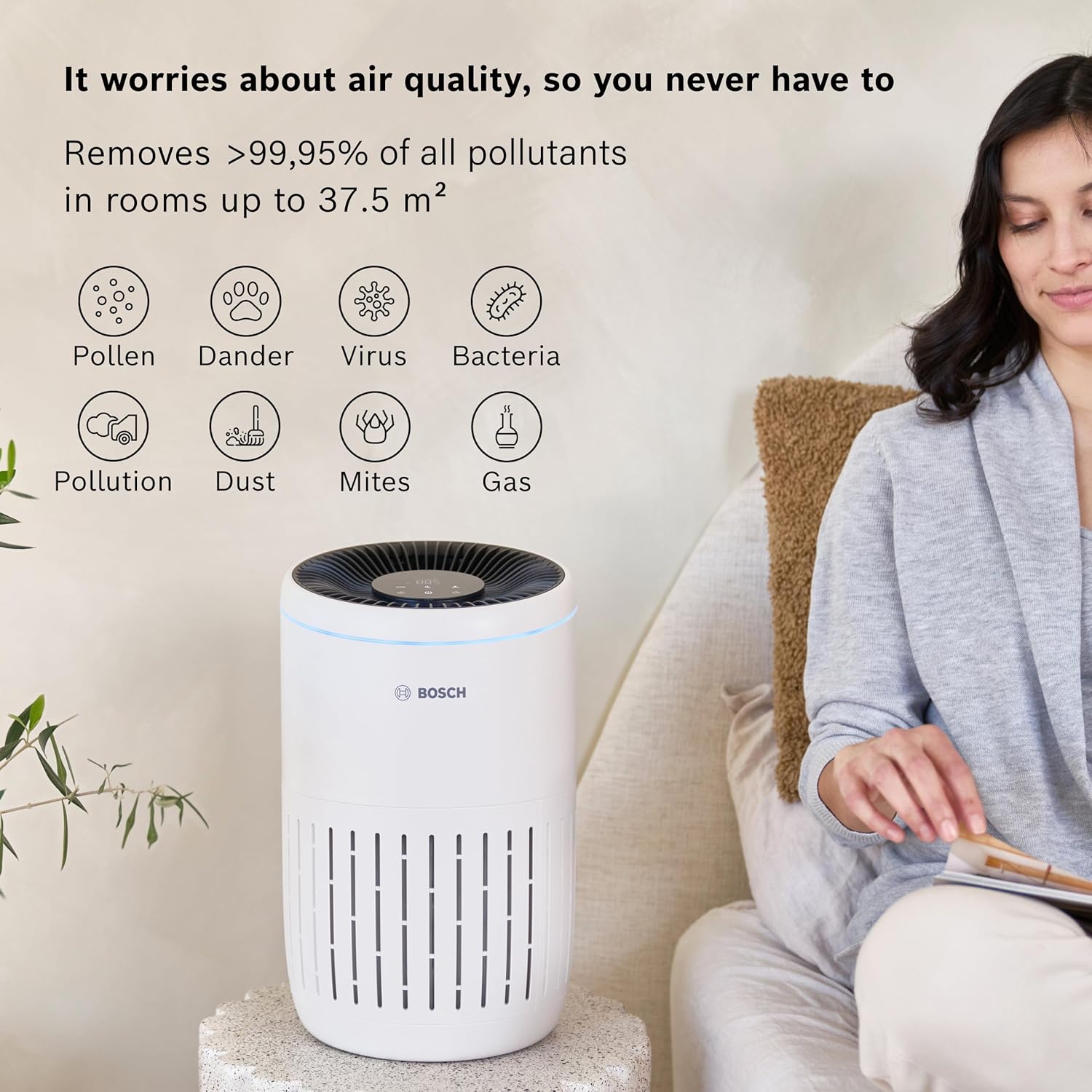
Filtration is where an air purifier earns its place in your room. A true HEPA filter is engineered to capture fine particles such as PM2.5, pet dander, and some bacteria, while a cheaper generic hepa filter may not meet the same strict standard for particle removal. When you compare the best air purifiers for medium rooms, always check whether the specification clearly states true HEPA and whether the filter is sealed around the frame to prevent dirty air bypassing the media.
Most modern air purifiers combine several filter layers, starting with a pre filter that catches hair, lint, and larger dust before it reaches the main hepa filter. Behind that, a dense activated carbon filter or carbon pellet bed targets gases and odours from cooking, smoke, and traffic pollution, which a particle filter alone cannot remove from the air. Some brands use a thin carbon coated sheet to save cost, but for a medium room with regular cooking or smoking nearby, a thicker activated carbon layer will provide better air quality and longer lasting odour control.
Real world tests, including any independent video review, often reveal how these filters perform beyond the marketing claims. For example, when reviewers test a levoit air purifier or similar purifiers in a 25 square metre room, they usually track how quickly PM2.5 particles drop and how long the carbon filter continues to neutralise smells. If you want a concrete benchmark, look at models tested with a PM2.5 monitor and auto mode, such as the unit examined in this detailed home and bedroom air purifier test, where the combination of a washable pre filter, a sealed HEPA filter, and a substantial carbon filter is evaluated under controlled conditions.
Noise, dBA ratings, and comfort in everyday use
Noise is the factor that often decides whether an air purifier stays on or ends up unplugged. In a medium room used as a bedroom or home office, a constant fan sound above 40 dBA can feel intrusive, especially at night when background noise drops. That is why the best air purifiers for medium rooms publish detailed noise level data for each fan speed, not just a vague claim of quiet operation.
When you read specifications, look for a noise range such as 24 to 50 dBA, which usually means a near silent sleep mode and a clearly audible but tolerable high mode. Remember that a 10 dBA increase sounds roughly twice as loud to the human ear, so a purifier rated at 60 dBA on maximum speed will feel significantly louder than one that tops out at 50 dBA for a similar CADR. In practice, you will probably use auto mode or a medium mode most of the time, so pay close attention to the mid speed noise figures rather than only the extremes.
Some air purifiers use brushless DC motors and aerodynamic fan blades to reduce turbulence and noise while maintaining strong air delivery. A levoit air purifier, for instance, often combines a quiet sleep mode with a higher speed turbo mode, giving you flexibility to boost clean air when cooking or vacuuming, then drop back to a low noise level for relaxation. If you are sensitive to sound, try to find a showroom or rely on a detailed video review where the microphone captures real dBA levels at different distances, because written numbers alone do not always convey how a purifier will feel in your specific room.
Smart sensors, auto mode, and real air quality monitoring
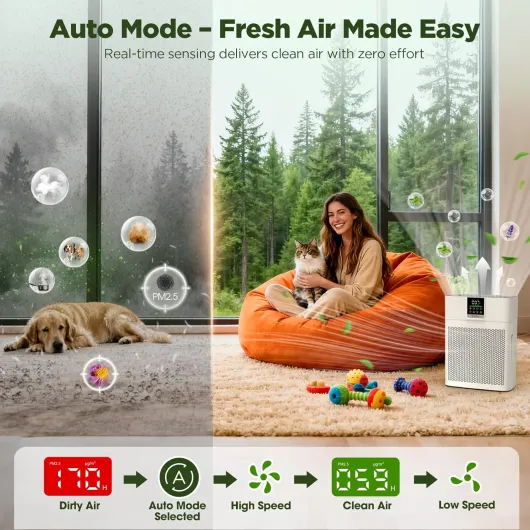
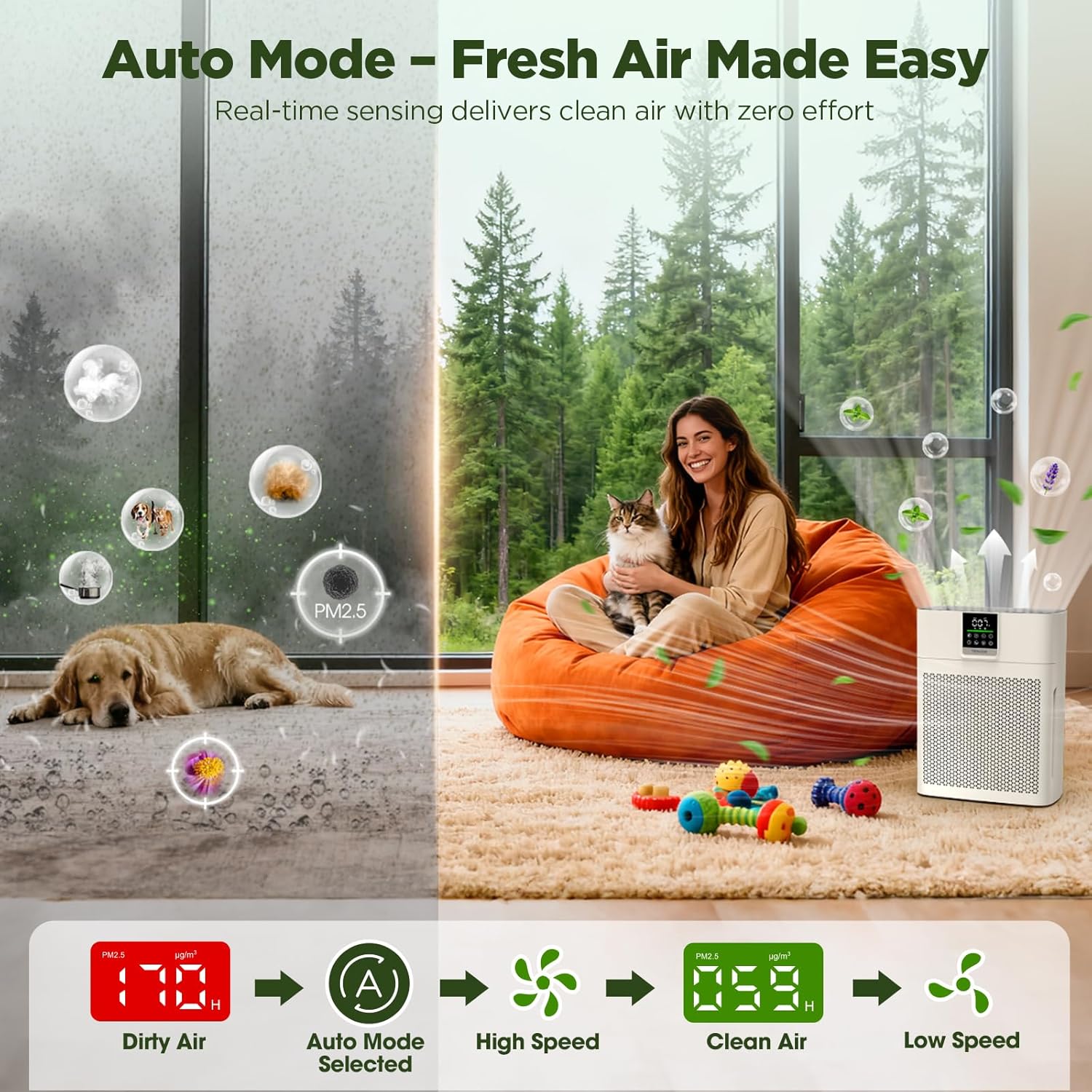
Modern air purifiers do more than push air through a filter. Many of the best air purifiers for medium rooms now include a quality sensor that measures particles, and sometimes gases, then adjusts fan speed automatically to maintain clean air. This auto mode can be especially useful in a living room or nursery, where you may forget to change settings as activities change hour by hour.
A good quality sensor typically uses a laser or infrared particle counter to estimate PM2.5 levels in the air, then displays air quality on a colour ring or numeric screen. When pollution rises, the purifier increases fan speed to raise the air changes per hour until the sensor detects that particle removal has restored safe levels, then it drops back to a quieter mode to reduce noise and energy consumption. This dynamic control helps maintain a stable rate CADR in real conditions, rather than relying on a fixed manual setting that might be too low during cooking or too high when the room is already clean.
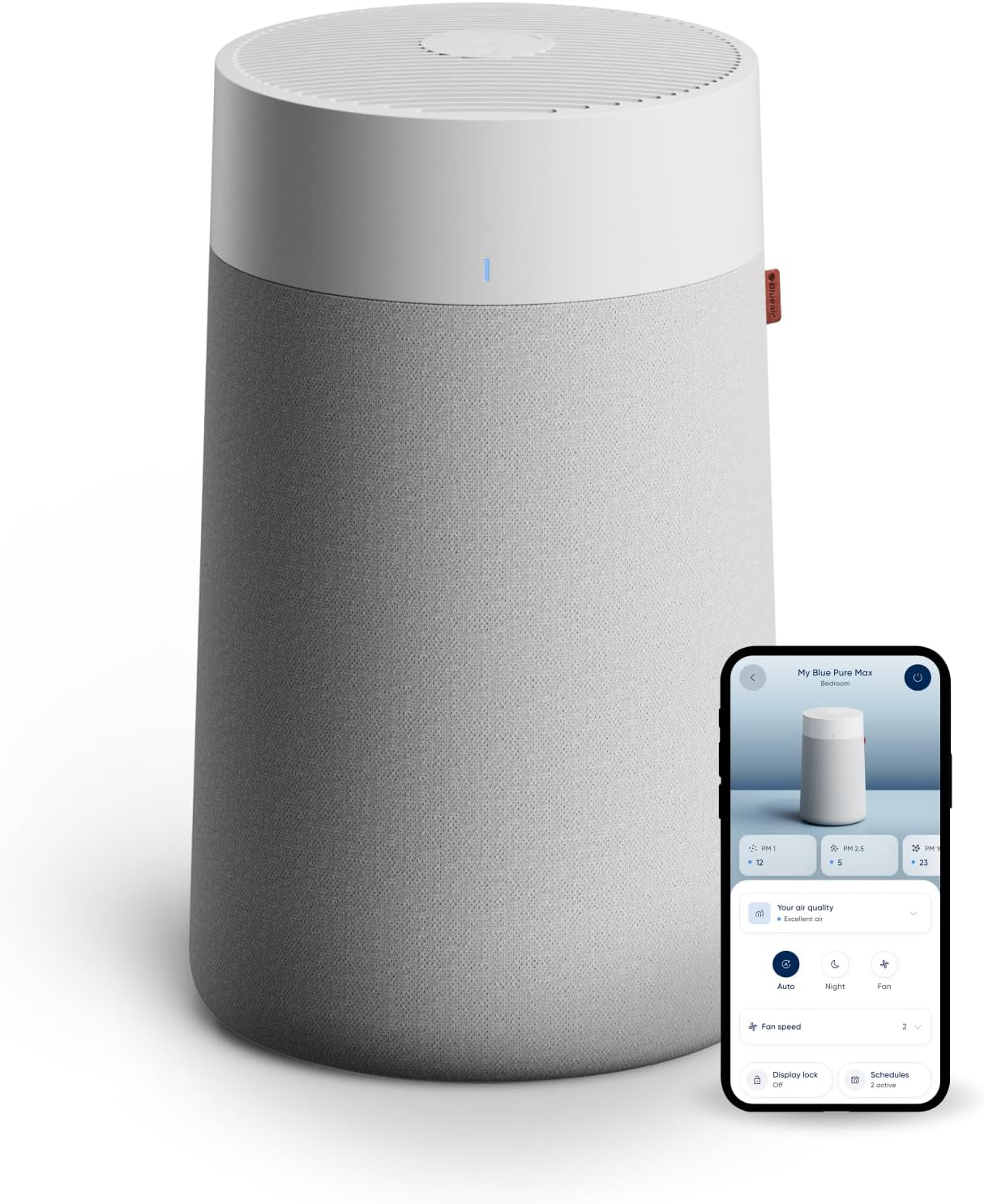
Some smart air purifiers also connect to mobile apps, allowing you to track historical air quality data and adjust mode remotely. While these features can be helpful, focus first on core performance metrics such as CADR, filter quality, and noise level, because a connected purifier with weak filtration will not protect your health. If you want to understand how certain technologies like ionisation or UV are sometimes oversold compared with solid HEPA and activated carbon systems, this in depth analysis of why the air purifier industry keeps overselling UV C and ionisation offers a useful perspective on what really matters for indoor air quality.
Energy consumption, running costs, and maintenance for medium rooms
Owning an air purifier is a long term commitment, not a one time purchase. In a medium room where the purifier may run for 12 to 16 hours per day, energy consumption and filter replacement costs quickly add up over the course of a year. A model with a modest 30 to 50 watt draw on medium speed can keep air quality high while limiting electricity use, whereas a less efficient design might double that consumption for the same air delivery.
When you compare the best air purifiers for medium rooms, look beyond the purchase price and calculate annual running costs. Check how often the hepa filter and carbon filter need replacement, how much each filter set costs, and whether the pre filter is washable or must be replaced regularly, because a washable pre filter can extend the life of the main filters by trapping larger particles first. Some brands, including several levoit air purifiers and other compact purifiers, offer filter subscription plans that spread costs but still require careful budgeting if you run multiple units across several rooms.
Maintenance also affects performance, because a clogged filter reduces CADR and effective air changes per hour. Follow the manual to vacuum or wash the pre filter every few weeks, and replace the hepa filter and activated carbon filter on schedule to maintain strong particle removal and odour control. If you notice a drop in airflow, a rise in noise level at the same fan speed, or a persistent smell in the room, those are clear signs that your air purifier needs fresh filters to keep delivering clean air at the promised rate CADR.
Choosing between compact and powerful air purifiers for medium rooms
Medium rooms sit in an awkward middle ground between small bedrooms and large open plan spaces. A compact air purifier designed for a small room may look attractive and quiet, but its limited CADR and air delivery rate often mean it cannot provide enough air changes per hour in a 25 square metre living room. On the other hand, an oversized purifier with very high CADR might clean the air quickly but take up more floor space and generate more noise than you really need.
To strike the right balance, start by listing your priorities in order, such as clean air performance, low noise, compact footprint, and smart features. Then compare several air purifiers that meet your minimum CADR requirement, checking how each model handles particle removal, gas filtration with activated carbon, and real world noise level at the fan speed you will actually use most of the time. A levoit air purifier, for example, often offers a good compromise between size and power, while some larger purifiers from other brands focus on maximum CADR cfm for people with severe allergies who need very frequent air changes.
Think about how the purifier will fit into your daily routine in that specific room. If you mainly need quiet background cleaning while you work or sleep, a slightly lower CADR with excellent noise control and an effective auto mode may serve you better than the absolute highest rate CADR on the market. If you host frequent gatherings or live in a high pollution area, a more powerful air purifier with robust filters and a strong fan speed range will keep air quality high even when the number of people and particles in the room changes hour by hour.
Key statistics on air purifiers for medium rooms
- In laboratory tests by the Association of Home Appliance Manufacturers, air purifiers with a CADR around 250 m³/h typically achieve four to five air changes per hour in a 25 square metre room with a 2.5 metre ceiling, which is considered an effective rate for allergy relief.
- Studies from the United States Environmental Protection Agency show that true HEPA filters can reduce indoor particulate matter by 50 to 80 percent in occupied homes, depending on room size and outdoor pollution levels, when operated continuously on an appropriate fan speed.
- Independent measurements of noise level indicate that many modern air purifiers operate around 24 to 30 dBA on their lowest mode, which is comparable to a quiet library and suitable for bedrooms, while high speed settings often reach 50 to 55 dBA, similar to normal conversation.
- Energy Star certified air purifiers use up to 40 percent less energy on average than standard models with similar CADR, which can save the equivalent of several dozen kilowatt hours per year when running a purifier in a medium room for 12 hours per day.
- Consumer testing organisations report that filter replacement costs over five years can exceed the original purchase price of an air purifier, especially for models with combined HEPA and activated carbon cartridges, making long term maintenance a critical factor in buying decisions.