
Summary
Editor's rating
Is it worth the money compared to cheaper purifiers?
Looks like an appliance, not decor – and you need space for it
Living with it 24/7: noise, sleep, and day-to-day annoyance level
Build quality, long-term use, and filter situation
How it actually performs in real life (allergies, pets, dust, smells)
What you actually get out of the box
Pros
- Noticeable improvement in allergy and dust symptoms after continuous use
- Strong sensor and fan combo that reacts quickly to cooking, dust, and smoke
- Simple physical controls, quiet on low/medium, and easy filter access and cleaning
Cons
- Loud and slightly whistly on top speed, not ideal right next to the bed on Auto
- Bulky design with significant depth, needs space away from walls
- Replacement filters add a recurring yearly cost and the manual is vague on some details

Specifications
View full product page →| Brand | Coway |
A purifier that finally feels worth plugging in
I’ve been running the Coway Airmega Mighty AP-1512HH pretty much non‑stop in my flat for a few weeks, mainly in the bedroom and living room. I bought it because my nose was constantly blocked at night, I’ve got mild dust allergies, and there’s a fair bit of traffic pollution where I live. I’d tried cheaper purifiers before and honestly never felt much difference. This is the first one where, after a day or two, the air actually felt less stuffy and I wasn’t waking up with that slightly sore throat every morning.
Setup was simple: pull the front cover off, unwrap the filters, slot them back in, plug it in, press Auto. That’s basically it. No app, no Wi‑Fi, no account nonsense. In practice, I kind of liked that. I didn’t want another thing nagging me with notifications; I just wanted cleaner air without having to babysit it. The air quality light and the fan speed changes give you enough feedback to see when it’s working harder.
The first thing I noticed was how quickly it reacts. Cooking, spraying deodorant, shaking out bedding – within seconds the light goes purple or red and the fan ramps up. On low and medium it’s very quiet, just a soft hum in the background. When it goes to high, though, it’s loud enough that you know about it. It’s not subtle, but you can literally hear it chewing through whatever’s in the air, and it usually settles back down fairly quickly.
Overall, my early impression was: this is not a fancy gadget, it’s a solid appliance. It’s not perfect – it’s bulky, filters aren’t cheap, and the top speed noise is pretty intense – but in day‑to‑day use it actually feels like it does something useful. If you’re expecting a tiny, whisper‑silent box you can hide behind a plant, this isn’t it. If you want a workhorse that you’ll mostly leave on Auto and forget, it’s much closer to that.
Is it worth the money compared to cheaper purifiers?
On price, the Coway Airmega Mighty sits in that middle zone: not bargain‑bin cheap, but not in the super‑premium bracket either. You’re paying for a well‑known model with a decent track record, proper HEPA filtration, and a sensor that actually reacts to what’s going on in your room. Compared to the random no‑name purifiers you see for half the price, this feels more like an appliance you’ll keep for years, not something you’ll replace after a season because it’s noisy or weak.
You do have to factor in ongoing filter costs. Roughly a filter pack per year at around £40 (give or take) adds up over time. If you run it 24/7 like many people do, that’s still only a few pence a day for cleaner air, which seems reasonable if you actually feel the health benefits. If you’re super price‑sensitive and don’t have serious allergies or asthma, then a cheaper unit might feel “good enough” for you, even if it doesn’t perform at the same level.
Where I think the value shows is in real‑world results. For people in the reviews with asthma, pets, or renovation dust, this unit clearly made a noticeable difference. I had a similar experience: less morning congestion, less dust floating around, and faster clearing of cooking smells. If you compare that to saving, say, £80 on a weaker unit that just moves a bit of air but doesn’t really change how you feel, the Coway starts to look like the better deal over a couple of years.
So in terms of value, I’d call it good but not dirt cheap. You’re paying for consistent performance, a proven design, and relatively low hassle. If your budget is tight and your air issues are mild, it might feel like overkill. But if you’re actually suffering from allergies, pet dander, or constant dust, spending a bit more here makes sense, as long as you’re okay with the ongoing filter bill and can live with the occasional blast of noise on high.
Looks like an appliance, not decor – and you need space for it
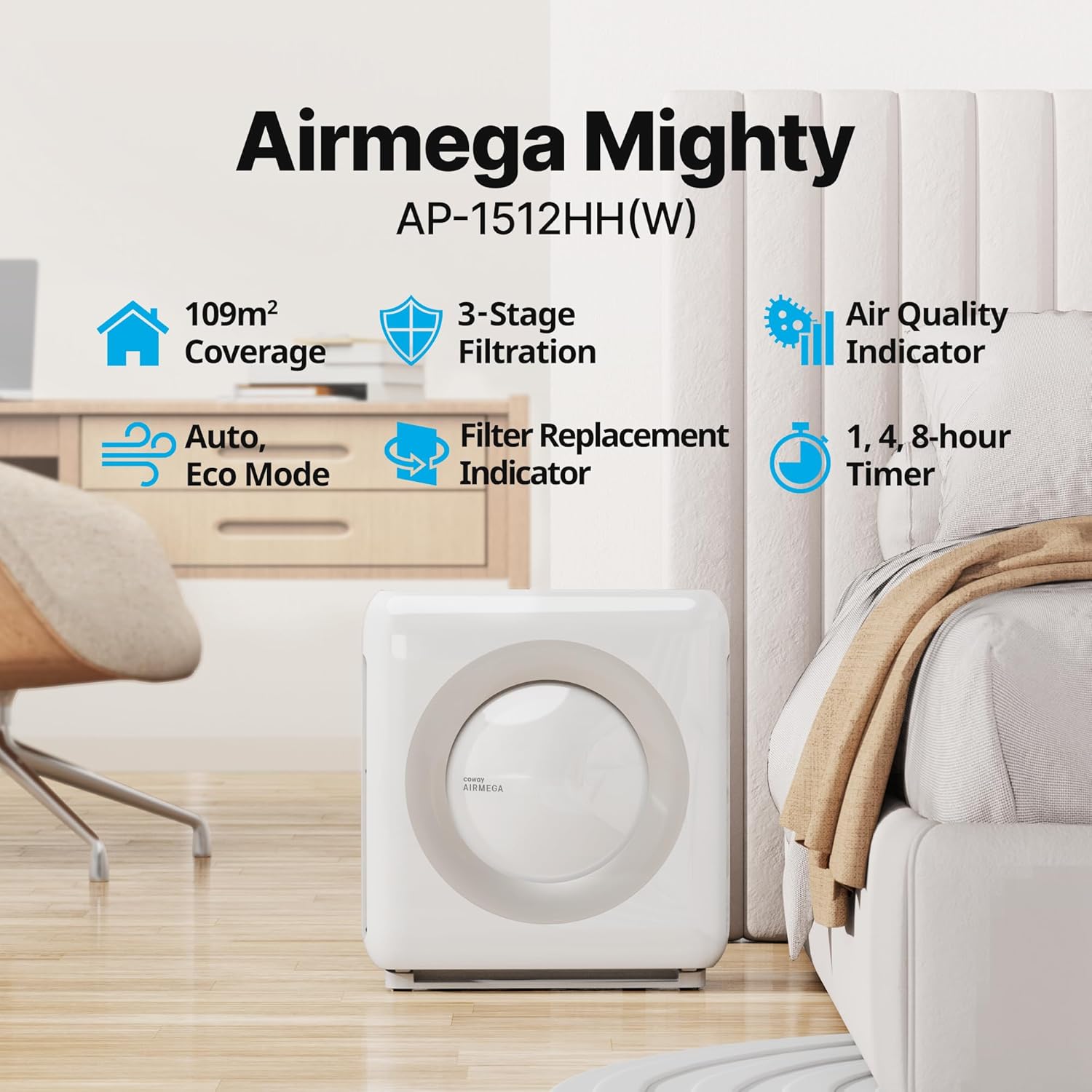
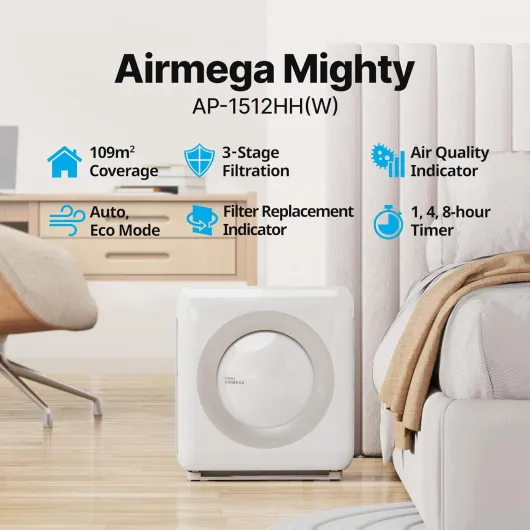
Design‑wise, this thing is not trying to be discreet. The white version I have is basically a glossy white box with a big circular detail in the middle. People joke that it looks like the front of a washing machine, and that’s pretty accurate. It’s not ugly, but it’s clearly a functional object, not something that blends into a minimalist living room. If you’re picky about aesthetics, you’ll probably position it in a corner and just accept that it’s there.
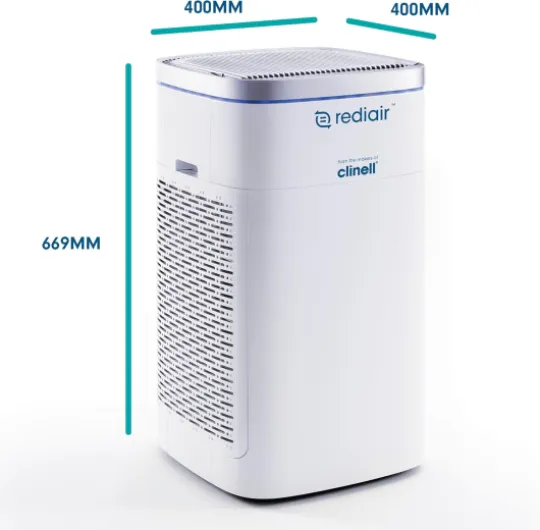
The footprint is bigger than it looks in photos. It’s not massively tall, but it’s quite deep front‑to‑back, and the air outlet sticks out at the back, so you can’t push it flush against a wall. You need to leave breathing room around it anyway for airflow, so plan on it sitting a bit into the room. In a small bedroom or tiny flat, you definitely notice it. In my case, I had to shuffle a side table to give it enough space.
On the positive side, the layout is practical. The front cover pops off easily for filter access, and there’s a built‑in carry handle at the top that makes it simple to move between rooms. At around 7.5 kg, it’s not feather‑light, but it’s manageable to carry with one hand. The top buttons are easy to reach, and the air quality light is front‑facing, so you can see it from across the room. You can also turn that light off if it bothers you at night, which is a small but important detail.
My main complaint on the design side is dust build‑up on the intake grille and the slightly awkward cleaning there. Dust tends to cling to the plastic pattern, and getting it spotless means either fiddling around with a cloth or, like some people mentioned, unscrewing parts you’re clearly not meant to remove regularly. That, plus the bulky depth, are the two design annoyances. Overall, though, it feels like a practical, no‑nonsense design: not pretty, but built around airflow and ease of use more than looks.
Living with it 24/7: noise, sleep, and day-to-day annoyance level
From a comfort point of view, this purifier is mostly easy to live with, as long as you understand its noise behaviour. On low, it’s quiet enough that I forget it’s running, even at night. It’s more like a gentle fan sound than anything else. On medium, you notice it, but it’s still fine for watching TV or working. The issue is high speed: when the air quality drops and it ramps up, it can sound like a small jet engine for a few minutes. If that happens in the middle of the night in a bedroom, it will probably wake light sleepers.
Personally, I keep it on Auto in the bedroom during the day and switch to a fixed low speed at night if I want peace and quiet. That way, it doesn’t suddenly jump to high if the sensor gets triggered by something small. You lose a bit of the automatic response, but you gain predictable noise. In the living room, I leave it on Auto and don’t care if it kicks up to high for a bit during cooking or cleaning; I actually like hearing it respond because it reminds me it’s doing something.
Another comfort detail is the air quality light. It’s bright enough to be distracting in a dark room, especially if it’s glowing purple or red. Luckily, you can hold a button to switch the light off while keeping the purifier running. That’s important in a bedroom; otherwise it’s like having a small night light you didn’t ask for. Once I turned the light off at night and locked the fan to low, it stopped bothering my sleep.
In terms of general annoyance: there’s no app nagging you, no beeps every five minutes, and the buttons are simple. The only regular interaction is cleaning the pre‑filter every few weeks, which is basically pulling it out, giving it a vacuum or rinse, and popping it back in. So in daily life, the comfort is decent: quiet enough most of the time, predictable once you learn its quirks, and not much maintenance beyond the occasional filter clean.
Build quality, long-term use, and filter situation
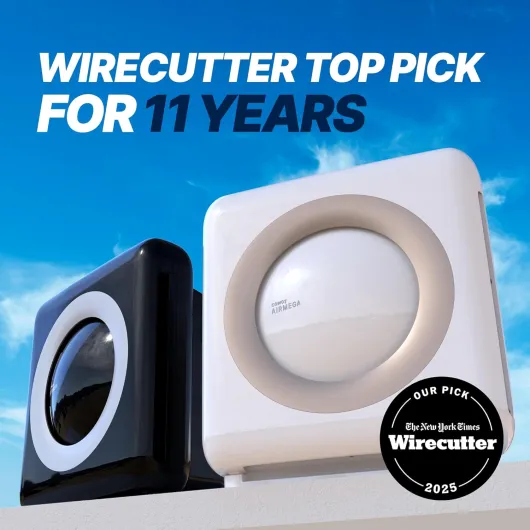
Build quality feels solid for a plastic appliance. Nothing on it feels flimsy or loose, and the front cover clips on and off with a clean snap. The buttons haven’t gone mushy, and the handle feels secure when you carry it around. A lot of people online mention running this model 24/7 for years, which lines up with my impression that it’s built to sit in a corner and just keep going. It doesn’t feel like one of those cheap purifiers that rattles or vibrates after a month.
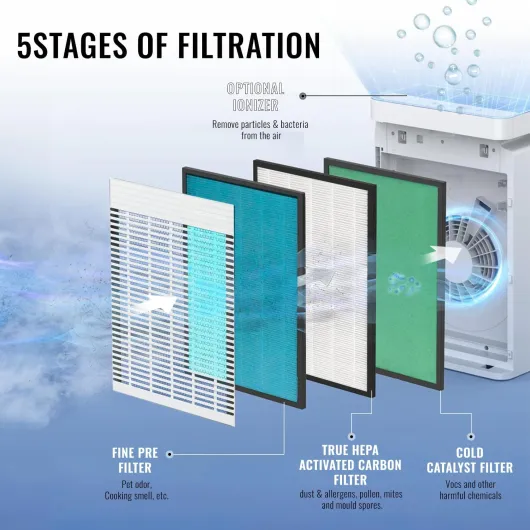
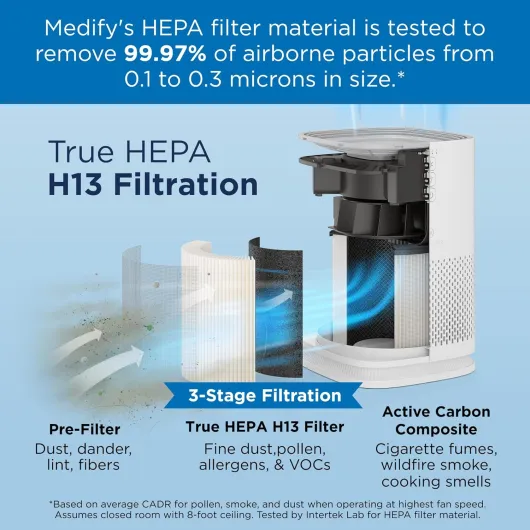
Where the long‑term story really matters is filters and maintenance. You’ve got a washable pre‑filter that catches the big stuff (dust, hair, pet fur), and then the main HEPA and deodorisation filters behind it. The pre‑filter is easy to clean: I usually vacuum it and occasionally rinse it under the tap. Doing that regularly means the main filters don’t clog as fast. Coway says the main filters can last up to about a year, depending on use. There’s a filter indicator based on actual runtime, not just a fixed calendar timer, which is a nice touch.
The downside: genuine replacement filters are not cheap. Roughly speaking, you’re looking at something like £40 a year if you buy official ones, maybe more or less depending on where you are. That’s not crazy, but it’s not pocket change either. There are cheaper third‑party options, but personally I’m wary of cutting corners on the main thing that actually cleans the air. A badly made HEPA filter kind of defeats the point of buying a decent purifier in the first place.
One small durability gripe is that cleaning the intake grille properly can tempt you to start taking parts apart. There’s a small magnet in there that detects if the cover is on, and if you’re not careful you can knock it loose when disassembling. It’s not a deal‑breaker, but it shows that some bits weren’t really designed for regular user tinkering. Overall, though, I’d rate durability as pretty solid for the price: good plastic quality, no weird noises or rattles over time, and a filter system that’s easy to maintain if you’re willing to spend a bit each year.
How it actually performs in real life (allergies, pets, dust, smells)
In day‑to‑day use, the performance is the main reason to buy this thing. I noticed a real difference with allergies and general stuffiness after running it almost constantly. The first week, I left it on Auto in the bedroom 24/7. Within a couple of nights, I was waking up with less congestion and fewer sneezing fits in the morning. That’s not scientific, but it lines up with what other reviewers say, especially people with asthma or pet allergies.
Where it really shows its strength is when something obviously dirty hits the air. Cooking, frying especially, pushes the light straight to red and the fan jumps to high within seconds. Same with changing bedding or opening a loft hatch – anything that stirs up dust. One reviewer mentioned vaping on the other side of the room and the sensor reacting immediately; I’ve seen similar with deodorant spray and cleaning products. The sensor isn’t just there for show; it actually responds quickly, and the high fan speed clears things out in a few minutes.
Noise is the trade‑off. On low, it’s very quiet, a soft hum that fades into the background. Medium is still ok for a living room or office. High is loud – more like a small fan at full blast, with a bit of a whooshing or even slight whistling tone depending on the unit. I wouldn’t sleep with it on high right next to my head. The good news is that in Auto, it doesn’t stay on high for long unless you’re constantly kicking up dust or cooking. For most of the day it sits on low or medium and you forget about it.
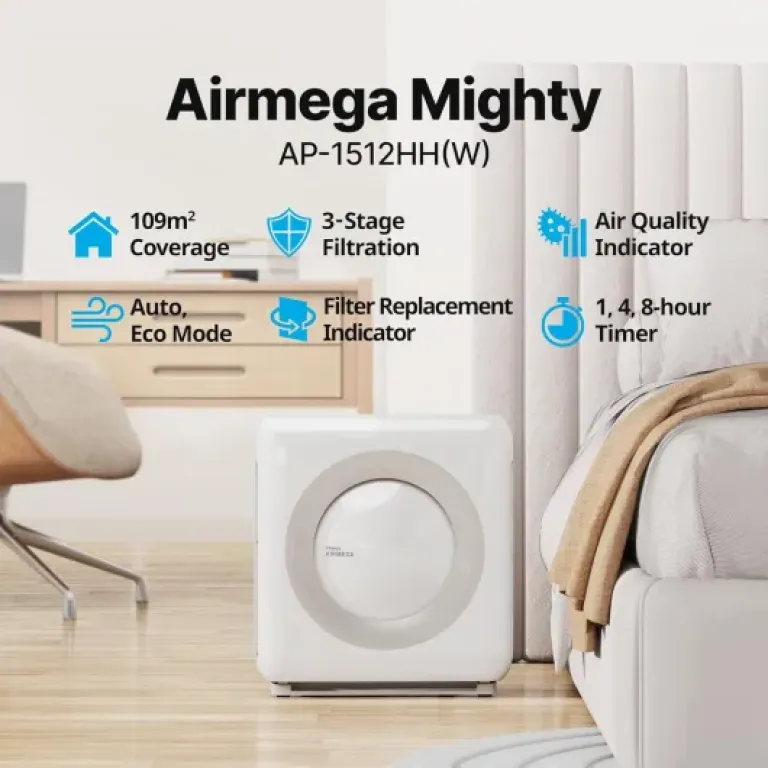
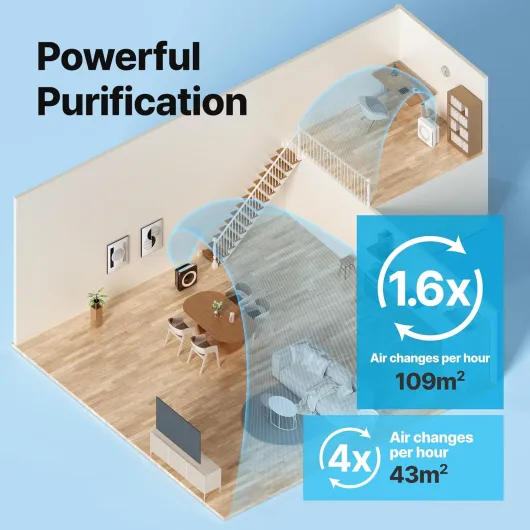
On smells, it’s not magic but it helps. Cooking smells, light smoke, pet odours – they fade faster with this running than without. If you have heavy smoke or constant strong smells, you’ll still notice them, but for normal household stuff it keeps the air fresher. Given the CADR rating and the room size claims (up to 109 m², realistically better for medium rooms), I’d say it’s strong enough for a typical bedroom or living room, but I wouldn’t expect one unit to handle a massive open‑plan space perfectly on its own.
What you actually get out of the box
Out of the box, the Coway Airmega Mighty is very straightforward. You get the unit, the pre‑installed filter pack (wrapped in plastic, so you do need to open it up before first use), and a basic manual. No remote, no app QR code, nothing fancy. It feels more like buying a small appliance than a tech toy, which I appreciated. I just wanted to plug it in and see if it helped with dust and pet dander, not spend an hour pairing Bluetooth.
The controls are all physical buttons on the top: power, fan speed, ioniser on/off, timer, and a light control. They’re clearly labeled and clicky enough that you know you’ve pressed them. You get four fan modes (low, medium, high, Auto) and a separate Eco mode that basically lets it idle when the air is clean. There’s also an air quality indicator ring on the front that changes colour depending on what the sensor thinks of your air. It’s simple and actually useful – you quickly get used to glancing at it and knowing if something in the room is bothering it.
The manual is where things feel a bit sloppy. It explains the basic functions, but some small but important details are vague. For example, the correct orientation of the filter isn’t clearly explained; people have mentioned installing it backwards. That kind of thing should be idiot‑proof and it’s not. If you’re not the type to read manuals carefully, you’ll probably still manage, but Coway could easily make this clearer with a bigger sticker or a proper diagram.
In practice, once you’ve done the initial setup, you rarely touch any of this again. I use Auto 95% of the time, occasionally hit the timer if I’m leaving the house, and that’s about it. So from a practical standpoint, the presentation is simple and focused on function. No smart features, which some people will miss, but also no app bugs or connection issues to deal with. It’s very much a plug‑it‑in, set‑and‑forget kind of device, which for an air purifier is honestly what I prefer.
Pros
- Noticeable improvement in allergy and dust symptoms after continuous use
- Strong sensor and fan combo that reacts quickly to cooking, dust, and smoke
- Simple physical controls, quiet on low/medium, and easy filter access and cleaning
Cons
- Loud and slightly whistly on top speed, not ideal right next to the bed on Auto
- Bulky design with significant depth, needs space away from walls
- Replacement filters add a recurring yearly cost and the manual is vague on some details
Conclusion
Editor's rating
The Coway Airmega Mighty AP-1512HH is not the prettiest or smartest air purifier out there, but it does the main job well: it cleans the air in a way you can actually feel. Allergies, pet hair, dust from traffic or renovation – it handles all of that with solid power and a sensor that reacts quickly. On low and medium it’s quiet enough to live with, and most of the time that’s where it sits. When the air gets bad it ramps up, gets loud for a bit, and then settles back down once it’s cleared things out. It behaves more like a serious appliance than a lifestyle gadget.
It’s not perfect. It’s bulky, the design is more “functional box” than stylish, and genuine filters aren’t cheap. The manual could be clearer on small details like filter orientation, and the whistling/hooting sound on top speed will annoy some people if they expect near‑silent operation. There’s also no app or smart control, which some will see as a downside and others as a relief. But if you want something reliable that you mostly leave on Auto and forget, it fits that role well.
Who is it for? People with allergies, asthma, pets, or dusty homes who actually care about performance more than looks. Also good if you cook a lot or are dealing with renovation dust. Who should skip it? Anyone obsessed with minimalist aesthetics, those wanting full smart‑home integration, or people who can’t tolerate occasional loud fan noise. Overall, it’s a strong, no‑nonsense option that feels worth the money if clean air is high on your priority list.