
Summary
Editor's rating
Value for money: strong performance, painful price
Design: big Scandinavian box that actually fits in a room
Noise, everyday use, and how it feels to live with
Build quality, filters, and how it should hold up over time
Performance: does it actually clean the air?
What this purifier actually offers (beyond the buzzwords)
Pros
- Cleans air quickly and effectively in medium to large rooms (dust, pollen, PM2.5 drop clearly visible)
- Quiet on low/auto with simple controls and handy app integration
- Solid build quality with wheels, smart RFID filter tracking, and decent Energy Star efficiency
Cons
- Very expensive upfront and filters are proprietary and costly
- Uses ionizing technology (HEPASilent), which may not suit some asthmatics/COPD users
- Bulky and heavy, and quite loud on higher fan speeds

Specifications
View full product page →| Brand | BLUEAIR |
Big, pricey, and supposedly high-tech – is it worth it?
I’ve been using the Blueair HealthProtect 7740i for a few weeks in my living room/office space, roughly 40–45 m², so basically the kind of room it’s aimed at. I didn’t get it for fun – I have dust allergies, mild asthma, and a partner who gets hammered by pollen every spring. So I was looking for something that actually helps, not just a fancy white box with an app.
On paper, this thing looks serious: HEPASilent Ultra, GermShield, Energy Star, auto mode, app control, the whole smart-home checklist. It’s also not cheap at all, and it’s big and heavy (over 19 kg), so it’s the kind of purchase you think about twice. I went in with fairly high expectations given the price, but I also read the 2.9/5 Amazon rating before, so I wasn’t expecting miracles.
In daily use, it’s a mix of “yeah, this actually helps” and “for this price, I expected better in a few areas”. It does clean the air and my symptoms are clearly a bit better, especially on high pollen days and when I’m vacuuming or cooking. But there are a few catches: noise at higher speeds, possible concerns about the ionizing tech if you’re sensitive, and running costs with filters.
If you’re thinking about getting the 7740i, I’d say you really need to know what you’re paying for: solid performance and smart features, yes, but also a bulky device, some noise above low speed, and tech that not everyone is comfortable with. It’s not bad, but it’s not the miracle box the marketing suggests either.
Value for money: strong performance, painful price
Let’s be blunt: this thing is expensive. Around the 800–900 pound range (depending where you find it) for an air purifier is a serious investment. For that kind of money, you can buy two or three decent mid-range purifiers from other brands and cover your whole home. So the question is: does the 7740i justify the premium? In some ways yes, in others not really.
What you’re paying for is a mix of high airflow, solid filtration, smart features, and a brand that leans heavily on health claims like 24/7 germ protection. In real life, the air cleaning performance is good, the build quality feels solid, and the auto mode plus app make it easy to live with. If you have bad allergies or asthma and you want one serious machine for a big room, it does the job and then some. In that sense, it’s not a waste of money – you actually get cleaner air and more comfort.
On the downside, there are a few value killers. First, the running costs: proprietary SmartFilters with RFID, changed once or twice a year, are not cheap. Add electricity for leaving a 72 W-capable unit on 24/7 (even if it’s usually on lower draw), and it’s a long-term commitment. Second, the HEPASilent/ionizer side isn’t for everyone. If you’re sensitive or just don’t want ionizing tech, you’re basically paying a premium for something you may not even be comfortable using.
Compared to some competitors (like mid/high-end models from Philips, Coway, or even some Dyson units), the Blueair sits in the upper price bracket but doesn’t completely crush them in real-world performance. It’s better than cheap purifiers from random brands, for sure, but not miles ahead of good mid-range units. So I’d say the value is decent if you really want this combo of design, features, and brand, but purely on price-performance ratio, there are better deals out there.
Design: big Scandinavian box that actually fits in a room
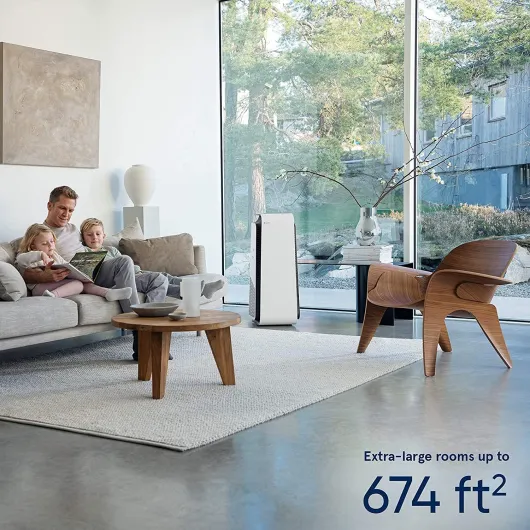
Design-wise, the 7740i is a tall, square-ish tower: 34 x 34 cm base and about 85.6 cm high. So it’s basically the size of a slim bedside table. It’s not tiny, and you definitely notice it in the room, but the white finish and simple lines help it blend in more than some shiny black plastic purifiers. Mine sits in a corner near a power outlet, and visitors do ask what it is, but it doesn’t feel like some industrial machine parked in the living room.
The build feels pretty solid. The casing doesn’t creak when you move it, and the plastic doesn’t feel cheap or hollow. It’s heavy at 19.2 kg, but they added wheels, which makes a huge difference. I can roll it between the living room and bedroom without wrecking my back. Carrying it up stairs is doable but not fun – this is not a compact unit you casually move every day.
Air comes out from these so-called SpiralAir outlets on the top edges. Marketing aside, what I actually noticed is that the clean air is pushed up and out in several directions instead of just blasting forward like a fan. That helps spread the air more evenly in the room. When I put it in a 40 m² open space, the air quality indicator reacted even when I was cooking 5–6 meters away, and the smell cleared faster than with my older, front-blowing purifier.
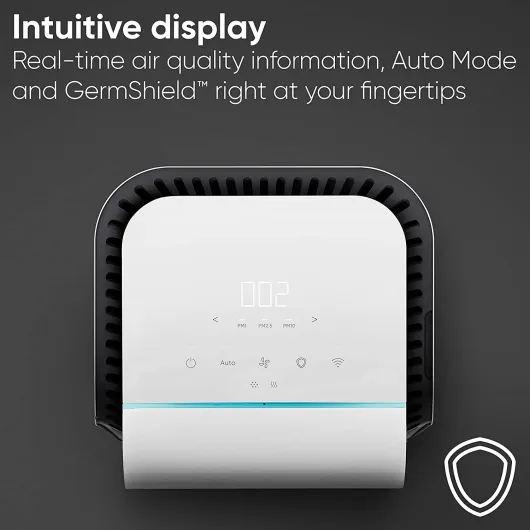
The control panel on top is straightforward: touch buttons, a color ring for air quality (blue good, red bad), and basic indicators. It’s not fancy, but it’s clear enough that you don’t need the manual after the first day. Overall, the design is functional and neutral. It’s not pretty, it’s not ugly – it’s a well-built white box that looks like it belongs in a modern home, not a lab. Just know you need some floor space for it.
Noise, everyday use, and how it feels to live with
Day to day, what really matters is: can you live with this thing running all the time? On the lowest speeds, the answer is yes. In auto mode in a fairly clean room, it hums very quietly, more like a soft airflow than a motor noise. I can work next to it, take calls, or watch TV without thinking about it. At night in the bedroom on the lowest speed, I got used to it quickly. It’s not completely silent, but it’s a steady, low sound that fades into the background.
Once it ramps up, it’s a different story. At medium speed, it’s still acceptable – you notice it, but you can talk over it and still hear the TV. At maximum speed, though, the 55 dB figure feels about right: it’s loud enough that you don’t want to sit right next to it for long. I usually let it blast for 10–15 minutes after cooking or cleaning, then drop it back to auto. It does move a lot of air on max, but you wouldn’t want that all evening unless you’re used to constant fan noise.
One thing I liked is the cool airflow effect the other reviewer mentioned. When it kicks in harder, you actually feel a cool breeze, which is nice in summer but can feel a bit drafty in winter if you’re sitting right in the path. It’s not an AC, obviously, but it does give the impression of fresher air moving around, which mentally makes the room feel less stuffy.
As for usability, it’s pretty straightforward. You plug it in, hit auto, and mostly forget about it. The app control is handy but not essential – I used it a bit at first to play with settings and check air quality graphs, then mostly ignored it. The biggest comfort downside for me is the size and weight: you need to commit to a spot, and moving it up and down stairs is annoying. But in daily use on one floor, it’s fine. Noise is well-managed at low speeds, just don’t expect it to be quiet when it’s working at full power.
Build quality, filters, and how it should hold up over time
I haven’t had the 7740i for years, obviously, but after a few weeks of moving it around, running it pretty much 24/7, and opening it up for a filter check, I can at least comment on how it feels in terms of build and maintenance. The outer shell feels solid and doesn’t flex or rattle. The wheels roll smoothly and haven’t jammed or scraped so far. The top panel and buttons still respond properly, no weird glitches yet. For something this price, you’d expect decent build quality, and it does feel like it can handle long-term use.
The main thing with durability on any purifier is filters and internal dust. The SmartFilter slides in and out easily, and the frame holds it tight so air doesn’t bypass the filter. After a couple of weeks in a dusty apartment with a cat, the pre-filter side already showed a visible gray layer, which is normal and actually reassuring – it means it’s catching stuff. I like that the RFID chip automatically resets the filter counter, so you don’t have to remember anything or mess with buttons. But it also means no third-party filters, so you’re stuck with Blueair’s pricing.
Filter lifespan will depend on your air quality and usage, but based on other Blueair models and what I’ve seen so far, you’re probably looking at once or twice a year for replacement if you run it daily. That adds a decent chunk of cost over time. Mechanically, I don’t see obvious weak points: no flimsy latches, no weird hinges, and the power cord feels robust enough. The fan noise hasn’t changed since day one, which is a good sign.
The only long-term concern I’d have is the electronics and app connectivity. Any Wi‑Fi smart device can become annoying if updates break something or the app stops being supported. Right now, the basic functions work fine even without the app, so I’m not too worried, but it’s something to keep in mind. Overall, it feels built to last, but you need to budget for regular filter changes and hope Blueair keeps supporting the model for a good while.
Performance: does it actually clean the air?
This is the part that matters. In my case, I tested the 7740i in a 40–45 m² open-plan room with a lot of dust sources: books, fabric sofa, cat, plus pollen drifting in when windows are open. I also used a cheap PM2.5 sensor (not lab-grade, but good enough for comparison) and paid attention to my own allergy symptoms. On auto mode, the purifier usually sits on a low, quiet speed with the light ring blue, which means it thinks the air is fine. When I start cooking, vacuuming, or opening the window on a high-pollen day, the ring goes purple/red within a few minutes and the fan ramps up.
In terms of numbers, when I fried food or stirred up dust, the PM2.5 on my sensor jumped over 100 µg/m³. With the purifier running on auto, it usually dropped back below 20 within 15–20 minutes, and under 10 if I let it keep going a bit longer. That’s comparable to other high-end purifiers I’ve tried, like some Dyson and Philips models. So purely on air cleaning speed, it’s solid. It moves a lot of air and brings the levels down noticeably.
On the health side, I noticed fewer sneezing fits in the morning and less itchy eyes after a few days, especially when pollen was high. It’s not magic – I still needed my antihistamines on the worst days – but I could tell the difference when I turned it off for a day as a test. My partner, who has asthma, also said night-time breathing felt a bit easier with the unit in the bedroom on low speed. So for dust and pollen, I’d say it genuinely helps.
About the GermShield/ionizer side: this is where it gets tricky. The HEPASilent tech basically combines filtration with an ionizing step, which some people with asthma or COPD don’t like. One Amazon review straight up says it made their lungs worse. Personally, I didn’t feel any irritation, and I didn’t notice any strong ozone smell or anything weird. But if you’re sensitive or your doctor told you to avoid ionizers, this might be a deal-breaker. Blueair claims it’s safe and low-ozone, but I can’t verify that in a home setting. So performance is strong in terms of cleaning, but the technology behind it won’t suit everyone.
What this purifier actually offers (beyond the buzzwords)
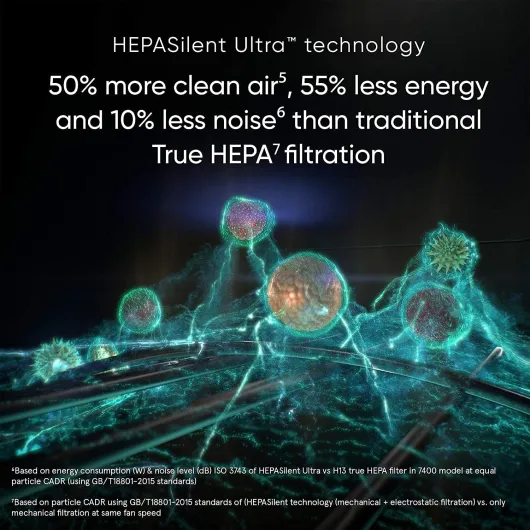
On the spec sheet, the Blueair HealthProtect 7740i is positioned as a high-end purifier for medium to large rooms, up to about 62 m². It uses what they call HEPASilent Ultra, which basically means a mix of mechanical filtration and electrostatic/ionizing action to catch fine particles like PM2.5, dust, pollen, pet dander, mold spores, etc. It’s also got this GermShield feature that’s supposed to protect against bacteria and viruses even when it’s on standby by occasionally pulsing air and keeping the filter from becoming a germ farm.
In practice, you get a tall tower unit, about 86 cm high, running up to 72 W at full power, with a claimed sound level up to 55 dB. That’s not jet-engine loud, but it’s not whisper-quiet either once you crank it. On the plus side, it’s Energy Star certified, so on lower speeds and auto mode it doesn’t seem to chew through electricity too badly. I left it on auto 24/7 for a couple of weeks and didn’t see a scary jump on the power meter, though obviously it’s not free.
The filter is a single "SmartFilter" cartridge with an RFID chip that tells the unit when it’s time to change and automatically resets the indicator. That part is convenient – no guessing or manual reset – but it also locks you into their filters. No generic replacements. That means you’re paying Blueair prices every time, which adds up for a machine that’s already expensive to buy. Blueair usually recommends changing filters roughly every 6–12 months depending on use and pollution levels.
Overall, the feature set is packed: Wi‑Fi, app control, air quality indicators, auto mode, germ protection, and a filtration system that’s clearly more advanced than basic HEPA boxes from cheaper brands. But at the end of the day, what matters is whether you breathe better and whether the noise and cost are acceptable for you. On that front, it does its job, but you pay for it in both money and some compromises.
Pros
- Cleans air quickly and effectively in medium to large rooms (dust, pollen, PM2.5 drop clearly visible)
- Quiet on low/auto with simple controls and handy app integration
- Solid build quality with wheels, smart RFID filter tracking, and decent Energy Star efficiency
Cons
- Very expensive upfront and filters are proprietary and costly
- Uses ionizing technology (HEPASilent), which may not suit some asthmatics/COPD users
- Bulky and heavy, and quite loud on higher fan speeds
Conclusion
Editor's rating
After using the Blueair HealthProtect 7740i daily, my take is pretty straightforward: it’s a strong air purifier that genuinely improves air quality and allergy comfort, but it’s expensive and not perfect. The air cleaning performance is solid – it brings particle levels down quickly, handles dust and cooking fumes well, and clearly helps with pollen days. Build quality is good, the design is neutral enough to live with, and the auto mode plus app make it fairly hands-off once you’ve set it up.
Where it stumbles is on cost and the tech choices. The purchase price is high, and the SmartFilter system locks you into pricey replacements, so ownership isn’t cheap. The HEPASilent Ultra tech uses ionization, which some people with asthma or COPD don’t like, and at least one user said it made their lungs worse. Noise is fine on low but noticeable on higher speeds, so if you’re very sensitive to sound, you’ll have to manage when you let it ramp up.
Who is it for? People with medium to large rooms, decent budget, and significant allergy or asthma issues who want one serious machine and don’t mind the ionizer aspect. Who should skip it? If you’re on a tight budget, want simple HEPA-only tech, or need multiple units for a whole house, you’ll probably be better off with cheaper, more basic purifiers. It’s a good but pricey option, not a miracle solution.