
Summary
Editor's rating
Is it good value for money?
Design and build: compact, light, and not an eyesore
Everyday comfort: living with it in a bedroom and living room
Build quality and long-term concerns
Noise, fan speeds, and smart features in real use
What you actually get with the Sandrem Ganymede
How well it actually cleans the air day to day
Pros
- Good filtration performance for dust, pet hair, and everyday odours in medium to large rooms
- Very quiet sleep mode with dimmed lights, suitable for bedroom use
- Useful auto mode with laser PM2.5 sensor and app control for remote adjustments
Cons
- Room size claims are optimistic; one unit is not ideal for very large open spaces
- Build feels light and filter availability/price will heavily impact long-term value

Specifications
View full product page →| Brand | Sandrem |
A “real life” test of this Sandrem smart air purifier
I’ve been running this Sandrem Ganymede air purifier at home for a little over two weeks, mainly in the bedroom and sometimes dragged into the living room when the dog has one of his shedding phases. I’m not an engineer, I just wanted something that would help with dust, pet hair, and the occasional cooking and smoke smells that drift around the flat. So this is from the point of view of a normal user, not someone obsessed with lab numbers.
The first thing that pushed me to try it was the combo of HEPA 13 filter + app control + UV-C + ioniser at a price that’s lower than some bigger brands. On paper, the CADR of 300 m³/h and coverage up to about 100–110 m² (they say 1220 sq ft / 1800 sq ft in different spots, which is already a bit confusing) sounded more than enough for my place. I also really wanted something quiet at night because I’m a light sleeper and most fan noises drive me nuts.
In daily use, I focused on a few concrete things: does the room actually smell fresher, does my nose feel less clogged in the morning, how annoying is the noise, and is the app just a gimmick or actually useful. I also paid attention to build quality, because a lot of budget-ish purifiers feel cheap and rattly after a few days. Spoiler: this one feels decent, not premium, but not toy-like either.
It’s not perfect and there are some annoying details, especially on the smart side and the marketing around room size. But overall, it gets the job done for cleaning the air in a medium to large room, especially if you’re sensitive to dust and pets. I’ll break down what worked well for me and where I think Sandrem cut a few corners or at least oversold things a bit.
Is it good value for money?
Looking at what you get – HEPA 13, CADR 300 m³/h, UV‑C, ioniser, app control, auto mode, child lock, quiet sleep mode – versus the price and the fact it’s not a big brand, I’d say the value is pretty good overall. If you compare it to better-known brands with similar CADR and smart features, those often cost noticeably more. So if your priority is getting solid filtration and some smart functions without paying for a logo, this Sandrem makes sense.
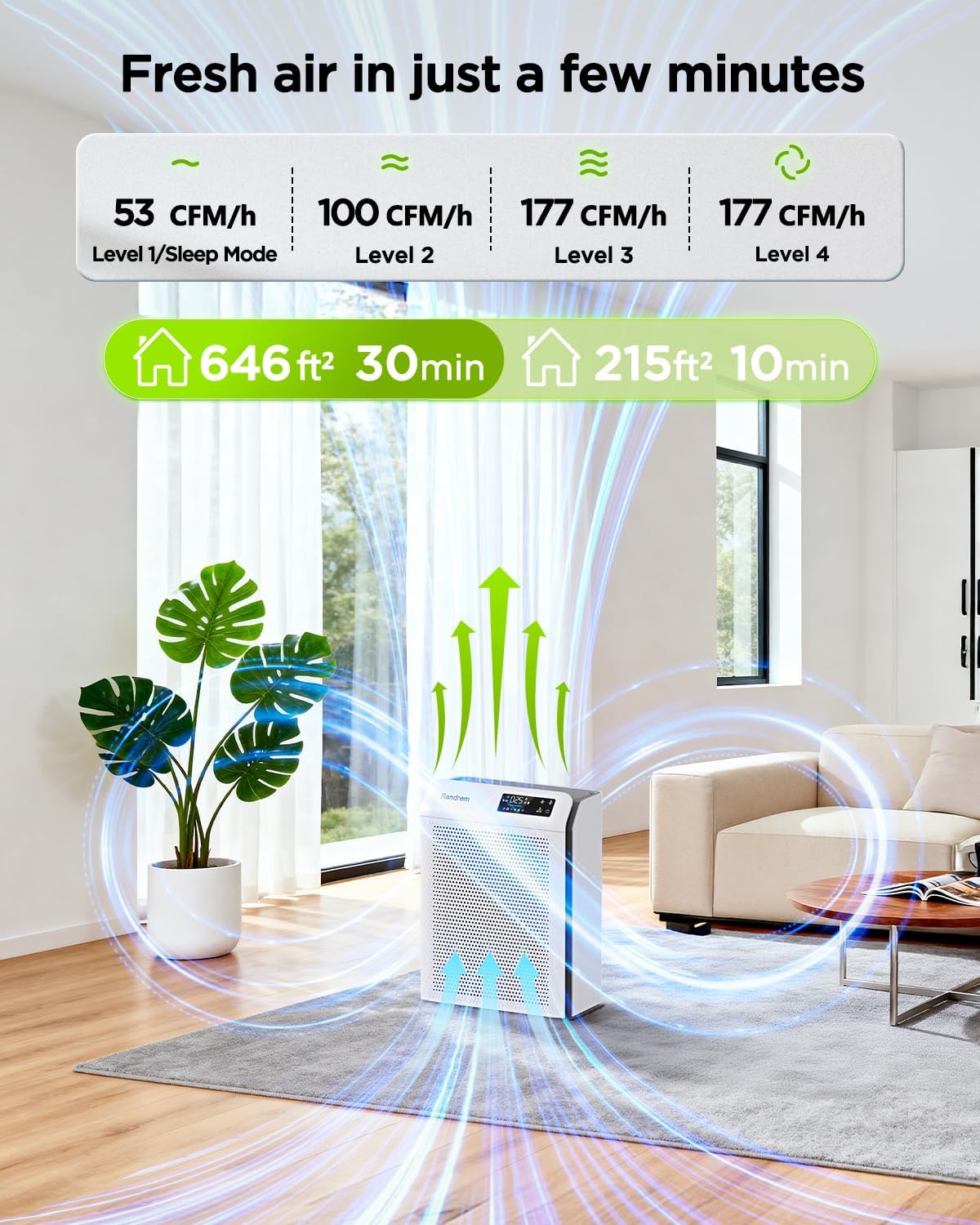
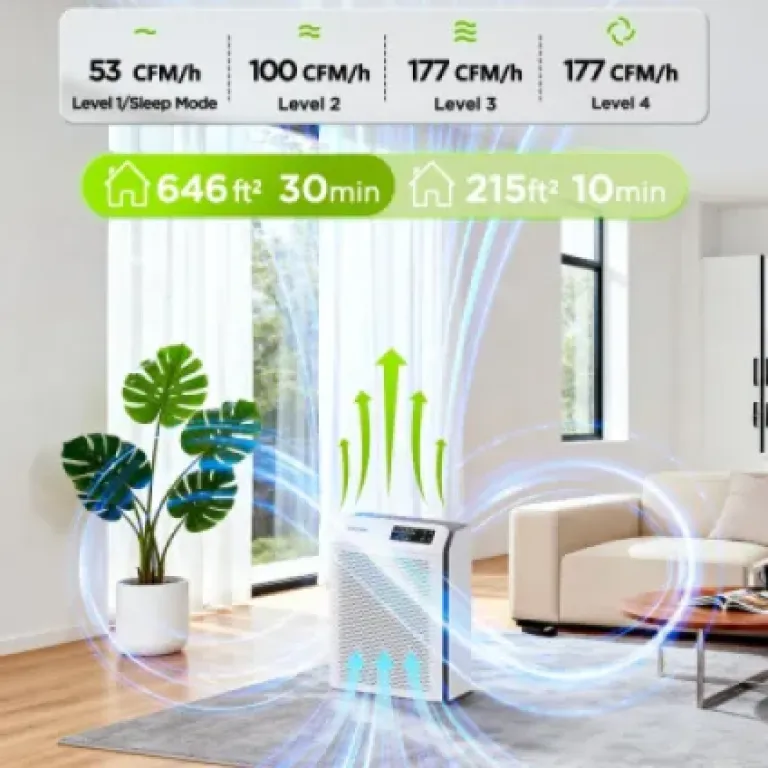
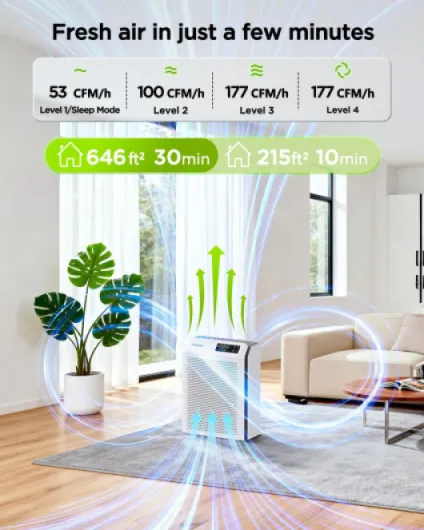
That said, there are a couple of caveats. First, the room size claims are a bit optimistic. They throw around numbers like 1220 sq ft and 1800 sq ft, which in reality is pushing it for a 300 m³/h purifier if you expect fast cleaning. For a normal user, I’d say it’s best suited for rooms up to 30–40 m² if you want it to actually refresh the air properly, not a whole big open-plan house. So don’t buy it thinking one unit will handle an entire large floor by itself.
Second, factor in filter replacement costs. The initial price is attractive, but if you need a new filter every 6–12 months (depending on usage and pollution level), that adds up. If replacement filters stay reasonably priced and available, then the long‑term value is good. If they become rare or expensive, the value drops quickly. This is where big brands sometimes have an edge: their consumables are easier to find.
Overall, if you’re looking for a quiet, capable purifier for a bedroom or living room, and you’re okay with a lesser-known brand from China with decent but not luxury build quality, this is a good value buy. If you want rock‑solid ecosystem support, super polished app experience, and guaranteed filters for years, you might want to spend more on a bigger name. For most everyday users who just want cleaner air and some smart convenience, the price-to-performance ratio is hard to complain about.
Design and build: compact, light, and not an eyesore
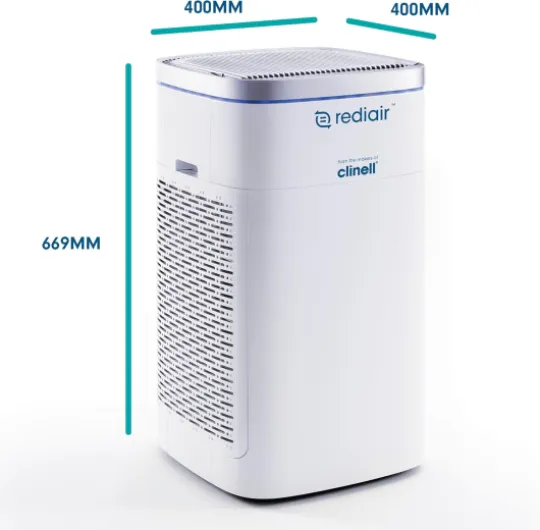
Physically, the purifier is more compact than the specs made me imagine. At about 31.6 cm wide, 39.6 cm high and 15.9 cm deep, it’s closer to a chunky desktop PC tower laid sideways than one of those huge floor units. Weight is around 3.5 kg, so you can move it with one hand easily. For me, that’s a plus: I can slide it from bedroom to living room without feeling like I’m dragging furniture around.
The design is pretty plain: white plastic body, air intake on the sides/back, and air blowing out the top. It’s not ugly, just generic. No glossy chrome nonsense, which I like. It tucks nicely into a corner and doesn’t scream for attention. The top panel has touch buttons and a simple display that shows fan speed, mode, and air quality. The icons are obvious enough after one or two uses. The lights do dim in sleep mode, which is important if you hate glowing gadgets in the bedroom.
Build quality is decent but not premium. The plastic doesn’t feel super thick, but nothing creaks massively when you move it, and the back filter cover clips in firmly enough. The air outlet grille on top is solid. I didn’t notice any vibration or rattling, even on higher fan speeds, which is often where cheaper units fall apart. The only minor gripe is that the touch buttons sometimes need a slightly firmer tap; they’re responsive, but not the most sensitive I’ve used.
In terms of placement, you do need to give it a bit of breathing room around the sides and back, so don’t shove it completely against a wall. I left about 15–20 cm from the wall and it seemed fine. Cables-wise, the power cord is standard and long enough for normal use, but if your sockets are in weird spots, you might need an extension. Overall, the design is practical and low‑profile, which, for an air purifier, is exactly what I want: something that works and visually disappears in the room.
Everyday comfort: living with it in a bedroom and living room
In terms of comfort, the noise level and light control are the two big ones, especially if you’re planning to keep it in a bedroom. Sleep mode does what it should: fan drops to a low, steady sound and the display lights dim. I’m the type who usually turns off anything that hums at night, but with this on sleep mode, I got used to it after one night and left it running. It’s more of a soft background noise than a distracting buzz.
The child lock is a small but useful feature if you have kids or pets. One tap and the buttons are locked, so no random changes when someone touches it. My dog brushed against it once and nothing happened because the lock was on. Without that, it would be easy to accidentally change modes or turn it off when walking past, since the buttons are on top.
From a usability point of view, the controls are clear and you don’t have to dig through menus for simple things. Want a timer? There’s a button. Want sleep mode? Another button. You don’t need to open the app every time, which is good if not everyone in the house is into using phones for everything. The only slightly annoying thing is that the beeps when changing modes are a bit sharp; not super loud, but at night they feel louder than they are. I would have liked an option to mute them completely.
Day to day, maintenance is simple: the back cover pops off, you vacuum or wipe the pre‑filter now and then, and eventually swap the whole filter when the app or indicator tells you. No tools, no weird clips. In short, living with it is easy: it’s quiet enough on low, straightforward to use, and doesn’t demand constant attention. If you want something you can just set to auto and forget about most of the time, this fits that use pretty well.
Build quality and long-term concerns
I obviously haven’t had this for years, so I can’t pretend to know how it will hold up in five years, but there are a few things you can judge early on. After a bit more than two weeks of daily use, no rattles, no weird vibrations, and no error messages. The fan still sounds smooth, even at higher speeds. The housing hasn’t warped or anything, and the filter cover still clips in snugly.
The plastic is on the lighter side, which makes it easy to move but also means it doesn’t feel super tough. If you knock it over hard, I wouldn’t be surprised if something cracked. So I’d say: fine for normal home use, but don’t treat it like a rugged industrial unit. For a purifier in this price range, that’s pretty standard. The internals (fan, sensor) are what really matter, and those seem stable so far.
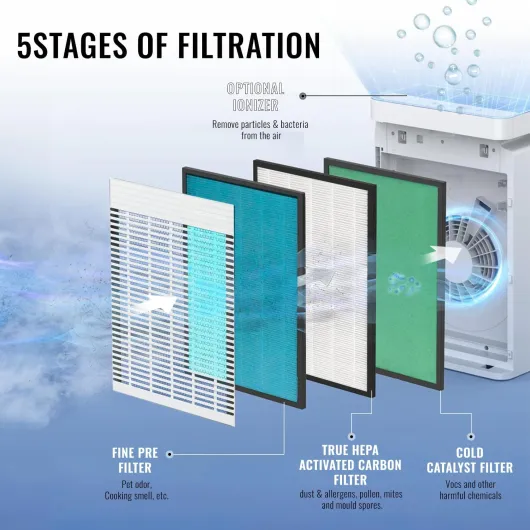
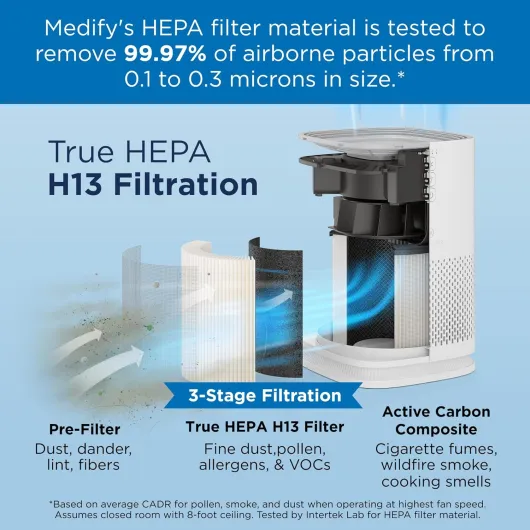
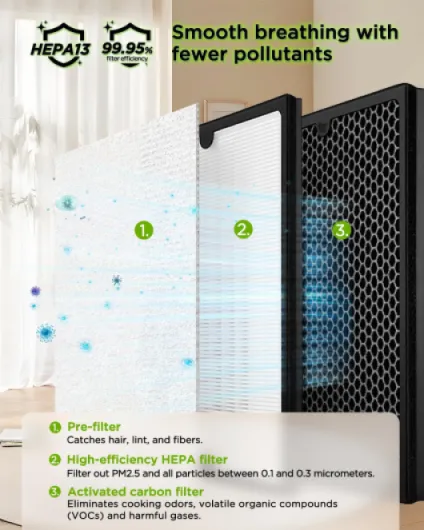
The filter system is simple: one combined cartridge with pre‑filter, HEPA, and carbon. That’s good for ease of use, but it means replacement costs can add up if filters are pricey or hard to find. At the time of testing, replacement filters were available but not as widely as big brand ones. That’s something to keep in mind: if Sandrem ever stops supporting this model, you might be stuck. I’d recommend checking current filter availability and price before fully committing, especially if you plan to run it a lot.
In terms of electronics, the CE certification is at least a sign it’s not total junk. The touch panel and Wi‑Fi connection stayed stable, no random disconnects for me. However, one of the Amazon reviewers mentioned trouble with the app setup, which suggests the software side may not be bulletproof for everyone. That’s more of a usability issue than durability, but if the app breaks in the future and you rely on it, that could be annoying. Overall, for durability I’d call it acceptable for the price: not tank‑like, but fine if you treat it reasonably and keep an eye on filter availability.
Noise, fan speeds, and smart features in real use
Performance-wise, there are two big parts: noise/airflow and the smart/app side. On noise, they claim 22–27 dB in sleep mode. I don’t have a meter, but in a quiet bedroom with everything off, I’d say it’s basically a soft whoosh, similar to a very low fan. I’m sensitive to noise and I could sleep with it on without any problem. The lights dim down, so it doesn’t light up the room either. If you need absolute silence, you might still notice it, but it’s one of the quieter ones I’ve tried.
The four fan speeds make sense: low, medium, high, and turbo (plus auto which hops between them). On high and turbo, you definitely hear it. It’s not jet engine loud, but you won’t forget it’s there. For quickly clearing cooking smells or a stuffy room, I ran it on high for 30–40 minutes, then dropped back to auto or sleep. For a 20–30 m² room, that seemed enough to refresh the air quite well. I wouldn’t keep turbo on all evening if I was watching TV, it would get annoying, but the lower levels are fine.
On the smart side, connecting the app was okay for me, but I can see why one Amazon reviewer struggled. You need 2.4 GHz Wi‑Fi and to follow the pairing steps exactly. Once connected, the app lets you change modes, speeds, set a timer, and see PM2.5 readings and filter life. It’s convenient if the purifier is in another room or you’re already in bed and want to switch to sleep mode without getting up. That said, it’s not essential; the touch controls on top already cover everything important.
The auto mode is the star here. The built‑in laser sensor seems quite sensitive: when I opened a window to a busy street, the PM2.5 value shot up quickly and the fan ramped up. When I closed everything, it dropped back down after a while. It’s not lab‑grade precise, but it behaves logically. I ended up leaving it on auto most of the time and only manually forcing high speed after heavy cooking. Overall, performance is good for the size and power: not overkill, but definitely more than a basic cheap purifier.
What you actually get with the Sandrem Ganymede
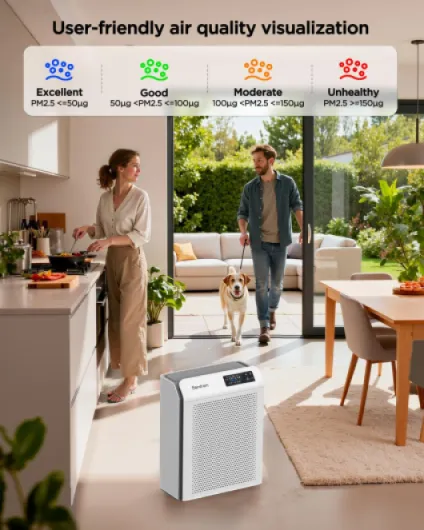
On paper, this thing is packed: HEPA 13 3‑stage filter, UV‑C light, ioniser, laser PM2.5 sensor, app control, auto mode, timer, child lock, and four fan speeds including a quiet sleep mode. The CADR is listed at 300 m³/h, which is roughly in the same league as some mid‑range models from better known brands, but at a lower price point. It’s rated at 20 W, so power use is pretty low, even if you leave it on most of the day.
Out of the box, you get the purifier, the combined filter already installed, and a small manual. No remote, because the idea is that you use the touch controls on top or the app. The manual is fairly basic but clear enough: how to remove the back panel, take the plastic off the filter, connect Wi‑Fi, etc. I had it running in under 10 minutes, including unpacking and filter setup. That part is straightforward, so even if you’re not into gadgets, you’ll be fine.
Function‑wise, this is clearly built around auto mode. There’s a built‑in laser sensor that measures PM2.5 and changes the fan speed based on air quality. You get a coloured indicator and a numerical value in the app. When I cooked something smoky, the reading jumped and the fan ramped up within a minute or two. When the windows were closed and everything was calm, it dropped back and the fan slowed down again. So the sensor isn’t just for show; it actually reacts.
Overall, the feature set is pretty solid for the price: you get proper HEPA filtration, odour handling via carbon, plus the extra UV‑C and ions (which you can turn off if you’re not comfortable with that). It’s not a super high‑end air station with crazy automation, but for a regular flat or house with pets or mild allergies, it covers the basics and then some. Just don’t expect miracles from the UV and ion part; the main work is clearly done by the filter and the airflow.
How well it actually cleans the air day to day
This is the part that matters: does it actually improve the air? In my case, yes, noticeably, but in a realistic way, not like stepping into a lab. I tested it mainly in a roughly 20–25 m² bedroom and a 30 m² living room with a dog that sheds a lot and tracks in dust. After a couple of days of running it several hours a day on auto, I saw less dust settling on surfaces near the unit, and the usual dog smell in the living room was reduced. Not gone completely, but clearly toned down, especially after a few hours on medium or high.
The HEPA 13 filter seems to do its job with dust and pollen. I have mild hay fever, and during a windy day with the window cracked, my nose normally gets stuffy by the evening. With the purifier running in that room on auto, my symptoms were milder. Hard to quantify exactly, but it felt like the air was less irritating. Also, when I checked the filter after about 10 days, there was already a visible layer of fine dust and hair on the pre‑filter, which is at least proof it’s actually catching stuff.
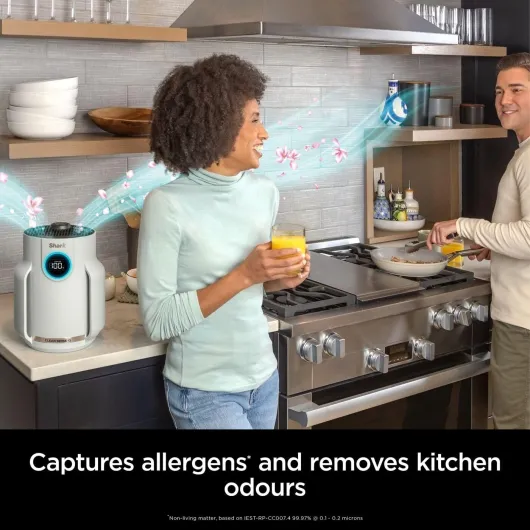
On odours and smoke, it’s decent. I tested it after frying food and after a friend who smokes came over and stood near an open window. In both cases, the PM2.5 reading jumped, the fan sped up, and the smell faded faster than usual. You still smell things right after they happen, this doesn’t magically erase them, but the lingering stale smell is clearly shorter. If you’re dealing with heavy indoor smoking all day, I think you’d want something even stronger or multiple units, but for casual smoke and cooking odours it’s fine.
One thing to mention: they also push the UV‑C and ioniser. I left them enabled for most of the test, but honestly, you can’t really feel or measure the difference as a regular user. The main effectiveness is from the mechanical filtration and airflow. If you’re worried about ions or UV, you can turn them off in the settings and the purifier still does the main job. Overall, in real life, I’d call the effectiveness pretty solid for a medium to large room, especially for dust, pet dander, and everyday smells.
Pros
- Good filtration performance for dust, pet hair, and everyday odours in medium to large rooms
- Very quiet sleep mode with dimmed lights, suitable for bedroom use
- Useful auto mode with laser PM2.5 sensor and app control for remote adjustments
Cons
- Room size claims are optimistic; one unit is not ideal for very large open spaces
- Build feels light and filter availability/price will heavily impact long-term value
Conclusion
Editor's rating
After living with the Sandrem Ganymede air purifier for a while, my overall take is that it’s a solid, no‑nonsense option if you want cleaner air in a medium to large room without spending a fortune. The HEPA 13 filter, decent CADR, and auto mode actually make a difference with dust, pet hair, and everyday smells. Noise levels in sleep and low modes are very manageable, so it works well in a bedroom. The app and smart functions are a nice bonus rather than the main reason to buy it – handy when they work, but not essential for daily use.
It’s not perfect: the room coverage in the marketing is optimistic, the build is more “light but okay” than premium, and the long‑term story depends a lot on how easy it is to get replacement filters over time. The app setup can also be finicky for some people. If you’re expecting the polish and long‑term ecosystem of a big brand, you might be a bit underwhelmed. But if your priority is good filtration, low noise, and reasonable price, it does the job well enough that I’d recommend it to friends with pets or mild allergies.
Who is it for? People in flats or houses who want a quiet purifier for bedroom or living room, care about dust and pet dander, and like the idea of auto mode and app control but don’t need perfection. Who should skip it? Those who want one unit to handle a huge open-plan space, or who are very picky about brand reputation and long-term official support. In short: decent, effective, and fairly priced, with a few small quirks you can probably live with.