
Summary
Editor's rating
Is the Winix T500 good value for money?
Compact, neutral design that doesn’t scream “medical device”
Power, energy use and what it means for your bill
Daily comfort: noise, ease of use and living with it 24/7
Real-world performance: noise, air quality and how fast it reacts
What the Winix T500 actually offers on paper
How effective is it for allergies, dust and everyday use?
Pros
- Very quiet in sleep and low modes, suitable for bedroom use at night
- Good filtration performance for dust, pollen and everyday allergens in small to medium rooms
- Simple to use with auto mode and sensors, plus optional app and Alexa/Google control
Cons
- Filter replacements add noticeable long-term cost
- CADR and size are a bit limited for large open spaces despite the 50 m² claim

Specifications
View full product page →| Brand | Winix |
A small smart purifier that actually makes a difference in a bedroom
I’ve been using the Winix T500 in a medium-sized bedroom for a couple of weeks, and I’ll be straight: it’s not some miracle gadget, but it does its job pretty well. I’m mildly allergic to dust and pollen, and I have a partner who complains every time a fan is too loud at night, so I was mainly looking for something quiet that actually cleans the air and doesn’t turn the room into an airport runway.
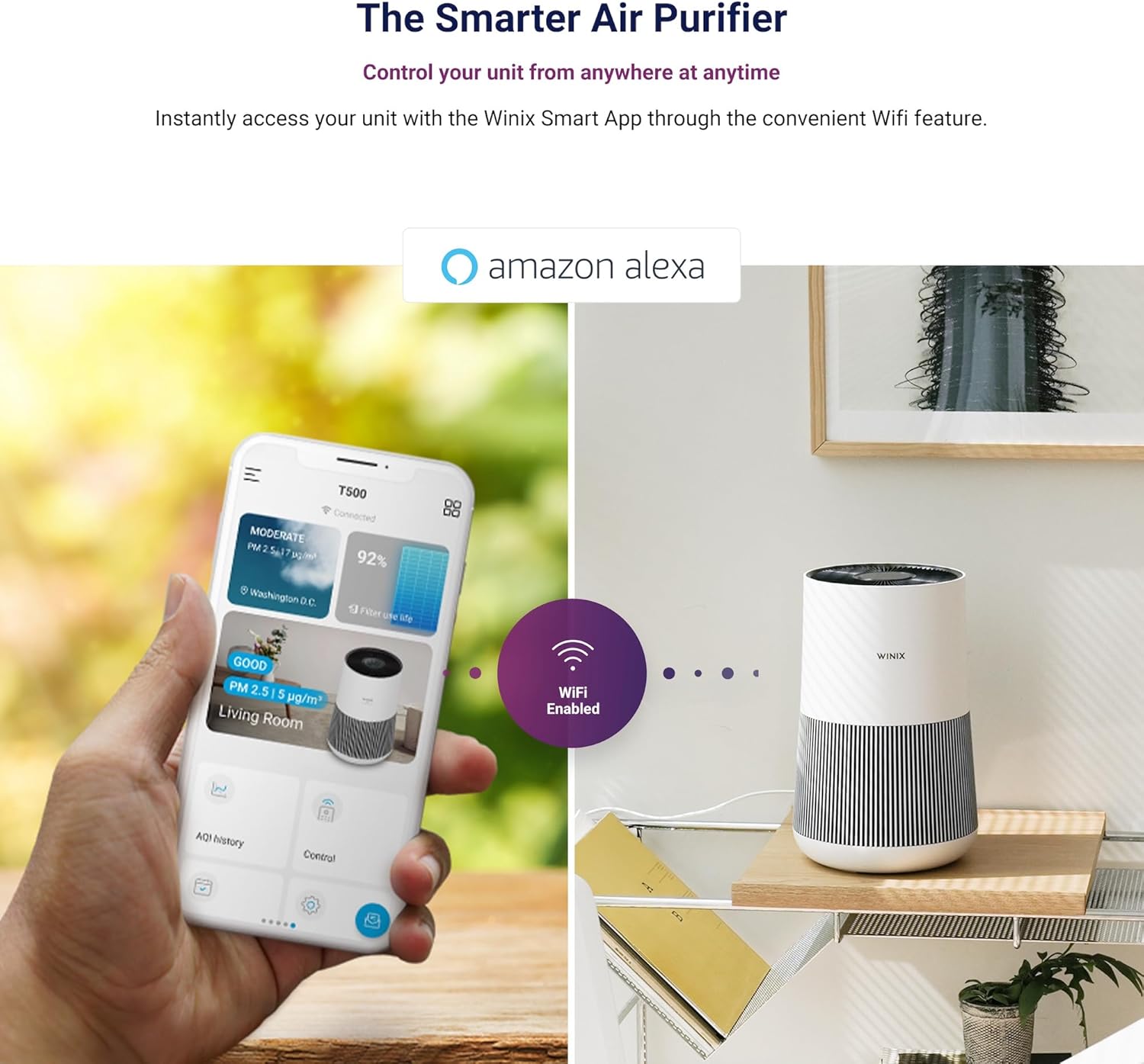
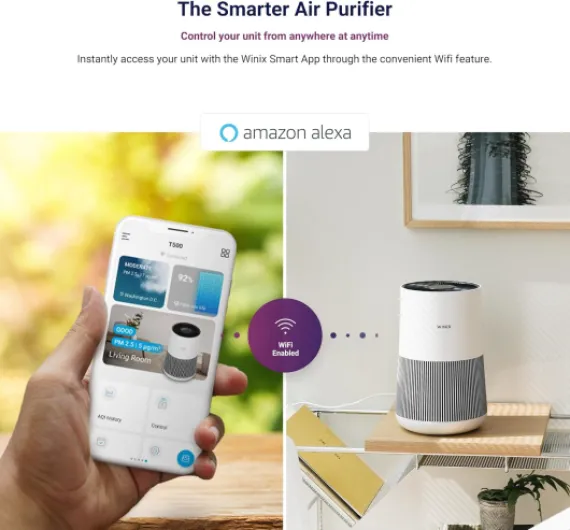
The first thing I noticed is how simple it is to live with. You plug it in, set it to auto, and basically forget about it. The smart features (Wi‑Fi, Alexa, app) are there if you care about monitoring the air quality and playing with schedules, but you don’t have to use them. The purifier starts reacting to changes in air quality without any real setup beyond connecting it to Wi‑Fi once.
In daily use, what stood out most for me was the noise level and the way it ramps up and down based on the sensors. When cooking in the next room or opening a window on a busy street, the fan speeds up, and after a while it calms down again. At night in sleep mode, it’s very quiet, more like a soft background hum than an actual fan. If you’re sensitive to noise, that’s probably the main thing you’ll care about.
It’s not perfect: the app feels a bit overkill if you’re not into smart home stuff, filters will add to the long-term cost, and for bigger open spaces it’s a bit on the small side despite the 50m² claim. But for a bedroom or office, especially if you have allergies or pets, it’s a pretty solid option that doesn’t take over the room or your ears.
Is the Winix T500 good value for money?
On the value side, the T500 sits in that mid-range segment: not the cheapest purifier on the market, but also not one of the high-end monsters. For what you pay, you’re getting: a proper HEPA filter, a carbon layer, smart features (Wi‑Fi, Alexa, Google Assistant), auto mode with sensors, and a compact, bedroom-friendly design. If you compare it to no-name budget brands that advertise HEPA but don’t have any certifications, this feels more trustworthy, especially with the Allergy UK and AHAM testing behind it.
Where the cost creeps up is filters over time. All-in-one cartridges are convenient but usually not the cheapest option. You have to budget for replacements every 6–12 months depending on use and air quality. If you plan to run it 12–16 hours a day during allergy season, expect to replace the filter closer to the 6–8 month mark. That’s not unique to Winix, but it’s something to factor in. The app at least helps you track when it’s actually needed instead of guessing.
Compared to other brands: versus very cheap purifiers, you’re paying more but getting better noise control, real HEPA performance, and smarter operation. Compared to more premium brands like Dyson or high-end Blueair units, you’re paying less but also getting fewer design frills and a bit less raw power. In that context, the T500 sits in a pretty sensible middle ground for a bedroom unit: solid performance, good noise levels, and enough smart features without going overboard.
For someone who just wants a reliable bedroom or office purifier and doesn’t care about fancy design, I’d say the value is good. If you only need something occasionally for a guest room or you’re extremely price-sensitive, you might find cheaper options that “kind of” work. If you want something that you can run every night, trust the filtration, and not hate the noise, paying a bit more for this one makes sense.
Compact, neutral design that doesn’t scream “medical device”
Design-wise, the Winix T500 is pretty low-key, which I liked. It’s white and grey, with a rounded, almost cylinder-like shape and a 360° air intake around the body. The footprint is roughly the size of a medium plant pot, so it fits easily next to a nightstand or in a corner without getting in the way. At 37 cm tall, it’s not tiny, but it doesn’t visually dominate a room either. If you hate big tower purifiers that look like speakers, this one is more discreet.
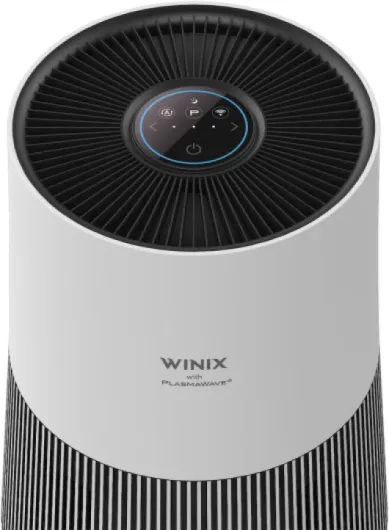
The top panel is where all the controls and display sit. You get touch buttons for power, fan speed, auto mode, and sleep mode, plus an air quality indicator. The display is clear enough to see even in moderate light, but not so bright that it lights up the room at night. In sleep mode, the lights dim to a low level, which is good if you’re sensitive to LEDs when trying to sleep. I didn’t feel the need to cover anything with tape, which I’ve had to do with other devices.
Build quality feels decent but not premium. The plastic doesn’t feel cheap, but it’s clearly a lightweight home appliance, not some heavy-duty piece of kit. The 3.1 kg weight is actually a plus for me because it’s easy to move between rooms with one hand. There’s no fancy handle, but the shape makes it easy enough to grip from the sides. If you have kids or pets, it’s stable enough that a light bump won’t knock it over, but a determined toddler could probably push it.
Overall, the design is practical and neutral: it blends into a modern or simple bedroom without clashing, and everything is where you’d expect it. No weird design choices, no glossy fingerprint magnet surfaces, no awkward angles. It’s not something you’ll show off, but that’s kind of the point for this type of product. You plug it in, it sits quietly, and visually you forget about it.
Power, energy use and what it means for your bill
The T500 doesn’t have a battery; it’s a corded 55 W device. So I’ll focus on power use and how realistic it is to leave it running. At full blast, 55 W is like having a small fan or an LED TV running. In real life, if you mostly use auto and sleep modes, it rarely sits at max power for long periods. Most of the time it’s closer to the lower end of its power range, especially in a reasonably clean bedroom.
If you run it in sleep mode all night (let’s say 8 hours) and a few extra hours in auto during the day, you’re probably looking at a modest bump on your electricity bill, not a shock. Compared to some larger purifiers that push 80–100 W, this one is relatively mild. I didn’t notice any scary jump on my energy consumption, and I’m the type who checks the bill. Obviously, if you leave it on high 24/7, that’s another story, but that’s not how it’s meant to be used.
The auto mode plus sensors actually help keep the power use reasonable. When the air is clean, the fan slows down and the power draw drops. When you open windows or cook, it speeds up, then settles again. So you’re not wasting maximum power all the time just for the sake of it. If you’re energy-conscious, it makes more sense to trust auto mode than to force it on high constantly.
So, no battery freedom here, but that’s standard for home purifiers. As a plug-in device, it’s energy use is acceptable for 24/7 or nightly use, especially compared to the cost of running heating or air conditioning. It’s not the cheapest thing to run in absolute terms, but it’s far from the worst, and for the comfort gain, I’d say the power draw is reasonable.
Daily comfort: noise, ease of use and living with it 24/7
From a comfort point of view, the T500 is easy to live with. The biggest factor for me is noise at night, and in sleep mode it’s genuinely low enough to forget about. There’s no high-pitched whine, just a soft airflow sound. If you’re used to total silence, you’ll notice it the first night, but I got used to it quickly, and it ended up being a bit like white noise. If you bump it up to low or medium while sleeping, you’ll hear it more, so sleep mode is the one to use for nights.
Using it day to day is simple. You can just leave it in auto mode, and it will adjust the fan speed based on the air quality sensor. That’s what I did 90% of the time. The controls on the top are straightforward: you don’t need the manual to guess what each button does. For people who hate fiddling with settings, it’s basically a set-and-forget device. The air quality indicator helps you see at a glance if the air is considered good or not, which is handy when you’re deciding whether to open a window or just let the purifier work.
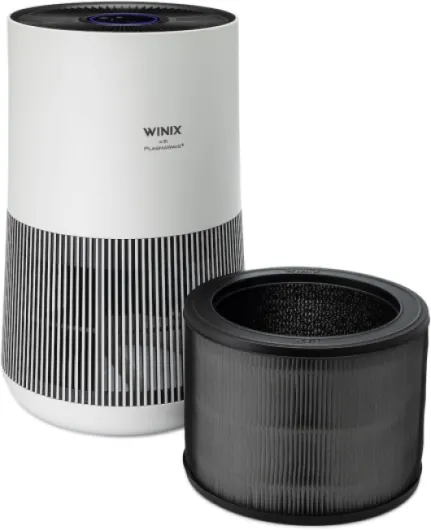
Maintenance is also pretty painless. The all‑in‑one filter means you don’t have to juggle multiple parts. You just pop off the cover, pull out the cartridge, and either clean the pre‑filter or replace the whole thing when it’s time. The app tells you the filter status, so you don’t have to guess. The only small downside is that replacement filters aren’t free, and over time that adds up, especially if you run it many hours a day. But that’s true for any real HEPA purifier.
In terms of physical comfort, the unit doesn’t blow cold air at you directly like a fan; the airflow goes upwards, so you don’t feel a draft when it’s near the bed. That’s a plus if you hate air blowing in your face while you sleep. Overall, from a comfort and usability angle, it’s pretty friendly: quiet enough, simple to operate, and doesn’t demand constant attention.
Real-world performance: noise, air quality and how fast it reacts
In terms of performance, I mainly tested the T500 in a 15–18 m² bedroom and briefly in a small living room. In the bedroom, it handles the space easily. On auto mode, it usually stays at low or medium, and the air quality indicator sits in the “good” zone unless I open the window onto a busy street or start vacuuming. When that happens, you can hear the fan speed up within a minute or two, and after 15–30 minutes it calms back down.
Noise-wise, this is where it shines for a bedroom. The spec sheet lists 26.5 dB in sleep mode and around mid-30s at low speed, and that matches my experience: in sleep mode, it’s a soft, constant hum that fades into the background. If you sleep with a fan or white noise, it’s fine. My partner, who hates loud fans, accepted it after the first night, which says a lot. At higher speeds, you definitely hear it, but it’s more of a whoosh than a harsh noise. You won’t want max speed while watching a quiet movie, but for clearing smells after cooking or airing a dusty room, it’s okay.
On the air quality side, the main things I noticed after a few days were: less dust settling on surfaces and fewer morning sneezes. I usually wake up with a slightly stuffy nose during pollen season; after running this every night, that was noticeably reduced. It didn’t magically fix everything, but the difference was clear enough that I’d miss it if I turned it off. For smells, it helps with light cooking odors and general stuffiness, but if you burn something in the kitchen, it takes a while to clear unless the purifier is in the same room.
One thing to be realistic about: the 50 m² claim is optimistic if you want fast cleaning. For a single closed bedroom or office, it’s strong enough. For a big open living room or an open-plan flat, you’re asking a lot from a unit of this size and CADR. In those cases, it’ll still improve things, just more slowly. But for its intended use (bedroom, study, small living room), the performance is pretty solid and matches the specs in real life.
What the Winix T500 actually offers on paper
On paper, the Winix T500 checks most of the boxes people look for in a home air purifier. You get a CADR of 250 m³/h, which is decent for rooms up to around 20–30 m² if you want proper circulation, and technically rated up to 50 m² if you’re okay with slower air turnover. It uses a 360° all‑in‑one HEPA filter with integrated pre‑filter and carbon layer, plus their PlasmaWave tech as a final stage. In simple terms: it grabs dust, pollen, pet dander, and tries to reduce smells and some VOCs.
The smart side: it connects via Wi‑Fi to the Winix app, and works with Alexa and Google Assistant. You can see the current air quality, change fan speeds, set schedules, and check filter status. On the device itself, there’s a digital display with air quality indicator, fan speeds, auto mode, and sleep mode. It’s powered by a 55 W motor, weighs about 3.1 kg, and measures roughly 24 x 24 x 37 cm, so it’s fairly compact and easy to move around.
The brand pushes the fact that it’s Allergy UK and AHAM certified, which at least tells you it’s not some random no-name purifier with fake specs. The claimed particle removal is up to 99.97% down to 0.3 microns with the HEPA filter, and they also mention 99.999% at 0.03 microns if you count the full system. In real life, that just means it’s in the serious HEPA category, not a simple dust filter.
In practice, what all that means is: it’s clearly built for bedrooms, living rooms, and home offices, not giant open-plan spaces. It’s small enough to sit in a corner without being annoying, but powerful enough that you actually feel a difference in dust and sneezing after a few days. If you expect it to handle smoke from a whole flat or heavy cooking smells from an open kitchen, that’s pushing it; as a single-room unit, the specs make much more sense.
How effective is it for allergies, dust and everyday use?
Effectiveness is always the big question with air purifiers: do you actually feel a difference or is it just a noisy box with lights? With the T500, after a few days of running it mainly at night and a bit during the day, I did notice less dust and slightly fewer allergy symptoms. I’m not severely allergic, but I usually get itchy eyes and a bit of sneezing in spring. With this running, the morning sneezing went down, and my eyes felt less irritated, especially on days when the pollen count was high outside.
For dust, the 360° intake seems to help. Surfaces in the bedroom didn’t get dusty as quickly as usual. I’m not saying you can skip cleaning, but I wasn’t wiping visible dust off shelves every two days like before. The pre‑filter does catch a decent amount of larger particles; when you look at it after a week or two, you can see it’s actually doing something. The HEPA filter is hidden inside the all‑in‑one cartridge, so you don’t see the fine particles, but given the reduction in symptoms, it’s clearly working.
For odors and smoke, it’s okay but not magic. It helps with light smells: cooking drifting in from another room, a bit of mustiness after keeping windows closed, or pet smells if the door is open. But if someone smokes heavily inside or you burn food, you’ll still need ventilation plus the purifier. The carbon filter has its limits, and the size of the unit doesn’t turn it into an industrial deodorizer. Think of it as reducing smells, not erasing them.
Overall, I’d say its effectiveness is good for allergies, dust and general air freshness in a bedroom-sized space. It’s not a cure for asthma or a replacement for regular cleaning and airing out the room, but as an extra layer of help, it clearly does something. If you’re expecting total silence and pure mountain air, you’ll be disappointed. If you’re realistic and just want to breathe a bit easier and have less dust floating around, it gets the job done.
Pros
- Very quiet in sleep and low modes, suitable for bedroom use at night
- Good filtration performance for dust, pollen and everyday allergens in small to medium rooms
- Simple to use with auto mode and sensors, plus optional app and Alexa/Google control
Cons
- Filter replacements add noticeable long-term cost
- CADR and size are a bit limited for large open spaces despite the 50 m² claim
Conclusion
Editor's rating
The Winix T500 is a solid, no-nonsense air purifier for bedrooms and small living spaces. It’s compact, reasonably quiet, and actually improves air quality in a noticeable way, especially for dust and mild allergies. The HEPA and carbon combo does the heavy lifting, and the auto mode plus sensors make it easy to just leave it running without micromanaging. Noise levels in sleep mode are low enough for most people to tolerate at night, which is probably its biggest strength.
It’s not perfect: the 50 m² claim is a bit optimistic if you expect fast cleaning in big open rooms, and filter replacements will add to the long-term cost. The app and Alexa integration are nice to have but not essential; if you don’t care about smart features, you might feel you’re paying partly for functions you won’t use. The design is simple and practical rather than stylish, so it blends in rather than impressing anyone.
If you’re an allergy sufferer, have pets, or just want cleaner air in a bedroom or home office, this is a good, reliable option that gets the job done without too much noise or hassle. If you’re trying to purify a huge living room or want something ultra-cheap, you should look elsewhere or go up a size. For its intended use, though, it’s a pretty solid balance between performance, comfort, and price.