
Summary
Editor's rating
Value for money: solid hardware, pricey software frustration
Design: compact, neutral look, but not really “grab and go”
Energy use & noise (since there’s no battery)
Build quality, maintenance, and how it holds up over time
Air purification performance: good, quiet, and mostly hassle‑free
What this Philips 3400 actually is and what it promises
Humidification & real-life comfort: helps a lot, but can overshoot
Pros
- Quiet and efficient air purification with HEPA + carbon filters and good CADR for bedrooms and medium rooms
- Humidifier actually improves comfort in dry environments (less dry throat, blocked nose, and dry skin)
- 2‑in‑1 design saves space and only uses one plug, with low energy consumption and decent build quality
Cons
- App and Wi‑Fi connectivity can be unreliable, which affects humidity control and overall experience
- Humidification can overshoot in small rooms if not monitored, potentially making the air too damp
- Filters and replacement parts are not cheap, and there is no physical remote despite the higher price

Specifications
View full product page →| Brand | PHILIPS |
Why I wanted a 2‑in‑1 instead of two separate machines
I picked up the Philips 2‑in‑1 Air Purifier & Humidifier 3400 Series (AC3420/10) because my flat gets dry in winter and dusty all year. I was tired of running a small purifier plus a cheap humidifier that left white dust on furniture. I wanted one device that I could just leave in the bedroom and forget about, ideally with some kind of auto mode so I didn’t have to babysit it every night.
I’ve been using it mainly in a 16–20 m² bedroom and sometimes moving it to the living room (around 30 m²). I let it run almost every night for a few weeks, mostly in auto or sleep mode, and I also played with the app to see if the connected features were actually useful or just a gimmick. I’m sensitive to dry air (blocked nose, dry throat, itchy eyes), so I notice pretty fast if a humidifier does nothing or overdoes it.
On paper, the specs look solid: HEPA + carbon filters, CADR 300 m³/h, coverage up to 78 m², humidification up to 650 ml/h Overall, my experience is pretty mixed but leaning positive. The air does feel cleaner and the dryness is clearly reduced, especially at night. But the app and humidity control are the weak points, and if you rely heavily on the smart features, you might get annoyed fast. If you just want it to quietly purify and add some moisture without obsessing over exact numbers, it’s more convincing.
Value for money: solid hardware, pricey software frustration
Let’s talk about whether this thing is worth the money. The Philips 3400 sits in the mid to high price bracket for a home air purifier, and you’re paying extra for the 2‑in‑1 (purifier + humidifier) and the brand name. If you bought a decent standalone HEPA purifier and a good evaporative humidifier separately, you could probably match the functionality for a similar or slightly lower price, but you’d have two devices taking up space and using two plugs.
Where it earns its price is mainly in the quiet performance and compact 2‑in‑1 setup. For a baby room or bedroom, it’s convenient to just have one unit doing both jobs quietly. Several Amazon users mention better sleep, less snoring, and less dryness, and I’d agree with that. If that’s your main goal, it delivers. The filters lasting around a year and the low power draw also help over the long term, though replacement filters are not cheap, so you need to factor that into the total cost of ownership.
The part that hurts the value is the software situation. When you pay this much, you expect the app to be stable and the Wi‑Fi features to work reliably. The fact that at least one user calls the product "unfit for purpose" because of humidity overshooting and an unreliable app is not something to ignore. My own app experience was mixed: it worked, then randomly disconnected, then worked again. Not catastrophic, but not confidence‑inspiring either.
So, in terms of value, I’d put it like this: if you mainly care about quiet purification and decent humidification in one box, and you’re okay using the physical controls and not relying 100% on the app, it’s a good but not cheap option. If you’re buying it specifically for the smart features and tight humidity control via app, then for this price, the value is weaker and you might want to look at competitors with more reliable software or accept using two separate, simpler devices.
Design: compact, neutral look, but not really “grab and go”
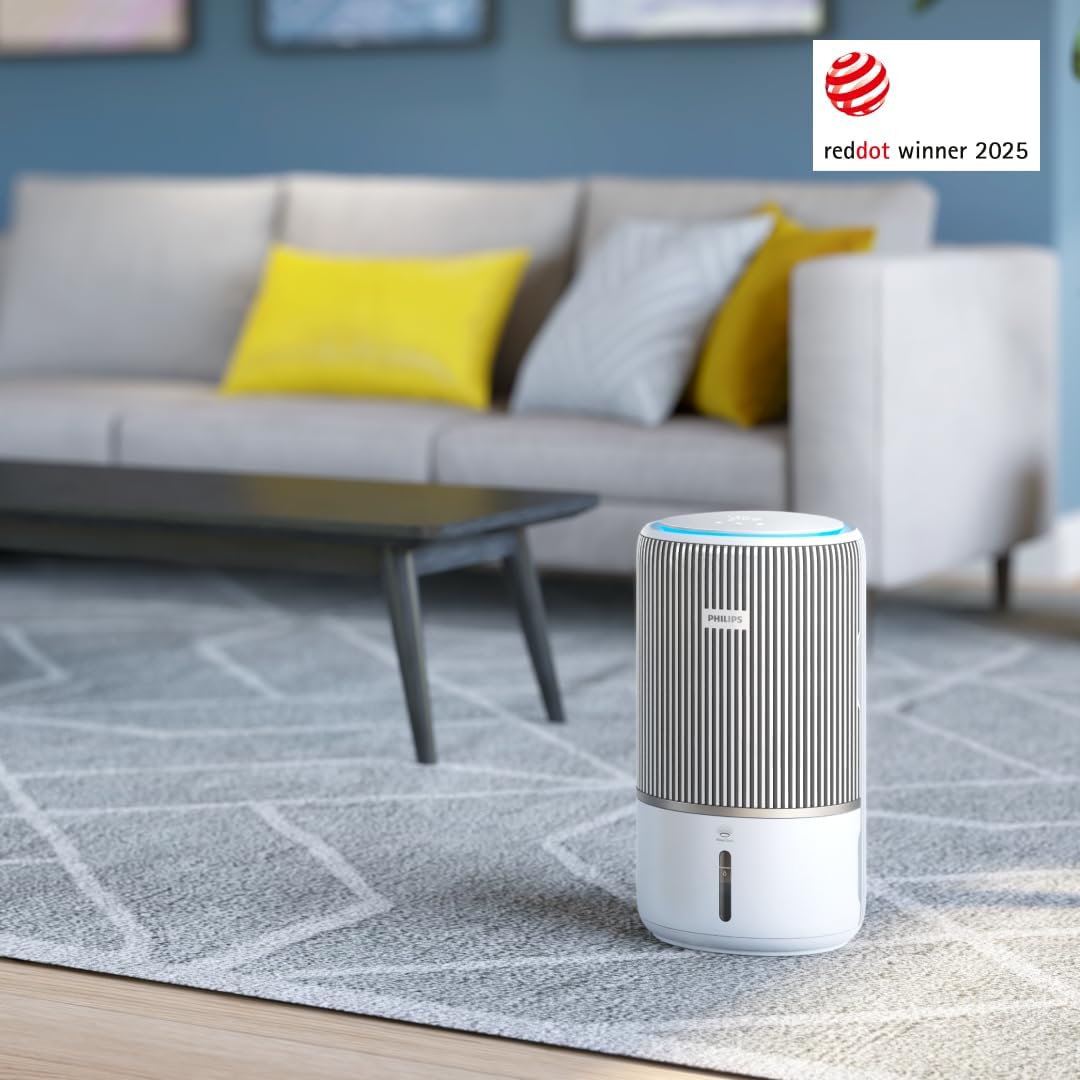
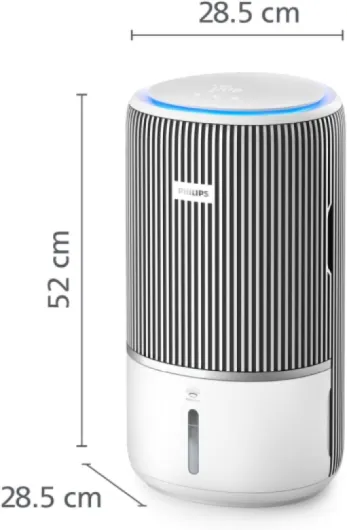
Design‑wise, the Philips 3400 is pretty straightforward. It’s a white tower, about 52 cm high and 28.5 cm wide/deep, so roughly the footprint of a small side table. It weighs around 6.5 kg. That’s not crazy heavy, but it’s also not something you casually drag from room to room every day, especially once the water tank is full. One Amazon review saying “not really a mobile unit” is spot on: you pick a room and mostly leave it there.
The look is very plain: white plastic body, black top with the air outlet, and a small front display. No flashy lights or weird shapes, which I liked. It blends into a corner and doesn’t scream “appliance”. If you care about aesthetics, it’s neutral enough for most interiors. The build feels decent but not premium — more like solid mid‑range plastic. Nothing flexes or creaks when you move it, and the panels click in place properly.
The control layout is simple: touch buttons on the top for power, modes, fan speed, and humidity settings. The display shows air quality and humidity with numbers and icons. You can use it fully without the app, which is important given the software complaints. I personally used the physical controls a lot more than the app after the first few days, because they’re faster and more reliable. The downside: there is no physical remote, and for this price, that feels like a miss. If Wi‑Fi or the app acts up, you have to walk over to it every time.
One practical point: you need to leave some space around it so it can circulate air properly. In my 16 m² bedroom, I kept it about 30 cm from the wall and away from curtains. It’s not gigantic, but if your room is already crowded, you’ll notice it. Overall, the design is functional, clean, and a bit boring, which for an air purifier is fine. Just don’t expect fancy materials or super compact size — it’s a practical box that does its job, not a decorative object.
Energy use & noise (since there’s no battery)
There’s no battery here, it’s a corded electric device, so I’ll treat this section as energy use and daily running noise — basically the “can I leave it on all the time without worrying?” part. According to the specs, the maximum power draw is 43 W. That’s roughly like a small light bulb or a laptop charger. In real life, the unit doesn’t sit at max all the time. In auto or sleep mode, it spends most of its time at lower fan speeds, so the average consumption is probably closer to 15–25 W in a normal bedroom scenario.
If you let it run 24/7 at an estimated 20 W average, that’s around 0.48 kWh per day. Depending on your electricity rate, that’s not crazy. For me, that’s within the range I’m okay with for something that improves air quality and comfort. I wouldn’t worry about energy use unless your electricity prices are very high or you plan to run multiple units.
On the noise side, it’s honestly one of the quieter units I’ve used. Sleep mode is barely audible — more like a very faint airflow than a fan. In auto mode, it’s usually quiet, and you only really hear it when it detects something and jumps to a higher speed. At full blast, it’s noticeable but not jet‑engine loud; it’s more like a normal room fan on medium. For watching TV or sleeping, I kept it in auto or sleep and had no real issues.
So, while there’s no battery freedom here, as a plug‑in device it’s easy to live with. Low-ish power draw, very low noise at night, and no weird humming or rattling. If you’re sensitive to noise, this is one of the better options I’ve tried so far. Just don’t expect it to run off a battery or be portable — it’s meant to sit in one spot and stay plugged in.
Build quality, maintenance, and how it holds up over time
I haven’t had it for years, obviously, but I can give a fair idea based on a few weeks of daily use and by comparing to other Philips purifiers I’ve seen. The overall build feels solid enough for a home appliance in this price range. The casing doesn’t feel cheap or flimsy, and the removable panels for the filters and water tank slide in and out without feeling like they’ll snap after three months. The weight (6.5 kg) also helps — it doesn’t feel hollow.
Maintenance is pretty straightforward but not zero. You have to:
- Clean the pre‑filter every few weeks (vacuum or rinse, depending on dust levels).
- Check/replace the HEPA + carbon filters roughly once a year (the unit tracks this and warns you).
- Rinse and clean the water tank and humidification filter regularly to avoid slime or smells.
If you ignore the humidifier cleaning, any brand will eventually smell or grow gunk, so that’s not unique to Philips. So far, no odd noises, no error codes, and no issues with the main fan. One Amazon reviewer mentioned 9 months of nightly use with no performance decline, which matches what I’d expect from Philips. The filters are original Philips parts (FY3400 & FY3401), and they claim about a year of optimal performance, which seems realistic for average use.
The weak spot isn’t the hardware, it’s the software and support. The very negative 1‑star review describes an app that disconnects and then refuses to reconnect, plus poor customer support with a useless chatbot. I didn’t get it quite that bad, but I did have a couple of random disconnects where the app just wouldn’t see the device for a while. That’s annoying when a core feature (humidity target control) is tied to the app. If Philips doesn’t improve the app, the hardware might outlast the software convenience, which is a shame.
Air purification performance: good, quiet, and mostly hassle‑free
On the purification side, I have almost nothing serious to complain about. In my bedroom, the Philips 3400 does a pretty solid job cleaning the air. I noticed less dust on surfaces over a couple of weeks, and I woke up with less of that stuffy, heavy feeling in the morning. I don’t have lab instruments, but compared to my previous small purifier (cheaper brand, similar HEPA spec), this one circulates air faster and seems to catch more dust, especially when I leave it on auto 24/7.
The auto mode is genuinely useful. When I open a window to a busy street, or start cooking and leave the door open, the fan ramps up noticeably within a minute or two. You can hear it, but it’s still reasonable. After around 10–15 minutes, it usually calms down again. For a 20 m² room, the claimed CADR of 300 m³/h feels realistic — the air “clears” fast. One Amazon user mentioned using it nightly for 9 months with no performance drop, and that tracks with the filter size and design. After a few weeks, my pre‑filter already had visible dust, which is a good sign it’s actually catching stuff.
Noise levels are where it shines. In sleep mode, it’s basically a very soft whoosh. The 16.5 dB spec feels believable. I’m a light sleeper and usually hate fan noise, but this didn’t bother me at all at the lowest setting. In auto, it’s still quiet most of the time unless it detects something and ramps up. For a bedroom device, that’s a big plus. Also, the display dimming in sleep mode works well — no bright light blasting in your face at 2 a.m.
One thing to keep in mind: the filters are not cheap, and you’ll likely need to replace them roughly once a year if you use it daily. The device tracks filter life and shows an alert, which is handy, but it’s an ongoing cost. Still, for the level of purification and the low noise, I’d say the performance is solid. If you mainly want a purifier and see the humidifier as a bonus, you’ll probably be happy with this part.
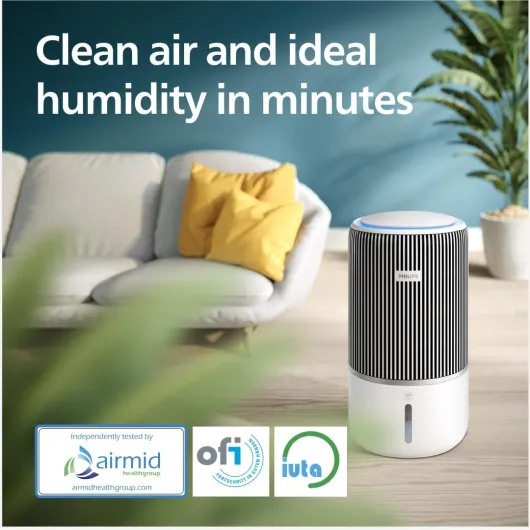
What this Philips 3400 actually is and what it promises
Let’s start with what this thing is supposed to do. The Philips 3400 Series is a 2‑in‑1 device: air purifier plus humidifier in one tower. It uses a 3‑layer HEPA filtration system with active carbon that claims to catch 99.97% of particles down to 0.003 microns and also reduce gases and VOCs. In normal words: it should handle dust, pet dander, pollen, smoke, and some smells. For the humidifier part, it uses Philips’ NanoCloud evaporative system, which is basically a wet filter that a fan blows through, meant to avoid the white dust you get from cheap ultrasonic models.
On the spec sheet, it’s rated for rooms up to 78 m² with a CADR of 300 m³/h. In practice, I’d say it’s more realistic for a bedroom or a medium living room if you want strong humidification and quiet operation. The humidification rate is up to 650 ml/h, which is plenty; in my small bedroom it can raise humidity by about 10–15% over a few hours if the doors are closed. You can run it in purifier‑only mode, humidifier‑only mode, or both at once.
The device has a small digital display on the front showing air quality, humidity, and the mode. It supports control through the Philips Air+ app, including schedules and voice assistants (Siri, etc.) if you’re into that. Power draw tops out at 43 W, so it’s roughly like running a small fan continuously. Noise in sleep mode is extremely low, and it does dim the display automatically, which is nice if you hate blinking lights in the bedroom.
On paper, it ticks most boxes: certified HEPA, low noise, low consumption, automatic modes, and a filter life of about a year (with smart replacement reminders). The catch is that a lot of this depends on the app and the sensors working properly. If the app connection drops, you lose some fine‑tuning, especially for humidity targets, and then it becomes more of a basic but still functional unit. So the promise is strong, but the real experience depends heavily on how stable the software is in your home setup.
Humidification & real-life comfort: helps a lot, but can overshoot
The humidifier part is where things get more interesting. In my case, the comfort difference was clear: less dry throat, no more waking up with a blocked nose, and my skin felt less tight in the morning. One of the Amazon reviews saying “no more blocked nose in the morning” matches exactly what I noticed after a few nights. My flat usually sits around 35–40% humidity in winter; with this running a few hours before bed and during the night, it climbed into the 45–55% range, which is much more comfortable.
The NanoCloud system is basically an evaporative pad with a fan. The good part: no visible mist, no white dust on furniture, and the water consumption is reasonable. I had to refill the tank roughly every 2–3 days when running it nightly in a small bedroom, which is in line with what another user reported. Refilling takes a couple of minutes: you pull out the tank, fill it at the sink, slide it back in. Not complicated, just one more thing to remember if you’re lazy like me.
Now, the downside: the humidity control can be hit or miss, especially if the app misbehaves. One angry review mentioned the unit pushing humidity up to 70%+ and leaving the room damp. I didn’t get that extreme, but I did see it overshoot my target by a good 5–10% at times, especially if the app lost connection and I couldn’t easily adjust the limit. If you live in a small, closed bedroom and run it on a high setting all night, you need to keep an eye on the humidity level at the start until you find the right balance.
In practice, I ended up using it like this: set a moderate humidity target (around 50%), use auto humidification, and avoid blasting it at full power with doors completely shut for many hours. With that approach, it kept the room comfortable without feeling swampy. So in terms of effectiveness, it definitely improves comfort in dry environments, but it’s not fire‑and‑forget perfect. If you’re very picky about exact humidity levels, or your room is tiny, you’ll want to monitor it a bit at the start.
Pros
- Quiet and efficient air purification with HEPA + carbon filters and good CADR for bedrooms and medium rooms
- Humidifier actually improves comfort in dry environments (less dry throat, blocked nose, and dry skin)
- 2‑in‑1 design saves space and only uses one plug, with low energy consumption and decent build quality
Cons
- App and Wi‑Fi connectivity can be unreliable, which affects humidity control and overall experience
- Humidification can overshoot in small rooms if not monitored, potentially making the air too damp
- Filters and replacement parts are not cheap, and there is no physical remote despite the higher price
Conclusion
Editor's rating
Overall, the Philips 2‑in‑1 Air Purifier & Humidifier 3400 Series is a solid but imperfect all‑rounder. On the hardware side, it does what it claims: it cleans the air quietly, reduces dust and allergens, and adds enough moisture to make a real difference in dry rooms. In a bedroom or baby room, it’s very comfortable to live with: sleep mode is almost silent, the display dims, and you don’t have to juggle two separate devices. Several user reviews talking about less blocked nose, less dryness, and better sleep line up well with my own experience.
Where it stumbles is in the software and humidity control. The app can be flaky, and if you rely on it heavily to manage humidity targets, you might get frustrated. In some setups, the humidifier can overshoot and push humidity higher than ideal if you just let it run without paying attention, especially in small rooms. Support also doesn’t sound great from at least one very unhappy buyer, which doesn’t help confidence.
I’d recommend this to people who: want a quiet, 2‑in‑1 unit for a bedroom or baby room; mainly care about comfort (less dryness, less dust) rather than perfect smart home integration; and are okay with basic physical controls and occasional maintenance. I’d tell you to skip it if: you are very picky about rock‑solid app control, you live in a very small room where humidity overshoot could be an issue, or you’d rather have two cheaper, simpler devices with no cloud or app involved. For most average users, it gets the job done well, but it’s not flawless, especially on the software side.