Summary
Editor's rating
Price, filters, and whether it’s worth the money
Design and noise: small footprint, almost invisible on low
Noise, sleep, and day-to-day comfort
Modes, airflow, and everyday usability
What you actually get out of the box
How well it actually cleans the air (pets, dust, and cooking tests)
Pros
- Very quiet on low and sleep modes, easy to keep on 24/7
- Noticeable reduction in dust, pet hair, and lingering cooking smells in medium to large rooms
- Simple controls with auto mode, PM2.5 display, and timer make it easy to use
Cons
- “2300 sq ft” coverage claim is optimistic; more realistic as a strong single-room purifier
- Replacement filters every 3–6 months add to long-term cost
- Some users report fan squeaking over time, pointing to average build quality

Specifications
View full product page →| Brand | AMEIFU |
| Color | white |
| Product Dimensions | 13"D x 7"W x 7"H |
| Floor Area | 2300 Square Feet |
| Specification Met | EPA Certified |
| Noise Level | 15 Decibels |
| Particle Retention Size | 0.3 Micrometer |
| Controller Type | Button Control |
Big room, small box: does this purifier really handle 2300 sq ft?
I’ve been running this AMEIFU air purifier in my living room and hallway area for a few weeks now. My setup: open-plan space, roughly 800–900 sq ft, two dogs that shed, and a kitchen that loves to spread cooking smells everywhere. I didn’t buy it to admire it; I bought it because I was tired of dust on everything and dog smell hitting me when I walked in the door. So this is coming from a pretty practical point of view: does it actually clear the air, or is it just another noisy box with lights?
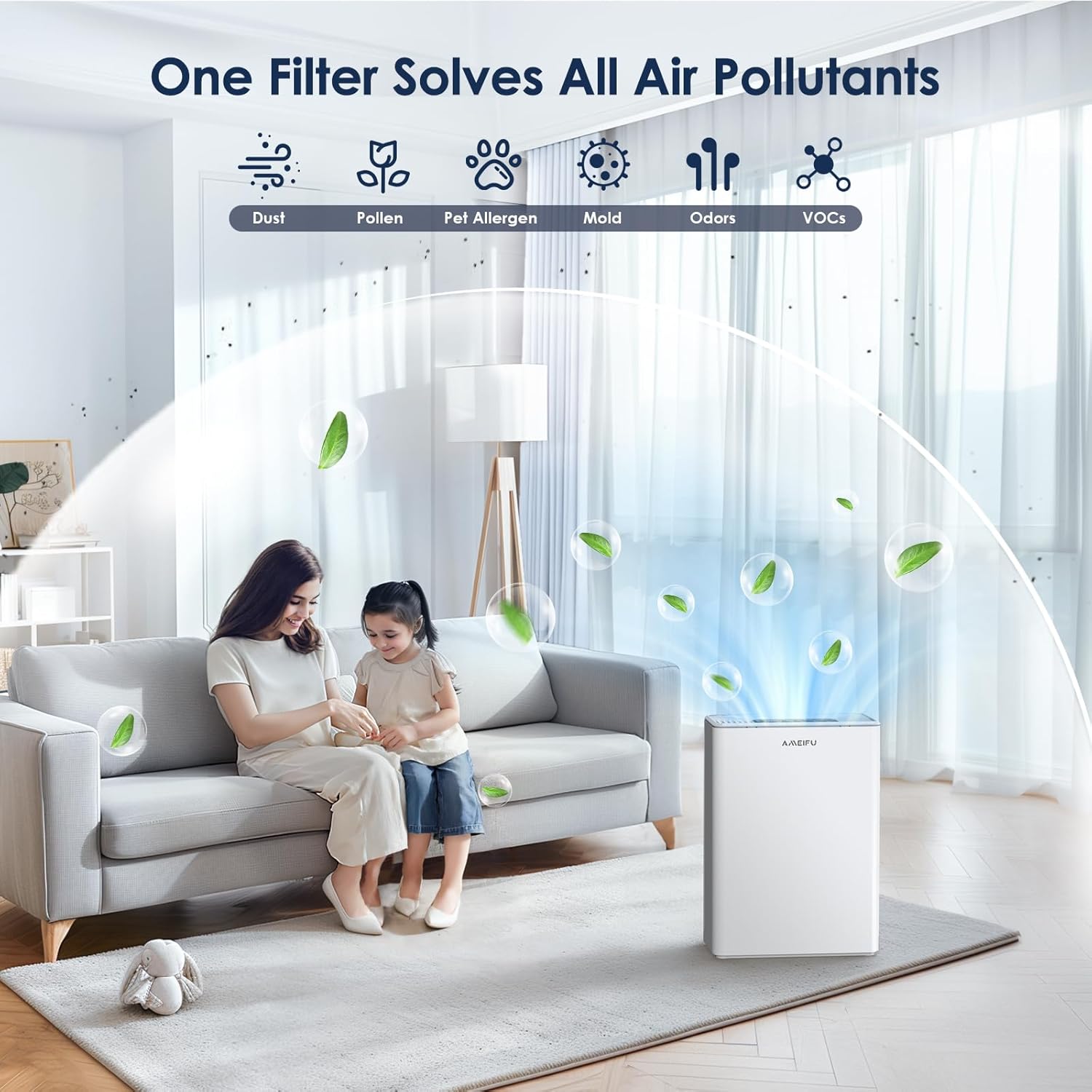
The promise on the box is pretty big: “up to 2300 sq.ft”, H13 True HEPA, 3 fan speeds, auto mode, timers, and very low noise. On paper it looks like one of those all-rounder machines that tries to do everything. In practice, I mostly used auto mode and sleep mode, with a few tests on max speed after frying food or when the dogs were going crazy and kicking up hair.
My main expectations were simple: less visible dust on furniture, fewer random sneezing fits, and not having to shout over the fan while watching TV. I also wanted to see if the PM2.5 display actually means anything or if it’s just there for show. So I paid attention to how fast it reacted when I cooked, vacuumed, or opened a window on a polluted day. I also checked how dirty the filter got after the first couple of weeks.
Overall, it does a pretty solid job as a daily air cleaner, but it’s not some miracle machine. It improves the air, it’s quiet on low, and it’s fairly easy to live with. On the downside, the “2300 sq ft” claim is optimistic if you expect deep cleaning in every corner, and replacement filters are not free, so you have to factor that into the long-term cost. I’ll break down the good and the annoying parts in the sections below.
Price, filters, and whether it’s worth the money
In terms of value for money, this AMEIFU sits in that mid-range zone. It’s not as cheap as the tiny desktop purifiers, but it’s also not in the high-end price range of brands like Dyson or Coway. For what you pay, you get a H13 HEPA filter, a decent motor, low noise, and a few practical features (auto mode, timers, PM2.5 display). If you look at what else is on Amazon in this price bracket, it’s pretty competitive, especially for pet owners and people with medium to large rooms.
The real cost over time is the replacement filters. The brand recommends changing them every 3–6 months, depending on how dirty your environment is and how many hours per day you run it. I checked the filter after a few weeks with two dogs, and it was already catching a lot of hair and dust, which is good, but also means you can’t just forget about filter changes. The official filters are available on Amazon (search B0BCGFKQCR), and they’re not dirt-cheap. If you plan to run this 24/7, expect to buy 2–3 filters a year.
Compared to some cheaper purifiers that cover only 150–200 sq ft, this one does feel like a step up in terms of airflow and coverage. On the other hand, that “2300 sq ft” claim is optimistic. I’d treat it as realistic for:
- One big living room or open-plan area up to ~800–1000 sq ft for general improvement
- Very solid coverage for bedrooms and offices up to ~300–500 sq ft
So, is it worth it? If you have pets, light allergies, and a medium to large main room, I’d say it’s good value. It’s not the cheapest, but it feels more capable than the budget mini units. If you’re super sensitive to air quality, have serious asthma, or want full smart-home integration and detailed CADR numbers, you might want to look at more premium brands. For normal household use, it hits a decent balance between price, performance, and noise.
Design and noise: small footprint, almost invisible on low
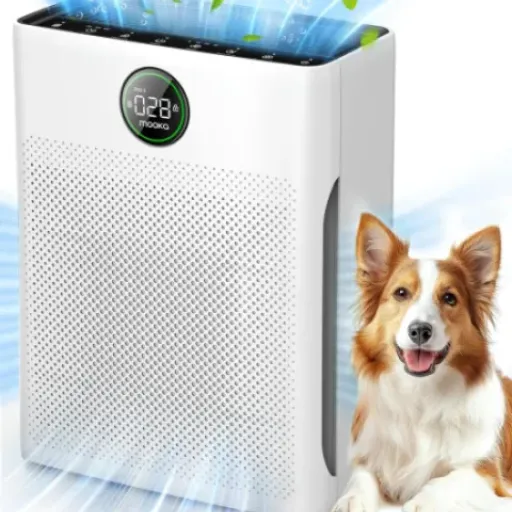
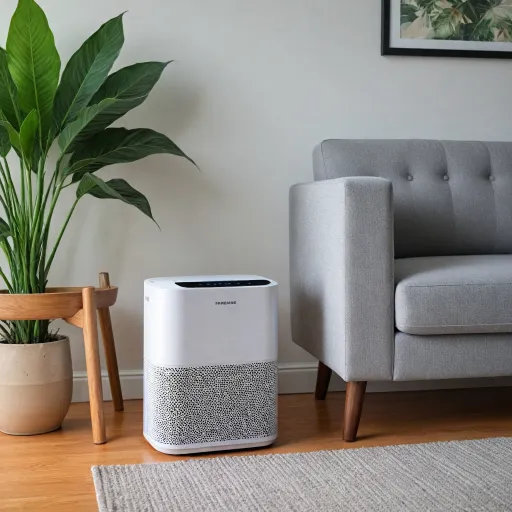
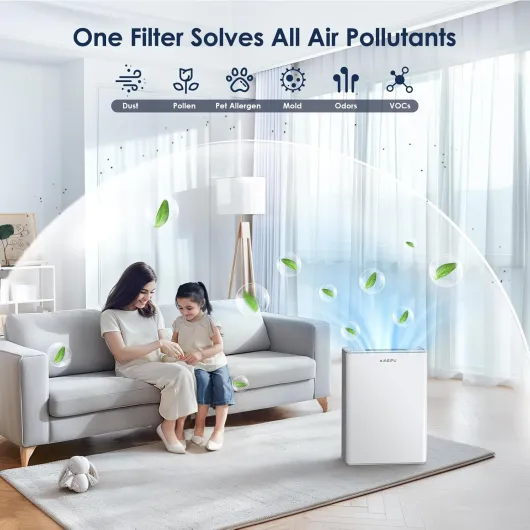
Design-wise, this purifier is pretty compact for something claiming large-room coverage. The dimensions listed are about 13"D x 7"W x 7"H, so it’s basically a tall-ish rectangular column. In reality, it tucks easily next to a sofa or in a corner without drawing much attention. The white color is neutral; it doesn’t look fancy, but it doesn’t look cheap either. It’s just a plain white box with a black top panel and a light ring that changes color with air quality.
The top touch panel is clear enough: icons for each mode, the digital PM2.5 reading, and the timer indicators. The touch buttons respond correctly, but they’re not super sensitive to accidental brushes, which is good. The child lock is useful if you have kids that like to press everything; one long press and the controls lock, so the settings don’t get messed up. For placement, it pulls air from the sides and blows it up from the top, so you want to leave a bit of space around it, but it’s not massive.
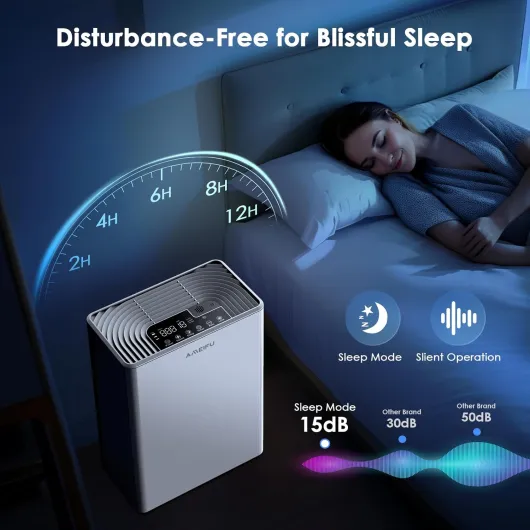
The real highlight in terms of design is the noise level. On low or sleep mode, it’s very quiet. The spec says around 15 dB, and while I don’t have a meter to confirm, it’s definitely in the “barely noticeable” range. I’ve slept with it on all night in the bedroom and forgot it was running. On medium, you hear a soft fan noise, nothing harsh. On high, it’s clearly audible and more like a small box fan, but that’s expected when it’s moving more air. For TV watching or working, low or auto mode is fine and not distracting.
One thing to mention: a few users reported fan squeaking after a while. I personally didn’t get that issue during my test period, but knowing that others did is important. The positive side is that the brand support seems to send replacements when that happens, but it’s still something that shouldn’t happen that early. So from a design/durability point of view, the overall layout and noise are good, but long-term fan quality is something to keep in mind.
Noise, sleep, and day-to-day comfort
Comfort is where this purifier does pretty well. On sleep mode, it’s genuinely quiet. I had it about two meters from my bed, and after a few minutes I forgot it was on. The manufacturer claims ≤15 dB on the lowest speed, and while I can’t measure that exactly, it’s in that “soft background hum” level that blends into the room. There’s no whistling or rattling on low, at least in my unit. For anyone sensitive to noise at night, this is a strong point.
On low and medium, it’s still very manageable. I kept it in the living room while watching TV and never felt the need to turn it off because of noise. On high speed, you definitely hear it; it’s more like a small fan running. I mostly used high for short bursts: cooking sessions, after vacuuming, or when I came back home and the place felt stuffy. I wouldn’t keep it on high all day in a quiet office, but for a couple of hours it’s fine.
The child lock is a nice touch for comfort too, in the sense that you don’t constantly need to check if someone messed with the settings. One long press, and all the touch buttons become unresponsive until you unlock it. If you have kids or even just curious guests, this avoids accidental mode changes. The top lights are visible but not blinding, and in sleep mode the brightness is reduced enough not to light up the room like a Christmas tree.
Physically moving the unit is easy enough. It weighs around 9.3 lbs (about 4.2 kg), so you can carry it from room to room with one hand. I did that a few times: daytime in the living room, nighttime in the bedroom. It’s not as convenient as having two units, but it’s doable. Overall, from a comfort point of view, it’s friendly to live with: quiet on the settings you’ll use most, simple to move, and not visually annoying. The only comfort risk is if you’re unlucky and get one of the units where the fan starts squeaking after a while, but that seems more like an occasional defect than the norm.
Modes, airflow, and everyday usability
Performance-wise, the purifier gives you a few useful modes: three manual fan speeds, auto mode, sleep mode, and a timer with 2/4/6/8/12-hour options. In daily use, I mostly stuck to auto during the day and sleep mode at night. Auto mode is pretty handy because it adjusts the fan based on the PM2.5 sensor, so you don’t need to babysit it. When the air is good, it hums quietly. When I cook or stir up dust, it ramps up, then drops back down once things clear out.
The airflow on high is strong enough that you can feel it a couple of meters away. It’s not like a big floor fan, but you definitely notice the air moving upward. If you put it in a large room and run it on high for an hour or two, you do feel the air freshen up. For a typical bedroom or medium living room, medium or auto mode is more than enough most of the time. The unit is rated at 34 watts, so even if you run it a lot, it’s not going to blow up your power bill. It’s similar to leaving a small fan or a couple of LED bulbs on.
The timer function is basic but useful. For example, if I knew I’d be out for the evening, I’d set it on high with a 4-hour timer to clean the air while I was gone, and it would shut off by itself. For sleep, I usually just left it in sleep mode all night without the timer, since it’s quiet enough. There’s also a filter replacement reminder that blinks when the filter is due; you then reset it by pressing the right combo (explained in the manual). This is better than guessing based on time alone.
One extra feature is the aromatherapy pad on top. You can drop a few drops of essential oil on the pad, and the airflow spreads the scent a bit. It’s not a diffuser, so don’t expect a strong smell across the whole house, but it can give a light scent around the unit. It’s a small bonus if you like that sort of thing. Overall, from a performance and usability angle, it’s pretty straightforward: no app, no smart home integration, but easy to operate, reacts correctly to dirty air, and doesn’t require much thinking once you set it up.
What you actually get out of the box
Out of the box, the AMEIFU FXAP2W is pretty straightforward. You get the unit, the pre-installed filter (wrapped in plastic, which you absolutely need to remove), a basic manual, and that’s it. No remote, no app, no fancy extras. The controls are on the top: power, fan speed, auto mode, sleep mode, timer, child lock, and a filter reset indicator. Everything is touch-sensitive, and it’s easy enough to figure out without reading the manual, though the filter reset button sequence is worth checking once.
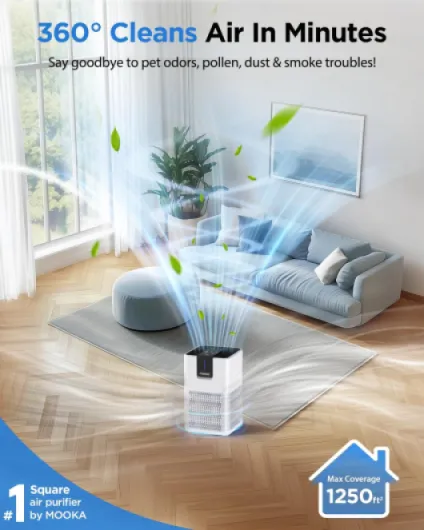
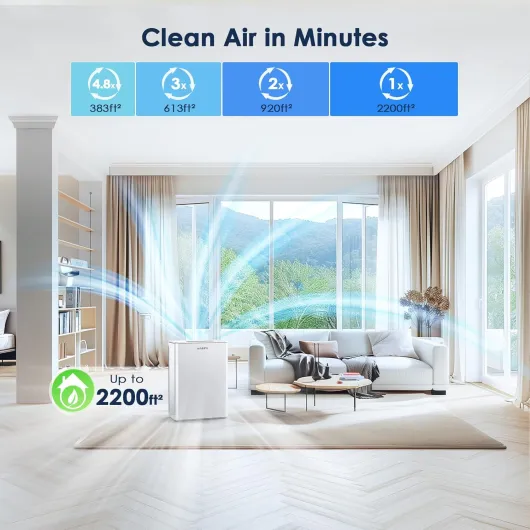
The brand claims it can handle up to 2300 sq ft, but that’s more “maximum coverage” marketing than realistic deep cleaning for a whole house. In my testing, I’d say it feels strong and efficient in a room around 300–500 sq ft, and still helpful in an 800–900 sq ft open area, but beyond that you’re stretching it. The CADR isn’t clearly advertised in big letters, which already tells you the 2300 sq ft number should be taken with a grain of salt. Still, as a single-room or small-apartment purifier, it’s decent.
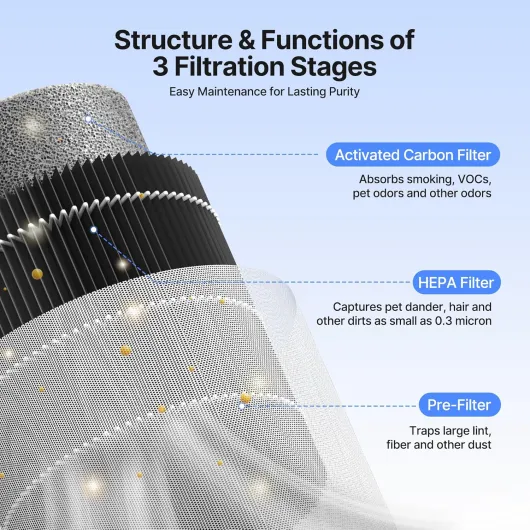
The features that matter day-to-day are: H13 HEPA filter (99.97% at 0.3 microns), 3 fan speeds + auto + sleep, PM2.5 air quality display, 5 timer options (2/4/6/8/12 hours), aromatherapy pad on top, and a child lock. No batteries, it’s AC powered, and it uses about 34W, which is not crazy for something that might run most of the day. For people with pets, there’s also a “pet/auto” style mode that basically ramps up when the sensor notices more particles.
From a use standpoint, the main thing is that it’s plug-and-play. You set it down, remove the plastic from the filter, plug it in, hit auto or sleep, and forget it. No Wi-Fi pairing, no app permissions, no account creation. Some people like connected gadgets; personally, for an air purifier, I don’t really care. I just want it to turn on, clean the air, and not be a pain to maintain. On that front, this one keeps it simple, which I appreciated.
How well it actually cleans the air (pets, dust, and cooking tests)
This is the part that matters: does it actually clean the air in a noticeable way? In my case, I noticed the biggest difference with pet hair and general dust. I have two dogs that shed, and before this purifier, I’d see a fine layer of dust and hair on the TV stand and coffee table after a couple of days. With the AMEIFU running most of the day on auto or low, I still get dust, but noticeably less. It doesn’t magically erase the need to clean, but it stretches the time between wipe-downs. Also, when the sun hits the room, I see fewer particles floating around compared to before.
The PM2.5 display isn’t laboratory-level accurate, but it reacts in a way that makes sense. If I start cooking something smoky or I fry food, the value jumps up, the ring changes color, and the fan ramps to a higher speed automatically. After 15–20 minutes, it usually drops back down and the fan calms. Same after vacuuming: the number climbs for a bit, then slowly comes back to the normal baseline. So even if the exact number might not be perfect, you can clearly see when the air is dirtier and how the purifier responds.
On smells, it’s decent but not magical. Cooking smells fade quicker with this running on high than without it, but if you cook something strong like fish, you’ll still smell it; it just doesn’t linger as long. For dog odor, it helps keep the “wet dog” smell under control, especially if you pair it with normal cleaning and open a window now and then. I’d say it reduces smells rather than fully removing them, which is pretty normal for this type of HEPA + basic carbon filter combo.
In terms of allergies, I’m not the worst allergy sufferer, but I do sneeze with dust and pollen. With this running, I had fewer random sneezes in the living room, especially on days when I had the windows closed. It’s not some miracle cure, but it clearly filters out enough fine particles to make the air feel less heavy. Overall, in real-world use, it gets the job done: cleaner-feeling air, less dust, and faster recovery from cooking and pet-related stuff. Just keep your expectations realistic about the whole-house 2300 sq ft claim; treat it as a strong single-room unit and it makes more sense.
Pros
- Very quiet on low and sleep modes, easy to keep on 24/7
- Noticeable reduction in dust, pet hair, and lingering cooking smells in medium to large rooms
- Simple controls with auto mode, PM2.5 display, and timer make it easy to use
Cons
- “2300 sq ft” coverage claim is optimistic; more realistic as a strong single-room purifier
- Replacement filters every 3–6 months add to long-term cost
- Some users report fan squeaking over time, pointing to average build quality
Conclusion
Editor's rating
After using the AMEIFU FXAP2W air purifier daily, my takeaway is pretty simple: it’s a solid, no-nonsense purifier that does what most people actually need. It cuts down on visible dust and pet hair in the air, helps with everyday smells, and runs quietly enough that you can keep it on all the time. The auto mode and PM2.5 display make it easy to just plug it in, leave it on, and let it handle the spikes from cooking, vacuuming, or pets running around. It’s not packed with smart features, but it’s easy to live with.
It’s not perfect. The “up to 2300 sq ft” claim is optimistic, and you should think of it more as a strong single-room to medium-area purifier rather than a whole-house solution. Replacement filters add up over the year, and there are some reports of fan noise developing over time, even if customer support seems responsive. If you want premium build, Wi-Fi control, and super detailed performance specs, there are better (and more expensive) options.
I’d recommend this to people who: have pets, want less dust and hair floating around, and care about low noise, especially for bedrooms and living rooms. It’s also a decent choice if you just want cleaner air without messing with apps or complex settings. I’d skip it if you expect one unit to handle an entire large house, or if you’re extremely picky about long-term build quality and want a brand with a big reputation behind it. For most everyday users, though, it’s a practical, good-value option that gets the job done.