
Summary
Editor's rating
Is the PuroAir 240 worth the money long term?
Looks fine, works fine, but it’s not décor
Noise, day-to-day use, and living with it 24/7
Build quality and how it feels for long-term use
How well it actually cleans the air day to day
What you actually get out of the box
Pros
- Noticeable improvement in dust, allergies, and everyday odors in medium-sized rooms
- Simple, hands-off operation with Auto and Sleep modes and a responsive air quality sensor
- Lightweight, easy to move, with reasonable noise levels and a 2-year warranty for peace of mind
Cons
- Replacement filters can be relatively expensive if you stick to the official ones
- Coverage claims are optimistic for large open spaces unless you accept higher noise on strong fan speeds

Specifications
View full product page →| Brand | PuroAir |
Does this little tower actually clean the air or just move it around?
I’ve been running the PuroAir 240 in my living room and bedroom for a while now, and I’ll be blunt: I bought it because my dust allergies were getting on my nerves and my place always felt a bit stuffy. I wasn’t looking for some futuristic gadget, just something that quietly pulls crap out of the air without me babysitting it all day. On paper, this thing promises to cover up to 1,000 sq ft and filter 99.9% of the usual suspects: dust, pollen, smoke, pet dander, VOCs. Big claims for a relatively small unit.
In practice, I treated it like a normal person would: I plugged it in, hit Auto mode, and mostly ignored it unless it started making noise or flashing lights. I didn’t run any lab tests, but I did pay attention to how my nose, eyes, and dust levels reacted over a couple of weeks. I also cooked, burned stuff in the pan a few times, and let some pet hair fly to see if it reacted to real-life messes, not just brochure conditions.
The short version: it does clean the air and it’s fairly hands-off, but it’s not magic. You still need to dust, and you still smell strong cooking for a bit. But compared to having no purifier, or the super cheap noisy ones I’ve tried before, there’s a clear difference in how “heavy” the air feels and how often I wake up congested. Noise-wise, it’s acceptable, but you’ll notice it on higher speeds, especially in a small room.
If you’re expecting total silence and hotel-style perfectly fresh air, you’ll be disappointed. If you want something that genuinely takes the edge off allergies and dust and you’re okay with a bit of fan noise and ongoing filter costs, this is a pretty solid option. Just go in knowing it’s a practical appliance, not a miracle box.
Is the PuroAir 240 worth the money long term?
Value on a purifier like this comes down to three things: upfront price, filter costs, and whether you actually feel a benefit. Upfront, the PuroAir 240 sits in the mid-range for home purifiers that claim around 1,000 sq ft coverage. It’s not the cheapest, but it’s also nowhere near the high-end brands that charge a lot more for similar specs and a shiny app. Considering it has a HEPA filter, carbon layer, automatic sensor, and a 2‑year warranty, the base price feels reasonable.
Where you need to pay attention is filters. Replacement filters are not free, and branded ones can add up. One reviewer pointed out that the PuroAir-branded filters are noticeably more expensive than unbranded equivalents, which is pretty common in this space. If you stick to official filters, factor that into your yearly cost. Depending on how dirty your air is and how much you run it, you’re probably swapping filters every 6–12 months. If you manage to find compatible third-party filters at half the price that still perform well, the long-term value jumps up quite a bit.
As for actual benefit, for me the main wins were: less dust floating around, fewer allergy flare-ups, and faster clearing of cooking smells. Those are tangible improvements. I also like that it’s Energy Star certified, so it’s not a power hog when running 24/7, which helps on the electricity side. Compared to super cheap purifiers I’ve tried that are loud, weak, and filter almost nothing, this feels like money better spent, even with filter costs.
Overall, I’d rate the value as pretty solid if you really need cleaner air—like if you have allergies, pets, or live somewhere dusty or smoky. If your air is already fine and you’re just curious, you might not feel it’s worth the ongoing expense. But if you actually notice congestion, smells, or dust buildup, this hits a good balance between performance, price, and hassle.
Looks fine, works fine, but it’s not décor
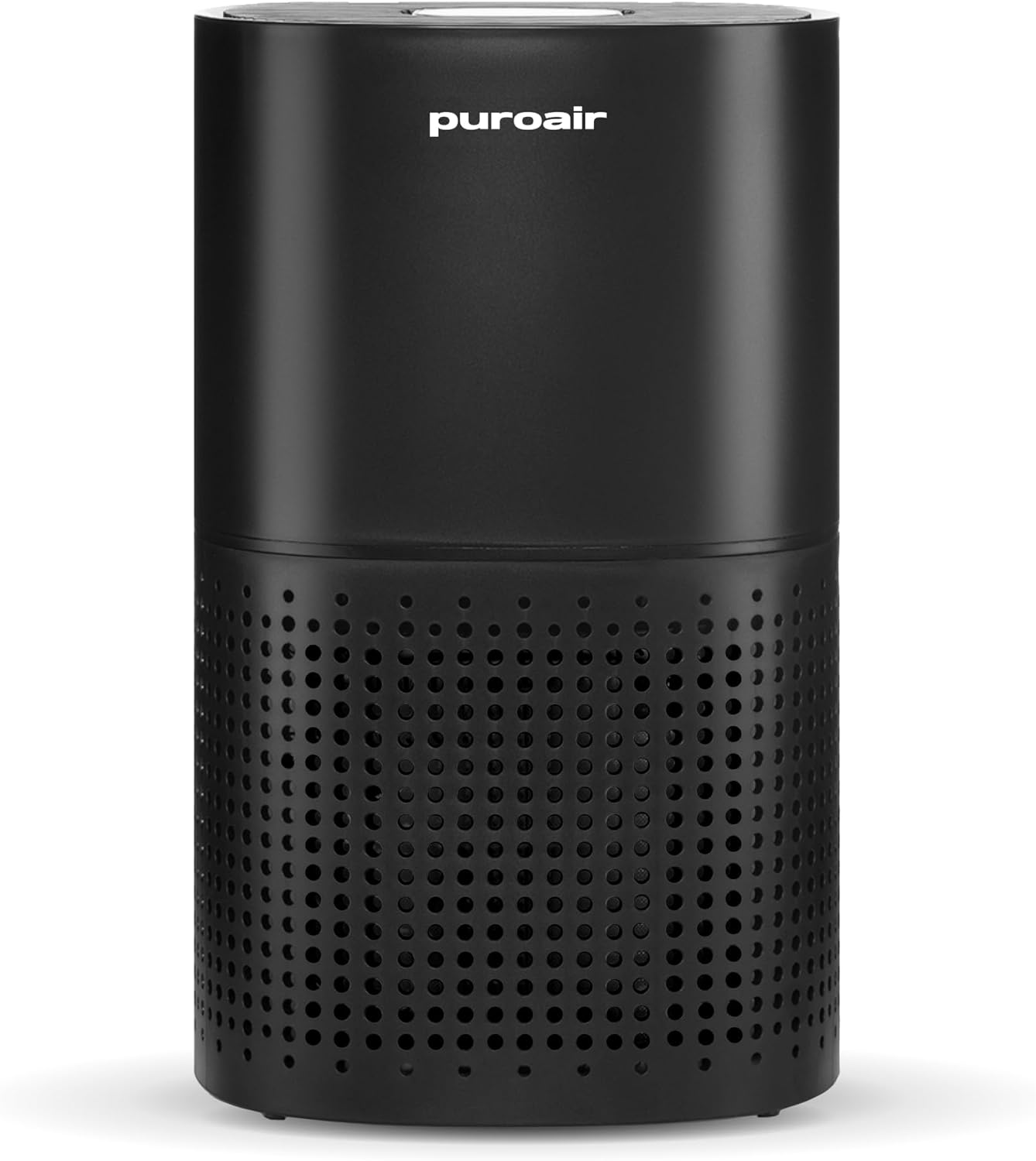
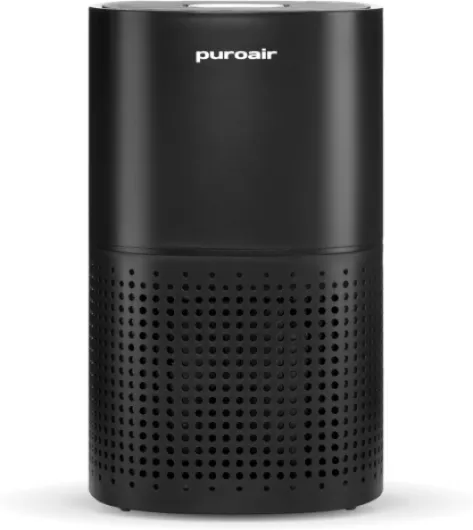
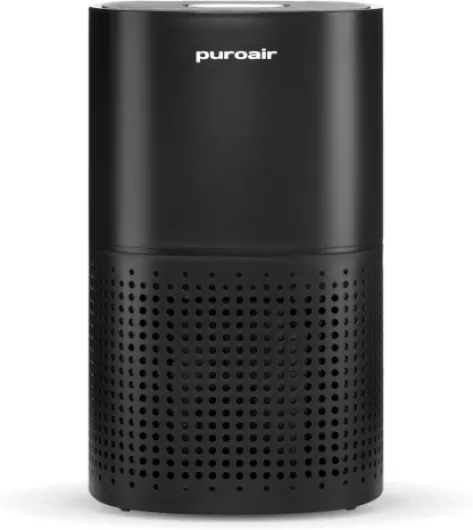
Design-wise, the PuroAir 240 is pretty basic, and I don’t mean that as an insult. It’s a black plastic tower with vents around the sides and a grille on top where the clean air comes out. No chrome, no fake wood, no weird shapes. If you like tech that disappears into the background, this does that job. It doesn’t scream “hospital” either, which is nice, but it’s not something you’re putting on display as a conversation piece.
The controls are all on the top panel, which is handy because you don’t have to bend down to fiddle with it once it’s on a low table or the floor. There’s an air quality indicator light that changes color (green/yellow/red) depending on how dirty the air is. In my use, frying food or burning toast was enough to kick it from green to yellow or red, and you could hear the fan ramp up. Once the smell cleared, it dropped back down and the light went green again. That feedback is actually helpful because you can tell it’s doing something and not just running blindly.
One thing I appreciated is that the air intake is around the sides of the unit, not just on the back. That makes placement easier than some models that need to be pulled way off the wall. You still need to leave some breathing room, but I could park it about 6–8 inches from the wall and it seemed fine. Compared to the bigger 400 model where the intake is on the back and placement is more annoying, this 240 is simpler to position in a smaller room.
If I had to nitpick, the plastic does feel a bit “appliance-grade” rather than premium, but at this price I’m not expecting brushed metal. The design is practical and low-profile. It blends in, which for an air purifier is exactly what I want. I care more about how it runs and how loud it is than whether it looks fancy, and on that front, the design gets the job done without being annoying.
Noise, day-to-day use, and living with it 24/7
Comfort here is mostly about noise and how much attention this thing demands. The PuroAir 240 is designed to run 24/7, and that’s basically how I used it. On the lowest fan setting and in Sleep mode, it’s pretty quiet. You can still hear a soft fan sound, but it’s more like background white noise than anything annoying. I could sleep with it running in the bedroom without any issue. If you’re super sensitive to noise, you’ll notice it, but it’s nowhere near as loud as a box fan or window AC.
On Auto mode, the fan speed ramps up when the sensor detects bad air (smoke, heavy cooking smells, maybe aerosol sprays). When it does this, it’s clearly audible, especially in a smaller room. It’s not jet-engine loud, but you’ll know it kicked up a gear. For me, that was fine because it usually only stayed loud for 5–15 minutes while it cleared the air, then dropped back down. If you’re on calls or watching TV, you might bump it down manually during those times, but I mostly let it do its thing.
Controls are simple: power, fan speed, Auto, Sleep, and a timer/lock on some models. No learning curve. I like that it’s basically “set and forget.” The filter light eventually comes on to tell you it’s time to change the filter, which is easy to swap out by popping off the panel. One Amazon reviewer mentioned PuroAir-branded filters being pricier than generic equivalents, and that tracks with what I’ve seen: the genuine ones cost more, but if you’re willing to dig a bit, you might find compatible ones for less. That’s something to factor into long-term comfort because no one wants to overpay for filters every 6–12 months.
Overall, from a comfort standpoint, it’s easy to live with. Noise is acceptable, controls are simple, and maintenance isn’t a hassle. It’s not totally silent, especially when it ramps up, but as a background appliance running all day, it blends in pretty well and doesn’t demand much attention after the first setup.
Build quality and how it feels for long-term use
Durability is harder to judge in a short test, but I can at least talk about build quality and what gives me confidence (or not) for the long term. The PuroAir 240 is mostly plastic, but the casing feels reasonably solid. Nothing creaks badly when you pick it up, and the top control panel doesn’t feel flimsy. The filter compartment opens and closes cleanly without feeling like it’s going to snap off after a few uses. I’ve moved it between rooms quite a few times and it hasn’t shown any signs of looseness or rattling.
Internally, the fan seems well-balanced. I’ve had cheap purifiers before where, after a few weeks, the fan noise changes or you start hearing vibrations against the casing. I didn’t get that here. Even at higher fan speeds, the noise is consistent and doesn’t sound like it’s struggling. That usually means the motor and bearings are decently built. Of course, only months or years of constant use will tell the full story, but there’s nothing early on that screams “this will die quickly.”
One thing in its favor is the 2‑year risk-free warranty and the fact that PuroAir actually highlights that. That doesn’t guarantee perfection, but it does mean if something goes wrong early, you’re not stuck. Seeing a bunch of reviews from people who’ve had older models and then bought more is also a decent sign that they don’t fall apart after a few months. I’d still keep the box and receipt for a while, just in case, but I don’t get the vibe of a disposable gadget here.
If I had to be critical, I’d say the finish is more “functional appliance” than “premium device,” so don’t expect it to age like a high-end speaker. You’ll probably see some scuffs and dust on the black plastic over time. But for something that’s going to sit in a corner and quietly pull junk out of the air, I’m fine with that. Overall, durability feels decent for the price, especially with the warranty as backup.
How well it actually cleans the air day to day
This is the part that matters: does the PuroAir 240 actually improve air quality in a way you can feel? For me, yes, noticeably, but with realistic limits. I have dust allergies and a fairly old, dusty house. After running this thing almost non-stop for about two weeks (Auto during the day, Sleep at night), I noticed I was waking up with less congestion and sneezing less in the evenings. It didn’t cure my allergies, but it took the edge off. Surfaces also seemed to stay cleaner a bit longer between dustings, which is a nice side effect.
The purifier uses a 3‑layer system: pre-filter, HEPA filter, and activated carbon. I can’t verify the 99.9% claim or the “700x smaller than a human hair” marketing line, but practically speaking, it handled dust, pet dander, and light cooking smells pretty well. When I fried bacon or accidentally let something smoke in the pan, the sensor picked it up within seconds, the light went yellow or red, and the fan jumped to a higher speed. Within about 10–20 minutes, the smell in the room was noticeably reduced, especially compared to running no purifier at all.
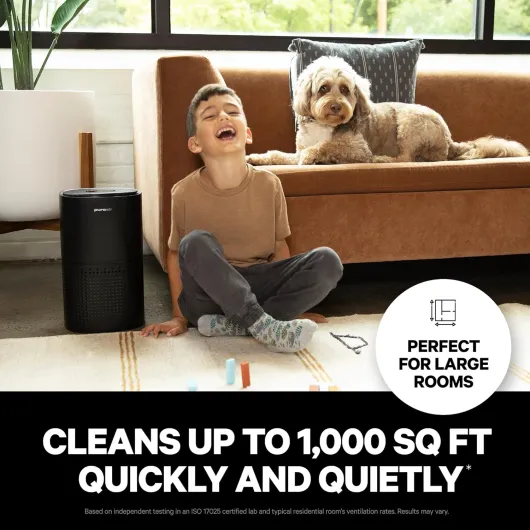
For room coverage, I think the “1,000 sq ft in one hour” spec is optimistic but not totally crazy if you’re patient and okay with higher fan speeds. In my ~400–500 sq ft open area, running it on Auto kept the air feeling less stale, and the sensor didn’t spike unless I did something obvious like cook or spray chemicals. In a smaller bedroom, it felt even more effective, especially for overnight use. I wouldn’t rely on a single 240 to handle an entire multi-story house, but for a main room or bedroom, it’s perfectly capable.
Overall, performance is solid: it reacts quickly to pollutants, reduces smells and dust, and improves comfort for allergy-prone people. It’s not some lab-grade machine, but for a home unit in this price range, it does what it claims reasonably well. Just don’t expect miracles in huge open spaces or with very heavy smoke; for that, you’d want something bigger or multiple units.

What you actually get out of the box
Out of the box, the PuroAir 240 is pretty straightforward. You get the unit itself, the main filter already installed (wrapped in plastic, so you do need to open the panel and remove that before use), a power cord, and a basic quick-start guide. No fancy extras, no complicated setup. I had it running in under five minutes. The unit weighs about 7.3 pounds, which is light enough to move room to room with one hand, so if you want it in your living room by day and bedroom at night, that’s doable without a workout.
The footprint is fairly small: the listing says 8.5" x 8.5" x 14.25" in one place and 10.63" x 10.63" x 28" in another, which is confusing. Mine is closer to the smaller, squat tower size. Either way, it’s not some huge floor hog like the big 400 model. You can tuck it in a corner or next to a couch as long as you leave some space around it so it can pull air in properly. Controls are on the top: power button, fan speed, Auto mode, sleep mode, and filter reset indicator.
The main pitch is that it handles up to 1,000 sq ft in an hour. In reality, that means in a big open space it’ll gradually clean the air, but if you want faster results, you’ll either put it in a smaller room or accept more fan noise on higher speeds. I used it in a 400–500 sq ft open-plan area and it seemed well-matched at medium speed, then moved it to a ~150 sq ft bedroom at night on sleep mode. It didn’t feel overkill in either scenario.
Overall, the presentation is simple and practical. No app, no Wi‑Fi, no smart home integration. Some people will miss that, but personally, I liked that I didn’t have to install yet another app or deal with pairing issues. It’s basically: plug in, choose mode, walk away. For a lot of folks, that’s all they want from an air purifier.
Pros
- Noticeable improvement in dust, allergies, and everyday odors in medium-sized rooms
- Simple, hands-off operation with Auto and Sleep modes and a responsive air quality sensor
- Lightweight, easy to move, with reasonable noise levels and a 2-year warranty for peace of mind
Cons
- Replacement filters can be relatively expensive if you stick to the official ones
- Coverage claims are optimistic for large open spaces unless you accept higher noise on strong fan speeds
Conclusion
Editor's rating
The PuroAir 240 is a practical, no-nonsense air purifier that does what most people need: it cuts down on dust, helps with allergies, and clears everyday smells without turning your living room into a wind tunnel. It’s light, easy to move, and simple to use—no app, no pairing, just Auto and Sleep modes that actually make sense. The sensor reacts quickly to smoke or cooking fumes, and the fan ramps up, does its job, then calms down again. For bedrooms and medium-sized living spaces, it’s well-suited, especially if you’re okay with a bit of fan noise when the air gets bad.
It’s not perfect. The plastic build is more functional than fancy, and filter replacements can add up, especially if you stick to the branded ones. The 1,000 sq ft coverage claim is a bit optimistic if you expect fast results in a big open area, but for normal rooms it’s fine. If you want deep smart-home integration or total silence, this isn’t it. But if your main goal is cleaner air, fewer sneezes, and less lingering cooking or pet smell, it gets the job done without much hassle.
I’d say it’s a good fit for: allergy sufferers, pet owners, people in dusty or smoky environments, and anyone who wants a set-and-forget purifier for a living room or bedroom. If you’re super budget-sensitive on filter costs or you only have mild air issues, you might look at cheaper, smaller units. For most everyday users who actually notice air quality problems, though, the PuroAir 240 is a solid, sensible choice.