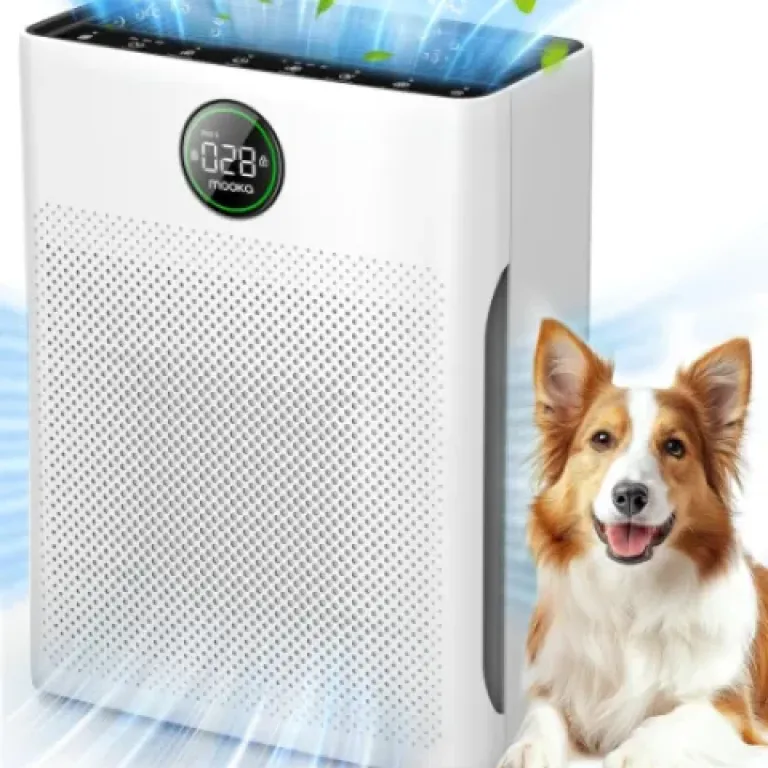

Summary
Editor's rating
Value for money: where it lands vs other purifiers
Design: simple box, decent footprint, a few quirks
Noise, day-to-day use, and how livable it is
Build quality, filters, and long-term concerns
Performance: how well it actually cleans the air
What you actually get with the MOOKA PR1
Pros
- Quiet operation with a genuinely usable Sleep mode and low noise on normal speeds
- PM2.5 sensor and Auto/Pet modes actually react to cooking, dust, and pet activity
- Washable pre-filter helps with pet hair and extends life of the main filter
Cons
- 2200 sq.ft coverage claim is optimistic for real multi-room use
- Ongoing cost of replacement filters can add up over time
- Sensor placement on back left is easy to misunderstand and leads to confusion if you don’t know it

Specifications
View full product page →| Brand | MOOKA |
Does this MOOKA actually clean the air or just look busy?
I’ve been running the MOOKA PR1 air purifier pretty much non-stop in my living room for a couple of weeks. For context, I’ve got a medium-sized open space (living room + kitchen), a dog that sheds, and I cook a lot, including stuff that usually leaves the house smelling like fried oil for hours. I’ve also used a couple of cheaper Amazon purifiers before, plus a more expensive one from Levoit, so I had something to compare it to.
Right away, this thing gave me the vibe of a practical appliance rather than a fancy gadget. It’s not huge, but it’s not tiny either. It’s the kind of device you just park in a corner and forget, which is exactly what I want from an air purifier. I didn’t bother reading the manual in depth at first, and honestly, you don’t really need to: plug in, hit power, and it starts doing its thing.
The main question I had was simple: does the air actually feel cleaner, and does it help with pet hair and smells? After a few days, I did notice less lingering food smell and the room didn’t get that dog-odor build-up it usually gets if I skip cleaning for a bit. It’s not magic, but it clearly cuts down the smell and dust in the air. The PM2.5 display and auto mode ended up being more useful than I expected, especially when cooking or vacuuming.
It’s not perfect, though. The 2200 sq.ft claim is optimistic in my opinion if you’re expecting the same effect in every corner of a big house. For one large area it’s fine, but for a full multi-room floor, I’d still go with two units. Also, the filter replacement cost is something to keep in mind, especially if you’re in a dusty or pet-heavy home. Overall, it feels like a solid, no-nonsense unit that actually gets the job done, with a couple of quirks you just need to be aware of.
Value for money: where it lands vs other purifiers
From a value perspective, I’d put the MOOKA PR1 in the “good for the money if you actually use the features” category. You’re not paying for Wi-Fi, apps, or fancy design. Most of the cost is clearly going into airflow, filtration, and the sensor system. Compared to some cheaper no-name purifiers, you’re getting a quieter unit, a usable PM2.5 display, a real auto mode that reacts properly, and a pet-focused mode that isn’t just marketing fluff.
Versus something like a Levoit or Coway in a similar size range, the PR1 usually comes in a bit cheaper or about the same, depending on sales. You might lose out on app control or slightly more polished design, but you gain the washable pre-filter and a pretty aggressive claimed coverage area. In real life, I’d say it handles a large room or mid-sized open area just fine, which is what most people actually need. If you expect it to handle a full house by itself, then yeah, you’ll be disappointed, but that’s more about expectations than the product.
The ongoing cost is mostly the main filter replacements every 3–6 months. That’s where the value can shift. If the official MOOKA filters stay reasonably priced and easy to find, the overall package is good value. If the filters get expensive or hard to source, it starts to feel less attractive. So it’s worth checking current filter prices before committing, especially if you run purifiers 24/7 like I do.
Overall, for someone with pets, allergies, or a kitchen that gets smoky or smelly, this unit gives you a solid mix of performance, low noise, and straightforward controls at a fair price. It’s not fancy, but it does the basics well. If you want smart-home integration and brand prestige, you might look higher-end. If you just want cleaner air, fewer smells, and less visible dust without spending a fortune, this is a pretty solid pick.
Design: simple box, decent footprint, a few quirks
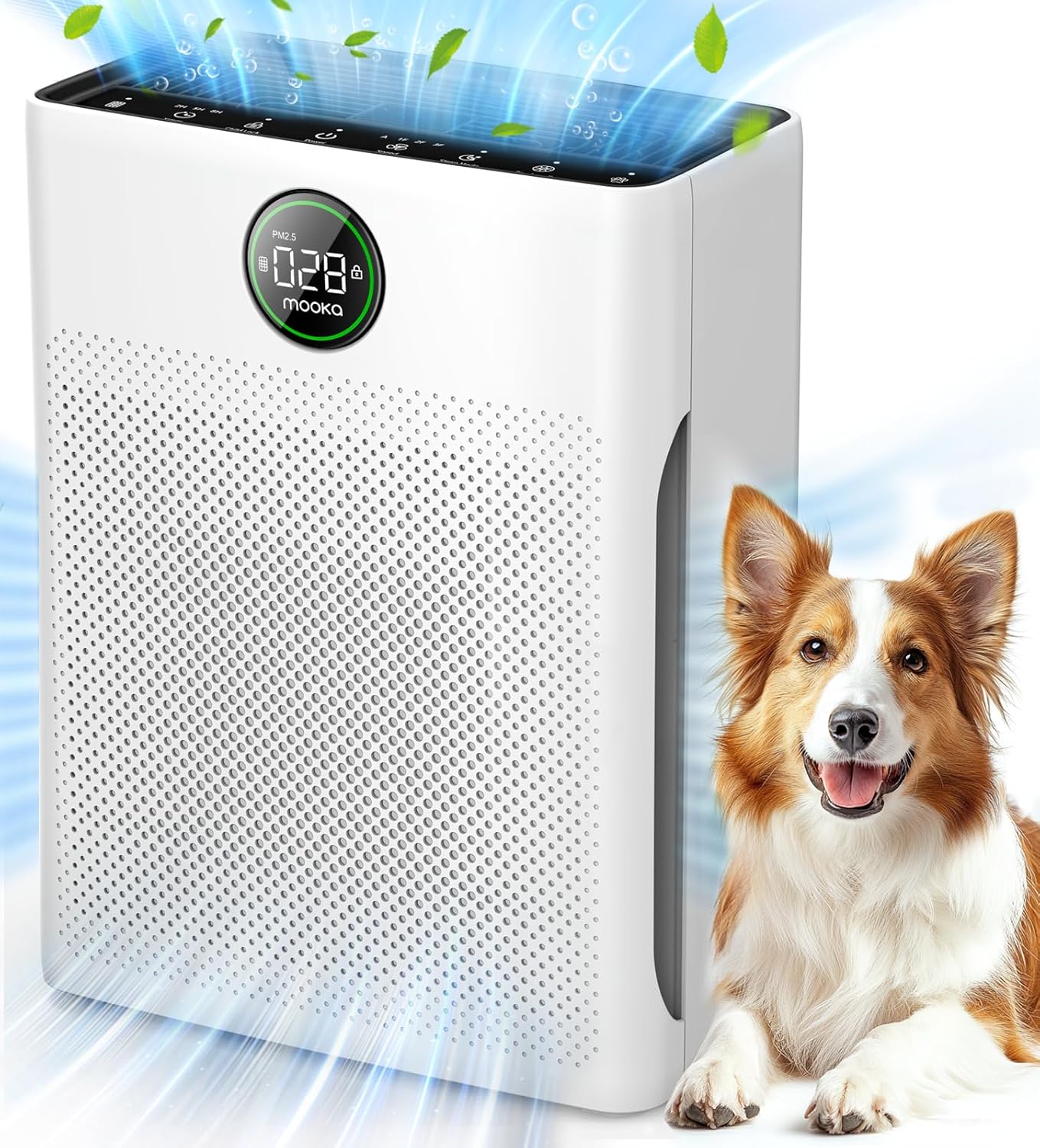
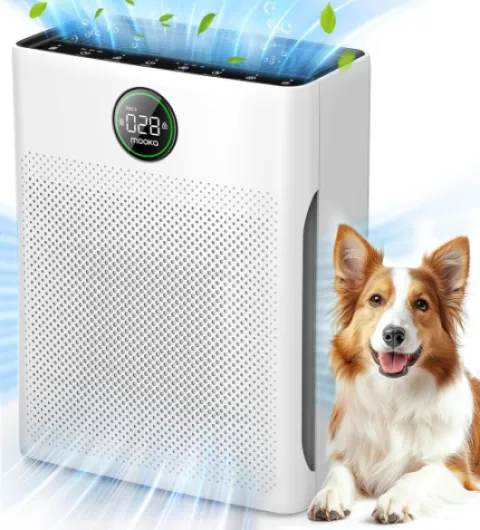
Design-wise, the PR1 is pretty straightforward. It’s a white rectangular unit, a bit taller than a shoebox and not very deep. Dimensions are roughly 12.3 x 6.4 x 16.3 inches, and the weight is under 9 pounds, so you can move it around without effort. I’d call it a clean, neutral look – it blends in next to a TV stand or between furniture. It’s not some design statement, but it also doesn’t look cheap or tacky. If you’re picky about aesthetics, it’s at least neutral enough not to annoy you.
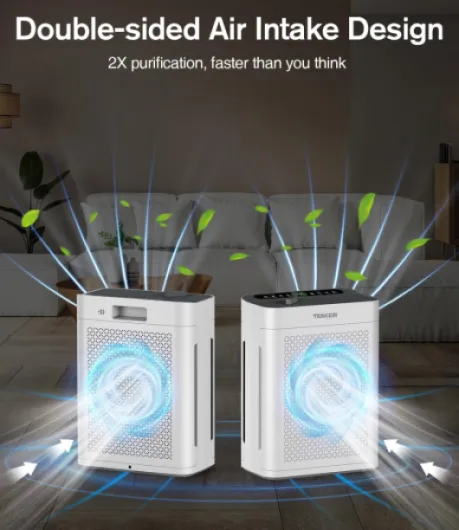
The air intake is on the front and sides, and the clean air comes out from the top, which is pretty standard. What’s easy to miss, and a lot of people clearly do, is that the PM2.5 sensor is on the back left side, not the front. That matters because if you’re trying to test it by blowing smoke or dust at the front, the sensor won’t pick it up properly. Once you know where the sensor is, the readings make a lot more sense. The display on the front shows the PM2.5 number and a color ring for air quality, which you can see from a distance without squinting.
The control panel on the top is touch-based and fairly responsive. I didn’t have issues with buttons not registering. There’s a child lock, which is handy if you have kids who like pressing everything, or even just clumsy adults (me) who brush it while walking by. The only minor downside is that the glossy top surface can pick up fingerprints and dust, so if you’re picky about that, you’ll be wiping it once in a while.
Placement-wise, because the sensor is on the back left, I’d avoid shoving it completely against a wall. Give it at least a bit of space so it can actually sense the room air and not just the corner. Also, since the intake is on the front and sides, don’t block it with furniture. That sounds obvious, but it’s easy to just slide it between sofas and kill half the airflow. Overall, the design is practical and compact enough for apartments and bedrooms. Nothing fancy, but it’s easy to live with and doesn’t scream for attention.
Noise, day-to-day use, and how livable it is
On the comfort side, the noise levels are one of the strong points. Sleep mode is genuinely very quiet – the spec says 26 dB and it feels about like a soft fan or laptop at idle. In a bedroom, I’d be fine leaving it on sleep all night, and if you like a bit of white noise, even level I or II could work. It’s nowhere near the loud vacuum-like roar some cheap purifiers make at high speed. On Pet mode or max speed, you definitely hear it, but it’s more a strong whoosh than a harsh noise. For TV watching at normal volume, Auto mode never bothered me.
Daily usage is simple: I mostly left mine on Auto during the day, then switched to Sleep mode at night if it was in the bedroom. The touch buttons respond quickly, and the child lock is one of those things you forget about until you need it. I accidentally brushed the panel a couple of times walking by, and locking it stops those accidental speed changes. The timer function works fine too if you don’t want it running 24/7 – you can set it and forget it for the evening.
One thing I liked is that you can actually feel a difference in air freshness when you walk in after it’s been running for a while, especially in a closed room. It’s not like stepping into a forest, but the air feels less heavy and stale. My nose tends to get stuffy with dust, and I noticed fewer random sneezing fits after a few days of continuous use. Obviously, that’s subjective, but combined with the dust on furniture dropping a bit, I’d say it’s doing its job.
The only minor comfort downside is the light from the display if you’re super sensitive at night. It’s not a crazy bright beam, but in a totally dark bedroom it’s noticeable. Depending on how picky you are, you might want to angle it away from the bed or put it a bit further. Overall though, in terms of living with it every day, it’s low-maintenance: quiet, no weird smells from the filter, and no random beeps or annoying behaviors.
Build quality, filters, and long-term concerns
On build quality, the PR1 feels like decent mid-range plastic, nothing premium but not flimsy either. The casing doesn’t creak when you move it, and the front panel and filter compartment fit snugly. You can lift it with one hand without worrying it’s going to flex or fall apart. I wouldn’t go kicking it around or dropping it down stairs, but for normal home use, it feels solid enough.
The important part for durability is the filter system and maintenance. The washable pre-filter is a big plus if you have pets. You can pop it out, rinse it under water, let it dry, and put it back. That catches hair and bigger dust, which takes some pressure off the main HEPA-style filter. The main filter isn’t washable, and you shouldn’t try to wash it or you’ll ruin it. MOOKA recommends replacing it every 3–6 months depending on use, which is standard. In a heavy pet or smoker home, expect closer to 3–4 months. In a cleaner environment, you can probably stretch it a bit if you regularly clean the pre-filter.
The filter indicator is time-based, so it lights up after a certain number of hours to remind you. When you swap filters, you hold the Filter Reset button for 3 seconds to clear it. That’s simple, but it also means you shouldn’t blindly follow the light – if your filter looks completely clogged before the light comes on, change it earlier. On the flip side, if your environment is cleaner than average, you might visually inspect and decide you can go a bit longer. That’s just basic air purifier reality, not specific to this model.
Long-term, the only real concern I’d have is the cost and availability of replacement filters. MOOKA pushes their official filters (search code B0DD3ZZ7ZV), and I’d stick with those at least initially. If you plan to run this 24/7, just factor in that you’re basically subscribing to new filters a couple of times a year. That’s normal for this type of product, but it’s something people forget when comparing prices. As for the electronics and sensor, nothing in my use hinted at flakiness – readings were consistent, no random errors, and no overheating. If you treat it like a normal appliance and clean the pre-filter regularly, I don’t see any big durability red flags.
Performance: how well it actually cleans the air
This is the part that really matters. In day-to-day use, the PR1 does a good job cutting down smells, dust, and pet funk in a medium to large room. My test setup: about 400–450 sq.ft open living room/kitchen, dog that sheds, and regular cooking. With the purifier running on Auto or level II/III most of the day, I noticed less dust floating in direct sunlight and way less lingering cooking smell, especially after frying. It doesn’t erase everything instantly, but it shortens the time the house smells like food from hours to more like 30–40 minutes for most dishes.
The PM2.5 sensor feels reasonably accurate for home use. When I start frying or using the oven at high temp, the reading jumps from single digits/teens up to 80–150, and the fan ramps up automatically in Auto mode. Once the cooking is done and windows are closed, it usually comes back down under 20 within 20–30 minutes. Same thing when vacuuming or shaking out a rug: the value spikes, then settles down. That’s more or less what I expect from a mid-range purifier – not lab-grade, but clearly reacting to real changes.
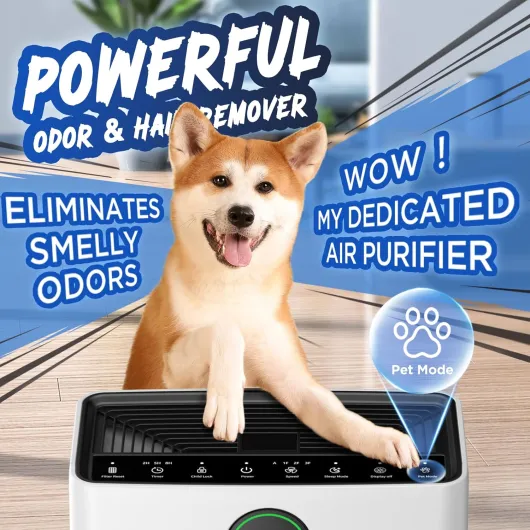
For pet use, the dedicated Pet mode basically runs the fan harder to catch more hair and dander. It’s a bit louder than normal Auto at low readings, but still not obnoxious. I wouldn’t sleep with Pet mode on, but it’s fine for daytime use. I did see less floating hair and fewer random hair tufts drifting around, though obviously it doesn’t replace vacuuming. For smells, especially the classic wet-dog or litter box funk, it helps a lot if you leave it running continuously near the problem area.
Now, about the 2200 sq.ft claim. In my opinion, that’s more of a maximum coverage number on paper, not a realistic "everything feels fresh" number. In a single large open space, it works well. But if you’re thinking it’ll handle a whole 2000+ sq.ft multi-room home by itself, that’s optimistic. You’ll still have rooms where the effect is weaker, especially with doors closed. If you want strong results across a whole floorplan, I’d use this as the main unit in the living area and maybe add smaller purifiers in bedrooms, which is basically what a lot of reviewers seem to do.
What you actually get with the MOOKA PR1
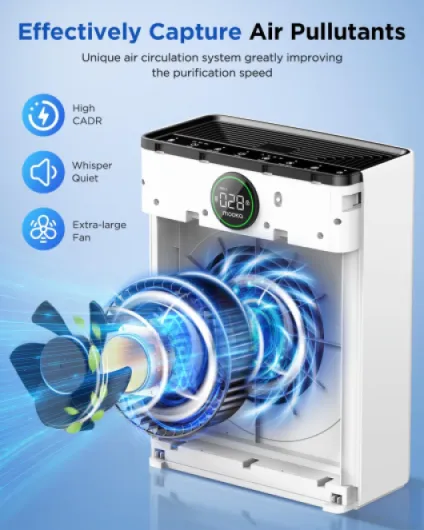
The PR1 is sold as an air purifier for large rooms up to 2200 sq.ft, with a focus on pet owners and people who care about PM2.5 levels. On paper, you get a 4-stage filtration system, a washable pre-filter, HEPA-style main filter, a PM2.5 sensor with a digital display, multiple fan modes (including a specific Pet mode), sleep mode, timer, child lock, and a little aroma pad area for essential oils. It’s meant to handle pet hair, dust, smoke, and smells, which pretty much covers the usual home issues.
In practice, the key features that actually matter are: the quiet operation, the PM2.5 display with auto mode, and the washable pre-filter. The rest is nice to have but not life-changing. The noise level is genuinely low on sleep and low speeds, so it’s fine in a bedroom. The PM2.5 reading does react when you cook, vacuum, or stir up dust, and the fan ramps up automatically in Auto mode, which makes it feel less like a dumb fan and more like a smart appliance. The washable pre-filter is handy because you can just rinse pet hair and larger dust instead of killing your main filter in two months.
Setup is dead simple: unpack, remove plastic from the filter, put it back in, plug it, and you’re done. Controls are touch buttons on the top, clearly labeled: power, speed, auto, pet mode, timer, sleep, lock, and filter reset. The unit also has a filter replacement reminder, which is good, but obviously it’s tied to hours of use, not actual dirt level, so don’t expect anything too clever there. You’ll still want to visually check the filter once in a while, especially if you have multiple pets.
Overall, in terms of feature set, it’s pretty solid for the price bracket. It doesn’t try to be a Wi-Fi smart-home gadget, which I honestly don’t miss. The focus is on core functions: moving air, filtering it decently, and telling you roughly how dirty your air is. If you want app control and deep smart features, this isn’t it. If you just want to plug it in and let it run, this is closer to what you’re looking for.
Pros
- Quiet operation with a genuinely usable Sleep mode and low noise on normal speeds
- PM2.5 sensor and Auto/Pet modes actually react to cooking, dust, and pet activity
- Washable pre-filter helps with pet hair and extends life of the main filter
Cons
- 2200 sq.ft coverage claim is optimistic for real multi-room use
- Ongoing cost of replacement filters can add up over time
- Sensor placement on back left is easy to misunderstand and leads to confusion if you don’t know it
Conclusion
Editor's rating
After living with the MOOKA PR1 for a bit, my take is simple: it’s a solid workhorse purifier that focuses on doing the basics right. It cleans the air in a large room noticeably, handles pet hair and smells better than the cheap units I’ve tried, and stays quiet enough to actually keep on all day. The PM2.5 display and auto mode are genuinely useful, not just decoration – you can see and hear it react when you cook, vacuum, or stir up dust. For everyday use in a living room, open apartment, or bedroom with pets, it gets the job done without drama.
It’s not perfect. The 2200 sq.ft claim is optimistic if you think one unit will cover a whole big house equally. The real sweet spot is one large space, not an entire multi-room floor. You also have to accept regular filter costs, and remember that the sensor is on the back left, which trips people up when they try to “test” it from the front. But none of these are deal-breakers if you know them going in.
Who is it for? People with pets, mild allergies, or cooking smells who want a quiet, plug-and-forget purifier without messing with apps. Who should skip it? If you’re obsessed with smart-home control, want one device to cover an entire large house, or hate the idea of buying filters a few times a year, you’ll probably be happier with a different setup. For most normal users in apartments or single large rooms, though, it’s a good balance of performance, noise, and price.