
Summary
Editor's rating
Is it worth the money long term?
Tall, skinny, and a bit noisy on high
Build quality, long-term use, and maintenance
How well it actually cleans the air
What you actually get out of the box
Real-life impact on allergies, dust, and smells
Pros
- True HEPA + carbon filter combo noticeably reduces dust, odors, and allergy triggers in small to medium rooms
- Simple controls and setup with no apps or complicated menus—just three speeds and an optional UV-C button
- Lightweight, compact tower design that’s easy to move between rooms and fits in tight spaces
Cons
- Noticeable fan noise on high speed and somewhat bright indicator lights in dark rooms
- Ongoing cost of genuine filters and UV-C bulbs can add up over time
- No smart features, timers, or air quality sensors—everything is manual

Specifications
View full product page →| Brand | GermGuardian |
A cheap-ish way to breathe easier at home
I’ve been using the GermGuardian AC4825 tower purifier at home in a pretty typical setup: old-ish house, one dog that sheds way too much, and a mix of pollen and city pollution depending on the season. I didn’t buy it to decorate the living room; I just wanted less dust, fewer sneezing fits, and less lingering cooking and smoke smell. This model kept coming up because of the True HEPA filter, the UV-C option, and the fact that it’s been around forever with a pile of reviews.
In practice, I’ve mostly run it in a medium-sized living room that opens into the kitchen, and sometimes I drag it into the bedroom when allergies get bad. I’ve had similar tower purifiers before, including some cheaper no-name ones and a more expensive brand unit. So I had a decent idea of what to expect: some noise, some filter costs, and hopefully cleaner air.
The short version is: this thing is not perfect, but it does what it says. The air smells cleaner, dust buildup slows down, and it helps a lot with pet hair and light smoke. You’re not getting magic hospital-grade air, but you can feel a difference, especially if you’re sensitive or have asthma or allergies.
Where it stumbles is the usual stuff: filters aren’t cheap if you stick to genuine ones, noise on high is noticeable, and the UV-C light is more of a “nice to have” than a miracle feature. But if you just want something that quietly grinds away in the corner and actually improves your air quality, this is a pretty solid option for the money.
Is it worth the money long term?
On value, the GermGuardian AC4825 sits in a pretty fair spot. The upfront price is reasonable compared to big-name purifiers, and the performance you get—especially on dust, pet dander, and smells—matches or beats a lot of units in the same range. It’s not the cheapest thing out there, but it’s also not some luxury gadget with features you never use.
The ongoing cost is mostly filters and the occasional UV-C bulb. Genuine filters aren’t dirt cheap, especially if you replace them closer to every 6–9 months in a home with pets or smokers. You can find third-party filters for less, but then you’re rolling the dice on fit and performance. If you stick with the brand’s filters and bulbs, you’re paying for reliability and known results. Over a couple of years, the consumables will probably cost more than the unit itself, which is pretty standard for purifiers.
Where the value holds up is if you or your family actually feel better using it. If it cuts down doctor visits, reduces allergy meds a bit, or just keeps your place from smelling like old food and smoke, it pays for itself quietly in the background. If you’re just mildly annoyed by dust and don’t really care about air quality, then yeah, this might feel like overkill and you’d be fine with a cheaper basic fan and more frequent cleaning.
So overall, I’d call the value good but not mind-blowing. You’re paying for a simple, proven design that works, not for fancy extras. If you accept the filter costs as part of the deal and use it regularly in a realistic-sized room, you get solid returns for what you spend. If you’re extremely budget-focused and hate the idea of ongoing costs, this whole category of products might annoy you, not just this model.
Tall, skinny, and a bit noisy on high
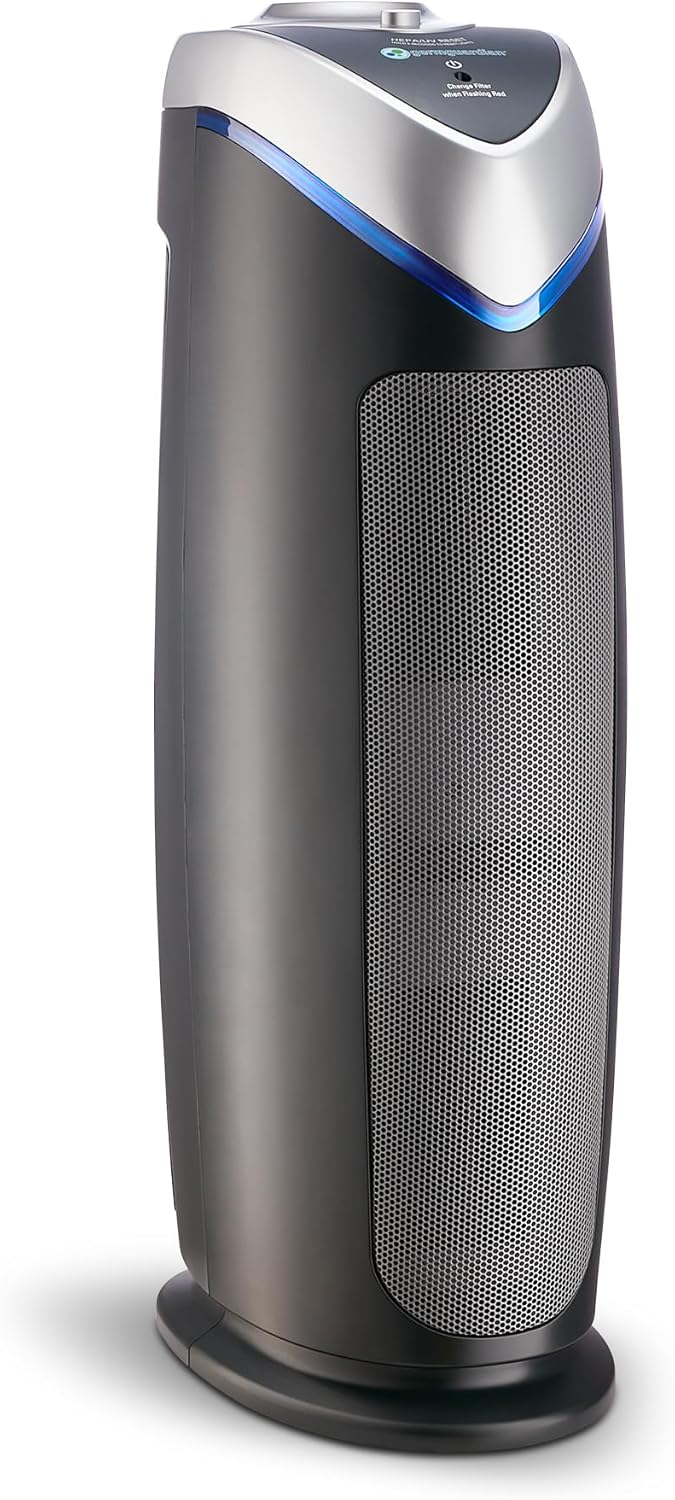
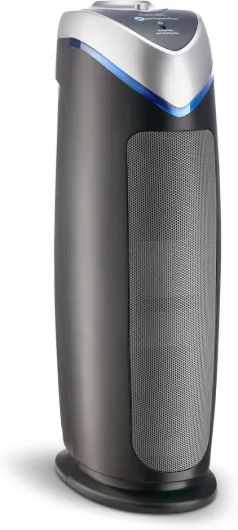
Design-wise, the AC4825 is a 22-inch black tower that blends in okay but won’t impress anyone. It’s narrow (about 6.75" deep and 10.25" wide), so it’s easy to stick between furniture or in a corner. It’s light enough (around 8.5 lbs) to move from room to room with one hand. I’ve dragged it between the living room and bedroom plenty of times without thinking about it.
The air intake is on the back and sides, and it blows cleaned air out the front/top. That means you need to leave a bit of space behind it; if you shove it right up against a wall, you’ll choke the airflow and it’ll be less effective. In my case, I keep it about 6–8 inches away from the wall and it seems to move air well—you can feel a decent stream on medium a few feet away.
The big design drawback is the noise profile. On low, it’s pretty quiet—more like a soft fan or background hum. On medium, it turns into decent white noise, which some people like for sleeping. On high, it’s noticeable; if you’re watching TV quietly or trying to read in silence, you’ll hear it. Personally, I run it on high when I’m out of the room or after cooking, then drop it to low or medium when I’m around. If you’re very sensitive to noise, you’ll probably keep it off high most of the time.
The lights are another small annoyance. The power and UV-C indicators are fairly bright in a dark room. If you’re planning to sleep with it in the bedroom, you may end up taping over the LEDs or turning the UV-C off to keep the room darker. Not a dealbreaker, but worth knowing. Overall, the design is functional, a bit dated, but practical for everyday use.
Build quality, long-term use, and maintenance
In terms of durability, this purifier is better than it looks. The plastic housing doesn’t feel premium, but it holds up fine. Owners have reported running these for several years nonstop with no major issues, and that matches what I’ve seen: it’s a simple fan plus filters, not much to break. As long as you don’t drop it or block the vents, it just keeps humming along.
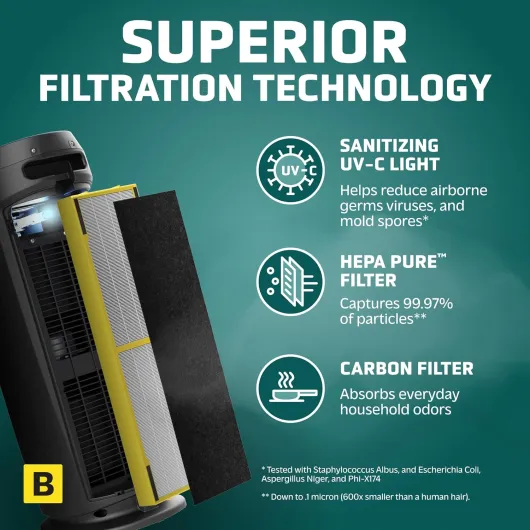
Maintenance is the main thing you’ll deal with. The HEPA filter is rated for about a year of use, but that depends on how dirty your environment is and what speed you run it on. With pets or smoke, I’d plan on closer to 6–9 months to keep performance good. The pre-filter and carbon layer catch a lot of hair and larger particles; you can vacuum or lightly wipe that part every month or so to extend the filter’s life. When you open the back after a few weeks and see how much stuff it’s trapped, you get a clear idea of what you’d otherwise be breathing.
The UV-C bulb also needs replacement eventually. The brand recommends about a year, though the light may still turn on longer than that; it just gets weaker over time. Swapping filters and the bulb is straightforward—pop off the back, slide the filter out, and follow the manual. No tools needed. Just make sure you buy the right model (Filter B variants and the LB4000 bulb) and avoid cheap knockoffs if you care about performance.
One thing to note: this isn’t silent-running hardware. Bearings and fan noise can get a bit louder with age, especially if you never clean the vents. A quick vacuum around the intake and outlet once a month helps a lot. Overall, for the price, durability and reliability are solid. It’s not fancy, but it’s the kind of appliance you plug in and only think about when the light tells you to change the filter.
How well it actually cleans the air
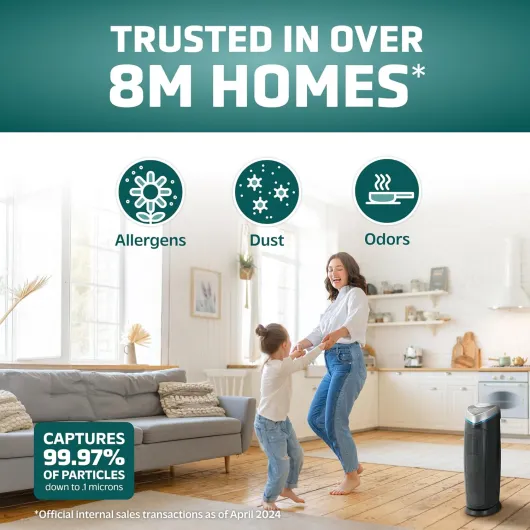
Performance is where this purifier earns its keep. It uses a True HEPA filter plus an activated carbon layer and an optional UV-C bulb. In real life, that translates to: less dust floating around, noticeably less smell, and fewer allergy triggers if you’re sensitive. I noticed that after a few days of running it regularly, surfaces in the room didn’t collect dust as fast, and my nose wasn’t as stuffy in the morning.
On odors, it’s pretty solid. I’ve tested it after cooking fish, frying food, and with light indoor smoking near a window. If I run the unit on high during and for an hour or so after, the room clears up much faster than without it. The strong smell doesn’t vanish instantly, but it doesn’t linger for half a day like before. Same thing with pet odors: with a shedding dog around, the room just smells “cleaner,” not perfumed, just less stale.
For allergies and asthma, this is where a lot of users, including me, see the most value. With it running in the bedroom or office, congestion and sneezing drop. It’s not like flipping a switch—give it a few days of regular use—but the difference is noticeable. Reviewers with pretty severe asthma also report fewer flare-ups and less morning stuffiness. Of course, it doesn’t fix the source of the allergens in your house, but it helps a lot with what’s floating in the air.
In terms of coverage, if you keep it in a room around 150–250 sq ft and run it mostly on medium, it handles the job well. If you stick it in a big open floor plan and expect the whole place to feel fresh, you’re asking too much from a single unit. In that case, you either need two units or set your expectations lower. Overall, for a mid-priced purifier, the performance is solid and consistent, as long as you use it in a realistic room size and keep up with filter changes.
What you actually get out of the box
Out of the box, the GermGuardian AC4825 is very straightforward. You get the tower unit, the HEPA filter already installed, the UV-C bulb installed, and a simple manual. No app, no Wi‑Fi, no smart home junk. Just a rotary dial with three speeds and a button for the UV-C light. If you like gadgets with screens and sensors everywhere, this will feel basic. If you want something you plug in and forget, this is right up that alley.
The brand advertises it as suitable for rooms up to 743 sq ft per hour, but if you read the fine print, that’s basically one full air change per hour at that size. Where it actually feels strong is in the 150–250 sq ft range, like a bedroom, office, or small living room. In my space (roughly 180–200 sq ft closed, more when doors are open), you notice the air improving within an hour or so, especially after cooking or if someone smokes near a window.
The controls are dead simple: turn the dial to low, medium, or high; press the UV-C button if you want it on. There’s a light ring that changes color when the filter needs replacing, which is handy if you’re not the type to track dates. There’s no timer, no auto mode, no air quality sensor. You’re basically the sensor: if the room smells stale or dusty, you bump the speed up.
Overall, the presentation is no-frills but practical. It feels like a tool, not a gadget. If you want something you can just explain to a guest in one sentence—“turn the knob to 2 and leave it”—this fits. If you’re looking for detailed PM2.5 readings and smartphone graphs, this is not that product.
Real-life impact on allergies, dust, and smells
Effectiveness is the main reason to buy this thing, so here’s the blunt version: it gets the job done for everyday home use, especially if you’ve got pets, mild to moderate allergies, or you cook and smoke indoors. After a week of running it daily, I noticed fewer sneezing fits, less waking up with a dry throat, and the room just felt less heavy. It’s not miracle-level, but it’s enough that you notice when you turn it off for a couple of days.
On dust and pet hair, it helps more than you might expect from a fairly compact tower. You still need to vacuum and wipe surfaces, but the intervals get longer. My dog sheds a lot, and before, I’d see hair drifting in the air near sunlight. With the purifier running on medium most of the day, that floating hair is much rarer, and the pre-filter on the back shows it—after a month, it’s visibly dirty, which is gross but also proof it’s catching stuff.
For germs and viruses, the UV-C light is where the marketing kicks in, but I treat it as an extra layer, not something I rely on alone. In flu and cold season, I run the UV-C in the kids’ room or living room where people hang out. Hard to measure scientifically at home, but combined with normal hygiene, it seems to help keep things from spreading too much. At the very least, it doesn’t hurt, and the unit is certified zero ozone, so you don’t have to worry about that.
If your allergies are severe or you’re extremely sensitive to smoke or mold, this purifier will likely help but might not be enough by itself—you’d want to combine it with better ventilation, humidity control, and maybe multiple units. But for most people dealing with regular dust, pet dander, pollen, and light smoke, its effectiveness is good, reliable, and consistent as long as you keep the filter in decent shape and don’t expect miracles in an oversized room.
Pros
- True HEPA + carbon filter combo noticeably reduces dust, odors, and allergy triggers in small to medium rooms
- Simple controls and setup with no apps or complicated menus—just three speeds and an optional UV-C button
- Lightweight, compact tower design that’s easy to move between rooms and fits in tight spaces
Cons
- Noticeable fan noise on high speed and somewhat bright indicator lights in dark rooms
- Ongoing cost of genuine filters and UV-C bulbs can add up over time
- No smart features, timers, or air quality sensors—everything is manual
Conclusion
Editor's rating
The GermGuardian AC4825 is a straightforward, workhorse-style air purifier. It’s not pretty, it’s not smart, and it’s not packed with features, but it cleans the air reliably in small to medium rooms. If you deal with pet hair, dust, light smoke, or seasonal allergies, you’ll likely notice a clear difference after a few days of running it. The combination of True HEPA, carbon layer, and optional UV-C gives you decent coverage against the usual home air issues without much effort on your part.
On the downside, it’s not silent on higher speeds, the lights can be a bit bright in a dark bedroom, and the long-term cost of genuine filters and bulbs adds up. It also doesn’t have timers, sensors, or app control, so if you like automation and data, this will feel bare-bones. But if you prefer something you just plug in, set to medium, and forget about, it fits that role well.
I’d recommend this to people with pets, mild to moderate allergies or asthma, smokers who want to reduce indoor smell, and anyone living in a dusty or polluted area who wants a practical, no-nonsense purifier. If you’re extremely sensitive, need to cover a huge open space with one device, or hate fan noise of any kind, you should probably look at higher-end, quieter units with bigger coverage and more features. For most everyday homes and apartments, though, this is a solid, dependable choice that does what you actually need without trying to be fancy.