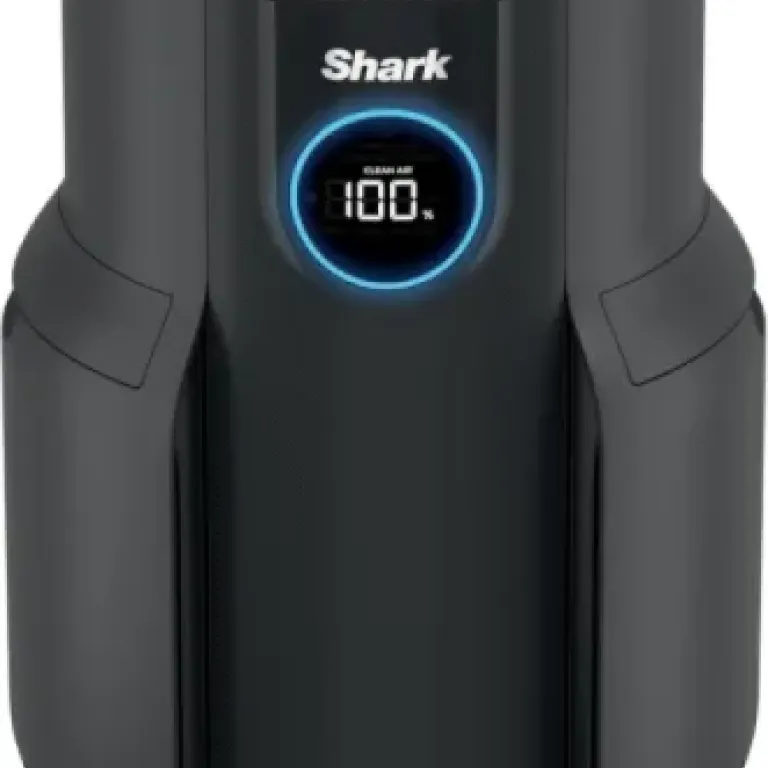

Summary
Editor's rating
Value: you pay more upfront, but save on filters
Design: compact, decent looking, but with a few quirks
Comfort & daily use: noise, sleep, and living with it 24/7
Durability & maintenance: long filter life, but keep an eye on the sensor
Performance: good filtration, slightly lazy auto mode
What this Shark HP152 actually is (and what it isn’t)
Pros
- Quiet operation on low and Eco modes, suitable for bedrooms and 24/7 use
- Long-life HEPA filter and washable debris screen reduce ongoing filter costs
- Clear real-time air quality display and dimmable lights make daily use simple
Cons
- Auto mode is too conservative and often needs manual fan speed adjustments
- Odor neutralizer cartridge is weak and not really worth buying replacements

Specifications
View full product page →| Brand | Shark |
A no-nonsense air purifier that mostly just does its job
I’ve been using the Shark NeverChange HP152 in my living room for a few weeks, in a place with two cats, cooking smells, and a fair amount of dust. I didn’t baby it at all – it runs pretty much 24/7 on auto, and I only touch it to bump the fan speed or to wipe the pre-filter. My goal wasn’t to admire it, just to see if the air actually felt cleaner and if it was annoying to live with.
Right away, the first thing I noticed was the noise level. On the lower speeds and Eco mode, it’s very quiet – the kind of background hum you forget about after 10 minutes. On higher speeds, you hear it, but it’s still more of a steady whoosh than a harsh fan noise. For a bedroom or office, that’s a big deal. I’ve had cheaper purifiers that sounded like a box fan on medium all the time; this one is way more manageable.
The other thing that stands out is the real-time air quality display. It’s a small thing, but it changes how you use it. Cooking something greasy? You see the number drop and the ring go yellow or red, the fan ramps up on its own, and you can literally watch it climb back to 100 over time. Same when you spray air freshener or light a candle nearby – it reacts, sometimes a bit too aggressively, but at least you know the sensor is alive.
Overall, my first impression is that it’s a practical, set-and-forget purifier. It’s not perfect – the odor cartridge is kind of pointless in my experience, and auto mode is a bit lazy if the source of pollution is far away – but for dust, pet dander, and general smells, it does what it’s supposed to do without needing constant attention. If you want a purifier you barely think about once it’s set up, this one fits that description pretty well.
Value: you pay more upfront, but save on filters
Price-wise, the Shark HP152 sits in that mid to upper range for a compact purifier. It’s not the cheapest thing out there, especially when you compare it to basic units under $150. But you have to factor in the long filter life. If the NeverChange filter genuinely lasts several years (and with a clean pre-filter, it probably will), you’re saving a decent chunk on replacement filters. Many cheaper purifiers need new filters every 6–12 months, and those add up fast.
In terms of what you actually get for the money, you’re paying for: a decent sensor with a visible display, quiet operation, AHAM certification, and low maintenance. There’s no app, no fancy connectivity, and the odor cartridge is basically a gimmick in my opinion. So if you love smart-home integration and controlling everything from your phone, this model is not giving you that. You’re mostly paying for reliable filtration and long-term running costs, not bells and whistles.
Compared to other brands I’ve tried, the Shark feels a bit more thought-out in terms of everyday use. The washable debris screen, dimmable lights, and clear air quality readout all make it easier to live with long-term. That’s worth something. On the other hand, the auto mode being a bit too gentle means you don’t always get the most out of it unless you manually bump the fan. So you’re not getting a perfect, fully automatic experience here.
If you’re on a tight budget and don’t mind buying filters every year, you can find cheaper units that will also clean the air, just with more ongoing cost and noise. If you’re okay spending more upfront to have something that runs quietly, needs very little attention, and doesn’t constantly demand new filters, then the HP152 is pretty good value over a 3–5 year period. For me, the value feels fair: not a steal, but sensible if you actually keep it long term.

Design: compact, decent looking, but with a few quirks
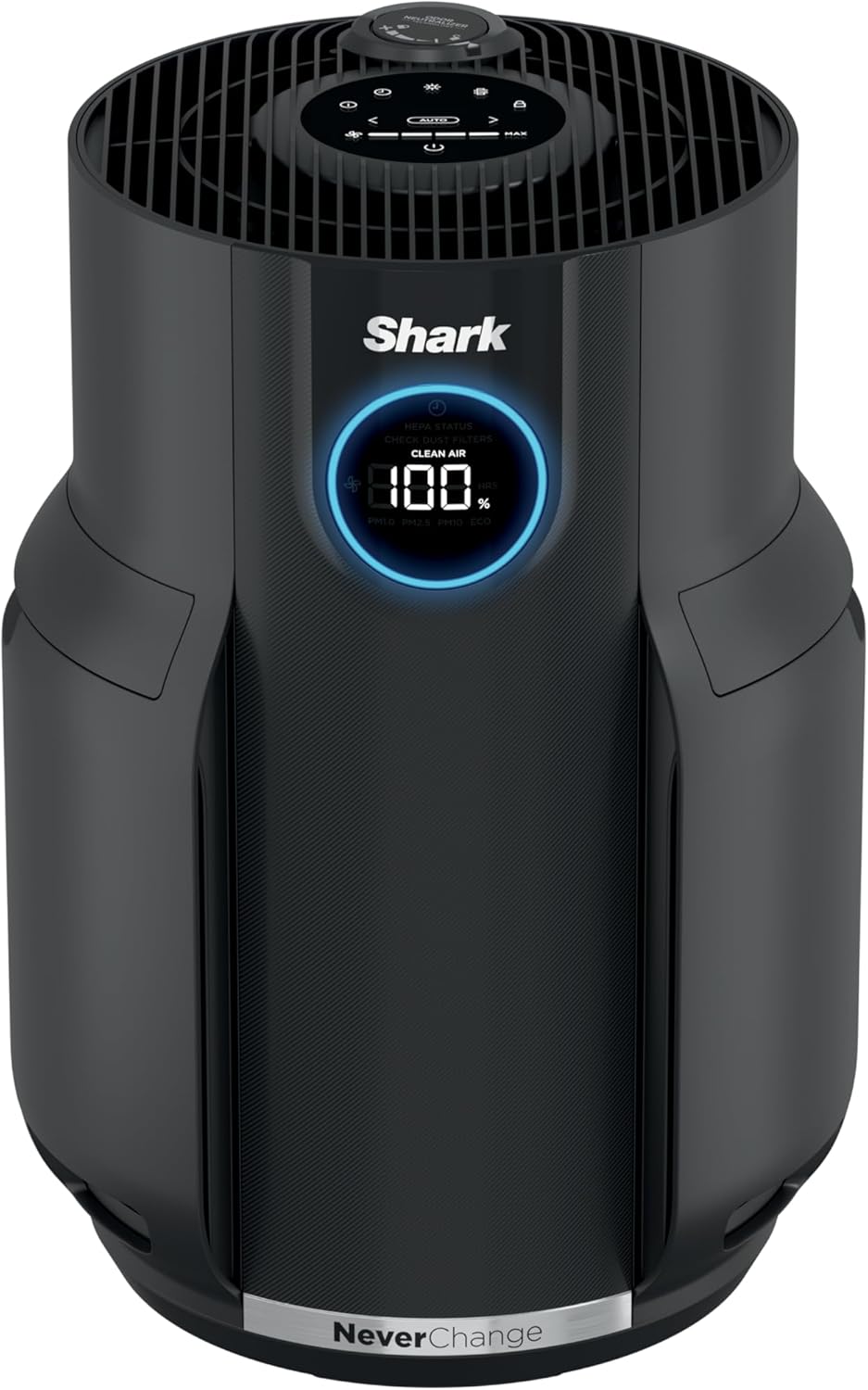
Design-wise, the HP152 is compact and fairly neutral. The charcoal color helps it blend into most rooms; it doesn’t scream for attention like some white plastic towers. The footprint is small enough that I could tuck it next to a TV stand or in a bedroom corner without feeling like it ate up the floor. At about 15 inches tall, it’s more of a chunky box than a tall tower, which is nice if you want to put it on a table or dresser.
The control panel on top is simple: physical buttons with a digital display and a light ring. The light ring is actually useful – green for clean, yellow for moderate, red for bad air. You can dim or turn off the lights at night, which I appreciate because bright LEDs in a bedroom drive me nuts. The display is clear enough to read from across the room, and the buttons are not overly sensitive, so you don’t accidentally change settings every time you dust it.
Placement matters, though. The air intake and sensor are on the sides/back, so if you stick it right against a wall, the sensor gets a bit "blind" and auto mode reacts slower. When I pulled it 6–8 inches away from the wall, it detected cooking smells and sprays more reliably. This matches what some other users say: give it some breathing room, especially behind it, or the sensor doesn’t get a good sample of the room air.
One design bit that feels like an afterthought is the odor neutralizer cartridge on top. In theory, it’s supposed to release a light scent while neutralizing odors. In reality, I barely smell anything unless I put my nose close to it, and that’s with a fresh cartridge. For me, it’s basically decorative. I’d rather they just focused on filtration and maybe lowered the price a bit, but at least you can ignore it if you don’t care about added scent.
Comfort & daily use: noise, sleep, and living with it 24/7
From a comfort standpoint, this purifier is easy to live with. I had it running 24/7 in the main living area and also tried it in the bedroom for a few nights. On Eco mode or the lowest manual speed, it’s very quiet – not dead silent, but more like a soft fan in the background. If you like a tiny bit of white noise while sleeping, it’s actually nice. On medium, you definitely hear it, but it’s still a smooth airflow sound. Only on the highest speed does it become noticeable enough that I wouldn’t want it right next to my bed while trying to fall asleep.
The dimmable lights are a small but important detail. I hate bright LEDs in a dark room, and this one lets you dim or pretty much shut off the front display and ring. Once that’s done, it doesn’t light up your whole bedroom. You still hear the fan a bit if it kicks up in auto mode, but it’s not jarring. In my case, I left it on a fixed low speed at night instead of full auto, just to avoid random speed jumps when the sensor picked up something trivial.
Maintenance-wise, comfort is about how annoying it is to keep it running. Here it’s pretty painless. The washable debris screen catches the big stuff like hair and larger dust. I just popped it out every week or two, gave it a quick vacuum and a wipe, and it was fine. That also means the main HEPA filter doesn’t get clogged as fast. Compared to purifiers where you’re constantly thinking "am I killing the filter by not cleaning it enough?", this setup is low stress.
One comfort downside: the odor cartridge is kind of useless in my experience. I never really smelled anything pleasant coming out of it, and I don’t see myself spending money on replacements. Luckily, it doesn’t affect the main function, so you can just ignore it. Overall, in day-to-day use, it’s the type of device you forget about, which to me is the best sign that it fits into normal life without being annoying.
Durability & maintenance: long filter life, but keep an eye on the sensor
In terms of build, the Shark HP152 feels like standard mid-range plastic. Nothing fancy, but it doesn’t feel flimsy either. The casing doesn’t flex much when you move it, and the filter housing clicks in securely. I moved it around between rooms several times and didn’t notice any rattling or weird noises developing, which is a good sign. It’s light enough to carry with one hand, but not so light that it tips over easily.
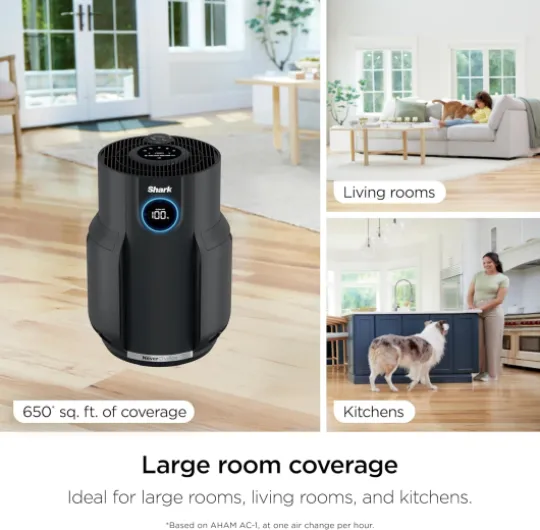
The big selling point is the NeverChange HEPA filter that’s supposed to last up to 5 years. Obviously I haven’t tested it for 5 years, but after a few weeks of daily use in a house with pets, the main filter still looked in good shape, mostly because the debris screen in front of it caught the worst of the hair and fluff. As long as you actually clean that pre-filter regularly (quick vacuum or rinse), I can see the main filter lasting a long time. That’s where you save money versus cheaper units that need new filters every 6–12 months.
One weak spot is the air quality sensor. A few users mentioned a red light stuck at 0% clean air after a while. Shark support apparently told them to unplug the unit and blow hard into the sensor port to clear dust, which fixed it. That lines up with what I’d expect: dust on the sensor can confuse it. It’s not the end of the world, but it does mean you might have to do a little manual "sensor cleaning" now and then if you notice weird readings or the fan stuck on high for no reason.
Overall, in terms of durability and upkeep, I’d say it’s reassuringly low-maintenance. No batteries, no complicated assembly, just occasional cleaning and eventually a filter swap years down the line. If you’re rough with your stuff or live in a very dusty place, expect to clean the pre-filter and maybe blow out the sensor a bit more often. But for normal home use, I don’t see any big red flags that it will fall apart quickly.
Performance: good filtration, slightly lazy auto mode
In day-to-day use, the Shark HP152 is pretty solid at actually cleaning the air, especially in small to mid-sized rooms. In my roughly 250 sq ft living room, cooking something smelly (like bacon or stir-fry) would push the air quality reading down and the ring to yellow or red. The fan would ramp up, and within 30–60 minutes the smell was mostly gone and the reading climbed back to 90–100. It’s not instant, but it’s noticeable, especially if you leave the house and come back – the usual lingering cooking odor is much weaker.
For dust and pet dander, the effect is slower but clear over a few days. I usually see a thin layer of dust on the TV stand after 2–3 days; with this running almost constantly, that layer took longer to show up, and it was lighter. I also sneezed less in the mornings, which is usually my allergy peak. Obviously that’s subjective, but combined with the visible dust reduction, I’d say it’s doing a decent job on particulates. Another user mentioned using it with 3D printing fumes, and I had similar results in a smaller room: smell and haze were reduced, though not totally erased, after about an hour.
Now, about auto mode. This is where it’s a bit meh. Auto tends to keep the fan at a very low speed most of the time. That’s quiet and energy-efficient, but in a larger room, it doesn’t pull in air from across the space very aggressively. If the pollution source is far away, the sensor doesn’t always ramp up quickly. I often found myself manually bumping the fan to medium or high for 30–60 minutes when I knew I’d been cooking or cleaning. Once I did that, the air cleared faster. So auto is fine if you just want gentle background cleaning, but if you’re picky, you’ll end up using manual speeds quite a bit.
The sensor itself seems fairly sensitive but a bit quirky. Spray Febreze or use a strong candle nearby and it freaks out, drops the score, cranks the fan. A couple of users reported the red light stuck at 0% clean air; I haven’t had that, but one person fixed it by blowing dust out of the sensor port, which sounds about right. Bottom line: performance is good for the size and price, but don’t expect it to magically handle a whole open-concept floor without some help and smart placement.
What this Shark HP152 actually is (and what it isn’t)
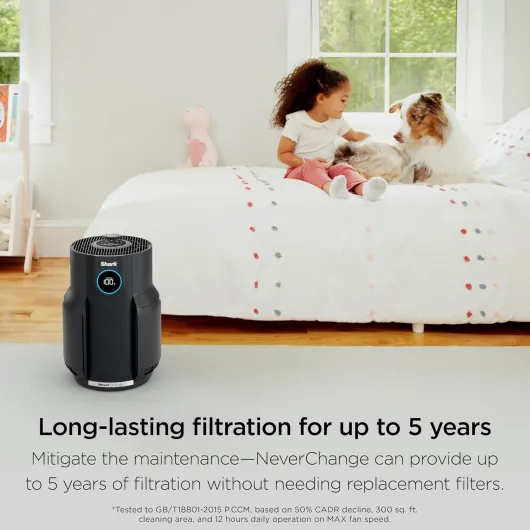
On paper, the Shark HP152 is a compact air purifier rated for up to 650 sq ft at one air change per hour. That number is a bit optimistic if you’re expecting super fast cleaning, but for a bedroom, office, or normal living room, it’s fine. It uses a "NeverChange" HEPA-type filter that’s supposed to last up to 5 years, plus a washable debris screen and a little odor neutralizer cartridge on top. The whole thing weighs about 7 pounds and is easy to move around.
The control panel is pretty straightforward: fan speeds, Eco mode, auto mode, lights dimmer, and the air quality readout. You also get a percentage-style indicator for filter life, which is nice if you hate guessing when to replace things. No app, no Wi‑Fi, no voice control – it’s basic, but honestly, that fits the price and target. This is more of a "plug it in and forget it" unit instead of a smart-home toy.
In terms of what it’s built to handle, it targets dust, pet dander, smoke, and general odors. I tested it with cooking fumes, cat hair, and some 3D printing fumes (TPU) in a smaller room. It did noticeably reduce the haze and smell over time, but it’s not some magic smoke vacuum. It works better if the source is reasonably close or at least in the same room, and you don’t have every window open.
What it is not: it’s not a whole-house solution for a huge open floor plan, and it’s not a medical device. If you expect hospital-level filtration in a 2,000 sq ft space, you’ll be disappointed. If you want a solid unit for one decent-sized room and you like the idea of not buying filters every year, then the specs and feature set line up well with that use case. It’s a pretty honest, mid-range machine with a couple of nice extras, not a fancy gadget.
Pros
- Quiet operation on low and Eco modes, suitable for bedrooms and 24/7 use
- Long-life HEPA filter and washable debris screen reduce ongoing filter costs
- Clear real-time air quality display and dimmable lights make daily use simple
Cons
- Auto mode is too conservative and often needs manual fan speed adjustments
- Odor neutralizer cartridge is weak and not really worth buying replacements
Conclusion
Editor's rating
The Shark NeverChange HP152 is a practical, low-hassle air purifier that fits well in real life. It handles dust, pet dander, and everyday smells in a normal-sized room without much drama. Noise levels are low on the settings you’ll use most, the air quality display is actually useful, and the washable debris filter keeps maintenance simple. The long-life HEPA filter is the main selling point: if it lasts anywhere close to the claimed lifespan, you’ll save a decent amount compared to cheaper units that burn through filters every year.
It’s not perfect. Auto mode is a bit too relaxed, especially in larger rooms, so you’ll probably end up manually bumping the fan when you cook or do anything that stirs up particles. The odor neutralizer cartridge feels like a gimmick – I barely noticed any scent – and the sensor can get confused if dust builds up on it, though that’s fixable with a quick blow-out. Also, there’s no smart app or Wi‑Fi, so if you want remote control and graphs, this isn’t the model for you.
I’d recommend this to people who want a quiet, straightforward purifier for a bedroom, living room, or home office, especially if you have pets or mild allergies and hate dealing with frequent filter changes. If you’re trying to handle a huge open-plan area with one unit, or you really care about smart features and fine-grained control from your phone, you should look elsewhere or step up to a more advanced model. For most everyday home setups, though, the HP152 is a solid, no-nonsense choice that gets the job done without much fuss.