
Summary
Editor's rating
Value: you’re paying for brains, not just blades
Design: looks better than the usual shiny tin box, with a few quirks
Build quality & durability: feels solid, but the sealing is half-baked
Performance: strong airflow, but you’ll hear it when you push it
What this thing actually is and who it’s for
Effectiveness: does it actually cool and dehumidify the space?
Pros
- Strong airflow for a 10" fan with smooth 10-speed control
- Built-in temp and humidity controller with WiFi/app makes it mostly set-and-forget
- EC brushless motor and dual ball bearings feel durable and run efficiently
Cons
- Noticeable gaps around shutters let in bugs/drafts unless you add your own sealing
- Loud at higher speeds, especially above level 6–7

Specifications
View full product page →| Brand | AC Infinity |
A wall fan that actually feels like an upgrade, not a noisy hole in the wall
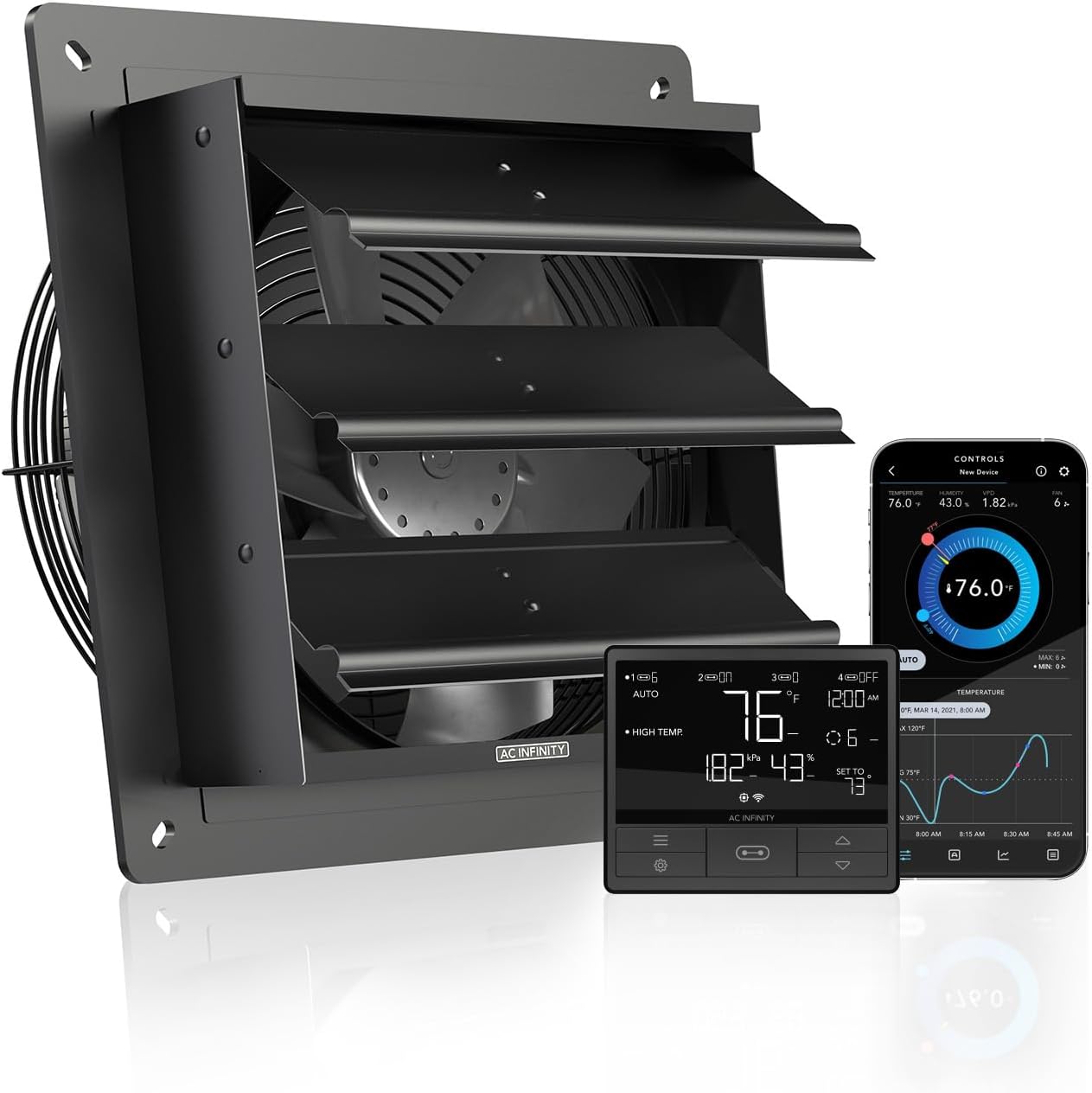
I’ve been using the AC Infinity AIRLIFT T10 as an exhaust fan for a small workshop and part of a garage, so not in a lab, just in normal annoying heat and humidity. Before this, I was playing with cheap box fans in the window and a basic shutter fan hooked to a dumb plug timer. It worked, but it was noisy, ugly, and I had zero control besides on/off. This T10 is the first time I felt like, “ok, this is closer to how this should work in 2026.”
The main thing that hit me after installing it is that it doesn’t feel like a random fan anymore, it feels more like a simple climate tool. You set a temp and humidity, and it just kicks in and ramps up or down. In practice, that means the space doesn’t swing between sauna and fridge; it just stays more stable, and I don’t have to babysit it. I still hear it, but at mid speeds it’s not crazy.
I used it in a roughly 250–300 sq ft area first, then tested it in a hotter 18x10 shed for a few days. In both, it pulled hot air out much faster than the cheap galvanized fan I had before. The EC motor and the 10-speed control actually matter: instead of “off or jet engine,” you can pick a level that’s a decent balance between noise and airflow. Around level 4–6 it moves air well and you can still hold a conversation.
It’s not perfect. The shutter gaps are real, and if you live somewhere with insects or cold winters, you’re going to want to seal or cover it somehow. Also, the controller has a bit of a learning curve if you ignore the app. But overall, for a wall exhaust fan, it’s pretty solid and feels more thought-through than the bare-metal, on/off junk I was used to.
Value: you’re paying for brains, not just blades
In terms of value, you have to compare this to two things: a basic galvanized shutter fan, and a DIY combo of fan + separate temp/humidity controller. A bare 10–12" shutter fan is obviously cheaper. If all you want is to dump hot air with a simple on/off switch and you don’t care about noise, sealing, or automation, those will save you money. But once you add a decent controller (Inkbird style) and wiring, you’re not that far off the price of the AIRLIFT T10, and you still don’t get the integrated app, smooth 10-speed control, and cleaner install.
What you’re really paying for here is the EC motor, the smart controller, and the app features. The motor should be more efficient and last longer than cheap shaded-pole motors, and the controller takes away the annoyance of always micromanaging your fan. For me, not having to remember to switch it on every hot day or off every cool evening is already worth a chunk of the price. The app and WiFi part are more of a bonus: being able to tweak settings and see temp/humidity trends from your phone is nice, especially if your garage or shed is a bit away from the house.
Is it the best deal on the market? Hard to say without a full side-by-side, but I’d call it good value if you actually use the smart features, average value if you just run it manually at one speed all the time. If you’re the type who will stick it on speed 5 and never touch the controller again, you might be overpaying for features you’re not using. On the other hand, if you have stuff to protect (tools, wood, electronics, plants) and you care about keeping heat and humidity under control automatically, the extra cost makes sense.
So from a normal user perspective: not cheap, but pretty solid value for what it does. You could spend less and get a louder, dumber setup, or spend roughly the same building your own Frankenstein combo. I’d rather have this all-in-one solution, with the main caveat being that you’ll probably still do a bit of DIY sealing around the shutters.
Design: looks better than the usual shiny tin box, with a few quirks
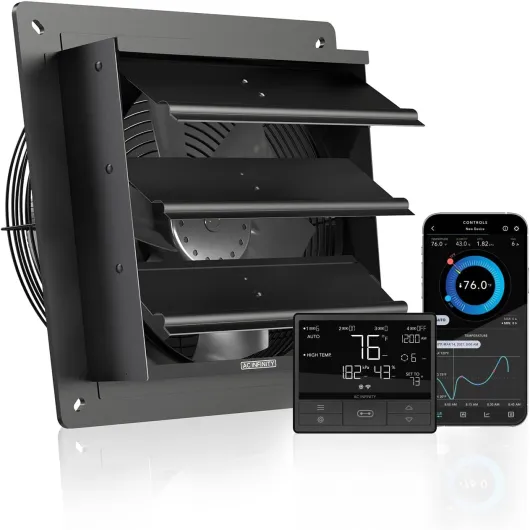
Visually, this fan is a big step up from the typical galvanized shutter fans. It’s all black, with steel shutters and aluminum blades, and it doesn’t scream “industrial farm fan” when you look at your wall. In a garage or shed where you actually spend time, that matters a bit. It’s not pretty in a décor sense, but it’s clean and modern enough that you don’t feel like you just punched a barn exhaust into your house.
The housing is compact for a 10" unit (about 13" x 13"), which helped a lot in tight framing. I had a situation like one of the reviewers: studs were about 14" apart, so a 12" fan wouldn’t fit. This 10" slid in with a bit of room to spare. The depth is roughly 6–8" with everything, so it doesn’t stick out like crazy inside. The shutters are gravity/spring style, and they open pretty easily once the fan hits a low-mid speed. Mounted vertically, mine opened reliably around speed 4, same as one of the reviewers mentioned.
The downside: the shutter and frame gaps. There’s roughly a 1/4" gap around the sides and top where you can literally see daylight. In a warm climate that’s not a disaster, but you will get bugs, dust, and some drafts. I ended up doing the same thing as another buyer: used different thickness foam tape along the frame to reduce the gap while still letting the shutters swing freely. After that, you’re closer to 1/8" gaps, which is livable but still not perfect. If you’re picky about air sealing, you’ll probably want to build a removable exterior cover or interior plug for winter.
The controller design is decent: clear LCD, buttons are straightforward once you understand the modes, and the separate sensor cable gives you some flexibility on where you measure temperature/humidity. The whole setup looks more like a proper system than a hack-job of random parts. Overall, design is functional and cleaner than average, but they could have done a better job on shutter sealing from the factory.
Build quality & durability: feels solid, but the sealing is half-baked
From a materials and build point of view, it feels like a step up from the bargain-bin metal fans. The housing and shutters are steel, the blades are aluminum, and the motor is an EC (electronically commutated) brushless type. That EC motor is a big deal for long-term use: less wear than brushed motors, smoother speed control, and usually better efficiency. A couple of reviewers mentioned running it for long periods, even 24/7 for days, without issues, and so far I haven’t heard any grinding or weird vibrations on mine.
The bearings are dual ball bearings, which should hold up better in horizontal or vertical mounting and over years of use. The IP44 rating means it’s reasonably protected against dust and splashing water, so using it in a slightly damp shed or near a greenhouse window is fine. I wouldn’t mount it in a place where it gets direct heavy rain, but for normal indoor/outdoor wall use, it feels appropriate. The finish is a basic black coating – nothing fancy, but it doesn’t look cheap and hasn’t chipped on me yet.
The weak spot again is the shutter sealing and overall air-tightness. Mechanically, the shutters work fine and don’t stick, but those gaps around the edges show that they didn’t push hard on sealing. That matters for durability in the sense that small bugs, dust, and cold drafts will find their way in. It’s not going to kill the fan, but it does mean you’ll probably end up adding your own foam tape or building a seasonal cover, like several users mentioned. For a product at this price, I would have liked them to tighten that up out of the box.
Overall, though, the materials and construction feel solid enough for long-term use. If you’re expecting commercial/industrial tank-level build, this isn’t that, but for a home workshop, garage, or shed, it sits in a good middle ground: better than the cheap stuff, not bulletproof, but good enough that I’m not worried about it failing after a season or two.
Performance: strong airflow, but you’ll hear it when you push it
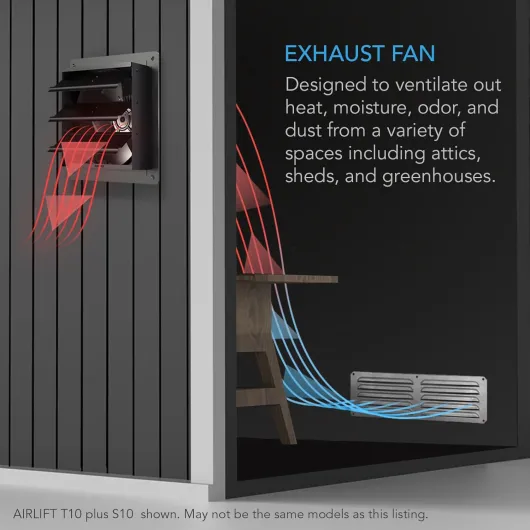
Performance-wise, this fan does what it claims: it moves a lot of air for a 10" unit. The rated 631 CFM feels believable. In my roughly 290 sq ft garage bay with about 8' ceilings, running it at speed 5 gives a noticeable change in air quality in a couple of minutes. Smoke, stale air, or that hot ceiling-layer heat gets pulled out fast, especially if you crack a door or window for intake. One Amazon reviewer said it clears 450 sq ft in under 3 minutes, and based on my experience, that sounds realistic if the space isn’t super choked off.
The big plus is the 10 speed levels. At levels 1–3, it’s pretty quiet and just keeps a gentle exchange of air going; good for background ventilation. At 4–6, you’re in the “good airflow, tolerable noise” zone – this is where I leave it most of the time when I’m working. Above 7, it starts sounding like a big box fan or small shop fan; not insane, but you’ll definitely notice it. At 10, it’s loud, no way around it, but it also pulls a ton of air. For quick clearing of heat or smoke, I’ll blast it at 9–10 for a few minutes, then drop it back down.
In terms of temperature and humidity impact, don’t expect it to turn a 100°F garage into a cool living room, but it does shave a few degrees off and, more importantly, removes that suffocating hot layer. One reviewer mentioned seeing 5–6% humidity drop and a couple of degrees off, and that matches what I see: it won’t replace AC, but it helps the AC a lot and keeps the space from feeling swampy. In my shed test, the difference between fan off and fan on auto mode through the afternoon was very noticeable in how long I could stay inside without feeling cooked.
If I compare it to a cheap galvanized shutter fan I had before: the AIRLIFT T10 is a bit quieter at similar airflow and way more usable because I can dial in speed. The EC motor also seems smoother when ramping up and down. So in performance terms: strong airflow for the size, good control, noise is acceptable at mid-levels but loud at full power. That’s fair for what it is.
What this thing actually is and who it’s for
The AIRLIFT T10 is basically a 10" wall-mounted exhaust fan with motorized shutters and a smart controller that handles temperature and humidity. Official numbers: 10" size, about 13" x 13" overall, 631 CFM airflow, 50W EC motor, and around 67 dB at full tilt. It’s meant for garages, sheds, attics, workshops, small greenhouses – basically any enclosed space that turns into an oven or stays damp and stale.
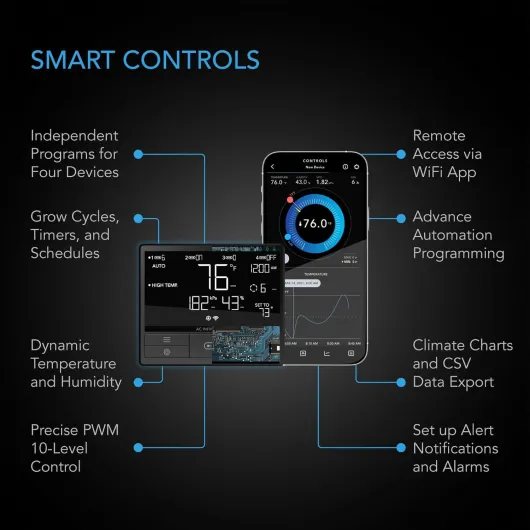
The key point is that it’s not just a fan with a switch. It comes with a controller that has a temp/humidity sensor, 10 speed levels, and programmable modes: you can set thresholds (like “turn on above 85°F or 60% humidity”), minimum speed, timers, and schedules. With the WiFi/app version, you also get remote monitoring, logs, and some alarms. If you’re coming from a basic shutter fan plus a separate Inkbird or cheap thermostat, this is a cleaner all-in-one setup.
In practice, I’d say it’s best suited for spaces from about 150 to 500 sq ft if you want it to actually impact the climate. In my 290 sq ft garage bay, at speed 5 it clears the stuffy air in a few minutes. In a more open 450 sq ft garage, you feel the air change in about 3–5 minutes too, especially if there’s some intake (cracked door, vent). For bigger areas like 800–900 sq ft, it still helps, but it’s more of a support for AC or other ventilation, not a magic solution on its own.
If you just want something dirt cheap to toss in a barn and don’t care about noise or control, this is probably overkill. But if you’re trying to keep a workshop, shed, or garage at a half-decent temperature and humidity without fiddling with switches all day, it fits that use case pretty well. It’s more for people who want “set and forget” than for someone who just needs to blow smoke out of a room once a week, even though it can do that too.
Effectiveness: does it actually cool and dehumidify the space?
This is where the fan plus controller combo actually makes sense. On its own, any exhaust fan just pulls air out. What makes the T10 more effective is the dynamic temp and humidity control. You can set it to kick on above certain thresholds, and it will adjust speed instead of just slamming from off to full. In real life, that means the space doesn’t see huge swings and you’re not constantly flipping switches or forgetting it on for days.
In my garage, I set it to turn on above 85°F or 60% RH, with a minimum speed of 2. On a hot day, it ramps up to 5–6 when the temp spikes and then slowly backs off as the evening cools. That alone keeps the garage from turning into a heat trap. It doesn’t make it cold, but walking in at 4pm is way less brutal than before. Paired with a half-decent insulated door and some basic sealing, you can get a few degrees of improvement and a much fresher feel.
For humidity, it’s more of a steady maintenance thing. After a rainy day, I let it run in humidity-controlled mode overnight, and by morning the air feels drier, tools aren’t as clammy, and the smell is less “damp basement.” The numbers aren’t perfect because sensors vary, but I saw roughly a 5–10% drop depending on outside conditions. It’s obviously limited by what the outside air is like, but it definitely helps keep moisture from lingering.
Where it shines is supporting other systems: if you have a small AC in a workshop, this fan helps dump the hottest air and lets the AC work less. One reviewer with a 900 sq ft space mentioned it helped their air conditioner run more efficiently, and that tracks with how it behaves in my setup. So in terms of effectiveness, it’s not magic, but it’s a solid, practical improvement over a dumb fan, especially if your goal is to keep temps and humidity from creeping too high without having to think about it all the time.
Pros
- Strong airflow for a 10" fan with smooth 10-speed control
- Built-in temp and humidity controller with WiFi/app makes it mostly set-and-forget
- EC brushless motor and dual ball bearings feel durable and run efficiently
Cons
- Noticeable gaps around shutters let in bugs/drafts unless you add your own sealing
- Loud at higher speeds, especially above level 6–7
Conclusion
Editor's rating
After using the AC Infinity AIRLIFT T10 in real conditions, my take is simple: it’s a solid, smart exhaust fan that actually helps keep small to medium spaces more livable, but it’s not magic and it’s not perfect. The airflow is strong for a 10" fan, the EC motor and 10-speed control make it much more usable than cheap on/off fans, and the temperature/humidity controller with WiFi/app support is genuinely practical. You set your thresholds, and it just does its job without you thinking about it every day.
The downsides are mostly about details: the shutter gaps are annoying and you’ll likely end up adding foam tape or a seasonal cover, and at higher speeds the fan is loud – not unexpected, but still something to keep in mind if you’re hoping for whisper-quiet. Also, if you’re not going to use the smart control features, the price might feel a bit high compared to a basic fan.
Who is it for? People with garages, sheds, workshops, or small greenhouses who actually care about keeping heat and humidity under control without constant manual tinkering. If you’ve got tools, projects, or plants to protect, or you just want a less miserable summer workspace, it’s a good fit. Who should skip it? If you just need to vent a random storage area a few times a month and you don’t care about automation, you can save money with a simpler fan. Overall, I’d give it a solid 4/5: good product, practical features, a few quirks, but it gets the job done well enough that I’d buy it again for another space.