
Summary
Editor's rating
Value for Money: Is It Worth Paying More Than a Cheap Tower?
Design: Looks Like a Big Plastic Box, Because It Is
Comfort and Day-to-Day Use
Build Quality, Noise Over Time, and Filters
Performance: How Well It Actually Cleans the Air
What You Actually Get With the Coway AP-1512HH
Pros
- Cleans air quickly and effectively, even with smoke and strong cooking smells
- Quiet on low and medium, easy to run 24/7 in a bedroom or living room
- Simple controls with useful Auto and Eco modes, no app required
Cons
- Bulky plastic design that stands out in a room and needs space from walls
- High fan setting is quite loud, though usually only needed in short bursts

Specifications
View full product page →| Brand | Coway |
Why I Ended Up Testing This Coway Purifier
I picked up the Coway Airmega AP-1512HH (the “Mighty”) mainly because my old cheap tower purifier was useless during wildfire smoke days and pretty annoying the rest of the time. It was loud, slow, and I still woke up with a stuffy nose. After seeing this Coway pop up everywhere – Wirecutter, Reddit, and a bunch of friends swearing by it – I decided to stop buying half-measures and try something more serious.
I’ve been using it daily in a 1-bedroom apartment, moving it between the living room and bedroom depending on what’s going on: cooking, pollen season, and those lovely days when outdoor AQI goes orange or red. I also have a cat and a partner with mild allergies, so I had a pretty clear idea of what I wanted to fix: less dust, fewer smells, and less morning congestion.
In practice, I used it mostly in Auto mode, with the air quality light on during the day and off at night. I kept it around 6–8 feet from where we sit or sleep, and I didn’t baby it – just let it run 24/7 on medium or auto. I cleaned the pre-filter every few weeks and didn’t change anything else in the house so I could see if the difference really came from the purifier and not from some other change.
Bottom line from my time with it: it’s not perfect, but it’s definitely not just hype. It actually clears the air fast, it’s quieter than I expected, and it’s way more practical than the cheaper units I’ve owned. There are a few annoyances, but overall it feels like a solid “workhorse” purifier, not a fancy toy.
Value for Money: Is It Worth Paying More Than a Cheap Tower?
Price-wise, the Coway AP-1512HH sits in that mid-range zone: more expensive than the $70–$100 no-name towers, cheaper than the big smart purifiers with apps and giant filters. In my opinion, it hits a good balance between cost and actual performance. Compared to the cheap tower unit I had before, the difference is pretty clear: this one cleans faster, is quieter on low/medium, and doesn’t feel like it’s just blowing air around. You’re basically paying for a more serious motor, a better sensor, and a real HEPA setup that actually does something.
Running costs are reasonable. It uses up to 77W at max, but on Low or Auto in a clean room, the consumption is much lower, and Eco mode even shuts the fan off when not needed. Filters are the main ongoing cost. Third-party and official replacements are widely available, and you’re not locked into some bizarre expensive subscription. If you budget one filter set per year, you’ll have a realistic idea of what you’re getting into. For what it does – improve allergy comfort, reduce smells, and handle wildfire/cooking smoke – I’d say the trade is fair.
Compared to other brands like Blueair or Dyson, this Coway is more practical than fancy. No app control, no 3D futuristic design, no marketing tricks. But the core job – cleaning the air – is on par with or better than a lot of more expensive options. The main compromise is looks and lack of smart-home features. If you don’t care about connecting your purifier to your phone and just want clean air, it’s a pretty solid deal.
So from a value perspective, I’d put it this way: if you only need a purifier for a tiny room and you rarely deal with bad air, a cheaper unit might be enough. But if you have pets, allergies, or live somewhere with regular smoke or pollution, paying the extra for this Coway actually makes sense. You get reliable performance without going into luxury pricing territory, and you’re not paying mainly for brand name or aesthetics.
Design: Looks Like a Big Plastic Box, Because It Is
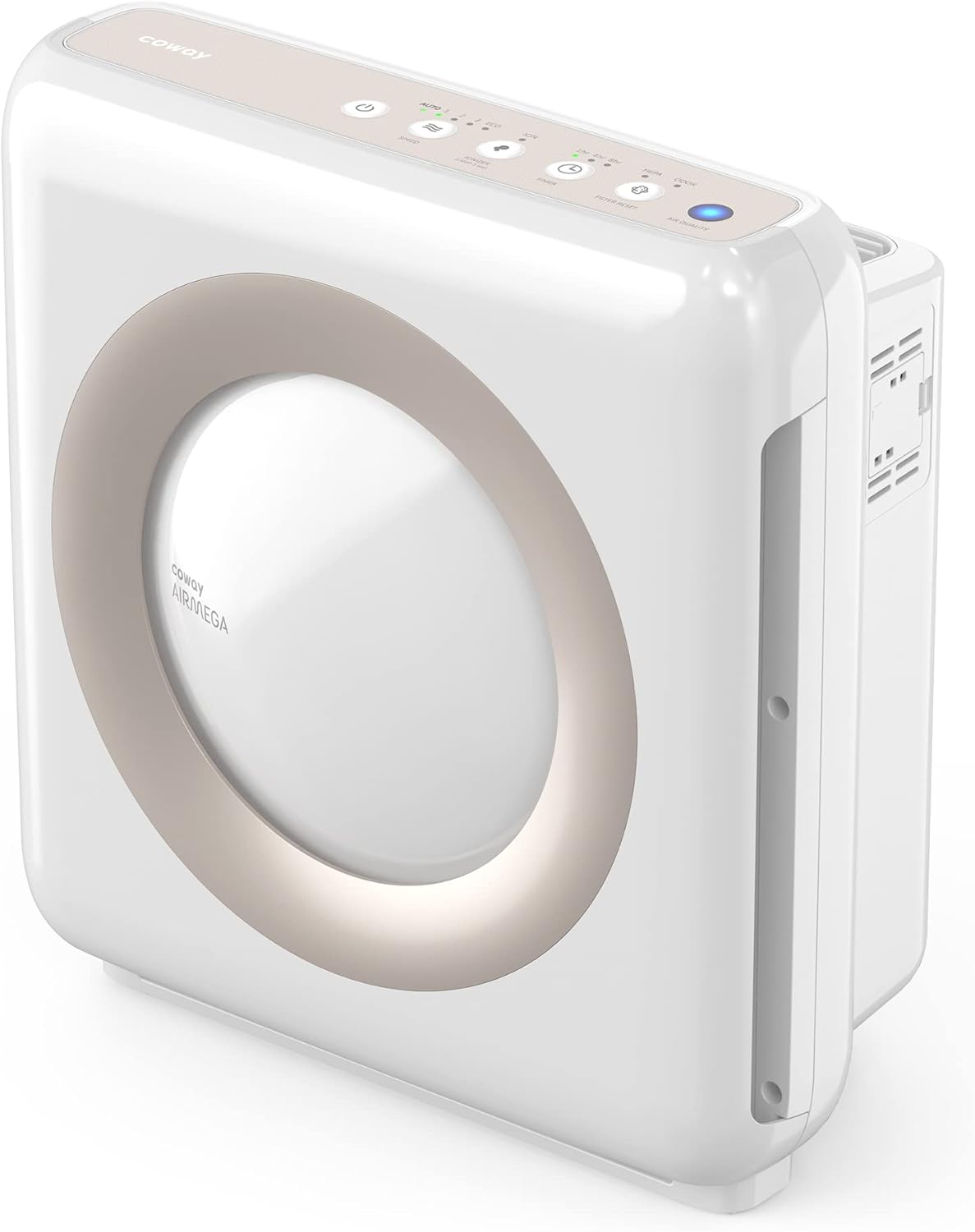
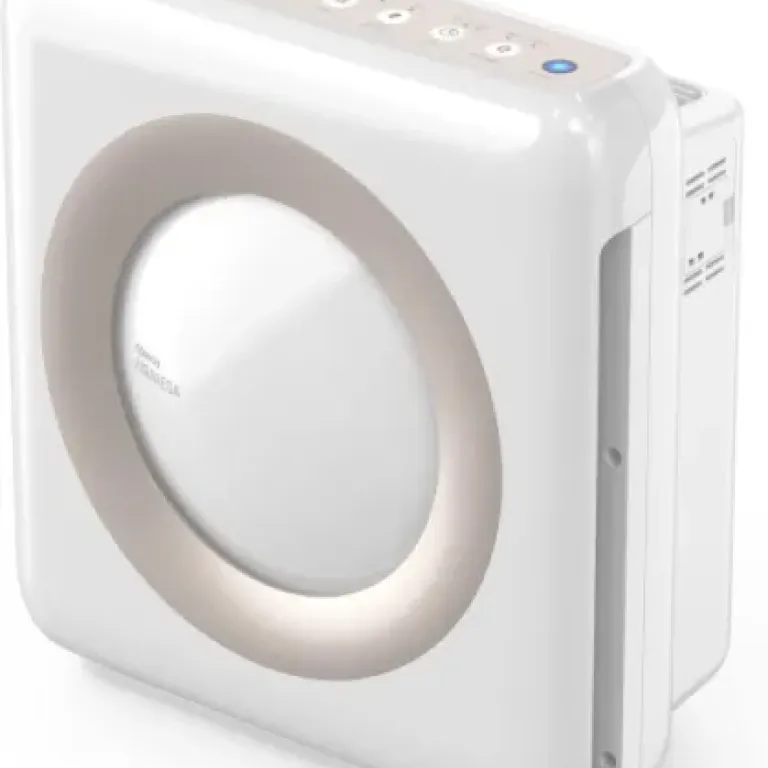
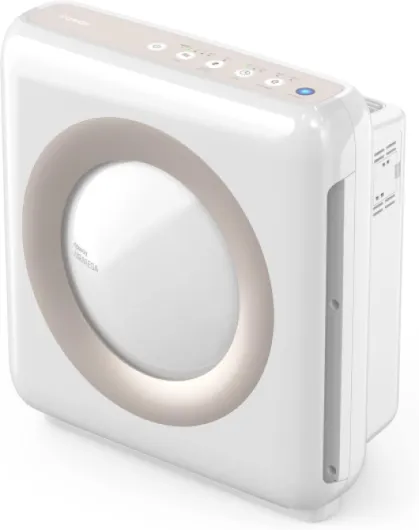
Design-wise, this thing is not trying to be furniture. It’s a glossy white plastic box with a black front circle and a blue LED ring. That’s basically the vibe. If you want something that looks like a designer object, this isn’t it. It’s about the size of a small carry-on suitcase: roughly 18" tall, 17" wide, and under 10" deep. In a small room, you notice it. It doesn’t disappear visually unless you tuck it in a corner, and even then it still looks like an appliance.
The manufacturer recommends keeping it about 18 inches from walls for best airflow. Real talk: most people, including me, push it a bit closer because space is limited. I usually keep it 6–10 inches from the wall, and it still performs fine in my use. Just don’t cram it directly against furniture or curtains, because the intake is on the front and sides and it needs room to breathe. If you’re picky about how your place looks, you might end up placing it near a litter box or in a corner where it “belongs,” like one Amazon reviewer did. It’s not ugly, just very obviously a plastic machine.
On the plus side, the control layout is simple and clear. The top panel has physical buttons with icons and labels – no guessing, no weird touch slider. Even in low light you can feel your way around the buttons after a few days. There’s also a button to turn off the front light, which is nice if you’re using it in a bedroom and don’t want a glowing blue circle at 2 a.m. The only small nitpick: the air quality indicator is just colors, not numbers. It would be nice to see an approximate PM2.5 value, but at this price and age of the model, that’s not a shock.
Weight-wise, it’s about 12.5 pounds, so it’s easy enough to pick up and move between rooms with one hand. There are no dedicated handles, but the shape makes it easy to grab from the sides. If you plan to move it daily between bedroom and living room, it’s doable without feeling like a chore. Overall, the design is more about practicality than style: it’s not pretty, but it’s easy to live with and clearly built to be used, not just looked at.
Comfort and Day-to-Day Use
From a comfort standpoint, this purifier is easy to live with. The first thing I noticed is you can actually leave it on 24/7 without it driving you nuts. On Low or Auto in a clean room, it’s so quiet that it just blends into the background. At night in the bedroom, I usually set it to Medium or Auto with the lights off, and it turns into a kind of soft fan noise. If you like white noise for sleep, it’s actually nice. If you’re super sensitive to any sound, you’ll probably be okay on Low with the light turned off.
The controls are dead simple, which makes daily use less annoying. No app to update, no Bluetooth pairing, no account creation. You walk up, tap the fan button to cycle speeds, hit Auto, or set a timer (1/4/8 hours). The Eco mode kicks in by itself if the air is clean for 30 minutes, stopping the fan. That’s handy if you don’t like the idea of a fan running constantly. Personally, I usually leave it in Auto and just ignore it. The unit handles the rest based on what the sensor detects.
Maintenance is also straightforward. The front panel pops off easily, and you can pull out the pre-filter to rinse or vacuum it. I’d say plan to clean it once a month if you have pets, maybe every 2–3 months if you don’t. The filter indicator lights tell you when it’s time to either wash the pre-filter or replace the HEPA set, which is nice if you don’t want to keep track manually. Replacement filter sets are not dirt-cheap but not outrageous either; they’re reasonable for something you’ll probably replace once or twice a year depending on your air quality and usage.
The only comfort downsides: it’s a bit bulky, and if you’re picky about light at night, you need to remember to turn the air quality light off before bed. Also, the beeps when you press buttons are a bit bright and cheerful – not loud, but you notice them in a quiet room. Overall, though, as a daily-use appliance, it’s very low hassle. You turn it on, clean it once in a while, and mostly forget it’s there until the air gets bad and you hear it kick up.
Build Quality, Noise Over Time, and Filters
In terms of build quality, the Coway AP-1512HH feels like decent mid-range plastic gear. It doesn’t feel premium, but it also doesn’t feel flimsy. The casing doesn’t creak much when you move it, and the front panel clips on securely without feeling like it’s going to snap off after a few removals. The buttons on top have a clear click, and after repeated daily use they don’t feel mushy. It’s not a tank, but it’s not junk either.
Noise-wise, after running it many hours a day, I haven’t noticed any weird rattles or new vibrations. That’s usually the first sign of cheap build quality on fans and purifiers: they start buzzing over time. Here, the sound profile has stayed consistent – Low is still barely audible, Medium is a steady hum, High is strong but smooth airflow noise without rattling. I’ve seen long-term reviews from people who’ve used it for years saying the same thing, so that lines up with my shorter experience.
On durability of the filters, the washable pre-filter holds up well. You can vacuum or rinse it without it falling apart. The carbon and HEPA filters are consumables, so they will need replacing. How often depends on your environment. With pets and city air, I’d expect to replace the main filter set roughly every 6–12 months if you run it regularly. The good part is that Coway’s replacement filters are easy to find and not priced like some weird proprietary scam. They’re not cheap, but they’re fair considering the performance you get.
The warranty is 3 years limited for motor and electronics, 1 year for internal parts, excluding filters. That’s decent for an appliance in this price range. It’s not the longest in the world, but it’s better than the usual 1-year-only you see on a lot of cheaper purifiers. Overall, durability feels solid enough that I’d be comfortable running this as my main unit for several years, as long as I keep up with basic cleaning and filter changes. It doesn’t feel like something that’s going to fall apart after one wildfire season.
Performance: How Well It Actually Cleans the Air
This is where the AP-1512HH earns its good reputation. In real use, it clears a room fast. During a smoky day (AQI outside around 150), I closed the windows, turned this to high, and checked with a cheap PM2.5 meter. The living room went from about 60 µg/m³ down to under 10 in roughly 20–25 minutes. After that, Auto mode kept it hovering in the low single digits. That lines up pretty well with what a lot of reviewers say: it punches above its size for cleaning speed, especially considering the price.
Cooking is where the air quality sensor really proves itself. Fry bacon, sauté onions, or slightly burn something, and the light instantly goes purple or red, then the fan ramps to high. In my place, smells that used to linger for an hour now fade a lot faster. I’d say most typical cooking smells drop to barely noticeable in 10–20 minutes with the unit on Auto. If I manually force it to max, it’s even quicker. One funny but true use case: it absolutely reacts to bathroom smells and, yes, kids’ farts, just like that Amazon review mentions. You can literally see (and hear) it react to whatever’s in the air.
For allergies and dust, the difference is more subtle but still there. After a couple of weeks running it in the bedroom at night, I noticed less morning congestion and less dust collecting on surfaces. I still need to dust, but not as often. People with cat allergies who came over seemed to react less than before, though obviously that’s not a scientific test. Compared to my older cheap tower purifier, the Coway keeps the air much steadier: no constant smell buildup, fewer random sneezing fits, and the room just feels less "stuffy." It’s not magic, but it clearly does the job.
Noise-wise, performance lines up with the specs. On Low, it’s basically silent – you have to walk up to it to check if it’s actually on. On Medium, it’s a soft white noise that blends into background sounds; I can sleep with it right across the room without issues. On High, you definitely hear it – think strong fan noise, similar to a bathroom fan or louder AC setting. But you usually only need High in short bursts when the air is bad. The nice part is that Auto mode ramps it up only when needed, then drops it back down. Overall, in terms of actually cleaning the air, this thing is pretty solid and feels way more serious than cheaper units I’ve tried.
What You Actually Get With the Coway AP-1512HH
Out of the box, the Coway AP-1512HH is pretty straightforward. You get the purifier already assembled, a full filter set (pre-filter already installed, deodorization filter, and HEPA), and a basic manual. No app, no Wi‑Fi, no smart-home nonsense. Just physical buttons on top: power, fan speed, ionizer, timer, and a light-control button. If you like gadgets that stay offline and just do one job, this fits that profile.
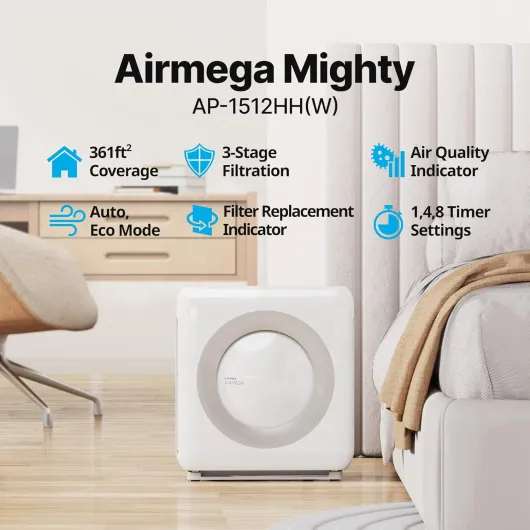
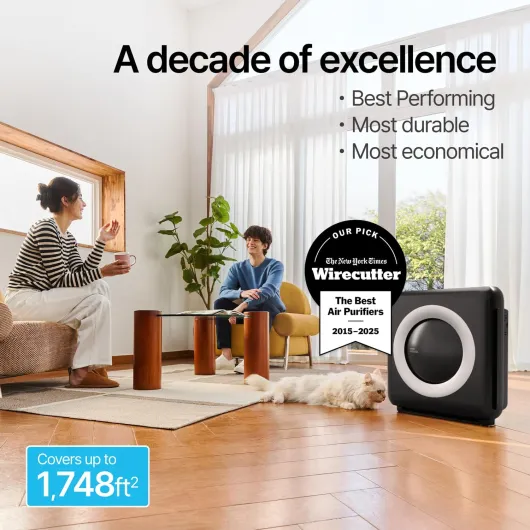
In terms of specs, it’s rated for up to 361 sq ft, with CADR around 233–246 depending on smoke/dust/pollen. In real life, that means it easily handles a bedroom or medium living room. I used it in an open-ish living room/kitchen area around that size, and it could clear cooking smells and visible smoke in under 10–15 minutes when running on high. For wildfire smoke days with closed windows, it kept the indoor air noticeably clearer than outside – I checked with a cheap PM2.5 meter and saw numbers drop from the 40–60 range down into single digits after a bit of runtime.
The 4-stage filtration is: washable pre-filter (hair, big dust), deodorization carbon filter (smells, VOCs), True HEPA filter (fine particles), and an ionizer you can turn on or off. I personally leave the ionizer off most of the time – the purifier still works well without it, and I’m not interested in extra ions in the air if I don’t need them. The nice part is that Coway actually lets you disable it with a clear button, unlike some cheap purifiers where it’s always on.
Day to day, the main things you actually notice are: the air quality light (blue/purple/red ring), the fan noise at different levels, and the Auto/Eco modes. The light turns red quickly when you cook, spray something, or stir up dust, then calms down once the air clears. Eco mode is simple: if the sensor doesn’t see pollution for 30 minutes, the fan stops to save power and kicks back in if the air gets worse again. It’s not fancy, but it’s practical and you don’t have to fiddle with it all day.
Pros
- Cleans air quickly and effectively, even with smoke and strong cooking smells
- Quiet on low and medium, easy to run 24/7 in a bedroom or living room
- Simple controls with useful Auto and Eco modes, no app required
Cons
- Bulky plastic design that stands out in a room and needs space from walls
- High fan setting is quite loud, though usually only needed in short bursts
Conclusion
Editor's rating
The Coway Airmega AP-1512HH is not pretty or high-tech, but it does what matters: it cleans the air well and quietly. In normal everyday use, it handles cooking smells, pet dander, and dust without drama. During worse conditions like wildfire smoke, it steps up and actually makes a noticeable difference in how your place feels and how your throat and nose react. The controls are simple, the sensor-based Auto mode works reliably, and maintenance is straightforward. It really fits the “set it and forget it” category once you’ve found a good spot for it.
It’s not perfect. The design is bulky and looks like a plain plastic appliance, the air-quality indicator is just colors instead of numbers, and on High it’s definitely loud. If you’re obsessed with interior design or want everything in your home to be app-controlled and stylish, you’ll probably find it a bit boring. But if your priority is function over looks, it’s a strong choice. I’d recommend it to people with allergies, pet owners, and anyone dealing with recurring smoke or city pollution in a small to medium room. If you only need something for very light use in a tiny space and care more about how it looks than how hard it works, you might want to look at smaller, more design-focused models instead.